
Is Chicken Good for Dogs Benefits and Risks Explained
You look into those soulful eyes and only want the absolute best for your furry companion. Choosing the right nutrition often feels like a puzzle. You wonder if common pantry staples are safe. Many pet parents ask if this popular protein source fits into a healthy canine diet.
Plain, fully cooked poultry can be a nutritious treat when prepared with care. However, you must avoid bones, skin, and heavy seasonings. These might cause digestive distress. Safety remains your top priority when introducing new foods to your pet’s bowl.
This guide explores how to serve this meal safely. We’ll avoid common pitfalls like raw meat hazards or potential allergies. We will cover proper portion sizes and when to consult your veterinarian. This ensures your pet thrives.
Table of Contents
Is Chicken Good for Dogs?
When thinking about what human foods to give your pet, you might wonder if chicken is safe. Plain, cooked chicken is a highly digestible protein source that many dogs love. It can be a good addition to their diet if given in the right amounts.
When Plain Chicken Can Be a Healthy Food for Your Dog
Vets often suggest plain chicken for dogs with sensitive stomachs. It’s low in fiber and easy to digest, which can help soothe their stomach. Boiled chicken and rice is a common bland diet for dogs feeling unwell.
“Protein is the building block of life for dogs, and high-quality, lean chicken provides the essential amino acids necessary for muscle maintenance and overall vitality.”
Why Chicken Should Complement Rather Than Replace Complete Dog Food
Chicken is nutritious but not a complete meal. Dogs need a mix of vitamins, minerals, and fatty acids that chicken alone can’t offer. Eating only chicken can cause significant nutritional deficiencies over time.
To keep your pet healthy, remember these tips:
- Use chicken as a nutritious topper or occasional treat.
- Make sure 90% of your dog’s calories come from a balanced commercial diet.
- Talk to your vet before adding chicken to your dog’s regular meals.
Factors That Affect Whether Chicken Is Appropriate
Whether chicken is good for your dog depends on their health. Dogs with pancreatitis need a very low-fat diet, so even lean chicken must be given carefully.
Some dogs have food allergies that can cause skin problems or ear infections. If your dog is allergic to poultry, it’s best to avoid it. Always listen to your vet, especially if your dog is a puppy, senior, or has a chronic condition.
Benefits of Feeding Chicken to Dogs
Feeding chicken to dogs has many benefits. It’s a tasty source of protein that dogs love. But, it should be part of a balanced diet, not the only food they eat.
High-Quality Protein for Muscles and Tissue Repair
Chicken is full of lean protein, which is good for your dog’s health. This protein helps keep muscles strong and repairs body tissues. It supports your dog’s strength and health at all life stages.
Essential Nutrients Found in Chicken
Chicken also has important nutrients besides protein. It’s not a complete food on its own but adds value to a balanced diet. It has vitamins and minerals like:
- Vitamin B6: Helps with energy and brain health.
- Niacin: Important for energy use.
- Phosphorus: Helps bones and teeth stay strong.
- Selenium: Boosts the immune system.
How Chicken May Support Appetite and Recovery
Chicken is very tasty, which is a big plus. If your dog is sick or not eating well, chicken can help. It can make them want to eat, which is key for getting them to eat when they’re not feeling well.
Why Chicken Is Often Used in Bland Diets
Vets often suggest boiled chicken for dogs with upset stomachs. It’s easy to digest and can calm a sore stomach. But, it’s only for a short time. Long-term diets need vet advice to avoid nutritional problems.
Which Dogs May Benefit From Chicken in Their Diet?
Chicken is a versatile food, but it’s not right for every dog. It’s best for dogs based on their health and age. Always check if it fits their needs.
Dogs That Need a Palatable Protein Source
Some dogs have a hard time eating or are recovering from illness. A palatable protein for dogs can help them eat more and get stronger.
Chicken is often loved by picky eaters because of its smell and taste. A bit of plain, cooked chicken can make them more interested in food.
Chicken for Puppies, Adult Dogs, and Senior Dogs
As dogs get older, their needs change. Chicken for puppies gives them the amino acids they need to grow fast. But, it must be part of a complete diet.
Adult dogs get energy from chicken, which helps keep their muscles strong. Chicken for senior dogs is good because it’s easy to digest. This is helpful for older dogs with slower metabolisms or dental issues.
Situations in Which Your Veterinarian May Recommend Chicken
Your vet might suggest chicken during certain times. This is common when switching dog foods or when a dog has a sensitive stomach.
Always consult your vet before changing your dog’s diet. They can tell you if adding chicken is safe for your dog’s health.
Why Individual Health Conditions Matter
Health conditions affect if chicken is safe for your dog. Dogs with kidney disease or pancreatitis need special diets. Chicken might not be allowed.
Some dogs have food allergies that cause skin problems or upset stomachs. If your dog has allergies, don’t add new foods without your vet’s advice.
| Life Stage | Primary Benefit | Key Consideration |
|---|---|---|
| Puppy | Growth Support | Balanced Calcium |
| Adult | Muscle Maintenance | Calorie Control |
| Senior | Easy Digestion | Joint Health |
Choosing the Best Chicken for Dogs
Choosing the right protein for your dog is important. You need to focus on quality and how it’s prepared. The best chicken for dogs should have simple, high-quality ingredients that help your pet stay healthy.
Skinless, Boneless Chicken Breast and Thigh Meat
Chicken breast is lean and full of protein, making it a great choice. It’s a solid base for a balanced diet when cooked right.
Thigh meat has a bit more fat, which can make it tastier for dogs. But, always remove any visible fat to avoid upsetting your dog’s stomach.
Fresh, Frozen, and Plain Canned Chicken Options
You can pick from fresh, frozen, or canned chicken based on what’s easiest for you. Fresh and frozen let you control the cooking fully.
For canned chicken, make sure it’s in water, not oil or broth. Always check that it doesn’t have harmful additives.
How to Check Ingredients on Store-Bought Chicken
Always read the label before buying meat for your dog. Look out for garlic, onion, salt, or preservatives that could be bad for them.
Many pre-cooked chickens have spices that are toxic to dogs. If the label lists anything other than chicken and water, it’s best to avoid it.
Why Lean, Unseasoned Meat Is Usually the Safer Choice
Lean, unseasoned meat is the safest choice for your dog. It’s easier to keep track of calories and watch for sensitivities with simple ingredients.
Keeping it plain ensures the best chicken for dogs stays healthy. Consistent quality helps keep your dog well and happy for a long time.
How to Prepare Cooked Chicken for Dogs Safely
Preparing safe and nutritious meals for your dog is key. When adding cooked chicken for dogs to their diet, aim to remove dangers. Follow kitchen safety rules to ensure your pet gets a healthy protein source without risks.
Cooking Chicken Thoroughly to Reduce Bacterial Risk
Raw poultry can have harmful bacteria like Salmonella and Campylobacter. Cook the meat to 165°F to kill these bacteria. Never serve meat that’s not fully cooked, as it can make your pet sick.
Removing Bones, Skin, Fat, and Visible Seasonings
Before cooking, remove bones, skin, and fat. Bones can splinter and cause harm. Also, avoid high-fat foods to prevent pancreatitis in sensitive dogs.
“The safety of your pet’s diet depends entirely on the quality of the ingredients and the care taken during preparation.”
Safe Cooking Methods for Chicken
Use simple, clean methods to cook cooked chicken for dogs. Avoid butter, oils, or heavy seasonings to prevent stomach upset. These methods help keep the meat nutritious.
Boiling and Poaching
Boiling or poaching is easy and keeps the meat moist. Just simmer boneless, skinless meat in water until cooked. This method avoids added fats or oils.
Baking Without Oil or Seasoning
To bake chicken, place it on a clean sheet without grease. Use a consistent oven temperature for even cooking. This makes a lean, healthy protein for dogs.
Using Plain Cooked Chicken as a Food Topper
Use cooked chicken as a tasty topper for kibble. It’s great for picky eaters. Make sure the chicken is unseasoned and free from harmful ingredients like garlic or onion powder.
Cooling, Cutting, and Serving Chicken Safely
Let the chicken cool before handling. Cut it into small pieces to prevent choking. Store leftovers in an airtight container in the fridge for up to three days.
Raw Chicken for Dogs: Potential Risks and Considerations
Some people think raw diets are better for dogs. But, there are big risks of feeding chicken to dogs without cooking it. Raw poultry can make your pet very sick.
Salmonella, Campylobacter, and Other Bacterial Hazards
Raw chicken often has harmful germs like Salmonella and Campylobacter. These can make dogs very sick, causing vomiting, diarrhea, and fever. Even healthy dogs can spread these germs, making others sick too.

Risks From Raw Chicken Bones
Many think raw bones are safer than cooked ones. But, they can still choke, break teeth, or hurt the inside of your dog. If a bone gets stuck or tears the intestines, it’s a serious emergency.
Cross-Contamination in Your Kitchen
Handling raw chicken for dogs can spread dangerous germs everywhere. These germs can get on countertops, utensils, and hands. This puts everyone in your home at risk of getting sick.
Why Raw Feeding Requires Veterinary Guidance
Before changing your dog’s diet, talk to a vet. They can help you understand what’s safe and what’s not. Without a vet’s advice, you might harm your dog.
Higher-Risk Dogs and People in Your Household
Some people are more likely to get sick from raw meat. This includes kids, older adults, pregnant women, and those with weak immune systems. Keeping your family safe is more important than your dog’s diet.
| Hazard Type | Raw Chicken Risk | Cooked Chicken Risk |
|---|---|---|
| Bacterial Pathogens | High (Salmonella/Campylobacter) | Low (if cooked properly) |
| Bone Splintering | Moderate (choking/obstruction) | Very High (sharp shards) |
| Household Safety | High (cross-contamination) | Low (minimal spread) |
Chicken Preparations You Should Never Feed Your Dog
Many ways of cooking chicken can harm your dog. Plain, boiled meat is healthy, but other methods are not. It’s key to know which unsafe chicken for dogs to avoid to keep them healthy.
Cooked Chicken Bones and Their Splintering Risk
Never give chicken bones for dogs after they’re cooked. Cooking makes bones brittle and prone to splintering.
These sharp pieces can hurt your dog’s mouth, throat, and stomach. They might even need surgery to fix internal damage.
Fried Chicken, Breaded Chicken, and Excess Grease
Fried or breaded chicken is bad for pets. It’s full of grease and unhealthy fats that can cause pancreatitis.
The breading can also upset your dog’s stomach. Plus, fried foods have too many calories, leading to weight gain.
Chicken Seasoned With Garlic, Onion, or Chives
Stay away from seasoned chicken for dogs with garlic, onions, or chives. These are toxic and can harm your dog’s blood cells, leading to anemia.
Even a little bit of these seasonings can be dangerous. Always check the labels to avoid these ingredients.
Chicken With Salt, Spicy Sauces, or Rich Marinades
Dogs can’t handle as much salt as humans. Chicken with lots of salt, spicy sauces, or marinades can cause dehydration and imbalances.
Spicy foods can upset your dog’s stomach. This might lead to vomiting, diarrhea, and stomach pain.
Processed Chicken, Deli Meat, and Chicken Nuggets
Processed meats like deli slices and chicken nuggets are not good for your pet. They have preservatives, sodium, and artificial flavors.
These additives are not safe for dogs. Stick to fresh, whole foods for their protein.
Chicken Skin, Gravy, and High-Fat Pan Drippings
Chicken skin and pan drippings are too fatty. They can upset your dog’s stomach and increase the risk of pancreatitis.
Gravy often has hidden ingredients like onion powder or too much salt. It’s an unhealthy choice for your dog. Remove the skin and discard fatty drippings before serving chicken.
Chicken Allergies, Intolerances, and Warning Signs
Spotting a chicken allergy in dogs needs careful watching of your pet’s health. Many dogs love poultry, but some may get sensitive. Spotting these signs early helps keep your dog comfy and healthy.

Common Symptoms of a Food Allergy or Intolerance
A chicken intolerance in dogs shows up as skin and digestive problems. You might see your dog scratching a lot, licking their paws, or getting ear infections often. These signs mean their immune system is reacting to chicken proteins.
Other signs include skin inflammation, redness, or hair loss in certain spots. If your dog has loose stools or gas after eating, it’s a sign their body can’t handle the food.
Distinguishing an Upset Stomach From a More Serious Reaction
It’s key to tell apart a mild upset stomach from a serious dog reaction to chicken. A mild upset might cause vomiting or diarrhea that goes away fast. But, if you see severe symptoms, get medical help right away.
Look out for signs like facial swelling, trouble breathing, or sudden collapse. These are signs of an anaphylactic reaction, a serious emergency. Also, don’t ignore repeated vomiting or blood in the stool.
| Symptom Type | Mild Reaction | Severe/Urgent Reaction |
|---|---|---|
| Digestive | Occasional gas or soft stool | Bloody diarrhea or constant vomiting |
| Skin/Physical | Mild itching or redness | Facial swelling or hives |
| Behavioral | Lethargy | Collapse or difficulty breathing |
What to Do if Your Dog Reacts After Eating Chicken
If you think your pet is reacting, stop feeding chicken right away. Keep a log of symptoms, including when they started and how bad they are. This info is very helpful when talking to your vet.
Don’t try to treat symptoms with human meds, as they can be harmful to dogs. Instead, call your vet to set up a check-up. They can figure out if it’s a food allergy or something else.
Why You Should Not Start an Elimination Diet Without Guidance
Some owners try an elimination diet to find out if their dog has a chicken intolerance. But, it’s complex. A good trial needs careful control of what your dog eats for weeks. Randomly removing foods can cause nutritional problems.
Always talk to a vet or a vet nutritionist before changing your dog’s diet. They can make a safe plan that makes sure your dog gets all the nutrients they need. This way, you can safely figure out why your dog reacts to chicken.
How Much Chicken to Feed Dogs
Many pet owners wonder how much chicken to feed dogs without upsetting their diet. Chicken is a healthy snack, but it should not replace their main food. It’s best to see it as a treat or topper.
Keeping Chicken Within the Treat and Topper Allowance
Follow the 10% rule for treats and toppers. They should not be more than 10% of your dog’s daily calories.
Too much can cause nutritional problems. Always prioritize their main kibble or wet food for all vitamins and minerals.
Adjusting Portions for Your Dog’s Size and Activity
Portion size depends on your dog’s needs. Small, inactive dogs need fewer calories than big, active ones.
Think about your dog’s age and activity level when setting portions. Young, active dogs might need a bit more, while older dogs need less.
Accounting for Calories From Chicken in Daily Meals
Adding chicken means you need to count those extra calories. If you give a lot of chicken, cut down on their regular meal to avoid weight gain.
Tracking these calories helps keep your dog at the right weight. Consistency is key for your pet’s health.
Starting With a Small Amount
Start with a tiny amount of chicken if it’s new. This lets you watch for any bad reactions.
Look for signs like vomiting or diarrhea. If your dog does okay with a small amount, you can slowly add more, but stay within the 10% limit.
When a Veterinarian Should Set the Portion
If your dog has health issues like obesity or diabetes, talk to your vet first. They can help with diet plans.
A vet can figure out the right calories for your dog’s health needs. They’ll give a plan that’s safe and right for your dog.
Dog-Friendly Chicken Recipes and Serving Ideas
Exploring dog-friendly chicken recipes can make mealtime fun for your pet. While kibble is balanced, adding fresh ingredients can be exciting. Always keep things simple and safe for your dog.

Plain Chicken With Your Dog’s Complete Food
Adding chicken as a tasty topper to your dog’s regular food is easy. Just mix a bit of boiled, shredded chicken into their bowl. This way, your dog gets all the nutrients they need.
Chicken, Rice, and Vegetable Combinations
Boiled chicken and white rice can soothe a sick dog’s stomach. But, it’s not a complete meal for the long term. Use it only when your vet says it’s okay to help your dog feel better.
Homemade Chicken Treats Without Unsafe Ingredients
When making homemade snacks, use only pure, lean meat. You can dry thin chicken breast strips for healthy chews. Never add seasonings, as they can harm your pet.
Making Sure Homemade Meals Meet Nutritional Requirements
Making balanced homemade meals is tricky and needs a vet’s help. If you’re going to feed your dog homemade food, talk to a vet nutritionist. They can make sure it’s nutritionally complete for your dog.
Ingredients to Pair With Chicken and Ingredients to Avoid
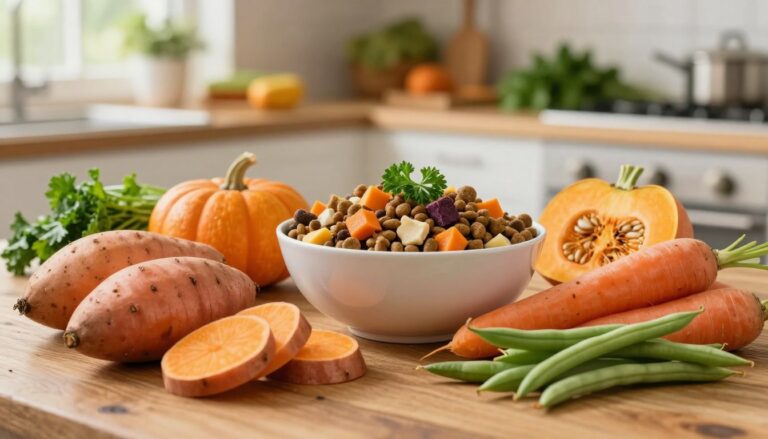
When making dog-friendly chicken recipes, it’s important to know what’s safe. You can pair chicken with steamed carrots, green beans, or plain pumpkin. But, avoid these:
- Garlic, onions, and chives (highly toxic to dogs)
- Excess salt or salty broths
- Butter, oils, and fatty sauces
- Cooked bones that can splinter
Adding Chicken to Your Dog’s Diet Responsibly
When you first add chicken to your dog’s diet, it’s important to do it carefully. A slow introduction helps you see how your dog reacts to this new food.
Introducing Chicken Gradually
Begin with a tiny bit of plain, cooked chicken mixed into their usual meal. This lets you see how their body handles the change without shocking them.
If your dog seems fine after a few days, you can gradually increase the chicken. Patience is key to make sure they adjust smoothly.
Monitoring Stool, Appetite, Weight, and Energy
Watch your dog closely in the first week. Look for any changes in their stool, like diarrhea or constipation, which could mean they don’t like it.
Also, keep an eye on their appetite, energy, and any signs of itching or vomiting. Tracking these signs helps you know if the chicken is good for them.
“The greatness of a nation and its moral progress can be judged by the way its animals are treated.”
Storing and Refrigerating Cooked Chicken
Keeping food safe is crucial to avoid bacteria growth. Always put cooked chicken in a sealed container in the fridge within two hours of cooking.
Try to use the chicken within three days for the best taste. Never leave cooked chicken out for too long, as it can get contaminated.
Discarding Spoiled or Improperly Stored Chicken
If the chicken smells bad, looks slimy, or has changed color, throw it away. It’s better to be safe than to risk your dog’s health with bad food.
If you’re unsure, it’s best to err on the side of caution. Keeping high standards for food storage keeps your dog healthy.
When to Stop Feeding Chicken and Contact Your Veterinarian
Stop giving chicken right away if your dog vomits a lot, has severe diarrhea, or shows signs of an allergy like hives. These signs mean chicken might not be right for them.
If symptoms get worse or don’t get better, call your vet. They can help make sure your dog gets the right care.
Conclusion
Feeding your pet needs careful thought about nutrition and safety. Plain, fully cooked, boneless, and unseasoned meat is good for dogs if done right. It’s important to choose safe chicken for dogs to keep them healthy and happy.
Keeping chicken feeding safe is key to your pet’s health. Avoid high-fat foods, seasoned scraps, and processed items with garlic or onions. These can harm your dog’s health.
Start with small amounts of new foods to see how your dog reacts. Make sure chicken is just a treat, not a main meal. If your dog has health issues or seems sick, talk to your vet.
Good preparation is crucial for your dog’s health. Being informed and careful makes mealtime better. Share what you learn with other pet owners to help everyone feed their dogs right.