When to Switch to Adult Dog Food Know the Right Time
Watching your puppy grow is a truly magical experience. They start as tiny bundles of energy and soon fill your home. You want the best for them, especially their health.
Puppies need special nutrients for their bones, joints, and muscles. As they grow, their diet needs change a lot. Knowing when to switch to adult dog food is key to keeping them healthy for years.
This change is a big step in your journey together. But, it needs careful planning to avoid upset stomachs. By knowing when your dog is ready for a new diet, you set them up for long-term health.
Table of Contents
Understanding Puppy Growth Stages
Every puppy goes through fast physical changes that need special nutritional support for growth. In the early months, your dog’s body works hard to build a strong base for adulthood. Giving the right food during this development phase is key for their long-term health.
The Rapid Development Phase
Puppy food has extra calories to help their bones, joints, and muscles grow fast. This special nutrition is crucial for their immune system and energy. Without it, a puppy might not reach their full potential.
“The nutritional requirements of a growing puppy are significantly higher than those of an adult dog, as they must support both maintenance and rapid tissue accretion.”
To understand these milestones better, here’s a table of key areas to focus on in your dog’s early life.
| Growth Stage | Primary Focus | Nutritional Need |
|---|---|---|
| Early Puppyhood | Immune Support | High Protein/Fat |
| Rapid Growth | Bone Development | Calcium/Phosphorus |
| Late Maturation | Joint Stability | Controlled Calories |
When Growth Plates Close
One key part of puppy growth is when growth plates close. These are soft cartilage areas at the ends of bones that turn into solid bone. Pushing your puppy too hard or not feeding them right before these plates close can harm their joints.
Bigger breeds grow slower than smaller ones. Knowing when they reach skeletal maturity is crucial to avoid joint problems later. Watching your puppy’s development phase closely helps you adjust their diet and exercise for healthy growth.
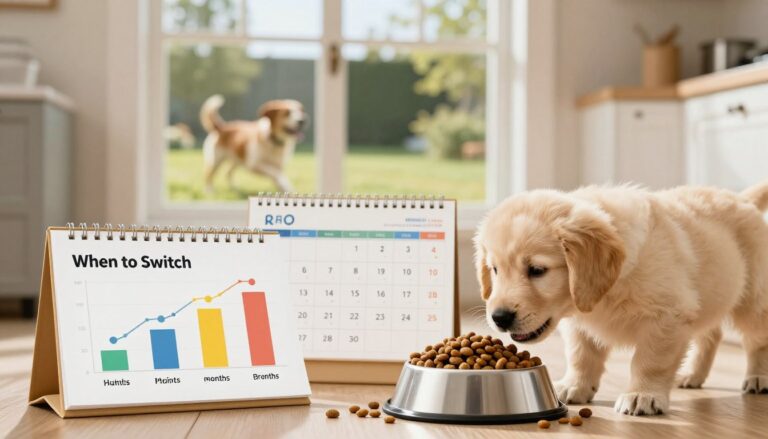
When to Switch to Adult Dog Food
Deciding when to switch to adult dog food is a big step for your pet. It makes sure they get the right nutrients for their life stage. This change helps them grow well and avoid nutritional problems.
General Age Guidelines by Breed
The best time for adult dog food depends on your dog’s breed and size. Smaller dogs grow up faster and need different food sooner.
Small dogs, up to 20kg, can start adult food at 8 to 10 months. Medium dogs, 15 to 30kg, need puppy food until 12 to 15 months. Watch your dog’s growth to know when to switch.
Why Timing Matters for Long-Term Health
Choosing the right time to switch from puppy to adult food is key for health. Puppy food has lots of calories for growth. But, too many calories can cause weight gain and health issues later.
Knowing when to change dog food to adult formula prevents these problems. Keeping your dog on puppy food too long can lead to obesity and joint issues. Proper timing protects your dog’s health and metabolism for the long run.
Breed Size and Nutritional Requirements
Switching to adult dog food depends on your dog’s breed size. Different breeds mature at different rates. Tailoring your feeding strategy to your dog’s size ensures they get the right nutrients.
Small Breed Maturity Timelines
Small dogs, weighing under 10kg, grow up fast. They are often ready for adult food by 8 months. Early maturity means they need adult food to avoid gaining too much weight.
Medium Breed Development Milestones
Medium-sized breeds grow at a steady pace. They reach full size between 10 and 12 months. Keep an eye on their weight as they move to adult food.
Large and Giant Breed Considerations
Large and giant breeds grow slowly. They may not stop growing until 18 to 24 months. Protecting their developing joints is key. A diet that supports steady growth is vital for their health.
Identifying Signs Your Puppy Is Ready for a Change
Figuring out when to change dog food to adult formula means watching for special signs. Age is a guide, but your dog’s own growth is key. Watching their daily life helps make sure they get the right food for now.
Physical Indicators of Maturity
As your puppy grows up, they will look different. Their growth rate slows down and their body shape changes. If they start to get too heavy, it’s time to switch from puppy food.
Feeling your dog’s ribs is a good way to check their health. If you can’t feel them easily, they might be eating too much. Switching to adult food helps keep them at a healthy weight and stops them from getting too fat.
Behavioral Changes and Appetite Shifts
Your puppy’s eating habits change as they grow. If they start skipping meals or leaving food, it’s a sign they need less food. This means their body doesn’t need as much energy from food.
You might also see them less excited about eating. If they’re not as hungry at every meal, it’s time to think about when to change dog food to adult formula. Make sure any changes aren’t because they’re sick before you change their diet.
When Your Puppy Stops Gaining Weight
When your puppy stops getting bigger, it’s a big deal. This means their bones have stopped growing. Watching for this is important to know when to switch to adult food.
| Indicator | Puppy Stage | Adult Readiness |
|---|---|---|
| Appetite | Highly ravenous | Consistent or picky |
| Weight Gain | Rapid and steady | Stable plateau |
| Body Shape | Soft and rounded | Defined and lean |
| Energy Level | Bursting with energy | Balanced and calm |
By watching these signs, you can know the right time to switch to adult food. Giving the right food at the right time helps your dog stay healthy and full of energy. Always talk to your vet if you’re not sure about your dog’s growth.
The Importance of Gradual Transitioning
Switching from puppy to adult food should be done slowly. It’s not good to just swap the bags right away. Your dog’s digestive system needs time to get used to new foods and nutrients. A gradual approach helps avoid upsetting your pet’s body.
The Seven-Day Transition Method
The best way to transition to adult dog food is a seven-day plan. This plan slowly adds more new food to your dog’s diet. It helps their gut adjust without shock. Many pet owners find this method the most effective.
| Days | Puppy Food Ratio | Adult Food Ratio |
|---|---|---|
| 1-2 | 75% | 25% |
| 3-4 | 50% | 50% |
| 5-6 | 25% | 75% |
| 7 | 0% | 100% |
Why Sudden Changes Cause Digestive Upset
Changing your dog’s diet too quickly can upset their stomach. It might cause vomiting or diarrhea. Their gut needs specific enzymes and bacteria to digest food well. A sudden switch disrupts these processes, causing inflammation and discomfort.
“A slow, phased change is essential for maintaining the delicate balance of your dog’s digestive health during life-stage transitions.”
Mixing Puppy and Adult Formulas
When transitioning to adult dog food, mix the two formulas well. This ensures your dog gets a balanced mix of nutrients at every meal. If your dog shows signs of stomach upset, extend the transition to 14 days.
The goal of this switch from puppy to adult food is to support your dog’s long-term health. A gentle, step-by-step change keeps your dog happy and full of energy. Always watch your dog’s stool quality and appetite as you go through the week.
Comparing Puppy and Adult Nutritional Profiles
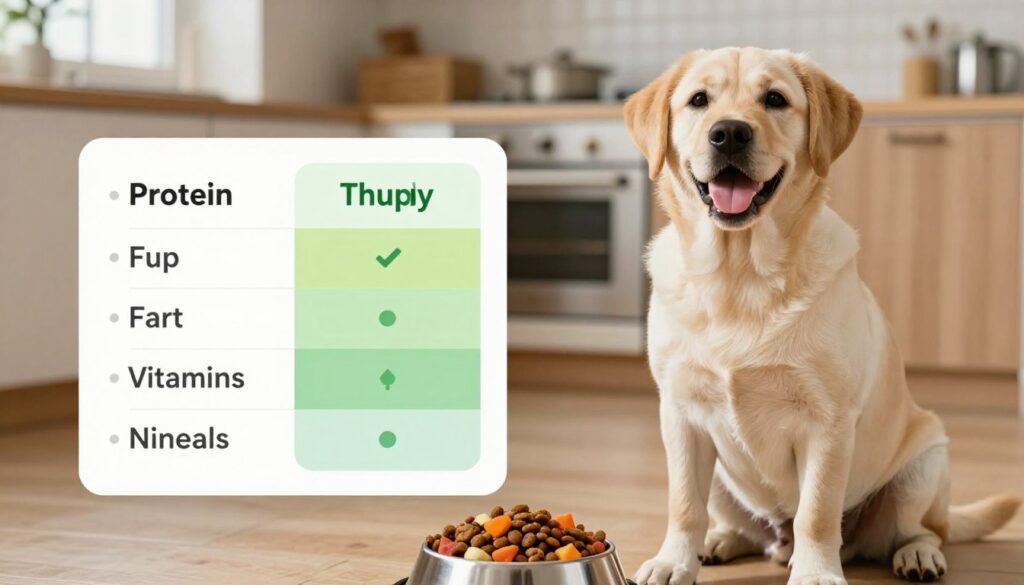
It’s important to know the differences in puppy and adult dog food. Dogs grow and change as they get older. Giving them dog food for adult dogs helps meet their needs at each stage of life.
Caloric Density Differences
Puppies need lots of calories for fast growth. Adult dogs, on the other hand, need less to stay at a healthy weight. Feeding a puppy diet to an adult dog can lead to weight gain and obesity.
Protein and Fat Content Variations
Puppy food has more protein and fat for muscle and tissue growth. Adult dogs need less to avoid health problems like high cholesterol. Adult formulas give the right amount of energy without too much.
Essential Minerals for Bone Development
The right mix of calcium and phosphorus is key for puppies’ bones. Adult dogs need less to keep their bones strong. The wrong food can harm their bones over time.
| Nutrient Category | Puppy Formula Focus | Adult Formula Focus |
|---|---|---|
| Caloric Density | High for rapid growth | Moderate for maintenance |
| Protein Levels | High for muscle building | Balanced for tissue repair |
| Fat Content | Higher for energy needs | Controlled for weight management |
| Mineral Balance | Optimized for bone formation | Maintained for skeletal health |
Common Mistakes During the Diet Change
Many pet owners make simple mistakes when changing their dog’s diet. These errors can lead to long-term health problems. Knowing these common mistakes is key to a smooth transitioning to adult dog food.
Switching Too Early or Too Late
Timing the switch is crucial. Switching too early can deprive your puppy of essential nutrients. On the other hand, waiting too long can cause your dog to gain too much weight.
Ignoring Individual Metabolic Needs
Every dog is different. Your pet’s breed, activity level, and health history affect when they’re ready for an adult dog diet change. Always watch your dog’s body condition, not just their age.
Overfeeding During the Transition Period
Many owners accidentally overfeed their pets during the transition. It’s easier for dogs to gain weight than to lose it. So, keep a close eye on your dog’s condition. If they start to look soft or lose their waistline, reduce their food right away.
By avoiding these mistakes, you can ensure your dog gets the right nutrition. A careful approach to the adult dog diet change will help your dog stay healthy and full of energy. Always listen to your dog’s body and not just generic feeding advice when transitioning to adult dog food.
Managing Sensitive Stomachs During the Switch
If your dog has a sensitive stomach, switching to new food needs extra care. Minor digestive changes are normal when introducing new foods. But, if your dog has severe symptoms for more than a day, see a vet right away.
Recognizing Signs of Food Intolerance
It’s important to know if your dog is just adjusting or has a true intolerance. Look for signs like persistent vomiting, chronic diarrhea, or a lot of gas. Persistent lethargy or not wanting to eat are also warning signs.
“A healthy gut is the foundation of your dog’s overall vitality, especially during the critical life stage transitions.”
Here’s a table to help you spot if your dog needs a different diet.
| Symptom | Normal Adjustment | Potential Intolerance |
|---|---|---|
| Stool Consistency | Slightly soft for 24 hours | Watery or bloody diarrhea |
| Appetite | Slightly picky | Complete refusal to eat |
| Energy Levels | Normal | Extreme lethargy or weakness |
Using Probiotics to Aid Digestion
Adding probiotics to your dog’s diet can help their digestion. These good bacteria keep the gut balanced, which is important when changing food. You can find probiotic supplements or choose dog food for adult dogs with them already in it.
Selecting High-Quality Ingredients
For dogs with sensitive stomachs, the food’s ingredients are key. Choose foods with easily digestible proteins like chicken or whitefish. Opting for premium dog food for adult dogs ensures your pet gets the best nutrition without upsetting their stomach. This makes the adult dog food transition safer and more comfortable for them.
Monitoring Your Dog’s Weight and Body Condition
Watching your dog’s body condition is key to their health after a adult dog diet change. Labels are a good start, but your dog’s metabolism is unique. Consistent observation helps ensure they do well on their new diet.
Using the Body Condition Score System
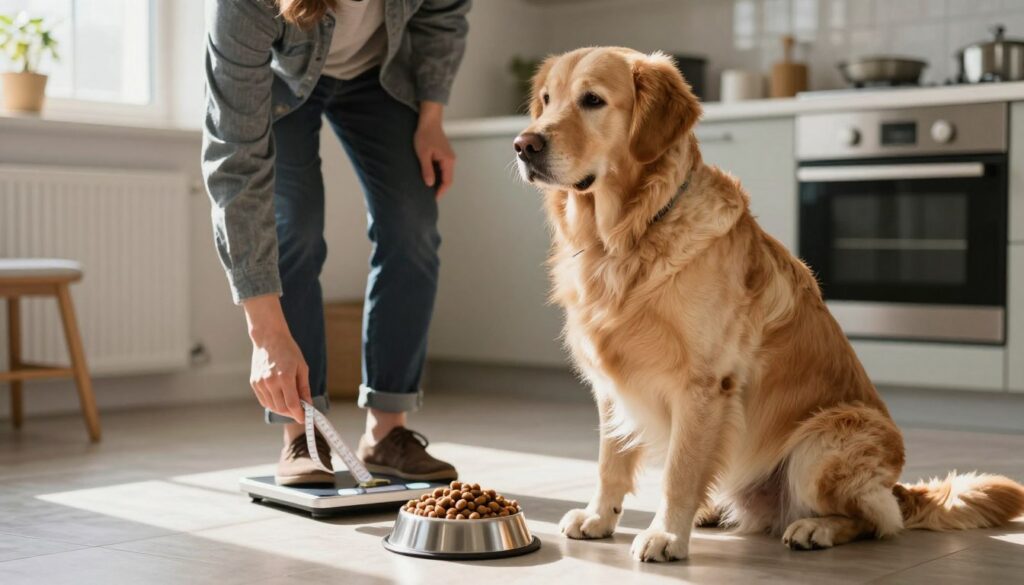
The Body Condition Score (BCS) system is a simple tool to check your dog’s weight. You can do this at home by feeling their ribs and looking at their shape from above and the side. A good score means you can feel their ribs without too much fat, and you should see a clear waistline.
If you can’t feel the ribs, your dog might be too heavy. If the ribs are too visible, they might need more food. Regular checks help you spot weight changes early. This makes it easier to adjust their diet before health problems start.
Adjusting Portions Based on Activity Level
Start with the feeding guidelines on the food packaging. But remember, these are just estimates. You need to adjust the portions based on your dog’s activity level.
Dogs that are always active need more food than those that like to relax. If your dog is gaining weight, cut back on their food a bit. If they seem too thin or tired, you might need to give them a bit more to eat.
Preventing Obesity in Young Adults
It’s easier to prevent obesity than to treat it. Young adult dogs are at a higher risk of gaining weight. Keep their diet strict and limit treats to protect their joints from extra weight.
| Activity Level | Metabolic Need | Feeding Adjustment |
|---|---|---|
| Sedentary | Low | Reduce by 10% |
| Moderate | Average | Standard Guideline |
| Highly Active | High | Increase by 10-20% |
By keeping an eye on your dog’s body condition, you ensure a successful adult dog diet change. Stay alert, watch their shape closely, and talk to your vet if you notice any sudden changes in weight or appetite.
Consulting Your Veterinarian for Personalized Advice
Your vet is key to your dog’s health. They know how to meet your dog’s adult dog nutritional needs. This is based on your dog’s growth and health.
When to Seek Professional Guidance
See your vet if your puppy is having trouble with food changes. Or if their growth seems off. A vet can check if your dog is growing right before changing food.
Call your vet if you see these signs:
- Persistent digestive upset during the food transition.
- Unexplained weight loss or rapid weight gain.
- A lack of interest in the new adult food.
- Concerns regarding your dog’s energy levels.
Discussing Pre-existing Health Conditions
If your dog has health issues, get expert advice. Conditions like food allergies or sensitive stomachs need special care for adult dog nutritional needs.
Your vet can suggest diets or ingredients that help. They’ll help you choose the right food for your dog’s health and happiness.
Tailoring Nutrition for Specific Breeds
Different breeds have different health needs. For example, big breeds need special food for their joints. Small breeds might need more calories.
Talk to your vet about your dog’s breed. They can make a plan that fits your dog’s needs. This way, your dog can stay healthy and happy as an adult.
Adjusting Feeding Schedules for Adult Dogs
Creating a regular mealtime routine is key for your dog’s health as they grow up. As they get older, their needs change, including how much food they need. Adjusting their feeding schedule helps with digestion and keeps them healthy.
Moving from Multiple Meals to Twice Daily
Puppies eat often to grow fast and keep their blood sugar steady. But by 6 months, they can handle fewer, bigger meals. You can split their food into two meals a day.
Switching to two meals a day stops them from eating too much. It also lets you keep track of how much they eat. Consistency is the key during this time.
Establishing Consistent Feeding Routines
Dogs like knowing when they’ll eat. Feed them at the same times each day to help them feel secure. This also helps with house training.
Don’t leave food out all day. It can make them picky or eat too much. Instead, give them food for a set time, like twenty minutes, and then take it away. This shows that mealtime is a specific event.
Managing Treats and Supplemental Calories
Treats, chews, and table scraps can add up. They can lead to obesity if not balanced with their regular food. Treats should be no more than ten percent of their daily calories.
If you use a lot of treats, consider smaller meals. Mindful management of these calories keeps your dog at a healthy weight. Watching these extras helps avoid health problems from being too heavy.
Conclusion
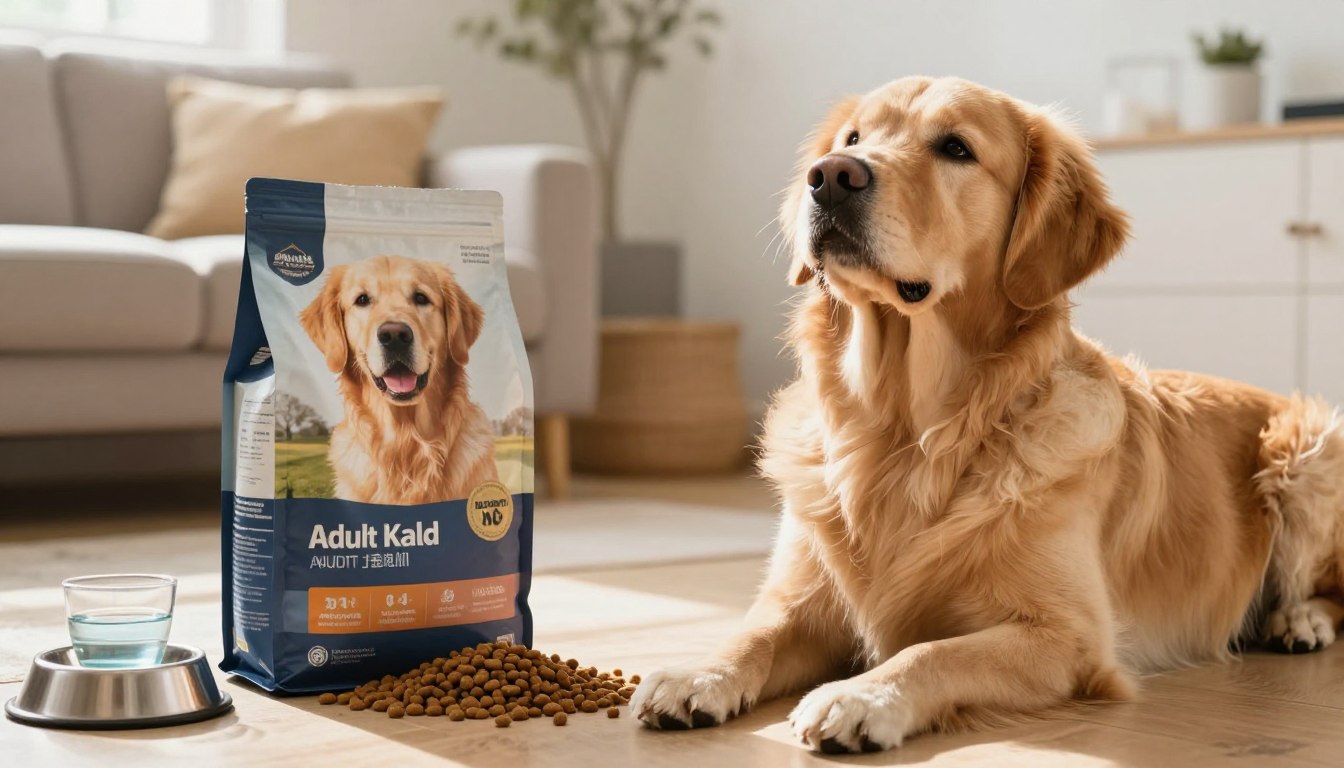
Moving your pet to adult dog food is a big step for their health. It helps them grow strong and healthy in their prime years.
You have everything you need to make this change smoothly. Knowing your dog’s breed and metabolism helps you pick the right food. Brands like Purina Pro Plan and Royal Canin have special formulas for this transition.
Being patient is key during this time. Watch how your dog’s body changes to adjust their diet. Making small changes to food amounts or when you feed them keeps them happy and healthy.
Your dedication to good food makes a big difference in your pet’s life. Watch their energy and coat health as they get used to their new diet. Talking about your experiences with other pet owners helps build a community of caring pet owners.