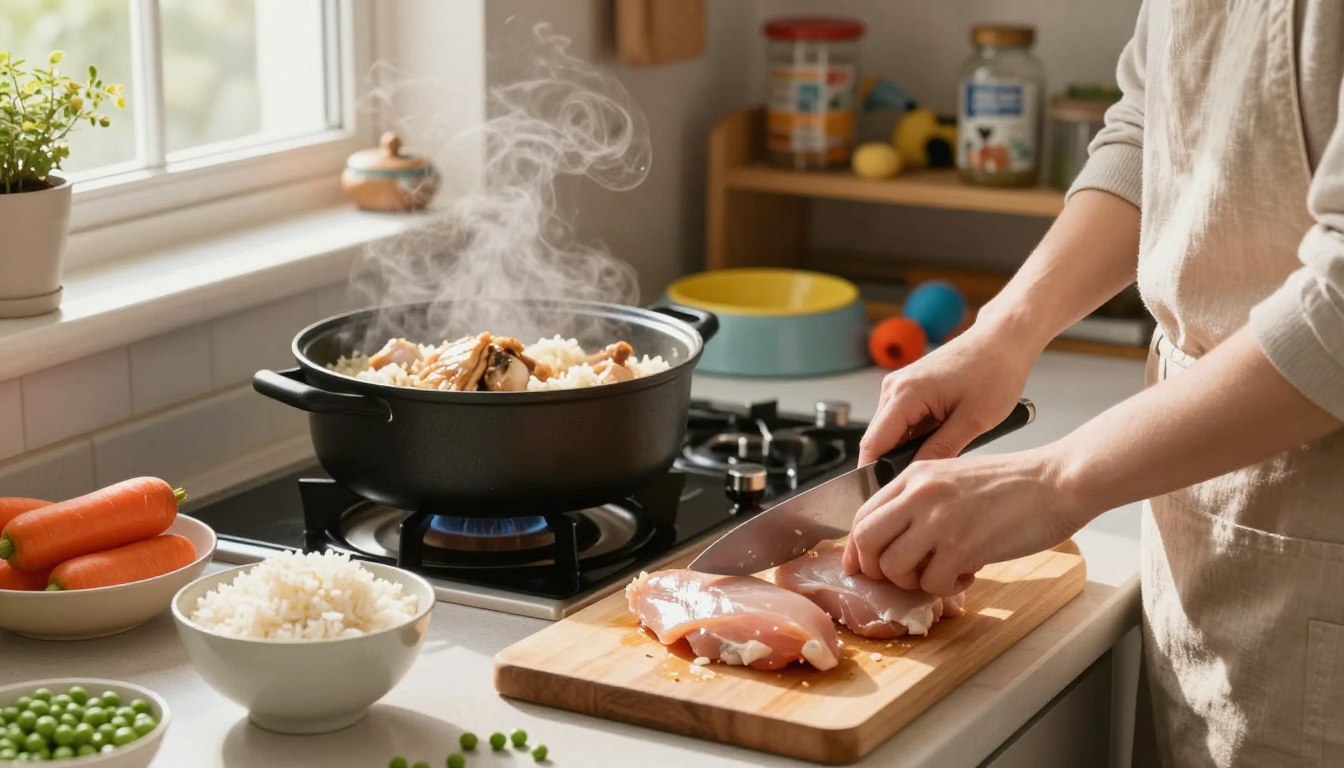
how to make chicken and rice for dogs
Watching your furry companion struggle with an upset stomach is heartbreaking. You want to provide quick relief, and a bland diet is often gentle. Learning how to make chicken and rice for dogs can comfort your pet during a difficult time.
To prepare this simple meal, cook the poultry to an internal temperature of 165°F. Remove every bone, and avoid seasonings because they can harm your dog. This homemade chicken and rice dog food can temporarily soothe digestion.
Remember, this bland mixture does not replace complete, balanced nutrition. It may help in the short term, but your pet needs a specialized diet to thrive long term.
Table of Contents
When Chicken and Rice for Dogs Makes Sense
A gentle, homemade meal can help when your dog’s stomach needs a break. It is not a permanent solution, but it may soothe mild digestive distress.
Why veterinarians may recommend a bland meal temporarily
Veterinarians often suggest a bland diet because dogs can digest it easily. The primary benefits of chicken and rice for dogs include familiar, low-fat ingredients that may not irritate a sensitive gastrointestinal tract.
Chicken provides lean protein, while white rice offers an easily digested carbohydrate. Together, they can firm stools and provide gentle energy during recovery without overloading digestion.
Situations that require veterinary guidance first
Always consult your veterinarian before changing your dog’s diet, especially if your dog seems lethargic or refuses water. A professional can tell whether minor upset or a serious health condition caused the digestive problem.
If your dog vomits often, shows severe pain, or has bloody stool, skip home cooking and visit a clinic. Professional medical advice is essential for correct treatment of your pet’s specific symptoms.
Why this recipe is not a complete long-term diet
Remember, a chicken and rice diet for dogs is only for short-term use. This meal lacks the complex balance of calcium, essential fatty acids, vitamins, and trace minerals your dog needs to thrive.
Feeding this mixture for an extended period can cause serious nutritional deficiencies. Always transition your dog back to a complete and balanced commercial food once its digestive system returns to normal.
Check Whether Chicken and Rice Is Safe for Your Dog
Many owners choose simple home-cooked meals, but first confirm this plan suits your dog. Before feeding chicken and rice for dogs, review your pet’s medical history and past food reactions.
Chicken allergies, food sensitivities, and previous reactions
If your dog has a known poultry allergy, this common remedy may cause more harm than good. Even without a diagnosis, watch for gastrointestinal distress or skin irritation after eating.
If your dog reacted poorly to these ingredients before, do not use them again. Choose ingredients you know your dog tolerates to protect its comfort.
Health conditions that affect ingredient or portion choices
A chicken and rice diet for dogs is not right for every pet. Puppies, senior dogs, and pets with chronic illnesses often need specialized nutrition.
Dogs with pancreatitis, diabetes, or kidney disease have strict dietary limits. Even a small amount of the wrong ingredient can cause a serious health crisis. Consult your veterinarian to match the meal with your dog’s treatment plan.
Warning signs that need prompt veterinary care
Stay alert while managing your dog’s health at home. Some symptoms require professional care instead of a simple diet change.
Repeated vomiting, bloody diarrhea, weakness, and dehydration
If you notice repeated vomiting or blood in your dog’s stool, seek help immediately. These signs may point to a serious problem requiring urgent diagnostic testing. Also watch for extreme weakness or dehydration, which can quickly become life-threatening.
Symptoms that do not improve within the expected time
If your dog’s condition does not improve within 24 to 48 hours, contact your clinic. Ongoing symptoms suggest the bland diet is not treating the illness’s root cause. Do not wait for the situation to worsen before seeking professional guidance.
Choose Safe Ingredients and Kitchen Equipment
Choosing safe ingredients and kitchen equipment is the first step toward a successful bland diet for your pet. When preparing dog-friendly chicken and rice recipes, keep everything simple and safe to support your dog’s recovery.
Boneless, skinless chicken breast or thigh
Choose fresh, high-quality chicken for your meals. Use boneless and skinless cuts to reduce fat and support easy digestion. Remove all visible fat to help prevent stomach upset during recovery.
Plain white rice and the role of other rice varieties
Plain white rice is the standard choice for a bland diet because it digests easily and contains little fiber. Brown rice and wild rice may offer more nutrients, but sensitive stomachs may struggle to process them. Stick to simple white rice for the gentle energy your dog needs.
Water, a saucepan, a pot, and a food thermometer
You do not need fancy gadgets to cook for your pet. A standard saucepan or medium-sized pot works well for boiling the ingredients. Use a food thermometer to ensure the chicken reaches a safe internal temperature and kills harmful bacteria.
Ingredients and seasonings to keep out of the recipe
Making healthy chicken and rice dog meals requires avoiding certain common kitchen items. Many ingredients people enjoy can harm or poison dogs.
Onions, garlic, leeks, and chives
Never include members of the allium family in your cooking. Onions, garlic, leeks, and chives are highly toxic to dogs and can seriously damage their red blood cells.
Salt, butter, oils, sauces, and spicy seasonings
Keep the meal completely plain. Salt, butter, cooking oils, soy sauce, and spicy seasonings can irritate your dog’s digestive tract or cause dehydration. Your goal is a neutral, soothing meal instead of a flavorful one.
Cooked bones, chicken skin, and high-fat scraps
Do not add cooked bones because they can splinter and cause internal injuries. Discard chicken skin and high-fat scraps, since excess fat commonly triggers pancreatitis in dogs.
Prepare the Chicken and Rice for Dogs
Learning how to make chicken and rice for dogs is a simple process that starts with a clean kitchen. Following these steps helps keep the meal safe and easy for your pet to digest during recovery.
Step 1: Wash your hands and sanitize your work area
Before you begin, wash your hands with warm, soapy water for at least twenty seconds. Sanitize your countertops and utensils to prevent cross-contamination. Cleanliness is the first step in protecting your dog from harmful bacteria.
Step 2: Trim the chicken and remove visible fat
Select high-quality, boneless, skinless chicken breast. Use a sharp knife to trim away all visible fat, since excess fat can be hard for a sensitive stomach to process.
Step 3: Rinse the rice and measure the water
Place plain white rice in a fine-mesh strainer and rinse it under cold water until the water runs clear. Measure the rice and water according to your specific recipe ratios for a soft, hydrating texture.
Step 4: Cook the chicken thoroughly
Boil or poach the chicken in plain water without oils, salt, or seasonings. Cooking chicken and rice for dogs requires a plain approach to avoid irritating their digestive tract.
Step 5: Cook the rice until soft and fully tender
Simmer the rice in water until it is completely soft and slightly overcooked. This extra softness makes the grains easier for your dog to break down and absorb.
Step 6: Shred the chicken and combine the ingredients
Once the chicken is cooked, shred it into small, manageable pieces. Mix the shredded meat with the prepared rice to create nutritious homemade chicken and rice dog food.
Use a food thermometer to confirm the chicken reaches 165°F
Always use a food thermometer to verify the chicken’s internal temperature reaches 165°F. This temperature is essential for killing harmful pathogens that could make your pet ill.
Remove every bone, cartilage piece, and tough fragment
Before serving, inspect the mixture carefully and remove every bone, cartilage piece, and tough fragment. Even small bone bits can pose a serious choking hazard or cause internal damage to your dog.
Use the Right Chicken-to-Rice Ratio
Using the right ratio gives your dog a gentle, easy-to-digest meal during recovery. When you prepare dog-friendly chicken and rice recipes, a steady balance prevents sensitive stomachs from handling too much richness.
A practical starting ratio for a temporary bland meal
A common starting point for a bland diet is one part cooked chicken to two or three parts cooked white rice. This mixture provides energy while staying gentle on digestion. Always ensure the chicken is shredded finely to help your pet eat it.
How to adjust the mixture for your dog’s size and tolerance
Every dog reacts differently to dietary changes, so monitor your pet closely. Smaller breeds may need smaller, frequent portions to prevent bloating. If your dog struggles, ask your veterinarian to adjust chicken and rice for dogs based on stool and energy levels.
Why the recipe should remain low in fat
High-fat foods can worsen digestive distress or cause complications like pancreatitis. Always trim visible fat from the chicken before cooking. Keeping the meal lean is a critical step in soothing an upset stomach.
Plain pumpkin, oatmeal, or potato only with veterinary advice
Some owners consider adding fiber sources like pumpkin or carbohydrates like oatmeal. However, add them only with professional guidance. A veterinarian can review your dog’s medical history and confirm whether these ingredients suit your dog’s current health.
Why substitutions can change calories and digestion
Swapping ingredients can change the meal’s calorie and fiber content. A sudden carbohydrate change can cause gas, diarrhea, or constipation. Understanding these shifts helps maintain a stable recovery plan.
| Ingredient | Primary Benefit | Digestibility |
|---|---|---|
| White Rice | Energy Source | High |
| Chicken Breast | Lean Protein | High |
| Plain Pumpkin | Fiber/Digestion | Moderate |
| Oatmeal | Complex Carb | Moderate |
Portion Chicken and Rice According to Your Dog’s Needs
When you start a chicken and rice diet for dogs, serving food correctly matters as much as choosing ingredients. The right amount supports recovery without burdening your pet’s sensitive digestive system.
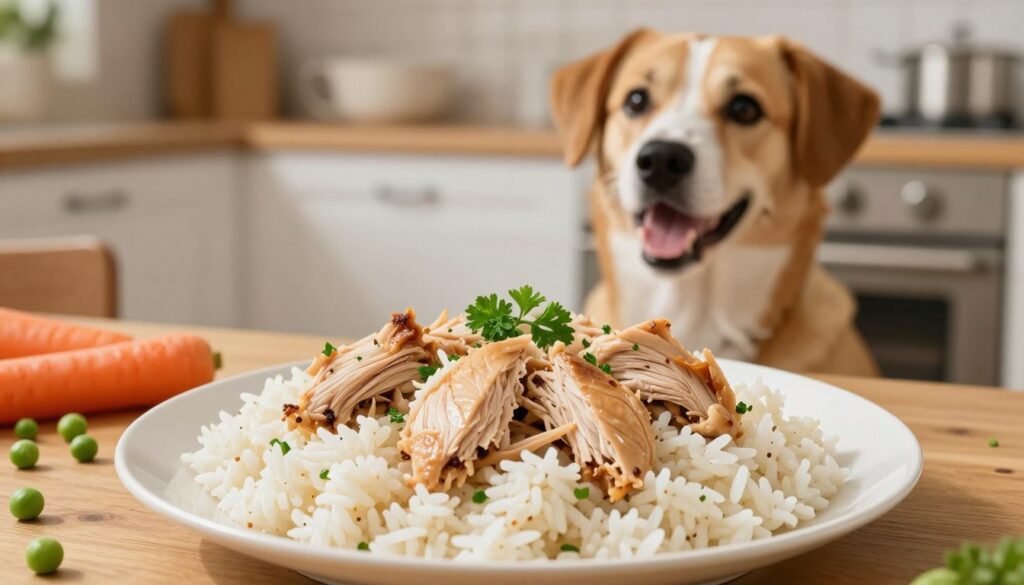
Begin with small, frequent servings
Serve the daily total in three to four smaller portions throughout the day instead of one or two large meals. This can keep the stomach from stretching too much and lower the risk of discomfort or vomiting. Small meals are easier for a recovering dog to process.
General portion guidance for small, medium, and large dogs
Every dog is different, but general guidelines can help you estimate a starting amount. The table gives a baseline for a typical chicken and rice diet for dogs based on body weight.
| Dog Size | Weight Range | Estimated Daily Total |
|---|---|---|
| Small | 10–20 lbs | 1/2 to 1 cup |
| Medium | 21–50 lbs | 1.5 to 2.5 cups |
| Large | 51–80+ lbs | 3 to 4.5 cups |
Calculate portions using your dog’s normal calorie needs
For greater precision, calculate the calories your dog normally eats each day. Unless your veterinarian suggests a temporary reduction, provide a similar amount. This bland mixture often has fewer calories than standard kibble, so adjust the volume as needed.
Adjust the amount based on appetite, stool, and energy
Watch your dog after each meal and note their response. If their stool stays loose or they seem lethargic, you may be feeding too much at once. Always prioritize your dog’s comfort over strict adherence to a chart.
How to increase food gradually when your dog tolerates it
If your dog improves, slowly increase portions over several days. Look for a healthy appetite and firm, regular bowel movements. If these signs continue, your dog may be moving toward recovery.
How to respond if your dog refuses food or vomits
If your dog refuses food or vomits after eating, stop feeding at once. Contact your veterinarian to discuss these symptoms; they may signal a more serious underlying issue. Do not force-feed your pet when they show clear signs of distress.
Account for treats, medications, and other daily calories
Treats and medications add calories to your dog’s daily total. During a chicken and rice diet for dogs, remove high-fat treats to help keep the digestive tract calm. Give necessary medications with a small meal portion to help prevent stomach irritation.
Serve Homemade Chicken and Rice Dog Food Safely
Preparing homemade chicken and rice dog food is only half the battle. Serving it correctly helps keep your pet happy and healthy. How you present the meal can affect your dog’s digestion and comfort.
Cool the meal to a safe serving temperature
Always allow the cooked mixture to reach room temperature before placing it in your dog’s bowl. Serving food that is too hot can burn your dog’s mouth and throat. Patience is key when providing a safe meal for your furry friend.
Offer fresh water with every meal
Hydration is essential, especially when your dog is recovering from an upset stomach. Always provide a bowl of clean, fresh water alongside the meal. This helps your dog stay hydrated and digest the rice and protein.
Introduce the food gradually when your dog is not sick
If you are feeding chicken and rice for dogs as a diet change, not a medical need, do not switch abruptly. A sudden diet change can cause unwanted stomach issues. Instead, mix small amounts of the new food with current kibble over several days.
Keep servings plain rather than adding human-food toppings
Making the meal more appealing can be tempting, but avoid adding extra ingredients. Keeping the recipe simple helps ensure your pet receives the intended benefits of the bland diet.
Why broth, gravy, and cheese may create unnecessary risks
Many owners believe adding broth, gravy, or cheese makes healthy chicken and rice dog meals more appealing. However, these toppings often contain high sodium, fat, or hidden ingredients like onion or garlic powder. These additives can cause digestive distress or serious health complications.
How a slow transition can reduce digestive upset
A gradual transition allows your dog’s digestive system to adjust to new protein and carbohydrate sources. Slowly increasing the homemade meal ratio over a week lowers the risk of diarrhea or vomiting. Consistency and caution are your best tools for a successful diet transition.
Store, Refrigerate, and Reheat the Meal Correctly
After preparing a batch of homemade chicken and rice dog food, keep it fresh to protect your pet’s health. Safe handling keeps each serving nutritious and safe.
Cool and refrigerate cooked chicken and rice promptly
Do not leave cooked food at room temperature for more than two hours. Bacteria grow quickly in warm, moist food and can harm your dog.
Spread the mixture onto a shallow tray so it cools faster before refrigeration. Speed is key for preventing unwanted bacterial growth.
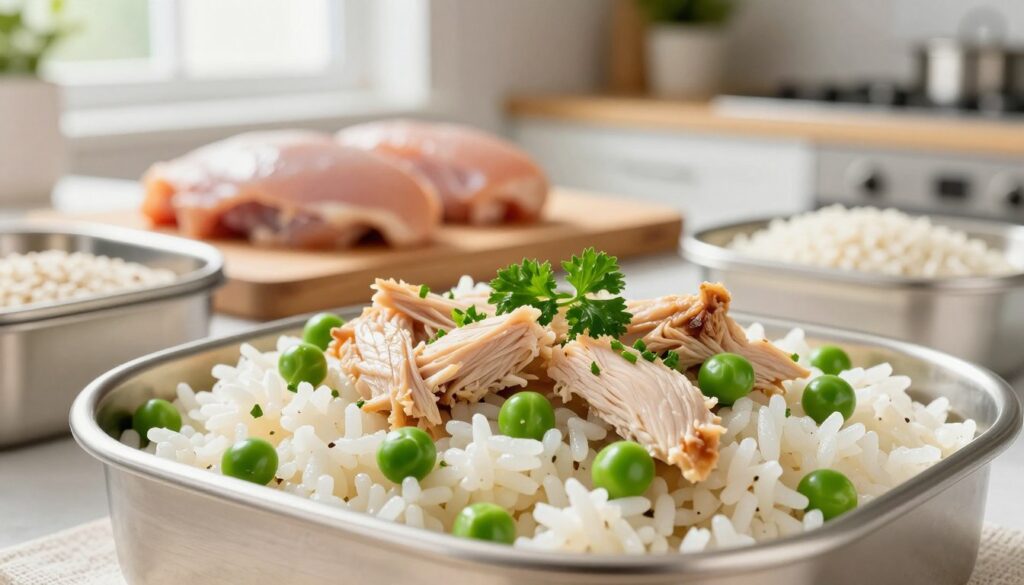
Use airtight containers and label preparation dates
Store your homemade chicken and rice dog food in clean, airtight containers. They help retain moisture and block odors from other foods in your fridge.
Write the preparation date on each container. This helps you track freshness and use the oldest portions first.
Follow safe refrigerator and freezer storage limits
Your prepared meal usually stays fresh in the refrigerator for up to three days. Freeze individual portions if you make a larger batch.
Frozen meals can remain safe for up to two months. Thaw each portion slowly overnight in the refrigerator before use.
Reheat only the portion you plan to serve
Remove only enough food for one meal. Repeatedly reheating and cooling a batch can lower ingredient quality and increase safety risks.
Stir the food and check for hot spots before feeding
A microwave often heats food unevenly. Always stir the mixture thoroughly to spread heat throughout the bowl.
Test the temperature with your finger for hidden hot spots that could burn your dog’s mouth. Serve the food lukewarm or at room temperature.
Discard food with an unusual smell, texture, or appearance
Trust your senses when serving homemade chicken and rice dog food. Discard it immediately if it smells sour, feels slimy, or shows mold.
Use caution when protecting your dog’s digestive health. When in doubt, throw it out to help prevent illness.
Know the Benefits and Limitations of Chicken and Rice for Dogs
Knowing the limits of homemade bland diets helps protect your pet’s long-term health. Although chicken and rice for dogs is a popular home remedy, it serves a specific purpose in your pet’s care.
How the recipe can provide gentle protein and carbohydrates
This simple combination provides easily digested energy. Lean chicken protein supports muscle maintenance, while rice supplies carbohydrates that fuel your dog without taxing its system.
Why familiar, simple ingredients may be easier to digest
Digestive upset can make your dog’s gastrointestinal tract sensitive. Healthy chicken and rice dog meals are effective because they use few ingredients. This may lower the risk of further irritation or allergic reactions during recovery.
What nutrients the basic recipe does not provide
This meal is not a complete source of nutrition. The basic recipe lacks key nutrients your dog needs to thrive over time.
- Lack of balanced calcium-to-phosphorus ratios.
- Absence of essential fatty acids like Omega-3 and Omega-6.
- Insufficient levels of vital trace minerals and vitamins.
Why prolonged feeding can cause nutritional deficiencies
Feeding this restricted diet for more than a few days can cause serious health issues. Dogs need many nutrients to maintain healthy skin, coat, and organ function.
Calcium, essential fatty acids, vitamins, and trace minerals
Without these nutrients, your dog may develop bone density issues or metabolic imbalances. The table shows gaps in a basic homemade bland diet versus a commercial, balanced formula.
| Nutrient Category | Basic Chicken & Rice | Balanced Dog Food |
|---|---|---|
| Calcium | Very Low | Optimal |
| Essential Fats | Minimal | High |
| Trace Minerals | Deficient | Complete |
The difference between a temporary diet and balanced dog food
A temporary bland diet is a short-term tool to soothe an upset stomach. In contrast, complete and balanced dog food is scientifically formulated to provide every nutrient your pet needs for lifelong health.
Return Your Dog to a Complete and Balanced Diet
Returning your dog to a complete, balanced diet is a key part of recovery. After a chicken and rice diet for dogs, their body may need time to handle complex nutrients. Move slowly to help prevent another upset stomach.
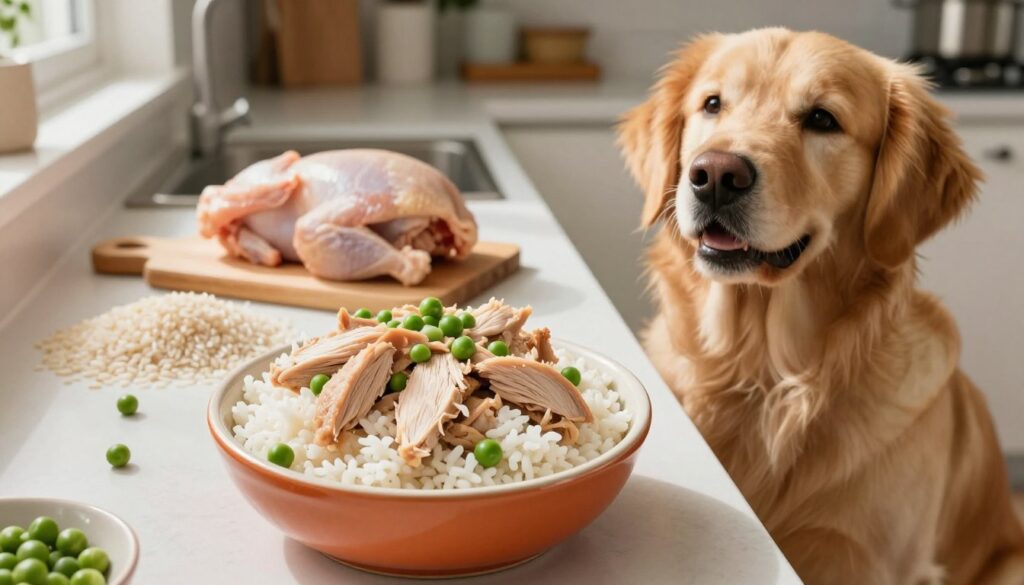
Signs your dog is ready to transition back
Look for clear signs that your dog has recovered. A normal appetite, firm stools, and steady energy are the main signs. Hydration should remain steady without lethargy or discomfort.
Mix the regular food back in over several days
Avoid changing your dog’s food suddenly, because this can cause immediate digestive distress. Slowly mix regular kibble or wet food into the chicken and rice diet for dogs. Begin with a small portion, then increase it over five to seven days.
| Day | Regular Food Ratio | Bland Diet Ratio |
|---|---|---|
| 1-2 | 25% | 75% |
| 3-4 | 50% | 50% |
| 5-6 | 75% | 25% |
| 7+ | 100% | 0% |
What to do if digestive symptoms return
If loose stools or vomiting return, stop the transition right away. Return to the last ratio where your dog felt comfortable and stable. Monitoring your dog closely shows whether they need more time on the bland diet.
Ask your veterinarian about a therapeutic or prescription diet
Persistent digestive issues may point to an underlying health condition requiring professional care. If symptoms continue despite your efforts, consult your veterinarian for guidance. They may recommend a specialized therapeutic or prescription diet to support your dog’s long-term health needs.
Compare Homemade Meals With Commercial Chicken and Rice Dog Food
Homemade meals give you control, while commercial food offers unmatched convenience for busy pet owners. Your dog’s health needs and daily schedule should guide your choice.
When a complete commercial formula may be more practical
Commercial diets may work best when you need consistent nutrition without guesswork. Veterinary nutritionists create these foods to balance vitamins and minerals in every bite.
Commercial kibble and canned food also store easily. Unlike fresh homemade meals, high-quality commercial bags are shelf-stable and need no refrigeration.
How to evaluate the best dog food with chicken and rice
To find the best dog food with chicken and rice, look beyond the package front. Check that high-quality protein sources appear first on the ingredient list.
Review the calorie density to match your dog’s activity level. Reliable products provide feeding guidelines based on your pet’s weight and age.
Examples of established options, including Hill’s Science Diet and Purina Pro Plan
Many veterinarians recommend top chicken and rice dog food brands that have undergone rigorous testing. Hill’s Science Diet and Purina Pro Plan are known for research and quality control.
Check the nutritional adequacy statement and life-stage label
Verify the AAFCO nutritional adequacy statement on the label. It confirms complete and balanced nutrition for your dog’s life stage, such as puppy, adult, or senior.
Choose formulas appropriate for allergies, weight, or medical needs
If your dog has sensitivities, choose limited-ingredient formulas that avoid common fillers. Many brands offer options for weight management or sensitive digestion, giving your pet the exact support they require.
Conclusion
Gentle care for your pet starts with understanding simple, digestible ingredients. Preparing homemade chicken and rice dog food requires attention to detail, including making sure the meat reaches 165°F internally and avoiding harmful seasonings.
These healthy chicken and rice dog meals can support short-term digestive health. Treat this approach as a temporary bridge, not a permanent nutrition plan. Using this basic recipe too long may create gaps in your pet’s essential nutrient intake.
Monitor your dog closely for changes in energy, appetite, or stool quality. If symptoms persist, consult your veterinarian about transitioning to the best dog food with chicken and rice. Trusted brands include Hill’s Science Diet and Purina Pro Plan. Proper portions and safe storage remain vital for your dog’s recovery.
Learning about chicken and rice for dogs helps you make informed choices during illness. Keep your veterinarian involved throughout your pet’s dietary journey to support long-term health and vitality.