Does Pineapple Stop Dogs from Eating Poop? Fact vs. Myth
You walk into the backyard, expecting a peaceful moment with your furry friend. But instead, you see a behavior that leaves you feeling utterly baffled and frustrated. This habit, called coprophagia, is a common problem for many pet owners. You’re looking for a quick, natural way to stop this instinct right away.
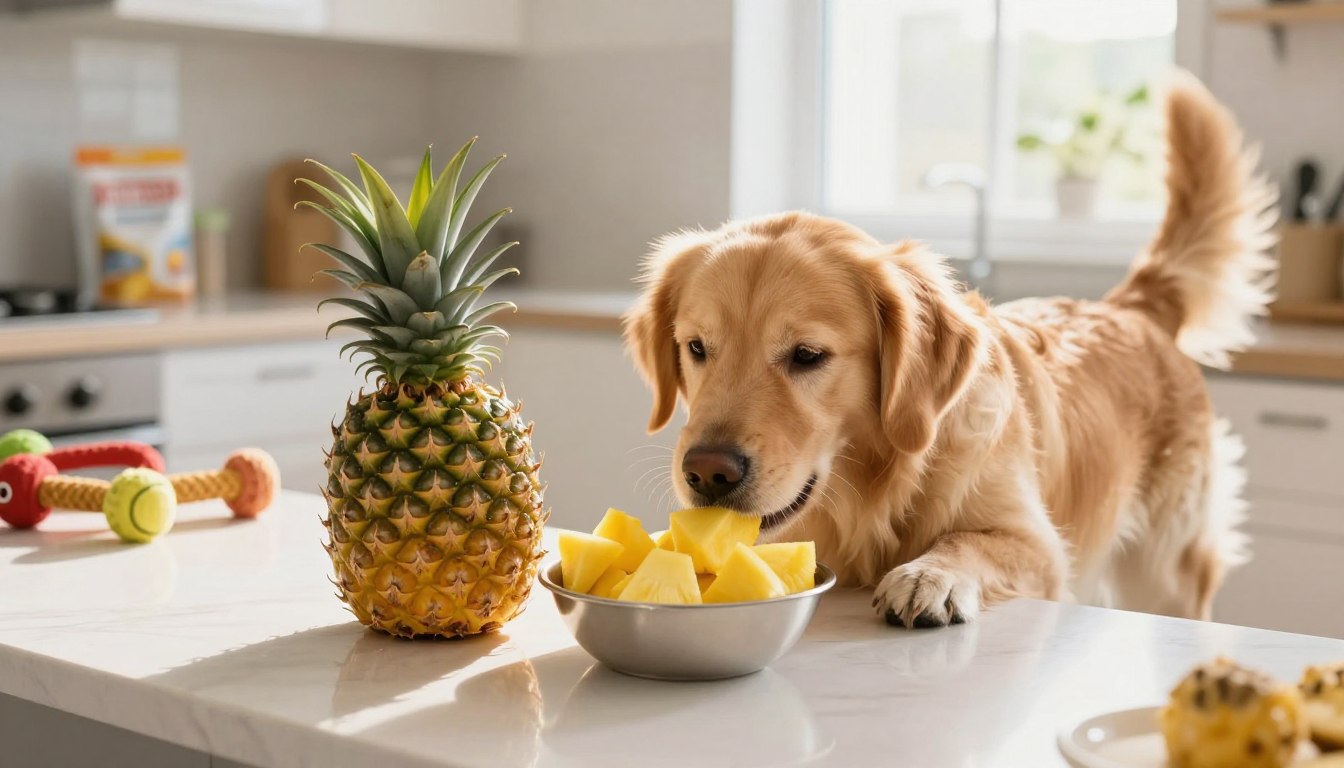
Many owners try using kitchen staples to solve the problem. A popular home remedy suggests adding pineapple to your pet’s food. But does pineapple stop dogs from eating poop, or is it just an internet myth?
It’s time to look beyond the rumors and see what’s real. We’ll dive into the science behind this dietary solution. This will help you understand if it really works.
Table of Contents
Understanding Coprophagia in Dogs
Eating feces is a behavior that dogs have had since their wild days. In the vet world, this is called coprophagia. It’s a common problem that many dog owners face.
Defining the behavior of eating feces
Coprophagia is when dogs eat their own or others’ feces. It’s seen as a flaw by many, but it’s a known behavior in dogs. People often look for ways to stop pineapple and poop eating behavior in dogs.
“Coprophagia is a complex behavior that can stem from a variety of medical, nutritional, or behavioral triggers.”
This behavior is not always a sign of illness. But, it’s not something most owners want to see in their homes.
Why dogs engage in this natural but unpleasant habit
Dogs are natural scavengers, and their ancestors ate many things to survive. This instinct can show up in domestic dogs as an interest in stool. There are several reasons why your dog might do this:
- Ancestral instincts: Scavenging for food was a survival mechanism for wild canines.
- Learned behavior: Puppies may mimic their mothers or other dogs in the household.
- Environmental factors: Boredom or a lack of mental stimulation can lead to unusual chewing habits.
Understanding these reasons is key before trying to stop the behavior. By figuring out if it’s instinct or stress, you can tackle the problem better. Remember, while it’s natural for dogs, it’s not okay in a human home.
The Origin of the Pineapple Myth
Ever wonder how a simple fruit became a big deal in dog behavior? For years, many owners have used pineapple as a deterrent for dogs eating feces. They hope it’s a quick fix for a messy problem. The idea is that the fruit makes the stool taste bad to dogs.
How the theory became a popular home remedy
The idea spread fast through word of mouth. Frustrated pet owners shared it as a natural solution to avoid harsh chemicals or expensive training. It’s often talked about online as a simple way to handle bad behavior at home.
Since pineapple is safe for dogs in small amounts, many owners tried it without a vet’s advice. This made it popular on social media and pet forums. It turned into a widely accepted pineapple as a natural remedy for dogs eating feces.
The role of anecdotal evidence in pet care
Most support for this method comes from personal stories, not rigorous clinical trials. One owner might see success, while another might not. This kind of evidence can be misleading because it ignores other important factors.
When you hear about home remedies, always question the source and lack of scientific proof. Relying only on online stories can delay finding the real reason for your dog’s behavior. Before trying a new remedy, check if it’s backed by science or just a long-standing myth.
Does pineapple stop dogs from eating poop?
If your dog eats feces, you might have tried pineapple. People say it makes poop taste bad. But is does pineapple stop dogs from eating poop really true, or just a myth?
Evaluating the scientific consensus
Looking for scientific proof, you’ll find most experts are unsure. There’s no study that shows bromelain in pineapple changes stool taste enough to stop dogs. Vets see it as a story, not a real cure.
So, will pineapple prevent dogs from ingesting poop for sure? Since enzymes break down before reaching the colon, waste might not taste different. Relying on pineapple alone can be disappointing if your dog’s problem is deeper.
Distinguishing between fact and folklore
It’s key to know what’s true and what’s not. Some owners say it works, but it might be because of other changes too. Understanding how effective is pineapple in stopping dogs from eating poop means seeing its limits.
| Myth or Fact | Description | Scientific Status |
|---|---|---|
| Pineapple as a deterrent | Enzymes change stool taste | Unproven/Anecdotal |
| Digestive aid | Bromelain helps protein breakdown | Fact |
| Behavioral fix | Stops all coprophagia | Myth |
| Safety profile | Generally safe in moderation | Fact |
Think of pineapple as a nutritional supplement, not a fix for all poop-eating issues. If you try it, watch your dog for any stomach problems. Always talk to your vet to find the real cause of the behavior.
How Bromelain Affects Digestion and Stool
It’s important to understand how bromelain works in your dog’s stomach. Many pet owners look for natural ways to solve problems. But, it’s crucial to know the science behind these remedies.
The role of enzymes in breaking down proteins
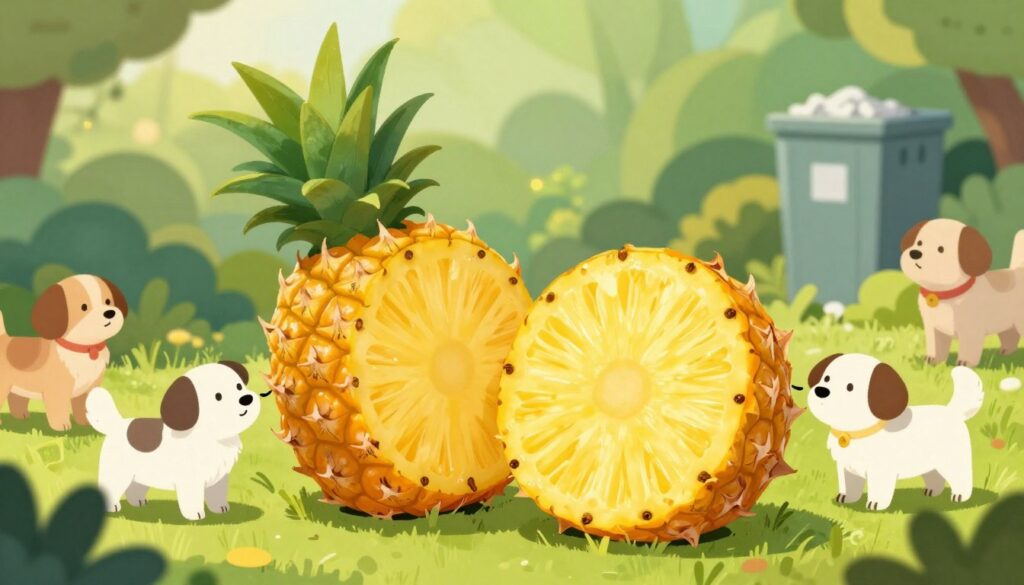
Bromelain is a blend of enzymes found in pineapple. It helps break down proteins into smaller parts.
When dogs eat pineapple, these enzymes go into their stomach. They help with digestion, but stomach acid breaks them down. So, they don’t really change the waste’s smell or taste.
“Digestive enzymes play a vital role in nutrient absorption, but they are not magic bullets for behavioral modification in pets.”
Does the enzyme change the taste of feces?
Many wonder if bromelain makes stool taste bad to dogs. They hope it will stop dogs from eating poop.
But, there’s no proof that bromelain makes stool taste bad. Dogs might still find their own waste appealing. So, pineapple doesn’t really stop dogs from eating poop.
| Enzyme Type | Primary Function | Impact on Stool |
|---|---|---|
| Bromelain | Protein hydrolysis | Negligible taste change |
| Protease | Protein breakdown | Supports digestion |
| Amylase | Starch digestion | No behavioral effect |
Using fruit enzymes to change behavior doesn’t usually work. It’s better to use medical or training methods to solve the problem.
Nutritional Benefits of Pineapple for Canines
Many people wonder about the benefits of feeding dogs pineapple to prevent poop consumption. But, this fruit is mainly good for your pet’s health. It’s important to know that any good effects on behavior are mostly stories. But, the health benefits are real and backed by science.
Adding pineapple to your dog’s diet should be for its vitamins, not just to change behavior.
Vitamins and minerals found in fresh pineapple
Fresh pineapple is full of important nutrients that help your dog’s immune system and metabolism. It’s especially rich in Vitamin C, which fights inflammation. It also has a lot of manganese, key for strong bones and body functions.
These nutrients help keep your dog full of energy. When given in small, fresh amounts, pineapple is a natural treat that processed snacks can’t match. Make sure to remove the tough skin and core, as they’re hard for dogs to digest.
Fiber content and digestive health
Pineapple is also a good source of dietary fiber. Fiber is essential for regular bowel movements and a healthy gut. It helps your dog’s digestive system work well.
While some owners think pineapple helps with poop issues, its real benefit is in digestion. A healthy digestive system is key to your dog’s health. Here’s what you find in a standard serving of fresh pineapple.
| Nutrient | Primary Function | Benefit for Dogs |
|---|---|---|
| Vitamin C | Immune Support | Reduces oxidative stress |
| Manganese | Metabolic Health | Supports bone strength |
| Dietary Fiber | Digestive Aid | Promotes regular stools |
| Bromelain | Protein Digestion | Assists nutrient absorption |
In moderation, pineapple is a safe and healthy treat for dogs. Its nutritional value is not just about stopping poop eating. It’s a tasty snack that supports your dog’s health in many ways.
Potential Risks of Feeding Pineapple to Your Dog
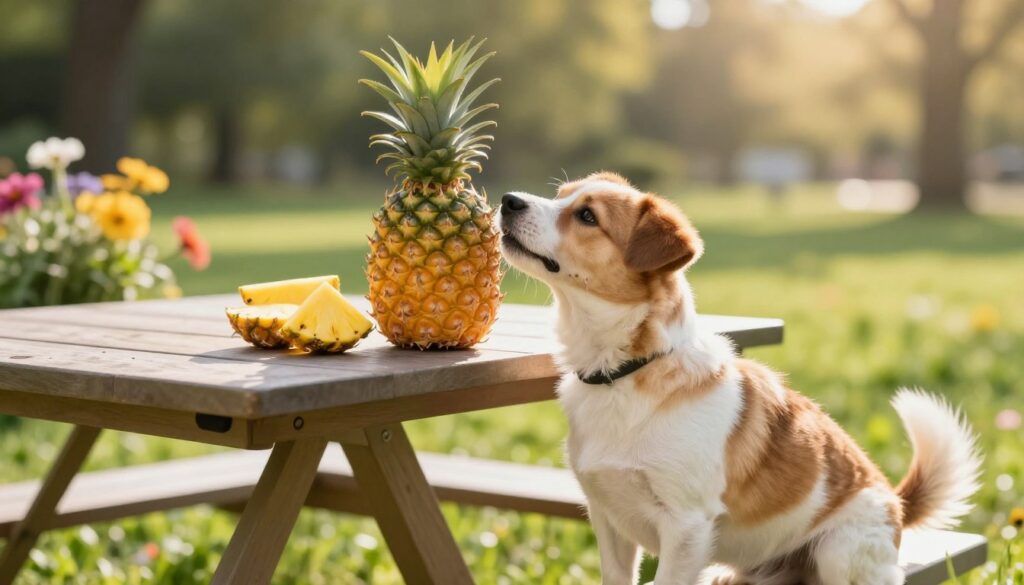
Many owners think pineapple is a natural fix, but it’s crucial to consider the health risks first. You might look for the benefits of feeding dogs pineapple to prevent poop consumption. But remember, fruit should never be a full diet replacement. Home remedies can sometimes harm your pet’s health.
Sugar content and weight management concerns
Pineapple has a lot of sugar, which can be bad for dogs if they eat too much. Too much sugar can make them gain weight and even lead to obesity. The sugar in pineapple can also cause dental problems if your dog eats it often.
Offering pineapple should be done carefully. Treat it as an occasional snack, not a regular part of their diet. Watch your dog’s weight to make sure they stay healthy.
Gastrointestinal upset from overconsumption
Pineapple’s high fiber and acidity can upset your dog’s stomach. Dogs with sensitive stomachs might get diarrhea, vomiting, or feel really tired if they eat too much pineapple.
The idea that pineapple helps with poop issues is not backed by solid evidence. The risks of stomach upset are real. If your dog seems uncomfortable after eating pineapple, stop giving it to them and talk to your vet.
Behavioral Causes of Feces Consumption
Emotional distress often triggers coprophagia in dogs. Many owners first look at the food bowl, but the real cause is often in your dog’s mental and emotional state. Finding these triggers is key to helping your pet stop this habit.
Anxiety and stress-induced coprophagia
Dogs can feel anxious when they’re insecure or overwhelmed. Separation anxiety is common, causing dogs to repeat behaviors to calm themselves. When stressed, dogs might eat feces to manage their feelings.
Stress from changes like a new pet or move can also cause this behavior. If your dog feels left out or anxious, they might eat feces to deal with their feelings. Dealing with the underlying anxiety is more effective than just using deterrents.
Boredom and lack of mental stimulation
A bored dog will find odd ways to entertain themselves. Without toys or interaction, they might eat feces out of boredom. This behavior is a way for them to get some sensory stimulation.
Keeping your dog mentally active is crucial for their happiness. Use puzzle feeders, scent games, or extra training to keep their mind engaged. When a dog is mentally satisfied, they’re less likely to engage in odd habits.
The impact of environmental factors
The environment greatly affects your dog’s behavior. Being in small spaces or lacking outdoor time can make them frustrated. When a dog feels trapped, they might act strangely as a coping mechanism.
Make sure your dog has enough room to move and regular chances to explore. By making the environment more stimulating, you can prevent unwanted habits. Creating a balanced lifestyle is the best way to stop this behavior for good.
Medical Reasons Your Dog Might Eat Poop
Before you think it’s just a bad habit, your dog might have a medical issue. Many owners think it’s just a quirk, but it could be a sign of a health problem. It’s important to check for these issues first to make sure your dog gets the right care.
Nutritional deficiencies and malabsorption issues
Your dog might eat feces because they’re not getting enough nutrients. Conditions like exocrine pancreatic insufficiency (EPI) make it hard for the body to digest food. This leaves your dog feeling hungry, even after eating.
When the body can’t break down proteins, fats, or vitamins, the stool may still have undigested food. Your dog might eat their own waste to get these nutrients. This can lead to weight loss and feeling tired if not treated.
Parasites and underlying health conditions
Intestinal parasites can also cause this behavior. Worms and other invaders take nutrients from your dog’s food, making them hungry all the time.
Other health problems can also lead to this behavior. Look out for these signs that mean you should see a vet:
- Chronic diarrhea or frequent soft stools.
- Sudden, unexplained weight loss despite a healthy appetite.
- Increased hunger or constant begging for food.
- Signs of abdominal pain or frequent bloating.
When to run diagnostic tests
If your dog is eating poop, take them for a full check-up. Your vet will probably suggest diagnostic tests to find out why. These might include a fecal exam for parasites and blood tests for organ health.
If the first tests don’t show anything, more tests might be needed. Finding and treating hidden illnesses early can help your dog stop eating poop and live better.
Effective Alternatives to Pineapple for Deterrence
Many pet parents find using pineapple to discourage dogs from eating feces not as effective as modern alternatives. While some try kitchen hacks, these methods often fail to change a dog’s habit. Relying only on pineapple as a deterrent for dogs eating feces can be frustrating if the behavior doesn’t stop.
Commercial stool-eating deterrents
For a more reliable solution, consider products made to stop coprophagia. These products have ingredients like yucca, parsley, or chamomile. They make stool taste bad to dogs. Consistency is key when using these supplements, as they must be given with every meal.
Dietary supplements and probiotics
Supporting your dog’s internal health is crucial in stopping unwanted behaviors. High-quality probiotics and digestive enzymes help with nutrient absorption. This makes your dog feel full after eating. A balanced gut microbiome reduces the urge to eat stool.
The importance of a balanced diet
The best strategy is to give your dog a high-quality, complete diet. If they lack essential nutrients, they might eat stool. Consulting with your veterinarian to ensure your dog’s food meets all their needs is the best way to stop the behavior at its source.
Training Techniques to Stop Coprophagia
While some owners try using pineapple to discourage dogs from eating feces, training is the best way. Using only food additives doesn’t solve the problem. Instead, teach your dog to make better choices with guidance.
Positive reinforcement and the leave it command
The “leave it” command is key. Hold a treat in your fist and wait for your dog to stop trying to get it. When they do, give them a better treat from your other hand.
Being consistent is crucial. Practice this command in different places. This way, your dog learns to ignore things everywhere. When they ignore something, give them a treat right away to reinforce good behavior.
Managing the environment to prevent access
Preventing the behavior is as important as training. Keep your yard and home clean. Remove waste right away to stop the temptation.
If you can’t watch your dog, keep them in a safe place. This way, they can’t get to feces. By controlling their environment, you reduce the chance for them to practice bad habits.
Consistency in supervision
Watching your dog closely is key when changing their behavior. When outside, keep them on a leash. This way, you can stop them from eating waste right away. Change their focus to a toy or a game to distract them.
Changing a habit takes time and effort. Be patient with your dog. Celebrate small wins. With a consistent plan, your dog’s behavior will improve over time.
When to Consult Your Veterinarian
Stool-eating in dogs often means there’s a bigger issue that needs a vet’s help. While home remedies might seem like a good idea, getting professional advice is safer. A vet can find out if there’s a health reason behind this behavior.
Recognizing signs of chronic health issues
Watch your dog’s health closely. If they lose weight, seem tired, or eat less, see a vet. These signs might mean they have a problem with digestion or absorbing nutrients.
Keep a log of your dog’s habits to share with your vet. Write down how often they eat stool and any other odd behaviors. Finding problems early can help your dog feel better and avoid serious health issues.
Developing a professional treatment plan
At the vet’s office, they’ll do tests like blood work and fecal exams. These help find out what’s wrong. Then, your vet will create a treatment plan just for your dog.
This plan might include special diets, supplements, or even therapy. Working with a vet ensures your dog gets the best care. Fixing the real problem is better than just hiding the symptoms.
Conclusion
Managing your dog’s habits is more than just adding fruit. Pineapple is a popular fix, but it’s not backed by science. It’s not a reliable solution for dogs eating their own poop.
Your vet is the best person to talk to about this. They can check for health issues or diet problems. A balanced diet and training are key for your dog’s well-being.
Keep your dog’s mind active and use positive training. This strengthens your bond and solves the problem. With dedication, your dog will be happy and healthy for many years.