
High Fiber Foods for Dogs: Natural Sources Every Owner Should Know
Seeing your dog uncomfortable is heartbreaking for any pet owner. You wish for them to be happy, full of energy, and by your side every day.
Simple changes in their diet can make a big difference. Adding high fiber foods for dogs to their meals helps their gut health and keeps them energetic.
Choosing natural foods gives your pet the support they need for regular bowel movements. Knowing what to feed them helps you care for their health with confidence.
Table of Contents
The Role of Fiber in Canine Digestive Health
Fiber is a key player in keeping your dog’s gut happy and balanced. While many focus on protein and fats, fiber is crucial for healthy digestion for dogs. It helps move food through the digestive system, keeping bowel movements regular and overall health in check.
Knowing the importance of fiber for dog health helps you choose better food for your pet. Understanding how different fibers work can prevent digestive problems before they happen.
Understanding Soluble Versus Insoluble Fiber
Not all fiber is the same, and dogs need both types. These fibers work in different ways as they move through the digestive system:
- Soluble Fiber: This type absorbs water, forming a gel. It slows down digestion, which is good for dogs with loose stools.
- Insoluble Fiber: This adds bulk to waste, helping food move through the intestines faster.
It’s important to have the right mix of these fibers for optimal gastrointestinal function. The right balance helps keep your dog’s digestion steady and predictable.
How Fiber Supports the Microbiome
Fiber is more than just a helper; it’s a prebiotic. It feeds the good bacteria in your dog’s gut, which is key for healthy digestion for dogs. A healthy gut microbiome boosts the immune system and improves how your dog absorbs nutrients.
By focusing on the importance of fiber for dog health, you’re creating a healthy gut environment. This keeps your dog full of energy and comfort throughout their life.
Identifying When Your Dog Needs More Fiber
Is your dog having trouble with regular bathroom habits or always hungry? It’s important to notice the signs your dog gives. A high fiber diet for dogs can help with these common problems.
Signs of Digestive Distress
Your pet might have irregular bowel movements or strain during walks. These signs mean their digestive system needs more help. Consistency is key in watching your dog’s health, as sudden changes in stool quality can mean they need more fiber.
Proper fiber intake acts as a natural regulator for the canine digestive system, ensuring that transit times remain within a healthy range.
If your dog often has constipation or loose stools, a high fiber diet for dogs can help. Keeping a log of these episodes can show if a diet change is needed.
Managing Weight Through Satiety
Fiber is also key in weight management by making your dog feel full. When they’re full, they won’t beg for more treats or food. This satiety effect is great for keeping your dog at a healthy weight.
Adding more fiber helps your dog stay full longer without extra calories. This makes a high fiber diet for dogs a smart choice for weight control.
| Indicator | Healthy Status | Needs Attention |
|---|---|---|
| Stool Consistency | Firm and formed | Loose or very hard |
| Mealtime Behavior | Content after eating | Persistent begging |
| Bathroom Frequency | Predictable schedule | Straining or irregular |
High Fiber Foods for Dogs: Natural Sources to Incorporate
Improving your pet’s digestive health is simple. Look in your pantry for high fiber foods for dogs. These foods provide essential roughage for regular bowel movements and gut health. They’re easy to add to your dog’s meals.
The Benefits of Pumpkin and Squash
Pumpkin and squash are great for dogs with sensitive stomachs. They’re dog-friendly high fiber foods that help with digestion. Adding plain, cooked pumpkin can soothe mild stomach issues.
Using Green Beans as a Low-Calorie Filler
Green beans are perfect for dogs trying to lose weight. They’re crunchy and full of fiber without extra calories. They make your dog feel full and satisfied between meals, helping with weight control.
Carrots and Leafy Greens for Nutrient Density
Carrots and dark leafy greens like spinach or kale are fiber-rich and packed with vitamins. Carrots add a crunchy texture dogs love. Leafy greens bring antioxidants. Adding these to your dog’s diet gives them a well-rounded boost of nutrients and fiber.
Safe Preparation Methods for Fiber-Rich Vegetables
How you cook your dog’s veggies is key to their nutrition. It’s crucial to make sure they can digest and use the fiber they need. Preparing these foods right helps avoid stomach problems and boosts health.
Steaming Versus Boiling Techniques
Steaming is the gold standard for cooking veggies for dogs. It uses gentle heat to make fibers soft. This way, it keeps important vitamins and minerals from getting lost in water.

Boiling is another way, but it can lose nutrients if veggies are cooked too long. If boiling, use just enough water and cook quickly. Make sure the veggies are soft enough to mash so your dog can easily digest them.
Avoiding Toxic Additives and Seasonings
When cooking at home, be very careful with what you add. Many things we like to eat are highly toxic to dogs and should not be in their food.
Don’t add onions, garlic, chives, or leeks to your dog’s veggies. These can cause serious health problems. Also, avoid adding salt, butter, or oil to their veggies. Plain, steamed, or boiled veggies are the safest and healthiest for your pet’s stomach.
Incorporating Fiber Through Whole Grains and Legumes
Whole grains and legumes are great for adding fiber to your dog’s diet. They offer complex carbohydrates that give energy and help with digestion. When cooked right, they’re a key part of a balanced diet for dogs.
The Role of Brown Rice and Oats
Brown rice is full of fiber and minerals good for dogs. The outer layer of brown rice, unlike white rice, keeps the digestive system moving. Make sure the rice is cooked until it’s soft to avoid stomach issues.
Oats are also a good choice for dogs needing a fiber boost. Choose plain, rolled, or steel-cut oats over instant oats with added sugars. Properly cooked oats help control blood sugar and keep your dog full longer.
Safe Preparation of Lentils and Chickpeas
Lentils and chickpeas are rich in protein and fiber. But, they need careful preparation to be safe for dogs. Soak dried legumes overnight and rinse them well before boiling until they’re soft.
Don’t give these legumes raw or undercooked. Slowly introducing them into your dog’s diet helps avoid digestive issues. Start with a small amount and watch for any reactions before increasing the amount.
| Ingredient | Primary Benefit | Preparation Tip |
|---|---|---|
| Brown Rice | Digestive regularity | Cook until very soft |
| Rolled Oats | Satiety and energy | Use plain, unflavored |
| Lentils | Protein and fiber | Soak and boil well |
| Chickpeas | Nutrient density | Remove skins if possible |
By following these tips, you can add variety to your dog’s diet safely. Stick to plain, whole-food ingredients to avoid harmful additives. If your dog shows signs of digestive problems, reduce the amount and talk to your vet.
Best High Fiber Dog Food Options and Commercial Alternatives
Finding the best high fiber dog food options needs careful attention and knowledge of dog nutrition. Many owners cook meals for their pets, but commercial foods are handy for digestive health. Reading labels well helps pick the right food for your dog’s needs.

What to Look for on Ingredient Labels
Start by checking the first few ingredients on a kibble bag. Look for beet pulp, powdered cellulose, and psyllium husk. These help keep your dog’s digestive system running smoothly.
Watch out for vague terms like “vegetable derivatives” or “plant fiber.” You want clear, specific sources of fiber. Make sure the main ingredient is protein for a balanced diet.
Evaluating Fiber-Rich Dog Food Brands
Not all fiber-rich dog food brands are the same. It’s important to do your research. Look for brands that do feeding trials and have vet nutritionists on their team. A good brand will clearly state the fiber content on their website or packaging.
Here’s a table to help you understand different fiber sources in dog food:
| Fiber Source | Primary Benefit | Digestibility |
|---|---|---|
| Beet Pulp | Supports stool consistency | Moderate |
| Psyllium Husk | Promotes regularity | Low |
| Cellulose | Weight management | Very Low |
| Oat Fiber | Gentle digestion | Moderate |
Look for third-party quality certifications to ensure the ingredients are safe. Choose fiber-rich dog food brands that are transparent and backed by science. The best high fiber dog food options are those your vet recommends for your dog’s breed and age.
Homemade High Fiber Dog Recipes for Better Digestion
Boost your pet’s health by adding dog-friendly high fiber foods to their meals. Making food at home lets you control what goes in. With homemade high fiber dog recipes, your pet gets good nutrition without bad fillers.
Simple Vegetable and Protein Mixes
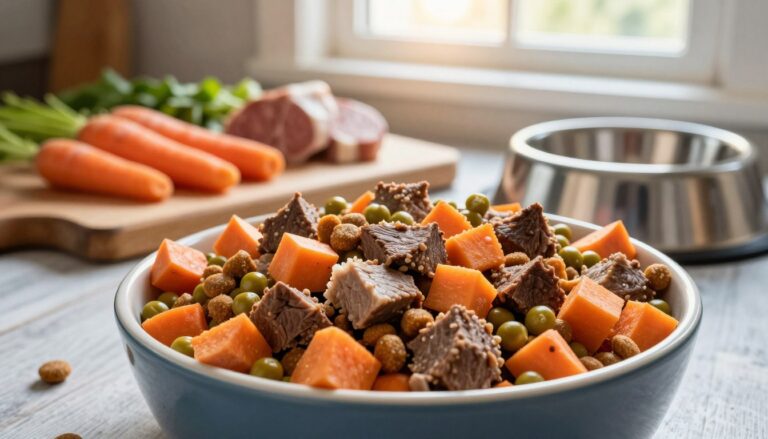
Start with lean protein like boiled chicken or ground turkey. Add steamed veggies like green beans, carrots, or pumpkin. These give your dog the fiber they need for a healthy gut.
Make sure veggies are cooked well for easy digestion. You can make these mixes in bulk and keep them in the fridge for up to three days. This consistent approach keeps your dog’s gut healthy.
Fiber-Packed Treat Recipes
Make natural high fiber dog treats for a healthy snack. Mix oat flour, pumpkin, and peanut butter (without xylitol). Bake into small treats for a snack that’s good for digestion and taste.
These treats are better than store-bought ones with bad stuff in them. Try adding grated carrots or flaxseed for more fiber and texture. Your dog will love the fresh, homemade taste of these treats.
| Ingredient | Fiber Content | Best Use |
|---|---|---|
| Pumpkin | High | Digestive support |
| Green Beans | Moderate | Weight management |
| Oats | High | Treat base |
| Carrots | Moderate | Nutrient density |
Precautions When Increasing Fiber Intake
When you start a high fiber diet for dogs, be patient. Fiber is great for health, but it takes time for your dog’s gut to adjust. Rushing the process can cause problems like gas, bloating, or loose stools.
Avoiding Sudden Dietary Changes
Gradually increase fiber over several days. Start by mixing a small amount of fiber-rich food with their usual diet. Watch your dog for any signs of discomfort during this time.
If your dog seems fine, you can slowly add more fiber over the next week. This slow adjustment period helps the gut get used to it. Sudden changes can upset sensitive animals’ stomachs.
“Digestive health is the cornerstone of canine wellness; introducing dietary changes with care ensures that your dog reaps the benefits without the burden of discomfort.”
Monitoring Hydration Levels
Fiber needs lots of water to move through the digestive system well. When you start a high fiber diet for dogs, make sure they always have fresh water. Without enough water, fiber can cause constipation.
Keep an eye on your dog’s water bowl all day. If they’re not drinking enough, add water or low-sodium broth to their meals. Proper hydration is essential for fiber to work right and aid digestion.
| Transition Phase | New Food Ratio | Old Food Ratio | Goal |
|---|---|---|---|
| Days 1-3 | 25% | 75% | Initial adjustment |
| Days 4-6 | 50% | 50% | Mid-point balance |
| Days 7-9 | 75% | 25% | Final adaptation |
| Day 10+ | 100% | 0% | Full transition |
By following these steps, you can keep your dog comfortable on a high fiber diet for dogs. Always remember to keep them hydrated and watch their behavior for a smooth transition.
Consulting Your Veterinarian Before Dietary Shifts
Your vet is key to keeping your dog’s digestion healthy. Before making big changes to your dog’s diet, talk to your vet. They’ll make sure any changes are right for your dog’s health.
Knowing how fiber helps dogs is important. But, fiber isn’t right for every dog. A vet can tell if your dog needs a diet change or if there’s another issue.
When Fiber Might Be Contraindicated
For some dogs, more fiber can be bad. Dogs with certain health issues might have trouble with high-fiber foods. Too much fiber can cause bloating, gas, or even blockages.
If your dog is too thin or recovering from surgery, a high-fiber diet might not be good. Your vet can check if your dog’s diet is safe and right for them.
Tailoring Nutrition to Specific Health Conditions
Every dog is different and needs a special diet. A vet can help you find the right mix of nutrients for your dog. This is especially important for dogs with chronic health issues.
The table below shows how fiber needs change based on health:
| Health Condition | Fiber Recommendation | Primary Goal |
|---|---|---|
| Obesity | High | Increase Satiety |
| Chronic Diarrhea | Moderate | Stool Firming |
| Intestinal Obstruction | Low/Restricted | Reduce Bulk |
| Diabetes Mellitus | High (Complex) | Regulate Glucose |
Working with your vet is the best way to make sure your dog gets the right fiber. They can help you keep an eye on your dog’s health and make changes as needed. This team effort is the best way to keep your dog’s digestion healthy.
Conclusion
Good digestive health is key for your pet to do well at every stage of life. You can make your dog more comfortable by choosing the right food. Look for natural ingredients that help with digestion and keeping a healthy weight.
Being consistent is crucial when changing your dog’s diet. Even small changes can make a big difference in their energy and health. Watch how they react to new foods like pumpkin, green beans, or whole grains.
Your dedication to healthy food shows how much you care for your pet. Talk to your vet to make sure the food is right for your dog’s health history. By doing this, you help your pet live a happy, active life for many years.