Can Dogs Eat Eggs? Benefits, Risks, and Safe Feeding Guidelines
You look into those soulful eyes and want to share the best with your furry friend. It’s natural to wonder if the protein-rich breakfast on your plate is safe for your pet. Many owners ask, can dogs eat eggs, and the answer is yes, with some safety measures.
Your pet’s health is the top priority. Before adding any new food, always talk to your vet. Every animal has different nutritional needs. Your vet can guide you to avoid risks and provide a healthy boost.
While these items offer great nutrients, they must be prepared right to prevent digestive issues or bacterial risks. Knowing how to add this snack to a balanced diet keeps your best friend happy and healthy. Learning if can dogs eat eggs safely is the first step to better nutrition.
Table of Contents
The Nutritional Profile of Eggs for Canines
Understanding what’s in an egg shows why they’re great for dogs. These simple foods are full of nutrients that boost your pet’s health and happiness.
Essential Amino Acids and Protein Quality
Eggs are top-notch for protein. They have all the essential amino acids dogs need but can’t make themselves.
These amino acids are key for muscle growth and fixing tissues. They keep your dog strong and lively all their life.
Vitamins and Minerals Found in Egg Yolks
The yolk is full of important nutrients. It’s packed with iron for healthy blood and selenium as a strong antioxidant.
Together, these nutrients boost your dog’s immune system. They help keep your pet’s metabolism strong and fight off stress.
The Role of Fatty Acids in Canine Health
Eggs also have essential fatty acids. These fats are crucial for your dog’s skin health.
Adding these fats to your dog’s diet makes their coat shiny. It’s a way to show you care about their health and happiness.
Can Dogs Eat Eggs Safely as Part of a Balanced Diet
When thinking about feeding eggs to dogs, it’s key to know their place in a healthy diet. Eggs are great for protein but should not be the main food. You want to add to their diet without upsetting their calorie balance.
Understanding Bioavailability in Canine Digestion
Bioavailability is how well your dog absorbs nutrients from food. Eggs are top-notch for protein because they have all the amino acids your dog needs. This makes them great for muscle health and fixing cells.
Make sure to cook eggs for your dog. Raw egg whites can mess with how your dog absorbs nutrients. Cooking eggs makes sure your dog gets all the vitamins and minerals from the yolk.
Eggs as a Supplemental Treat Versus a Meal Replacement
Many think eggs can be the main food for dogs. But are eggs safe for dogs as treats? Yes, but only if they follow the “10% rule.” Treats should not make up more than 10% of your dog’s daily calories.
“Moderation is the key to success when introducing any new food item into a canine diet. Always prioritize a balanced base diet to prevent nutritional gaps.”
Here’s how to add eggs to your dog’s diet based on their size:
| Dog Size | Recommended Frequency | Serving Size |
|---|---|---|
| Small (10-20 lbs) | 1-2 times per week | 1/4 egg |
| Medium (21-50 lbs) | 2-3 times per week | 1/2 egg |
| Large (51+ lbs) | 3 times per week | 1 whole egg |
Consulting Your Veterinarian Before Changing Your Dog’s Diet
Before adding can dogs eat eggs to your dog’s diet, talk to your vet. This is crucial if your dog has health issues like pancreatitis or kidney disease. Your vet can check if eggs are right for your dog’s health needs.
Watch your dog closely after introducing feeding eggs to dogs. If they show signs of upset stomach, stop right away. Knowing if are eggs safe for dogs with sensitive stomachs is best discussed with your vet. This keeps your dog happy and healthy.
Key Health Benefits of Including Eggs in Your Dog’s Meals
Adding eggs to your dog’s meals can greatly improve their health and energy. Eggs are packed with nutrients that support your dog’s well-being. These small changes can make a big difference in your pet’s life.
Promoting Healthy Skin and a Shiny Coat
Eggs are full of essential fatty acids and proteins that are great for your dog’s skin and coat. These nutrients help keep the skin healthy, preventing dryness and irritation. Your dog’s coat will become softer and shinier with regular egg consumption.
- Omega fatty acids nourish the hair follicles from within.
- Protein provides the building blocks for strong, healthy fur.
- Regular consumption helps reduce seasonal shedding and dander.
Supporting Muscle Development and Repair
Eggs are a top choice for protein because they have all the amino acids your dog needs. They are perfect for supporting muscle development and helping with tissue repair after exercise. Eggs keep your dog’s body strong and resilient, whether they are a puppy or an adult.
Eggs provide a complete amino acid profile, helping your dog maintain lean muscle. This is especially good for active breeds that need to stay in top shape. Adding eggs to their diet is a great way to support their physical activity.
Boosting Cognitive Function with Choline
Eggs are also a great source of choline, which is important for brain health. Choline helps with brain development and keeping the mind sharp, especially as dogs get older. Sharpening their mental focus helps keep your older dog alert and engaged.
Feeding eggs to your dog is a natural way to support their brain health at any age. By focusing on these nutrients, you’re investing in your dog’s brain health and overall well-being. It’s a simple yet powerful way to improve their life.
Potential Health Risks and Considerations
Before adding eggs to your dog’s food, think about the risks. Eggs are popular, but knowing the health risks of eggs for dogs is key to keeping them safe and healthy.
The Dangers of Salmonella and Bacteria
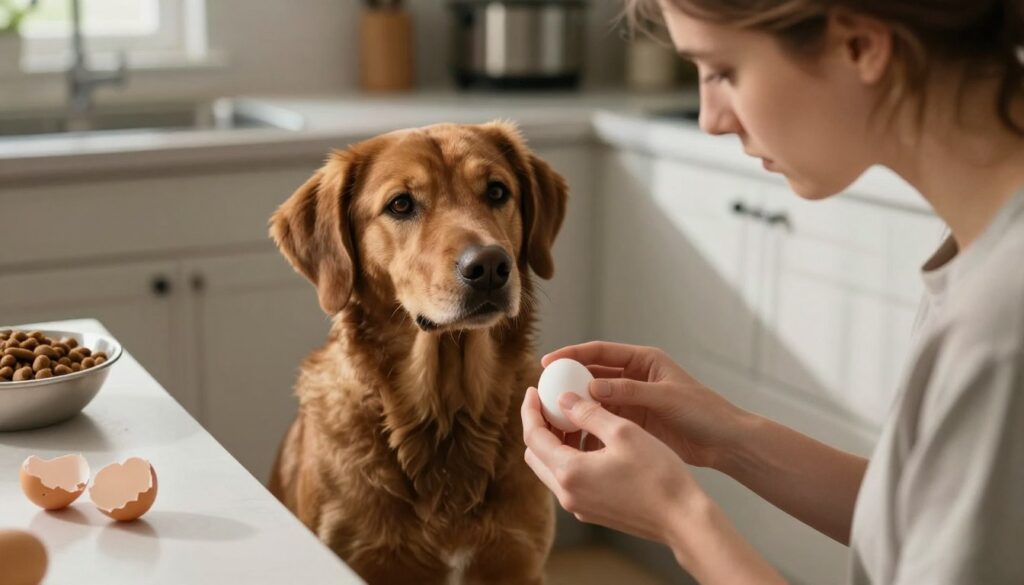
Raw eggs can be dangerous because of harmful bacteria. Salmonella or E. coli can be in raw eggs. These bacteria can harm your dog’s stomach.
These germs can also spread to people in your home. They can get into your dog’s saliva or on surfaces. Proper handling and cooking are the best ways to kill these germs.
“The safety of your pet is the foundation of a healthy, long-lasting bond, and informed feeding is the first step in that journey.”
Biotin Deficiency Risks from Raw Egg Whites
Raw egg whites can cause a nutritional problem. They have a protein called avidin that stops the body from using biotin. Biotin is important for your dog’s skin and coat.
Not getting enough biotin can cause dry skin, hair loss, and other health problems. Cooking the egg makes the avidin safe, so your dog can get the nutrients they need.
Managing Caloric Intake to Prevent Obesity
Even healthy foods can make dogs gain weight if they eat too much. Eggs are high in calories. Adding them to your dog’s diet without watching portion sizes can lead to obesity.
Here’s a table to help you add eggs to your dog’s diet without overfeeding:
| Dog Size | Recommended Egg Limit | Frequency |
|---|---|---|
| Small Breed | 1/4 Egg | Once Weekly |
| Medium Breed | 1/2 Egg | Once Weekly |
| Large Breed | 1 Egg | Once Weekly |
Watch your dog’s weight and activity when adding new treats. If they start to gain weight, cut back on these snacks to keep them healthy.
Best Practices for Cooking Eggs for Your Dog
When you start feeding eggs to dogs, how you prepare them is key. The right way ensures your pet gets the most nutrition without digestive problems. By following a few simple steps, you can make eggs a safe and healthy treat for your dog.
Why Plain Scrambled Eggs Are the Safest Choice
Scrambled eggs are a favorite for many. When cooking eggs for dogs, keep it simple. Cook the eggs until the yolk and white are firm to avoid bacteria.
“The simplest approach to canine nutrition is often the most effective, ensuring that your pet enjoys a wholesome meal without unnecessary complications.”
Avoiding Harmful Additives Like Salt, Butter, and Onions
Many human breakfasts include ingredients that are bad for pets. When feeding eggs to dogs, avoid salt, butter, oil, and seasonings like garlic and onions. These can cause serious stomach problems or long-term health issues.
Use a non-stick pan or a little water to prevent eggs from sticking. Keeping it plain means your dog gets good protein without toxins. Remember, dogs can’t handle the seasonings we enjoy.
Boiling Eggs for Easy Portion Control
Hard-boiling eggs is great for pet owners who want easy portions. Once cooked and cooled, you can peel and slice them. This is a quick and nutritious snack or kibble topper for your dog.
- Portioning: Use a knife to chop the boiled egg into small, bite-sized chunks.
- Engagement: Consider placing the pieces on a lick mat to provide mental stimulation.
- Storage: Keep boiled eggs in the refrigerator for up to one week to ensure freshness.
Addressing the Debate on Raw Eggs for Dogs
Choosing between raw or cooked eggs for your pet is a big decision. Many wonder if are eggs safe for dogs when they’re raw, or if cooking them is better. This debate pits old feeding ways against new vet advice.
The Argument for Natural Canine Diets
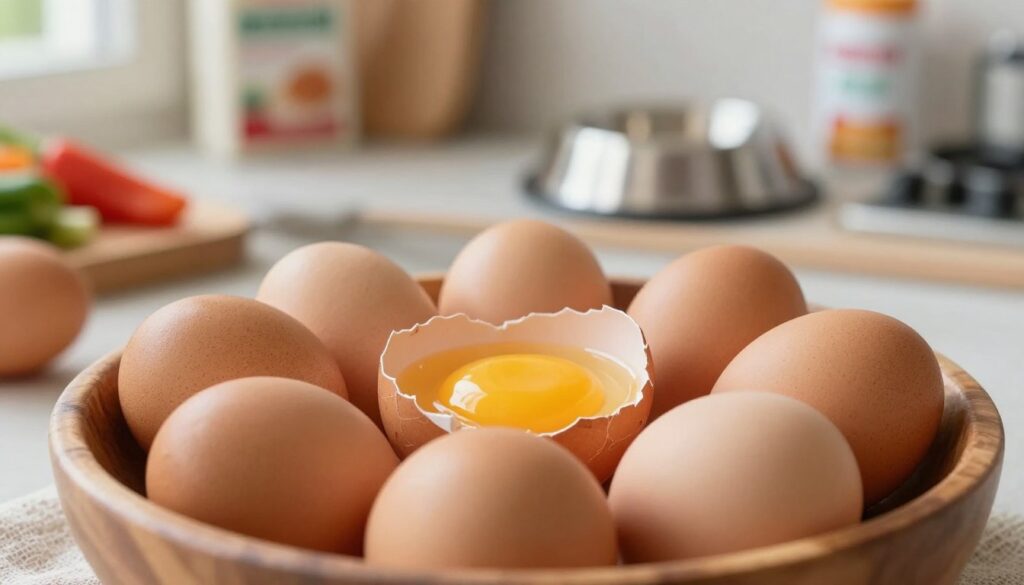
Raw egg fans say raw eggs for dogs offer key nutrients lost in cooking. They point out that wild dogs eat raw eggs, so our pets can too. They think this diet keeps dogs healthy and full of energy.
Why Veterinarians Generally Advise Against Raw Consumption
Vets warn against raw eggs because of health risks. The big worry is Salmonella or E. coli, which can make pets and people very sick. Also, raw egg whites have an enzyme that can block biotin, important for skin and fur.
Handling and Storage Safety Protocols
If you want to give eggs to your pet, cooking eggs for dogs is safest. Keep eggs in their carton in the fridge. Always wash your hands after touching raw shells to avoid kitchen germs.
| Feature | Raw Eggs | Cooked Eggs |
|---|---|---|
| Bacterial Risk | High (Salmonella) | Negligible |
| Nutrient Absorption | Inhibited by Avidin | Optimal |
| Digestibility | Moderate | High |
| Safety Level | Low | High |
Feeding Guidelines for Puppies and Senior Dogs
Feeding eggs to puppies or senior dogs is important. Each dog has different needs at different ages. Tailoring your feeding helps your pet get the most from eggs.
Developmental Needs for Growing Puppies
Many ask, can puppies eat eggs? Yes, but start slow to watch for any upset stomach. Puppies need protein for growth and muscle.
Start with small amounts of cooked egg. It gives essential amino acids for health. Make sure eggs are fully cooked to avoid bacteria.
Adjusting Portions for Senior Dogs with Slower Metabolisms
Senior dogs have slower metabolisms. This means you need to watch calories to avoid weight gain. Too much weight can hurt their joints.
Eggs can still be a healthy treat, but don’t replace meals. Give small, nutrient-rich portions. Monitoring your dog’s weight helps you know if you’re doing it right.
Frequency Recommendations for Different Life Stages
How often to give eggs depends on your dog’s activity and health. Here are some general guidelines:
- Puppies: Start with a small taste once a week to check for allergies.
- Adult Dogs: One to two eggs a week is usually safe, based on size and activity.
- Senior Dogs: Give eggs once every two weeks, in small amounts to manage weight.
If you’re wondering, can puppies eat eggs often, remember to keep it moderate. Always talk to your vet to make a plan for your dog. This way, you can safely add eggs to their diet all their life.
Identifying Signs of Allergic Reactions and Digestive Upset
Watching your pet after they try new food is key to managing health risks of eggs for dogs. Most dogs can handle eggs well, but each dog is different. They may react differently to new proteins.
Common Symptoms of Egg Intolerance
If your dog is sensitive, you might see signs a few hours after eating eggs. Look for subtle changes in their behavior or looks.
- Persistent scratching or red, inflamed skin.
- Frequent bouts of vomiting or diarrhea.
- Excessive gas or visible abdominal discomfort.
- Lethargy or a sudden loss of appetite.
When to Seek Veterinary Attention for Gastrointestinal Distress
Not all stomach issues need urgent vet visits. But, some signs are serious and need quick help. If your dog has severe dehydration, blood in their stool, or keeps vomiting, call your vet fast.
“The hallmark of responsible pet ownership is the ability to distinguish between a mild, passing stomach ache and a serious medical emergency that requires intervention.”
Here’s a table to help decide when your dog needs extra care:
| Symptom Severity | Observation Period | Action Required |
|---|---|---|
| Mild Gas | 24 Hours | Monitor at home |
| Occasional Vomiting | 12 Hours | Consult vet |
| Severe Lethargy | Immediate | Emergency clinic |
Monitoring Your Dog After Introducing New Foods
To avoid health risks of eggs for dogs, start with a tiny amount. Watch your pet for 48 hours after trying eggs for the first time. This ensures no late reactions.
Keep a simple log of what you fed them and their reaction. This proactive approach helps you safely add eggs to their diet. It keeps their health as your main concern.
Conclusion
Adding high-quality protein to your pet’s diet is a great way to improve their nutrition. You might be thinking, “Can dogs eat eggs?” Yes, they can, but only if they’re prepared right. Eggs are a good source of amino acids, which are important for your pet’s health.
It’s important to know if eggs are safe for dogs. Cooking eggs is the best way to make them safe. This way, you get rid of harmful bacteria while keeping the good stuff. Make sure to serve them plain to avoid any stomach problems.
Some pet owners wonder if puppies can eat eggs. Small amounts can be okay, but watch for any signs of allergy. Eggs are good for dogs, but don’t overdo it to avoid weight gain.
It’s best to avoid raw eggs for dogs to avoid health risks like salmonella. Always talk to your vet before changing your pet’s diet. By following these tips, you can give your dog a tasty and healthy treat.