Best Guard Dogs for Home Security and Family Protection
Knowing your home is safe brings a special peace. You want a pet that offers genuine security but is also gentle. It’s key to find a balance between being watchful and obedient.
Choosing the best guard dogs needs careful thought. You must consider your home and how much training you can do. It’s not just about protection. It’s also about making sure your pet gets along with kids and other animals.
By knowing the difference between natural alertness and training, you can make a good choice. This choice will make your daily life more comfortable.
Table of Contents
What Makes a Dog Effective for Home Security and Family Protection
Understanding what makes a dog good for home security is key. Not all big dogs can protect a home. True security needs specific mental and physical traits.
Looking for a balance between alertness and calm is important. This helps find the best top protection dogs.
Protective Instincts Versus Uncontrolled Aggression
A good guard dog has a natural instinct to protect. This instinct kicks in only when a real threat is present. It’s different from aggression, which can be a sign of fear or bad breeding.
You want a dog that stays calm under pressure. Not one that reacts too quickly to every noise or person.
Temperament, Stability, and Confidence Around Strangers
A stable dog is the best kind for protection. A confident dog doesn’t need to show off by barking or acting tough. Instead, it watches its surroundings carefully, staying calm even when strangers come near.
Size, Strength, Barking Ability, and Deterrence
Size and strength can help keep intruders away. A dog with a loud bark and strong build can scare off threats before they get close. But, it’s also important for the dog to know when to use its strength wisely.
Trainability, Impulse Control, and Responsiveness
Even the toughest dog is useless if it doesn’t listen. Good trainability means your dog can tell the difference between a delivery person and an intruder. Impulse control helps the dog stay calm and obedient, even when things get stressful.
How Family Lifestyle and Home Setting Affect Breed Selection
Choosing the right dog depends on your lifestyle and home. A high-energy breed might be great for a big property but not for a small apartment. You need to match the dog’s needs with your life and the security needs of your home.
| Trait | Importance | Goal |
|---|---|---|
| Stability | High | Maintain calm nerves |
| Trainability | High | Ensure obedience |
| Deterrence | Medium | Visual and audible presence |
| Socialization | High | Safe interaction with family |
By focusing on these traits, you can find top protection dogs that fit well in your home. Choosing from reputable guard dog breeds for security means you get a loving pet and a vigilant protector.
Best Guard Dogs for a Secure and Family-Friendly Home
Choosing the right dog for your home is a big decision. It’s not just about the breed’s reputation. Every dog has its own personality. Success comes from matching the dog’s nature with your home and your experience.
German Shepherd
Protective Temperament and Working Intelligence
The German Shepherd is known for its unmatched intelligence and loyalty. They have a natural instinct to protect, making them great at watching their surroundings.
Family Compatibility and Daily Exercise Needs
These loyal guard dogs love being part of the family. They need lots of exercise every day to stay happy and prevent bad behavior.
Training Priorities and Potential Challenges
Positive reinforcement training is key for this breed. Early socialization is crucial to keep them confident, not suspicious of everyone.
Belgian Malinois
High Drive and Advanced Protection Potential
The Belgian Malinois is a high-energy dog often used in security jobs. Their intensity and focus are truly remarkable for those who can give them a job.
Why This Breed Requires Experienced Handling
Because of their high drive, this breed is not for beginners. They need an experienced handler who can channel their energy into productive tasks.
Mental Stimulation, Exercise, and Training Demands
Exercise alone is not enough for a Malinois. They need constant mental stimulation through advanced training to stay balanced.
Rottweiler
Strength, Loyalty, and Natural Home Protection
Rottweilers are powerful guardians with a calm presence. They naturally protect their territory and family without aggression.
Socialization Around Children, Guests, and Other Pets
Early and frequent socialization is key for a well-adjusted Rottweiler. When raised right, they are gentle and patient with their family.
Obedience Training and Responsible Management
Consistent leadership is essential for this breed. Their size and strength mean professional obedience training is a must for safety.
Doberman Pinscher
Alertness, Speed, and Close Family Bonding
Dobermans are famous for their speed and quick reaction to threats. They form incredibly close bonds with their families and prefer to stay close.
Suitability for Active Families and Indoor Living
These dogs are great for active families who enjoy outdoor activities. They are clean and quiet indoors, making them perfect for modern homes.
Health, Weather Tolerance, and Training Considerations
Dobermans have a short coat and may struggle in cold weather. Prioritize health screenings and regular training to keep their minds sharp.
Cane Corso
Powerful Guardian Instincts and Territorial Awareness
The Cane Corso is a large, imposing breed with a strong sense of territory. They are naturally wary of strangers, making them excellent deterrents for any property.
Early Socialization for Household Stability
Without proper socialization, their protective nature can be hard to manage. Expose them to various people and environments early to ensure stability.
Space, Handling Experience, and Obedience Requirements
This breed needs a spacious home and an owner who can handle a large, powerful animal. Start obedience training early and practice it throughout their life.
Bullmastiff
Calm Deterrence and Quiet Household Protection
If you want a guardian that relies on size and presence, the Bullmastiff is ideal. They are naturally quiet and prefer to observe calmly.
Family Life, Exercise Needs, and Indoor Behavior
These dogs are surprisingly low-energy indoors and enjoy lounging with their families. While they need daily walks, they don’t require intense activity like other working breeds.
Managing Size, Strength, and Independence
Their independent nature means they may not always follow commands. Be patient and use consistent, positive methods to manage their size and strength.
Giant Schnauzer
Alertness, Versatility, and Strong Work Ethic
The Giant Schnauzer is a versatile worker that excels at guarding and obedience. They are highly alert and will quickly alert you to any unusual activity.
Exercise and Mental Engagement for a Balanced Temperament
A bored Giant Schnauzer can become difficult to handle. Provide plenty of physical exercise and complex mental challenges to keep them satisfied.
Grooming, Socialization, and Consistent Leadership
Their wiry coat requires regular professional grooming to stay healthy. Consistent leadership is vital, as they are intelligent dogs that will test boundaries if left unchecked.
Great Pyrenees
Independent Property Guardian Instincts
Great Pyrenees are loyal guard dogs bred to protect livestock independently. They are vigilant and patrol their territory with a calm, watchful eye.
Best Home Environments and Family Compatibility
These dogs thrive in environments where they have space to roam. They are generally gentle with their family but remain suspicious of outsiders.
Barking, Fencing, and Less Traditional Obedience Expectations
Be prepared for a dog that barks to alert you to anything unusual. You’ll need secure, high fencing and understand they may not always respond to commands quickly.
Best Family Guard Dogs for Homes With Children and Pets
When looking for the best family guard dogs, temperament is key. A good guard dog should be calm and stable, even in chaotic family moments. This ensures your home is a safe place for everyone.
Evaluating Patience and Tolerance Around Children
The perfect guard dog for families with kids needs to be patient. They should handle kids’ unpredictable behavior and loud noises well. Stability is crucial when choosing a dog.
Watch how the dog reacts to sudden touch or loud sounds. A good dog stays calm, not startled or defensive. They should see your kids as part of their pack to protect, not stress.
Introducing a Guard Dog to Cats and Other Household Pets
Introducing a new dog to pets needs to be slow and controlled. Never force them to meet right away. Start by letting them get used to each other’s scents in a neutral area.
- Use baby gates to create a physical barrier during the first few days.
- Keep the dog on a leash during initial face-to-face meetings.
- Reward calm behavior with treats to build positive associations.
- Ensure your cat has high places to retreat to if they feel overwhelmed.
Teaching Children to Respect a Dog’s Space and Signals
Even the most gentle dog needs boundaries. Teach your kids to respect a dog’s private areas like their bed or food bowl. This helps the dog feel safe and secure.
Also, teach your kids about dog body language. If a dog turns away, licks their lips, or leaves, they’re asking for space. Learning these subtle signals is important for a peaceful home.
Why Supervision Matters Regardless of Breed
Supervision is always necessary, even with well-trained dogs. Dogs can react unpredictably if they’re tired, hungry, or sick. Adult supervision adds an extra layer of safety for your family.
Always watch interactions between pets and young children, especially during play. This way, you can step in before things get out of hand. Remember, a loyal guard dog is a companion that needs your guidance and leadership.
Guard Dog Breeds for Home Security Based on Your Property
Your property type is key in picking the right guard dog breeds for home. You need to think about your space, noise levels, and neighbor proximity. A dog that loves open fields might not do well in a busy city.
No dog can replace a good security plan. But, the right dog can add a lot to your safety. Choosing wisely can make a big difference.

Choosing a Dog for an Apartment or Urban Home
Apartment or city living is tough for guard dogs. You need a dog that can stay calm and quiet, even with strangers around. Too much barking is a problem in shared spaces.
Indoor dogs need regular exercise to stay happy and healthy. A well-socialized dog is better in the city, knowing who’s a threat and who’s not.
Selecting a Guardian for a Suburban House
Suburban homes need dogs that are both friends and protectors. Think about how your dog will act with delivery people, neighbors, and kids. A dog that reacts too much can stress your family.
You want a dog that watches the property but stays calm. Training is key to keep your dog friendly but alert to danger.
Matching a Breed to Rural Land and Livestock
Rural areas need dogs that are tough and can make decisions on their own. If you have livestock, you need a dog that can protect them. These dogs spend a lot of time outside and must handle all kinds of weather.
On a farm, a dog needs to be independent but also listen to you. Make sure your dog is trained to stay close to home or the herd. Always check the dog’s personality to see if it’s right for your farm.
Fencing, Gates, Lighting, and Other Security Measures
Even the best dog needs strong fencing and gates. These keep your dog safe and define your property. They also scare off intruders, facing them with a physical barrier and a protective animal.
Lighting is also important. Motion-activated lights can surprise intruders, helping your dog see the threat. With these tools, your dog can do its job safely and well.
Guard Dog Training Tips for Reliable Protection
For reliable home security, start with basic commands. This ensures your dog stays under control. Before advanced protection, focus on a disciplined, responsive dog. These guard dog training tips help create a safe guardian.
Build Obedience Before Teaching Protective Behaviors
Teaching Recall, Sit, Stay, Leave It, and Place
Basic obedience is crucial for guard dog training techniques. Teach your dog to obey commands like “sit,” “stay,” and “place” quickly. A good recall is also key, letting you stop your dog if needed.
Using Reward-Based Training and Consistent Boundaries
Positive reinforcement builds trust with your dog. Rewarding good behavior encourages it to repeat. Clear boundaries help your dog understand what’s expected, avoiding confusion.
Socialize Your Dog Without Weakening Appropriate Alertness
Controlled Exposure to Guests, Delivery Workers, and Neighbors
Socialization means your dog should be calm around others. Introduce them to people slowly to know who’s a threat. This balance is key for trained guard dogs to stay calm until needed.
Reducing Fear, Reactivity, and Resource Guarding
Fear-based aggression is dangerous. Gradually expose your dog to new things to reduce reactivity. Early on, address resource guarding to prevent possessiveness.
Use Professional Help for Protection Work
How Qualified Trainers Assess Temperament
Trainers check your dog’s natural drives and stability for protection work. They look for confidence and the ability to calm down when needed. This ensures your dog is ready for guardian duties.
Why Attack Training Is Unsafe Without Expert Oversight
Trying protection work without a pro is risky. Wrong guard dog training techniques can cause aggression. Always use certified experts who know canine behavior and safety.
Maintain Skills Through Routine Practice
Reinforcing Calm Alerting and Handler Control
Consistency is crucial. Practice obedience drills daily to keep your dog’s skills sharp. Trained guard dogs need ongoing practice to stay obedient and responsive.
Recognizing When Training Methods Are Creating Risk
Watch your dog’s behavior for signs of over-arousal or instability. If training causes anxiety or unpredictable reactions, stop and seek a pro. Prioritize safety and clear communication for a loyal protector.
Trained Guard Dogs Versus Naturally Protective Family Dogs
Many people think their barking dog is a guard dog. But there’s a big difference between natural behavior and professional training. Trained guard dogs know when to act, unlike untrained pets.
What a Professionally Trained Protection Dog Can Do
A professional protection dog is a skilled partner. They are trained to know who is a friend and who is a threat. They stay calm focus even when things get stressful, making them top protection dogs.
These dogs can stop on command, unlike untrained pets. They are safe and secure, without acting out of fear or aggression.
Why Natural Watchfulness Does Not Equal Protection Training
Natural watchfulness is not the same as training. Many dogs bark at strangers or animals, but they’re not ready to defend your home. An untrained dog might get scared or confused by a real intruder.
“True protection is not about the dog’s desire to bite, but about the dog’s ability to listen and obey under extreme pressure.”
Without training, a dog is not reliable for security. They might act unpredictably, which can be dangerous. Professional training helps them act effectively and safely.
Questions to Ask When Buying or Adopting a Trained Guard Dog
When looking for a guardian dog, ask the right questions. Talk to the breeder or trainer about the dog’s training and experiences.
- What specific commands does the dog know?
- How does the dog react to children and other pets?
- Can the dog be handled by different family members?
- What is the dog’s history with professional protection work?
How to Verify Health, Temperament, Training History, and Ownership Records
When choosing top protection dogs, do your homework. Get vet records to check the dog’s health. A temperament evaluation by an expert can also give you peace of mind.
Check the dog’s training history with certifications or references. Make sure all ownership records are clear. This ensures the dog fits your lifestyle.
| Feature | Natural Watchdog | Trained Guard Dog |
|---|---|---|
| Response to Commands | Limited | High Precision |
| Impulse Control | Variable | Excellent |
| Threat Assessment | Instinctive | Controlled |
| Reliability | Low to Moderate | High |
How to Choose the Right Guard Dog for Your Household
Choosing the right ultimate guard dog breeds is more than just size or looks. You need to think about if you can give them the care they need. This includes structure, exercise, and socialization.
Match the Breed to Your Experience and Available Time
Not all guard dog breeds for home are right for beginners. Some dogs need a lot of time and training every day. They need mental and physical challenges to stay happy and healthy.
If you’re busy, think if you can handle daily training. Consistency is key for a good guard dog. A bored dog can become a problem, not a protector.
Compare Exercise, Grooming, Feeding, and Veterinary Costs
Having a big, protective dog is a big deal. It costs money and time. You’ll need to think about:
- Good food for their size and energy.
- Regular vet visits and medicines.
- Training classes or special advice.
- Dealing with their fur, if they have a lot.
Consider Age, Adoption History, and Individual Temperament
When looking for the best family guard dogs, remember that each dog is different. A puppy is a blank slate, but an adult might already have a personality.
Choose a dog that’s calm and steady. A dog that’s too scared or angry might not be the best guard.
Use a Trial Period or Professional Temperament Evaluation When Possible
Get a pro to check the dog’s personality before you decide. Many places let you try out a dog to see if it fits your family.
This trial lets you see how the dog acts with your family and pets. Good care is important for a dog to be a good guard for a long time.
Legal, Ethical, and Safety Responsibilities of Guard Dog Ownership
Having a guard dog means more than just training. It’s about keeping your community safe and following the law. You must manage your dog’s behavior in public and private places. Knowing your duties helps your pet be a valuable asset, not a problem.
Check State, County, City, and Homeowners Insurance Rules
Before getting a dog, learn about local laws. Many places have rules about certain breeds or leash laws. Also, check with your homeowners insurance to see if they cover your dog’s breed.
Prevent Escapes With Secure Containment and Identification
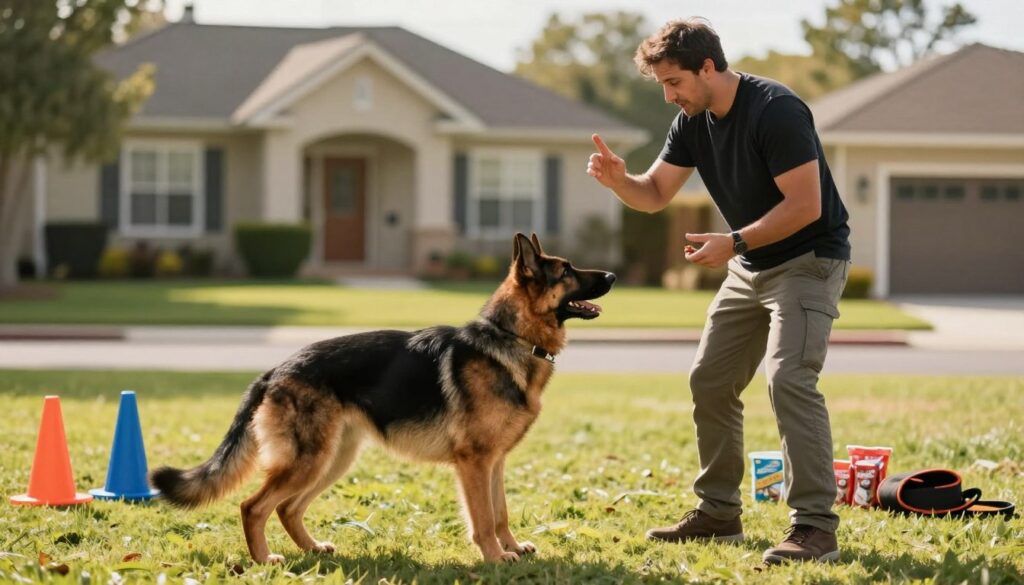
A secure home is key to avoiding unwanted encounters. Make sure your fence is high and sturdy to stop digging or jumping. Use strong gates and consider extra locks for safety.
It’s also important to have your dog wear a collar with current contact info and be microchipped. These essential safety measures help keep your dog safe if they get lost.
Document Warnings, Incidents, Veterinary Care, and Training
Keeping a detailed record of your dog’s life is crucial. Store files with vaccination records, health checks, and training certificates. These prove you care for your dog responsibly and can be important if legal issues come up.
Also, log any behavioral incidents or training achievements. This helps you understand your dog’s behavior and improve training. It shows you’re a dedicated owner.
Prioritize Prevention, De-Escalation, and Safe Family Interaction
The goal of a guard dog is to protect without causing trouble. Modern training focuses on de-escalation and control, not aggression. Teach your dog to stay calm in stressful situations and only act when necessary.
Always put your family’s safety first. Use positive reinforcement to keep your dog well-adjusted. This way, you create a safe space for everyone, respecting your family and the community.
Conclusion
Choosing the right guard dog is a big decision for your family and home. You need to look beyond what you’ve heard about breeds. Find a dog that fits your lifestyle and experience.
True protection comes from a calm temperament and good training. You are key in making your dog a reliable guard. By focusing on socialization and obedience, you keep your home safe for everyone.
Being a responsible dog owner means more than picking the right breed. You must follow the law and keep your dog safe. Regular vet visits and temperament checks keep your dog healthy and balanced.
Work on prevention and calm situations to keep your home safe. With the right training, you’ll have a loyal protector. Your effort will make your dog a trusted partner for many years.