
Dachshund Weiner Dog Facts: Everything Owners Should Know
Have you ever looked into the eyes of a loyal companion and felt an instant, unbreakable bond? For many, the dachshund weiner dog is more than a pet. It’s a spirited family member with a bold personality and a heart that beats only for its humans.
These small hunters are famous for their unique long bodies and short legs. But their true charm lies in their deep attachment to their owners. Understanding essential Dachshund breed facts is the first step toward a rewarding life together.
Whether you are curious about their history or preparing for the journey of Dachshund ownership, this guide covers everything. It includes daily care to long-term health.
Most of these resilient companions live between 12 and 16 years. With proper nutrition, consistent exercise, and preventive veterinary visits, you can ensure your friend enjoys a vibrant and happy life by your side.
Table of Contents
Dachshund Weiner Dog Origins, Appearance, and Breed Traits
The Dachshund’s story starts in Germany’s forests. Their unique shape was made for a special job. Knowing their Dachshund history makes them even more special today. It also gives you dachshund care tips for everyday life.
How the Dachshund Developed in Germany
The German Dachshund was bred to hunt badgers and other underground animals. Their name means “badger dog,” showing their main job. Breeders aimed for a dog that could fit into tight tunnels.
This effort created a dog with lots of stamina and courage. Today, you see these traits in their bold behavior and energy. They were meant to be independent, a quality they still have.
Why the Breed Is Called a Weiner Dog
People often call them “Weiner Dogs” because of their long, sausage-like body. This nickname is fun but forgets their practical shape. Their body is designed for a purpose, not just for looks.
Recognizing the Dachshund’s Long Body and Short Legs
The Dachshund’s long spine and short legs are key to their look. These features help them move through tight spaces. Their strong front legs are great for digging and navigating tough terrain.
Distinctive Ears, Muzzle, Tail, and Chest
These dogs have many unique features:
- Ears: Long, floppy ears that hang close to the cheeks.
- Muzzle: A long, tapered snout for better scenting.
- Tail: A strong, tapering tail that helps steer.
- Chest: A deep chest for more lung space.
Common Coat Types and Colors
Dachshunds have three coat types: smooth, longhaired, and wirehaired. Each needs different care. They also come in many colors and patterns, like:
- Solid colors like red, cream, or black.
- Bi-colored patterns like black and tan.
- Dapple or brindle markings for a unique look.
Dachshund Sizes, Weight, and Expected Lifespan
Dachshunds are special dogs with unique sizes. Knowing their size helps you care for them well. This care is key for their happiness and health throughout their life.
Standard Dachshund Size and Weight
The standard Dachshund is bigger. They usually weigh between 16 and 32 pounds when grown.
They need regular exercise to stay fit. It’s important to watch their Dachshund weight to avoid back problems.
Miniature Dachshund Size and Weight
Miniature dachshunds are smaller. They should weigh 11 pounds or less when fully grown, according to breed standards.
Even though they’re small, they have big personalities. Keeping them at a healthy weight is crucial for their movement.
How to Tell Whether Your Dachshund Is at a Healthy Weight
Weight alone isn’t enough to judge a dog’s health. Look at their body shape instead. A healthy dog should have a visible waist and you should be able to feel their ribs easily.
Typical Dachshund Lifespan and Factors That Affect Longevity
Dachshunds usually live between 12 to 16 years. Many things can affect their lifespan, like their genes, diet, and vet care.
Keeping them at a healthy weight is very important. It helps prevent back and joint problems. Also, good dental care and daily exercise can make them live longer and happier.
| Breed Variety | Typical Weight Range | Average Lifespan |
|---|---|---|
| Miniature Dachshund | 11 lbs or less | 12–16 years |
| Standard Dachshund | 16–32 lbs | 12–16 years |
Dachshund Coat Types and Everyday Grooming Needs
Every Dachshund owner needs to know how to groom their pet. This breed has three coat types, so grooming needs vary. Regular Dachshund grooming keeps your pet looking good and helps spot health issues early.
Short-Haired Dachshund Grooming
The smooth-haired Dachshund is the simplest to groom. They have a short, dense coat that’s easy to keep clean. A weekly brush or grooming mitt removes loose hair and spreads skin oils.
Long Haired Dachshund Grooming and Mat Prevention
Long haired Dachshunds need more care. Their long coats can get tangled, especially in certain areas. Brushing these spots often prevents painful mats.
Wirehaired Dachshund Coat Care and Trimming
The wirehaired Dachshund has a coarse coat that needs special care. They often need hand-stripping to keep their fur right. If you’re not up for hand-stripping, professional trimming can help.
Nail, Ear, Dental, and Skin Care
All dogs need regular care for their nails, ears, teeth, and skin. Trimming nails prevents walking discomfort. Check ears weekly for signs of trouble. Dental hygiene is key to prevent tartar and gum disease.
How Often to Schedule Professional Grooming
How often you need professional grooming depends on your dog’s coat, lifestyle, and shedding. Some owners groom at home, but pros offer deep cleaning and special care. Here’s a guide to help you plan:
| Coat Type | Brushing Frequency | Professional Needs |
|---|---|---|
| Smooth | Weekly | Occasional bath |
| Long | Daily/Every other day | Regular trimming |
| Wirehaired | Twice weekly | Hand-stripping/Trimming |
Dachshund Temperament, Behavior, and Family Compatibility
Welcoming a dachshund weiner dog into your home means getting a lively friend. They have big personalities, even though they are small.

Typical Personality Traits of a Dachshund Weiner Dog
The Dachshund temperament is a mix of love, alertness, and confidence. They are very loyal but can be stubborn and clever when they want something.
Remember, each dog is unique. Their personality is shaped by their genes, early socialization, and daily life. So, every dachshund is different.
How Hunting Instincts Shape Barking, Digging, and Chasing
Dachshund behavior is influenced by their hunting past. They were bred to follow prey into tight spots. This is why they love to dig and burrow.
They bark at strangers and chase small animals because of their alert nature and prey drive. Giving them the right outlets can keep your home calm.
Living With Children, Cats, and Other Dogs
Dachshunds make great family pets if handled right. They are small and have long backs, so kids need to be gentle with them.
Introduce them to cats and other dogs slowly. They like to be in charge, so socializing them early helps them get along with others.
“The dachshund is a dog that thinks it is a lion, and that is exactly why we love them so much.”
Separation, Attachment, and Preventing Problem Behaviors
Dachshunds bond strongly with their humans. They don’t like being left alone and may get upset or destructive.
Keep them busy and follow a routine to make them feel secure when you’re away.
When a Dachshund’s Behavior May Require Professional Help
If your dachshund shows extreme fear, aggression, or guarding, it’s time to get help. A professional trainer or vet behaviorist can assist.
| Behavior | Root Cause | Management Strategy |
|---|---|---|
| Digging | Hunting Instinct | Provide a sandbox |
| Barking | Alertness | Positive redirection |
| Chasing | Prey Drive | Leash training |
| Guarding | Possessiveness | Professional guidance |
Acting early can keep your pet happy and well-adjusted. With patience and the right approach, you can manage their stubborn traits.
Exercise, Play, and Mental Stimulation for Dachshunds
Keeping your Dachshund active is key. These dogs, though small, have lots of energy. It’s important to match their exercise to their age, health, and fitness level.
Daily Activity Needs for Standard and Miniature Dachshunds
Both standard and miniature Dachshunds need regular exercise. They should have two walks a day and some playtime. Make sure they don’t get too tired during these activities.
Safe Games for a Long-Backed Breed
Playing with your Dachshund safely is crucial. Choose games that don’t put pressure on their backs. Games like tug-of-war or fetch on a soft surface are good options.
Walks, Scent Work, and Indoor Enrichment
Dachshunds are great at sniffing out things. Using their sense of smell for games is a great way to keep them mentally sharp. Try hiding treats or using puzzle feeders to keep them engaged.
Activities to Limit Because of Spinal Injury Risk
It’s important to protect your Dachshund’s back. Avoid activities that can hurt their spine, like jumping or climbing stairs. Also, avoid twisting games that can be harmful. By choosing safe activities, you help your dog stay healthy and active.
Dachshund Training and Socialization Essentials
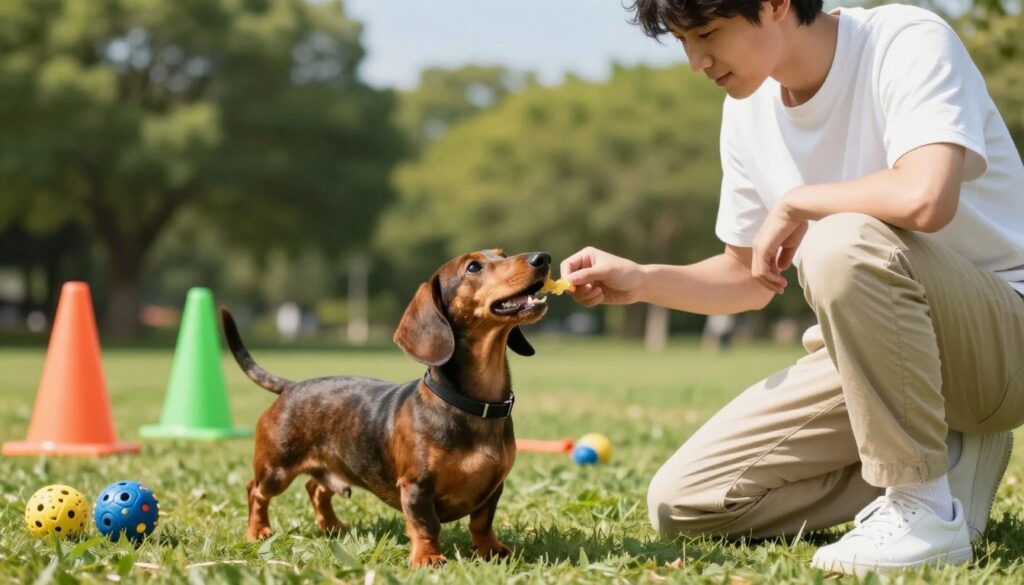
Dachshunds are known for their independent spirit. Your approach to dachshund training must be firm yet rewarding. They can be stubborn, so short, frequent sessions work better than long ones. Consistency is key to success with these clever dogs.
House-Training Strategies for Stubborn or Easily Distracted Dogs
House-training can be tough, but a strict schedule helps. Take your dog outside after they wake up, eat, or play. Supervision is key; use a crate or a small area if you can’t watch them.
Avoid punishment, as it can cause anxiety. Reward your dog with treats and praise when they go outside. This positive approach helps them understand what you want.
Positive-Reinforcement Dachshund Training Techniques
The best way to motivate your dog is through positive reinforcement training. Reward them with treats, toys, or affection for good behavior. Keep sessions short to keep them engaged and interested.
“Training is not just about teaching commands; it is about building a language of trust and mutual respect between you and your dog.”
Teaching Recall, Leash Manners, and Reliable Basic Cues
Start with basic cues like “sit,” “stay,” and “come” in a quiet place. Once they get it, move to more challenging spots like parks. Always keep them on a leash in unfenced areas to avoid chasing small animals.
Teach them to walk nicely on a leash to protect their backs. Use a harness instead of a collar. Reward them for walking by your side or checking in with you.
Socializing Cute Dachshund Puppies Safely
Early puppy socialization is crucial for a confident dog. Introduce cute dachshund puppies to new people, sounds, and surfaces. Make sure these experiences are positive and controlled to avoid overwhelming them.
- Expose them to various household noises like vacuums and doorbells.
- Introduce them to friendly, vaccinated dogs in safe environments.
- Handle their paws, ears, and mouth gently to prepare them for vet visits.
Managing Barking, Resource Guarding, and Digging
Dachshunds have a natural tendency to bark, dig, and guard. Provide mental stimulation and outlets for their energy. If they guard a toy, trade it for a treat instead of taking it away.
For barking, find the trigger and desensitize them. If they dig, create a “digging box” filled with sand. With patience and clear boundaries, you can redirect these behaviors into healthy habits.
Dachshund Feeding, Weight Control, and Daily Care
Dachshunds need a special diet because of their body shape. Using dachshund care tips early helps protect their spine and joints. A balanced diet keeps them active and happy for years.
Choosing Food for Your Dachshund’s Age and Activity Level
Your dog’s diet changes as they grow from a playful puppy to a dignified adult. Choose high-quality food that fits their life stage and energy level. Always check the label to ensure it’s a good protein source.
- Puppies need calorie-dense formulas to support rapid growth.
- Adults require maintenance diets that prevent excessive weight gain.
- Active dogs may need higher protein levels to support muscle health.
Portion Control and Treat Guidelines
Effective Dachshund feeding is about precision, not convenience. Use measured portions to avoid overeating. A standard measuring cup keeps their calories consistent.
Treats should be no more than ten percent of their daily calories. Healthy treats like carrot or green beans are better than processed snacks. Tracking every treat helps prevent hidden weight gain.
Preventing Obesity in a Small, Low-Slung Breed
Keeping a lean body is crucial for this breed. Excess weight stresses their long, fragile spines. Dachshund weight control is essential for their health, not just looks.
You should feel your dog’s ribs easily without hard fat. If their “waist” disappears, it’s time to cut their portions. Regular weigh-ins at home or the vet’s office keep you on track.
Water, Feeding Schedules, and Senior-Dog Nutrition
Consistency is key for a healthy digestive system. Always provide fresh water and stick to a twice-daily feeding schedule. As they age, senior Dachshund nutrition becomes crucial for their health.
Older dogs need diets with fewer calories but more fiber and joint support. Watch their appetite closely for health signs. Adjust their food based on their activity level to keep them comfortable.
When to Ask Your Veterinarian About a Specialized Diet
While most dogs do well on standard food, some need special diets. Consult your vet if your dog has food allergies, digestive issues, or urinary problems. A vet can recommend a prescription diet for obesity, kidney disease, or other conditions.
Dachshund Health Issues and Preventive Veterinary Care
Knowing your dog’s body shape is key to a long, happy life. Their long spines need special care to keep them healthy. Preventive dog health helps spot problems early, avoiding big medical issues.

Intervertebral Disc Disease and Back Injury Prevention
Intervertebral disc disease is a big worry for dachshunds. Their long backs make them prone to spinal problems. To help, avoid jumps and use ramps for furniture.
Keeping your dog slim is also important. Use a harness, not a collar, for walks. Watch for signs like wobbling or back pain. If you see these, get Dachshund veterinary care fast.
Common Joint, Bone, and Mobility Problems
Dachshunds can also get kneecap issues. Keeping them at a healthy weight helps their joints. Regular, gentle exercise keeps their muscles strong as they get older.
Dental Disease, Obesity, and Other Frequent Concerns
Dental health is crucial for preventive dog health. Their small mouths can lead to dental problems. Brushing daily and regular cleanings are key to avoid infections.
Obesity is a big risk for health problems. Measure meals and limit treats to keep them healthy. A good diet is essential for their well-being.
Eye Conditions, Seizures, and Breed-Related Health Risks
Some dachshunds may get eye problems like Progressive Retinal Atrophy. Early screenings can catch these. Seizures are rare but need quick attention from a vet.
Vaccinations, Parasite Prevention, and Routine Wellness Exams
Regular Dachshund veterinary care includes vaccinations and parasite control. Heartworm, flea, and tick prevention is vital. Annual or bi-annual exams keep them healthy.
Warning Signs That Need Prompt Veterinary Attention
Call your vet right away if you see these dachshund health issues:
- Sudden inability to walk or dragging of the hind limbs.
- Persistent shaking, whimpering, or signs of acute pain.
- Loss of bladder or bowel control.
- Difficulty breathing or persistent coughing.
- Sudden lethargy or refusal to eat for more than 24 hours.
Choosing Dachshund Breeders, Rescue Dogs, and Essential Supplies
Whether you pick a breeder or a rescue, your path to responsible Dachshund adoption needs careful planning. Making smart choices early on ensures a great home for your new pet.
What to Look for in Responsible Dachshund Breeders
Health Testing, Puppy Socialization, and Home-Raising Practices
Good dachshund breeders put their dogs’ health first, not profit. They share medical records and do genetic tests to avoid health problems.
A reputable breeder also focuses on early socialization. They raise puppies at home, exposing them to sounds and people to build confidence.
Questions to Ask Before Bringing Home a Puppy
Always ask about the parents’ health and temperaments. You should feel okay asking these questions:
- Have the parents been checked for common health issues?
- How do you socialize the puppies in their first eight weeks?
- Can I see where the puppies are raised?
- What support do you offer after I get the puppy?
How to Evaluate a Dachshund Rescue or Shelter Adoption
Preparing for an Adult Dog’s Medical and Behavioral History
Adopting from a dachshund rescue is rewarding. When adopting from a shelter, ask for the dog’s medical and behavioral history.
Many rescues offer foster care. This gives insights into how the dog interacts with others. Knowing this helps you see if the dog fits your lifestyle.
Dachshund Accessories That Support Safety and Comfort
Harnesses, Ramps, Crates, Beds, and Back-Safe Carriers
Choosing the right dachshund accessories is key to protecting your dog’s spine. This breed is prone to back injuries, so you need gear that prevents jumping and strain.
Here are some must-haves for your home:
- Stable Ramps: Use these for sofas and beds to prevent your dog from jumping down.
- Supportive Harnesses: A well-fitted harness reduces pressure on the neck compared to a standard collar.
- Back-Safe Carriers: These provide secure support when you need to transport your dog safely.
- Orthopedic Beds: These offer the necessary joint support for a low-slung breed.
By choosing quality gear, you make your home safer for your dog’s mobility and comfort.
Conclusion
Being a good dachshund owner means living a balanced life. You give your pet the best by feeding them right and training them well. This approach makes them happy and well-behaved.
Good care for your dachshund is more than just walks. It’s also about regular vet visits to catch health problems early. Keeping them slim is key to protecting their spine.
It’s your job to keep your dog safe. Avoid letting them jump on furniture or stairs. A happy dachshund needs mental and physical activities that fit their special body.
Every dog is different, based on their age, coat, and personality. Paying attention to these details helps your dog live a long, joyful life. Your care makes a big difference.