Long Haired Mini Dachshund: Size, Personality & Care Guide
Have you ever looked into a dog’s eyes and felt an unbreakable bond? The long haired mini dachshund is more than a pet. It’s a spirited companion that brings joy and curiosity to your home.
These dogs come from 15th-century Germany. They were bred to hunt badgers with great tenacity. Despite their small size, their hearts are huge. Their historical roots shape their modern behavior, making them bold and independent.
Getting a long haired mini dachshund means welcoming a loyal friend. This guide is your key to understanding their needs. It helps you give the best care to your new family member.
Table of Contents
Understanding the Long Haired Mini Dachshund Breed
The long haired mini dachshund has a rich history in Germany. They were once working dogs, not just pets. Their past shapes their spirit and actions today.
Knowing their history helps you understand their determination. Their body is a result of their hunting past. It’s not just for looks.
Historical Origins of the Dachshund
The name Dachshund means “badger dog” in German. They were bred to hunt badgers in underground dens. This required a low-to-the-ground, sturdy body.
Their long, narrow shape helped them fit into tight spaces. Even today, they show this tenacious spirit, whether they’re hunting or just relaxing.
Distinguishing Features of the Long-Haired Variety
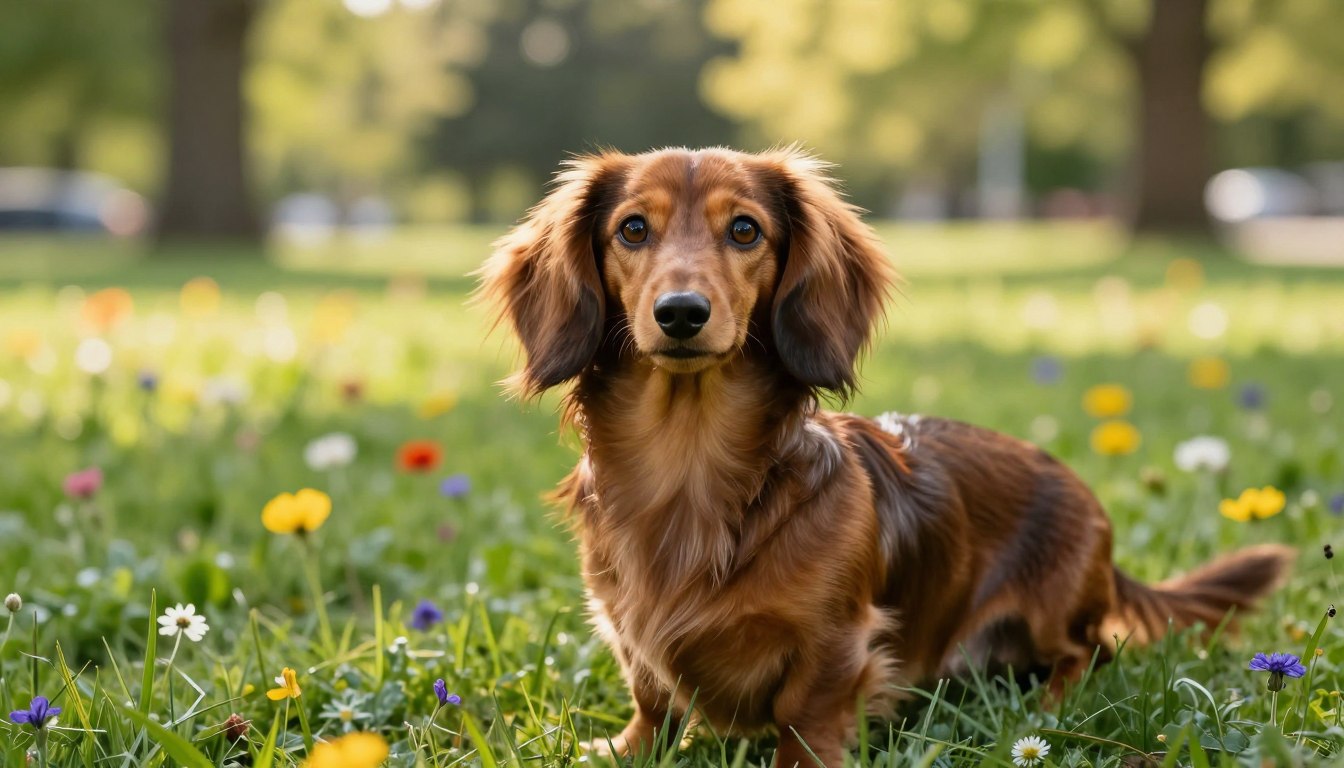
The long haired miniature dachshund is known for its silky coat. It has feathering on its ears, legs, and tail, making it look elegant.
These dogs are also known for their gentle nature. This sets them apart from other coat types. Here’s a table showing the main differences between the three coat varieties.
| Coat Type | Texture | Maintenance Level |
|---|---|---|
| Smooth | Short and sleek | Low |
| Wire-haired | Coarse and dense | Moderate |
| Long-haired | Silky and flowing | High |
Having a long haired miniature dachshund means regular grooming. This keeps their coat in top shape. Knowing these traits helps you care for your long haired mini dachshund well.
Physical Characteristics and Size Standards
Every long haired miniature dachshund has a special look that makes them unique. They are not just smaller versions of the standard dachshunds. They are bred to have a compact, sturdy body.
Weight and Height Expectations
The miniature variety is known for being small. A healthy adult long haired mini dachshund usually weighs under 11 pounds.
They are usually 5 to 6 inches tall at the shoulder. Keeping their size right is important for their health and movement.
Coat Texture and Color Variations
Their coat is their most striking feature. It’s not just beautiful but also protects them. You’ll need to take good care of it.
Common Coat Colors and Patterns
There are many colors and patterns in the breed. You’ll see red, cream, and black and tan colors. The dapple or piebald patterns add to their charm.
Understanding the Silky Texture
The long haired mini dachshund has soft, flowing hair. It should feel silky and have feathering on the ears, chest, and tail.
Because of this, they need regular grooming to avoid tangles. Keeping their fur clean and brushed keeps their shine bright and healthy.
Personality Traits and Temperament
The long hair dachshund has a big personality in a small body. They are known for being strong-willed and independent. Their unwavering confidence can be a surprise to new owners.
The Typical Dachshund Disposition
These dogs come from a long line of badger hunters. This history gave them a fearless and intelligent nature. They are very loyal to their families, often bonding strongly with one person.
“The Dachshund is a dog that thinks it is a lion in a small package, always ready to defend its territory with unmatched spirit.”
Socialization Needs for Your Mini
For reliable long haired mini dachshund info, early socialization is key. They can be wary of strangers. Introduce them to new places and people early to help them adjust.
- Introduce them to various household sounds and surfaces.
- Arrange controlled playdates with calm, vaccinated dogs.
- Use positive reinforcement to reward brave behavior in new situations.
Interaction with Children and Other Pets
They can be loving, but their strong-willed nature means they don’t always like rough play. Teach children to handle them gently to avoid hurting their spine. Always watch interactions to keep everyone safe.
With other pets, a long hair dachshund can get along if introduced right. They like other dogs but may try to be bossy. With the right training, they’ll be a friendly part of your family.
Essential Grooming Requirements for Long Hair
Grooming your long haired mini dachshund is key for their health. It keeps their coat healthy and lets you spot any problems early. Sticking to a grooming schedule keeps them comfortable and happy.
Brushing Techniques to Prevent Matting
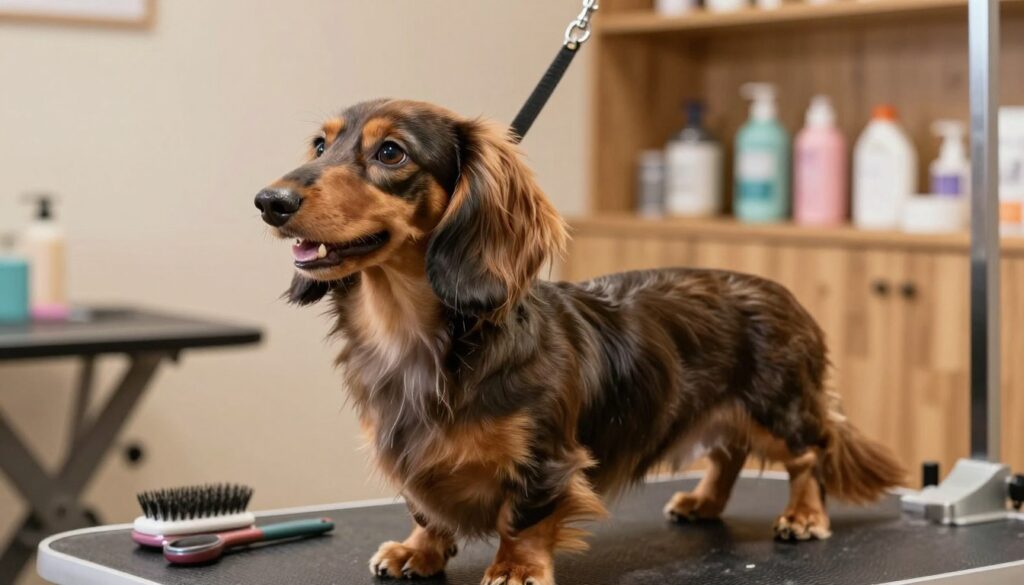
Brush your long hair dachshund 2 to 3 times a week. This stops painful mats and tangles. Focus on areas like the ears, armpits, and belly.
Use a slicker brush or metal comb for the undercoat. Be gentle when dealing with knots to avoid hurting your dog. For tough mats, use a detangling spray.
Bathing and Ear Care Routines
Bath your dog once a month with dog-specific shampoo. Avoid over-bathing to keep their skin from getting dry. Dry their hair well after bathing to prevent skin issues.
Ear care is crucial for your long haired mini dachshund info. Their ears can trap moisture, leading to infections. Clean the outer ear canal weekly with a vet-approved cleaner.
Professional Grooming vs. At-Home Maintenance
You can groom at home, but pros offer special services. They do deep conditioning and precise trims. These visits help keep your dog looking great.
The key to a healthy coat is consistency. Whether grooming at home or at a salon, regular care strengthens your bond. It also helps spot health issues early.
Health Concerns and Genetic Predispositions
Knowing about your dog’s health is key for top-notch long haired mini dachshund care. These dogs are lively but face certain health issues. Staying ahead means catching problems early and keeping your long hair dachshund healthy.
Intervertebral Disc Disease Awareness
Intervertebral Disc Disease, or IVDD, is a big worry for this breed. Up to 25% of them might face spinal disc problems. This happens when discs between vertebrae bulge or burst, harming the spinal cord.
Look out for signs like reluctance to jump, an arched back, or dragging hind limbs. If your dog yelps when lifted or loses coordination, get vet help fast. Quick action can prevent serious damage.
Common Dental and Eye Issues
Small breeds often have dental problems due to their jaw size. Plaque and tartar can cause periodontal disease, harming their health. Brushing regularly and getting professional cleanings is crucial.
Eye issues like Progressive Retinal Atrophy (PRA) can also occur. This genetic disorder causes vision loss. Regular vet visits are important to catch eye problems early.
Maintaining a Healthy Weight to Protect the Spine
Keeping your dog at a healthy weight is vital for their mobility. Extra weight strains the spine, making disc problems worse. An ideal weight reduces joint and back pressure.
Control portions and limit high-calorie treats to keep your dog lean. Low-impact exercise helps maintain muscle, supporting the spine. These habits are crucial for your long haired mini dachshund care efforts.
Training Your Long Haired Mini Dachshund
Training a miniature dachshund with long hair needs patience and smart planning. These dogs are very smart but can be stubborn. Knowing their personality helps you connect better.
Positive Reinforcement Strategies
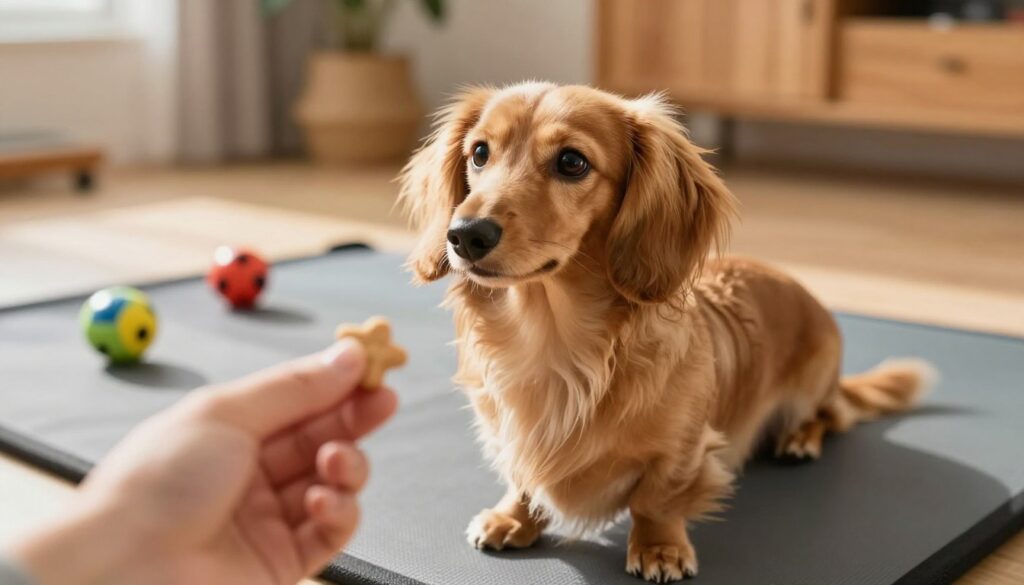
The best way to motivate your dog is with positive reinforcement. Use tasty treats and lots of praise. This way, your dog learns that good behavior is rewarded. Consistency is the key to teaching your dog what you expect.
Stay away from harsh corrections. They can hurt your bond with your dog. Instead, reward the good actions. This makes learning fun for both of you.
Addressing Stubbornness and Independence
This breed is known for being independent. Sometimes, they ignore commands if they don’t see a quick reward. Keep training sessions short and fun to keep them interested.
If your dog gets distracted, change the setting or try different rewards. Remember, patience is your greatest tool with stubborn dogs. Short sessions keep your dog focused and eager to learn.
Housebreaking Challenges and Solutions
Housebreaking is a big part of long haired mini dachshund care that needs extra effort. These small dogs have small bladders and may not like cold or rain. A strict, predictable routine is key to success.
Take your dog outside often, after meals, naps, or play. If accidents happen, clean them up with an enzymatic cleaner. With consistent supervision and positive encouragement, your dog will learn the house rules.
Exercise Needs and Activity Levels
Knowing what your pet needs to move around safely is important. Even though they are small, they have lots of energy. It’s crucial to find the right balance to keep them healthy.
Daily Activity Requirements
A miniature dachshund with long hair needs 30 to 60 minutes of gentle exercise daily. Short walks are better than long ones to avoid exhaustion. This keeps their muscles active without hurting their joints or back.
It’s more important to be consistent than to push too hard with exercise. Regular, gentle activity helps them stay at a healthy weight. This is key for their back. Watch for signs of tiredness, like lagging behind or heavy breathing, during walks.
Safe Play and Preventing Back Strain
Keeping their spine safe is a big deal for long hair dachshund breed characteristics. Avoid activities that make them jump, like jumping off furniture or catching flying discs. These can put too much pressure on their back.
Play games that keep all four paws on the ground. Use soft toys for games like tug-of-war or slow fetch in a hallway. This way, you can avoid accidents during play.
Mental Stimulation and Enrichment Games
Exercise is just one part of keeping a dog happy. Mental games that don’t require much physical effort are great too. Puzzle feeders and scent games are perfect for keeping their mind active.
These games give them a sense of achievement and prevent boredom. Adding them to your daily routine keeps their mind sharp and their body safe.
| Activity Type | Impact Level | Spinal Safety |
|---|---|---|
| Leisurely Walking | Low | Excellent |
| Scent Games | Very Low | Excellent |
| Jumping/Agility | High | Poor |
| Puzzle Toys | None | Excellent |
Nutritional Guidelines for Optimal Health
Good nutrition is key for your dog’s health and energy. Giving them high-quality food meets their special needs. A balanced diet helps keep your mini long hair dachshund at a healthy weight, which is vital for their health.
Choosing the Right Diet for Small Breeds
Choose a dog food that is AAFCO-compliant to ensure it has all the nutrients your dog needs. Small breeds like your mini long hair dachshund need food that’s packed with nutrients. Look for foods with high-quality protein as the first ingredient.
Remember, long hair dachshund breed characteristics mean they need food that’s just right for their size. Talk to your vet to find the best food for your dog’s life stage. Stay away from foods with lots of fillers that don’t offer much nutrition.
Managing Portion Sizes to Prevent Obesity
Being overweight can harm your dog’s back, especially for mini long hair dachshunds. Even a little extra weight can put too much pressure on their spine. Always measure their food with a measuring cup or digital scale.
“The greatest wealth is health, and for our canine companions, that wealth begins in the food bowl.”
Don’t let your dog graze all day. Instead, feed them at set times to keep track of how much they eat. If they start to gain weight, cut back on their food to keep them healthy.
Healthy Treats and Dietary Restrictions
Treats should only make up about ten percent of your dog’s daily calories. Choose low-calorie snacks like small pieces of fresh carrots or green beans. These treats are tasty and won’t add too much fat to their diet.
- Avoid giving your dog table scraps, especially fatty or salty foods.
- Keep harmful foods like grapes, onions, and chocolate away from your dog.
- Use training treats carefully to avoid overfeeding during training sessions.
Creating a Dachshund-Friendly Home Environment
Your home should be a safe place for your mini long hair dachshund. These dogs are at risk of spinal injuries from jumping or climbing steep stairs. Small adjustments to your home can help prevent long-term health problems.
Modifying Your Home for Spinal Safety
To keep your pet safe, avoid letting them jump. Use sturdy ramps for your sofa and bed. This lets your dog move up and down safely. If you have stairs, use baby gates to block access when you’re not watching.
Don’t let your mini long hair dachshund jump on furniture. Even a small drop can hurt their spine. Using ramps regularly helps keep their spine healthy for years. A flat, easy-to-get-around home reduces the chance of painful disc problems.
Managing Separation Anxiety
This breed loves their owners a lot, which can cause separation anxiety. Create a predictable daily routine with set times for food and exercise. Puzzle toys or long-lasting chews can keep them busy when you’re away.
Try to stay calm when you leave and come back. If your mini long hair dachshund gets anxious when alone, use a crate or playpen. Start with short training sessions to help them feel more confident over time.
Creating a Comfortable Sleeping Space
Every dog needs a quiet, cozy spot to rest. Choose an orthopedic bed for good back and joint support. Place it in a safe, draft-free area where your pet feels connected to the family.
| Modification Type | Primary Benefit | Ease of Setup |
|---|---|---|
| Furniture Ramps | Prevents spinal strain | High |
| Stair Gates | Limits dangerous climbing | Medium |
| Orthopedic Bed | Supports joint health | Very High |
| Puzzle Toys | Reduces anxiety | Very High |
By making these simple changes, you can ensure your mini long hair dachshund is happy and healthy. A well-thought-out home is the best gift for your loyal friend.
Finding a Reputable Breeder
Starting your journey to own a mini dachshund with long hair means choosing a good breeder. This choice affects your pet’s health, behavior, and happiness for many years. Spending time finding the right breeder is key to getting a happy pet.
Questions to Ask Potential Breeders
When you talk to a breeder, ask lots of questions. Find out about the puppies’ living conditions and how they are socialized. A good breeder will be happy to share information about the parents and their daily life.
Ask to meet the mother of the puppies to see her health and behavior. Also, ask for vaccination records and vet checkups. A caring breeder will be open about this.
Identifying Red Flags in Breeding Practices
Watch out for breeders who care more about money than the dogs. Avoid those who sell “teacup” puppies, as it’s a misleading term. Always avoid breeders who use this term to charge more.
Other warning signs include not wanting to show you where the puppies live or not asking about your lifestyle. If a breeder seems too quick to sell without asking questions, they might not care about the puppy’s future. Trust your gut if something feels wrong.
The Importance of Health Screenings
Good breeders do genetic tests to avoid hereditary problems. They care about their dogs’ health by testing before breeding. Choosing a breeder who does this means your mini dachshund with long hair will be healthier.
| Feature | Reputable Breeder | Backyard Breeder |
|---|---|---|
| Health Testing | Comprehensive genetic screening | None or minimal |
| Transparency | Open to questions and visits | Avoids direct answers |
| Marketing | Focuses on breed standards | Uses “teacup” or “rare” labels |
| Support | Offers lifetime guidance | Disappears after the sale |
Finding a good breeder for your mini dachshund with long hair takes time and effort. By looking for health screenings and ethical practices, you give your puppy the best start.
Conclusion
Owning a mini dachshund with long hair is a joy. These dogs are loyal and full of personality. You now know how to keep them safe and happy.
Good care is key to a strong bond. Feed them right, protect their backs, and groom them often. Small changes can make a big difference in their health.
Keep your pet’s mind and body active. Your patience and positive actions make them happy. Look forward to many years of fun with your loyal friend.
Share your stories with other owners. Your adventure with this breed is just starting. Cherish the bond you share with your special pet every day.