
Can Dogs Eat Rice What You Need to Know Before Feeding
You look into those soulful eyes and only want the best for your furry friend. When your pet feels sick or needs a light meal, you might wonder if common foods are safe. Many owners ask, can dogs eat rice when they’re worried.
Plain, fully cooked grains can be a good addition to a bland diet. They give quick energy from carbs. But, they never replace a complete, balanced commercial meal. You must avoid seasonings, onions, or garlic, as they are harmful to pets.
Knowing the right amount is key to keeping your pet happy and healthy. While many people ask if can dogs eat rice safely, it depends on how it’s prepared and in what amount. Let’s look at how to serve this grain right to help your pet’s health.
Table of Contents
Can Dogs Eat Rice?
Many pet owners wonder if dogs can eat rice. The answer is yes, but only if it’s prepared right.
Simplicity is the key when adding rice to your dog’s diet. Plain rice is safe, but how you cook it at home matters a lot.
When plain, fully cooked rice is generally safe
Only serve rice cooked in plain water. Don’t add salt, butter, oil, onions, garlic, or savory sauces.
“The foundation of a healthy diet for your pet is consistency and quality, ensuring that every extra treat serves a purpose rather than creating a risk.”
These additives can be harmful or upset your dog’s stomach. Make sure the rice is soft and easy to digest before giving it to your dog.
Why rice should complement—not replace—complete dog food
Rice is a good addition to your dog’s diet, but it shouldn’t replace their regular food. Dog foods are made to give the right mix of nutrients.
Replacing too much of your dog’s food with rice can lead to nutritional imbalance. Think of rice as a snack, not a main meal.
Factors that affect whether rice suits your dog
Not all dogs react the same to rice. Several things can affect if rice is good for your dog:
- Age and Activity Level: Active dogs might need the carbs, but older or less active dogs might gain too much weight.
- Health Status: Dogs with diabetes or other health issues should only eat rice with a vet’s okay.
- Digestive Tolerance: Some dogs might get upset stomachs or gas from new foods like rice.
Watch your dog closely after giving them rice for the first time. If they seem uncomfortable, go back to their usual diet.
Rice Nutrition and Its Role in a Canine Diet
Rice is not a key part of a balanced canine diet. It’s a common food for humans but not as important for dogs. Knowing its nutritional value is crucial for your pet’s health.
Carbohydrates, calories, and limited protein
Rice is high in carbohydrates, giving dogs quick energy. It’s also full of calories, helping active dogs stay energized.
But, rice has very little protein. Protein is key for muscle repair and growth. Without enough protein, dogs can’t stay healthy.
How rice compares with essential nutrients in dog food
Dog food is made to have the right mix of nutrients. It has proteins, fats, vitamins, and minerals for your pet’s health.
- Protein: Essential for growth and tissue repair.
- Fats: Necessary for healthy skin and coat.
- Vitamins and Minerals: Required for immune function and bone health.
Rice doesn’t have the same mix as dog food. It’s a simple carb without the needed nutrients for dog nutrition.
Why rice is not one of the healthiest dog foods by itself
Using rice as a base for dog meals is not the best idea. It’s missing important amino acids and fatty acids. Dogs need these for their health.
Feeding dogs only rice can cause nutritional problems. To keep them healthy, add high-quality proteins and supplements. Remember, rice is safe but not enough for a complete meal.
Choosing the Best Rice for Dogs
When you’re at the grocery store, it’s important to pick the right rice for your dog. Not all grains are safe for pets. The way the rice is processed and what’s added to it can affect your dog’s health.
White rice for easier digestion
White rice is a good choice for dogs with upset stomachs. It’s easy to digest because it’s been processed to remove the hull, bran, and germ. This makes it a safe option for dogs needing a gentle meal.
Brown rice for additional fiber and nutrients
Brown rice is better for dogs with strong stomachs. It has more fiber, vitamins, and minerals than white rice. But, it can be too much for dogs with sensitive stomachs. Start with small amounts.
Wild rice and other minimally processed options
Wild rice is a grass, not a grain, and is safe for dogs in small amounts. Make sure it’s plain and free from additives.
Rice varieties and products to avoid
Not all rice products are safe for dogs. Be careful when choosing to ensure you’re only giving safe foods for dogs.
Flavored, seasoned, and packaged rice mixes
Stay away from pre-packaged rice mixes. They often have onions, garlic, or too much salt. These can be harmful to dogs and should not be in their food.
Rice dishes containing onion, garlic, or excess sodium
Don’t give your dog rice dishes with onions, garlic, or lots of salt. These can cause serious health problems. Stick to plain, boiled rice for a safe choice.
How to Prepare Rice Safely for Your Dog
Preparing rice for dogs is more than just boiling water and grains. It’s about making sure the meal is gentle on your pet’s stomach. You need to follow specific steps to keep your pet healthy and happy.
Rinse and cook rice thoroughly in plain water
First, rinse the grains under cold water to remove excess starch. This step prevents the rice from becoming sticky or gummy. Cook the rice in plain water until it’s soft and easy to chew and digest.
Serve rice without salt, butter, oil, or seasoning
It’s crucial to keep the preparation completely plain. Never add salt, butter, oil, onions, garlic, or any commercial seasonings. These can be toxic or cause digestive problems, making them bad for safe foods for dogs.
Cool the rice and check its texture before serving
After cooking, let the rice cool to room temperature before serving. Hot food can burn your pet’s mouth and throat. Make sure the rice is soft and fluffy, as hard grains can be hard to digest.
Safe ingredients to combine with plain rice
For a more complete meal, mix the rice with other nutritious items. Always make sure these additions are prepared without harmful seasonings.
Lean, fully cooked proteins such as chicken or turkey
Adding a small amount of lean, boiled chicken or turkey boosts protein. Make sure the meat is skinless and boneless to avoid choking hazards or excess fat.
Dog-friendly vegetables such as carrots and green beans
You can also add steamed carrots or green beans to the mix. These vegetables are great safe foods for dogs and add important vitamins.
Safe storage, refrigeration, and reheating practices
If you have leftovers, store the cooked rice in an airtight container in the fridge for up to three days. When reheating, warm the rice through but not too hot. Always check that the rice hasn’t spoiled or smells off before serving it again.
How Much Rice Can Your Dog Eat?
Finding the right amount of rice for your dog is important. It depends on several factors. While many see rice as just a filler, it’s key for your dog’s health.
Use your dog’s size, age, and activity level to guide portions
Your dog’s needs change as they grow and get more active. A puppy needs more calories than an older dog. Always check your dog’s condition before adding rice to their diet.
Keep treats and extras within the daily calorie budget
Vets suggest the 10% rule for treats. This means treats, like rice for dogs, should not be more than 10% of their daily calories. This helps avoid weight gain and keeps their diet balanced.
“Moderation is the cornerstone of a healthy canine diet. When you introduce new foods, you must ensure they do not disrupt the nutritional integrity of the primary meal.”
Start with a small serving and monitor tolerance
Start with a tiny amount to see how your dog reacts. Even safe foods can cause issues in some dogs. Watch for signs like loose stools or gas for 24 hours.
Small dogs and toy breeds
Small dogs can get overwhelmed by a tablespoon of rice. Start with a teaspoon to make sure they can handle it.
Medium and large dogs
Larger dogs can have a bit more, but be careful. A quarter-cup is a good starting point for them, as long as it fits in their daily calories.
Why rice should not crowd out balanced dog food
Commercial dog food is full of important vitamins and minerals. Adding too much rice can dilute these. Treat rice as a small addition, not the main part of their meal.
| Dog Size | Starting Portion | Frequency |
|---|---|---|
| Toy/Small | 1 Teaspoon | Occasional |
| Medium | 1-2 Tablespoons | Occasional |
| Large/Giant | 1/4 Cup | Occasional |
By following these tips, you can add rice for dogs safely. Always remember to keep their diet balanced for their health.
Potential Benefits of Rice for Dogs
Rice is a common food in our homes, but it can also be good for our dogs. It’s important to know how it works with their bodies. Adding rice for dogs can help them have more energy, especially during certain times or health issues.

Providing an easily digestible source of energy
Many owners choose rice because it’s easy for dogs to digest. When cooked well, it’s quickly broken down. This helps your dog get energy without upsetting their stomach. It’s a great choice for dogs that are active or feeling a bit tired.
Adding gentle carbohydrates to selected meals
Carbs are key for your dog’s daily energy. Rice is a soft starch that most dogs can handle well. Adding a bit to their food gives them steady energy all day.
Supporting meal variety when used in moderation
Adding rice to your dog’s meals can make them more interesting. It changes the texture and taste of their usual food. But remember, rice benefits for dogs work best when it’s just a small part of their diet.
A balanced diet is the foundation of canine health, and supplemental foods should only be used to enhance, not replace, the core nutrients your dog requires daily.
How rice may fit into temporary bland meals
When your dog has a mild upset stomach, vets might suggest a simple diet. Rice and boiled chicken are often recommended. They provide calories and are easy to digest during recovery.
Why rice benefits for dogs depend on the rest of the diet
The value of rice depends on the rest of the diet. If the diet lacks important nutrients, rice can’t make up for it. Always make sure the main food is a high-quality, complete dog food.
| Benefit Type | Primary Advantage | Best Use Case |
|---|---|---|
| Digestibility | Rapid energy absorption | Post-upset recovery |
| Carbohydrate Source | Gentle on the gut | Daily energy boost |
| Meal Variety | Improved palatability | Encouraging picky eaters |
Risks of Feeding Rice to Dogs
It’s important to know the downsides of rice for your dog’s health. While many see it as a safe food for dogs, it’s not perfect for every dog.
Excess calories, weight gain, and blood sugar concerns
Rice is mainly carbs that give quick energy. Too much can cause unwanted weight gain. Dogs with diabetes or metabolic problems might face blood sugar spikes from white rice.
Digestive upset from sudden dietary changes
Always introduce new foods slowly to your pet. Sudden diet changes can upset their stomach, leading to vomiting or diarrhea. Even safe foods for dogs need time for their stomach to adjust.
Allergies, intolerances, and individual sensitivities
Dogs can have food sensitivities like humans. Rice is usually safe, but some dogs might still react. Look out for signs like itchy skin, ear infections, or chronic digestive problems.
Problems caused by undercooked, spoiled, or contaminated rice
It’s crucial to cook rice right for rice and dog health. Undercooked rice can hurt a dog’s stomach. Also, never give spoiled rice as it can cause food poisoning.
Ingredients in rice dishes that can harm dogs
The real danger is often in the additives in human meals. Be careful about what you mix into their food.
Onions, garlic, and concentrated seasonings
Many rice dishes have onions or garlic, which are toxic to dogs. These can damage red blood cells and cause anemia, even in small amounts.
High-fat sauces, butter, and fried rice
Fried rice or dishes with lots of butter and oils are too rich for dogs. These can cause pancreatitis, a serious inflammation of the pancreas.
Raisins, macadamia nuts, and other unsafe additions
Be very careful with rice mixes or leftovers. Raisins, currants, and macadamia nuts are poisonous to dogs. They can cause kidney failure or neurological problems. Always check the label before giving your pet any rice and dog health-related snacks.
Feeding Rice to Puppies, Seniors, and Dogs With Health Conditions
Adding rice to your pet’s diet needs careful thought. A canine diet must fit each pet’s needs. This is key for their long-term health.
Why puppies need complete nutrition for growth
Puppies grow fast and need the right nutrients. Rice can fill their bellies but not give them the nutrients they need. This can slow their growth.
Give puppies food made for their growth. If you add rice, make sure it’s just a little bit. This way, they get all the vitamins they need.
Adjusting rice for older or less active dogs
Older dogs may gain weight easily because they move less. Rice has a lot of calories, so it’s important to watch how much you give them. This helps keep them healthy.
Less active dogs need fewer calories. If your dog is gaining weight, cut down on carbs like rice. This helps them stay healthy.
Extra caution for dogs with diabetes, obesity, or digestive disease
Dogs with certain health issues need careful diet plans. Rice can raise blood sugar levels, which is bad for diabetic dogs. It can also add too many calories for dogs with obesity.
Dogs with digestive problems might react badly to rice. Always talk to your vet before changing your dog’s diet.
When a veterinarian should approve rice in a therapeutic diet
At times, a vet might suggest a special diet for your dog. Never add rice or other foods without your vet’s okay. They can tell if rice is right for your dog’s health plan.
| Life Stage/Condition | Rice Suitability | Primary Concern |
|---|---|---|
| Growing Puppy | Low | Nutrient dilution |
| Senior/Inactive | Moderate | Weight management |
| Diabetic/Obese | Very Low | Blood sugar/Calories |
| Digestive Issues | Conditional | Tolerance levels |
How Rice Fits Into a Balanced Dog Meal
Adding rice to your dog’s meals needs careful thought to keep their diet balanced. Rice can be a good addition, but it should not take over the main parts of a canine diet.
Pairing rice with complete and balanced commercial food
Most dog foods are made to give your dog all the nutrients they need. Adding rice can dilute these nutrients. So, make sure rice is only a small part of your dog’s daily food.
Balancing carbohydrates with protein, fat, vitamins, and minerals
A good meal has the right mix of nutrients. Rice is mostly carbs, lacking amino acids and fats found in meat. Make sure the rest of the meal has enough protein and fats for your dog’s energy and muscle health.
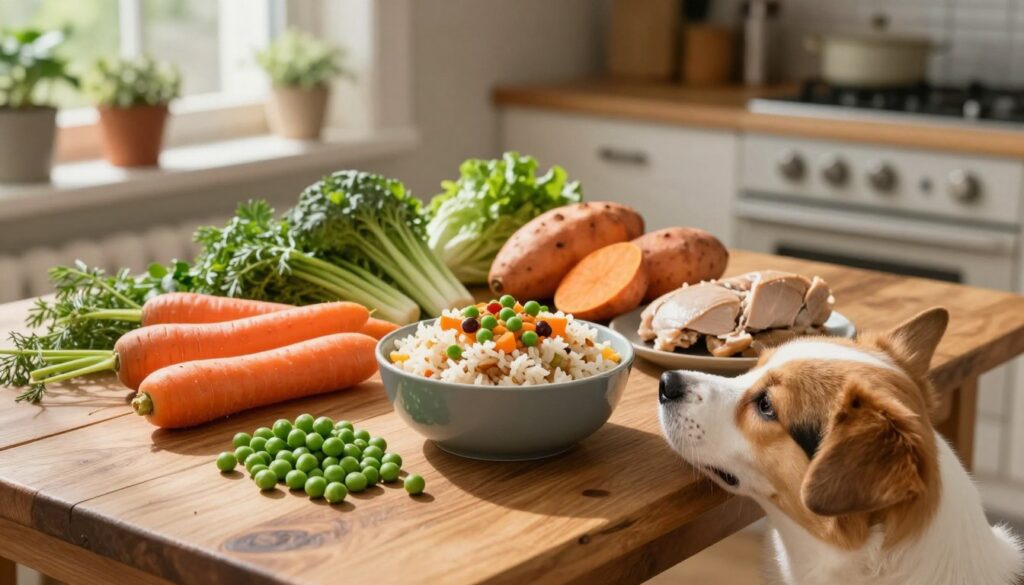
Using rice as a topper rather than the main ingredient
Think of rice as a flavorful topper not the main food. Using it sparingly adds texture and variety without harming your dog’s health. This way, you avoid an unbalanced diet while giving your pet something special.
Building a safe rotation of dog-friendly foods
Variety is key, but it must be managed. A mix of safe foods for dogs keeps meals interesting and ensures a wide range of nutrients. Always introduce new foods slowly to watch for any digestive issues.
Appropriate vegetables and lean proteins
To make your dog’s meal better, add nutrient-rich foods with a bit of rice. Good choices include:
- Steamed green beans or carrots
- Boiled, skinless chicken breast
- Lean ground turkey
- Small amounts of plain pumpkin
Foods and table scraps to keep out of your dog’s bowl
Not all human food is safe for dogs, even if it seems okay. Many common table scraps are toxic or hard for dogs to digest. Avoid adding these to your dog’s bowl, even with rice:
- Onions, garlic, and chives
- Foods seasoned with salt, butter, or oil
- Grapes, raisins, or macadamia nuts
- Leftovers with xylitol or artificial sweeteners
By following these tips, you can make sure your pet eats the healthiest dog foods while keeping their diet balanced and safe. Remember, consistency is key for your dog’s long-term health.
Using Rice for Temporary Digestive Upset
If your dog has an upset stomach, a bland diet might help. Veterinarians often suggest this for mild stomach issues. Rice for dogs is a gentle, easy-to-digest energy source that won’t upset a sensitive stomach.
Why veterinarians may recommend a bland meal in limited situations
A bland diet is for short-term use with minor diarrhea or vomiting. It’s like a reset button for the stomach. It removes complex ingredients, letting the stomach rest and recover.
Combining plain rice with an appropriate lean protein
To make a balanced meal, pair plain white rice with lean protein. Boiled, skinless chicken breast or lean ground turkey work well. Make sure both are cooked thoroughly without fats, oils, or seasonings.
How long to use a temporary bland diet
This diet is a short-term solution. Experts suggest using it for just a few days. If your pet doesn’t get better in 48 hours, see your vet.
Why a bland diet does not treat every cause of vomiting or diarrhea
A bland diet with rice for dogs isn’t a cure-all. It helps with simple diet mistakes but not underlying issues like infections or organ problems. If your dog seems very sick or tired, get vet advice.
Transitioning your dog back to regular food gradually
When your dog’s digestion improves, start adding their regular food back slowly. Mix a bit of their kibble into the rice over several days. This gradual transition prevents upset stomachs and ensures they get all the nutrients they need.
Signs Rice Is Not Agreeing With Your Dog
Even simple ingredients like rice can sometimes trigger unexpected reactions in dogs. While many pets digest grains easily, rice and dog health are not always a perfect match for every individual animal. Observing your pet closely after a meal helps you identify potential issues before they become serious.
Digestive symptoms to watch after feeding rice
If your dog struggles to process rice, you may notice immediate changes in their behavior or bathroom habits. Common signs of digestive distress include:
- Increased flatulence or gas
- Soft stools or sudden diarrhea
- Visible abdominal discomfort or bloating
- A noticeable decrease in appetite
Possible signs of an allergic reaction or food intolerance
Beyond basic digestion, some dogs may experience an immune response to grains. Allergies are less common than simple intolerances, but they still occur. Watch for persistent scratching, red or inflamed skin, and ear infections that appear shortly after you add rice to their bowl.
“The key to managing your pet’s diet is consistency and careful observation of their physical response to new ingredients.”
Symptoms that require prompt veterinary attention
Certain reactions indicate that your dog is experiencing a medical emergency. You must contact your veterinarian immediately if you notice these severe warning signs.
Repeated vomiting, severe diarrhea, or blood in the stool
If your dog cannot keep food down or is passing blood, this is a major red flag. Do not wait for these symptoms to resolve on their own, as they can lead to rapid fluid loss and dangerous electrolyte imbalances.
Lethargy, abdominal pain, dehydration, or collapse
A dog that appears unusually weak, refuses to move, or shows signs of extreme pain requires urgent care. Dehydration is a serious risk when digestive upset is severe, and professional intervention is necessary to restore your pet’s stability.
What information to record for your veterinarian
When you speak with your vet about rice and dog health, having accurate data makes a big difference. Keep a simple log to help your doctor diagnose the problem quickly:
- The specific type of rice used (white, brown, or wild)
- The exact portion size and preparation method
- The time elapsed between feeding and the onset of symptoms
- Any other ingredients or medications given at the same time
Conclusion
Knowing if dogs can eat rice helps you make better choices for your pet. Plain, fully cooked rice is a gentle addition to their diet. It should be given without seasonings or fats.
Think of rice as a supplement, not a full meal. It’s best when used during temporary digestive issues. Always choose high-quality nutrition that meets your dog’s needs for protein and vitamins.
Watch your dog closely when introducing new foods. Keep an eye on portion sizes to help them stay healthy. If you notice any persistent symptoms, talk to your vet. They can guide you to ensure your dog stays well and full of energy.