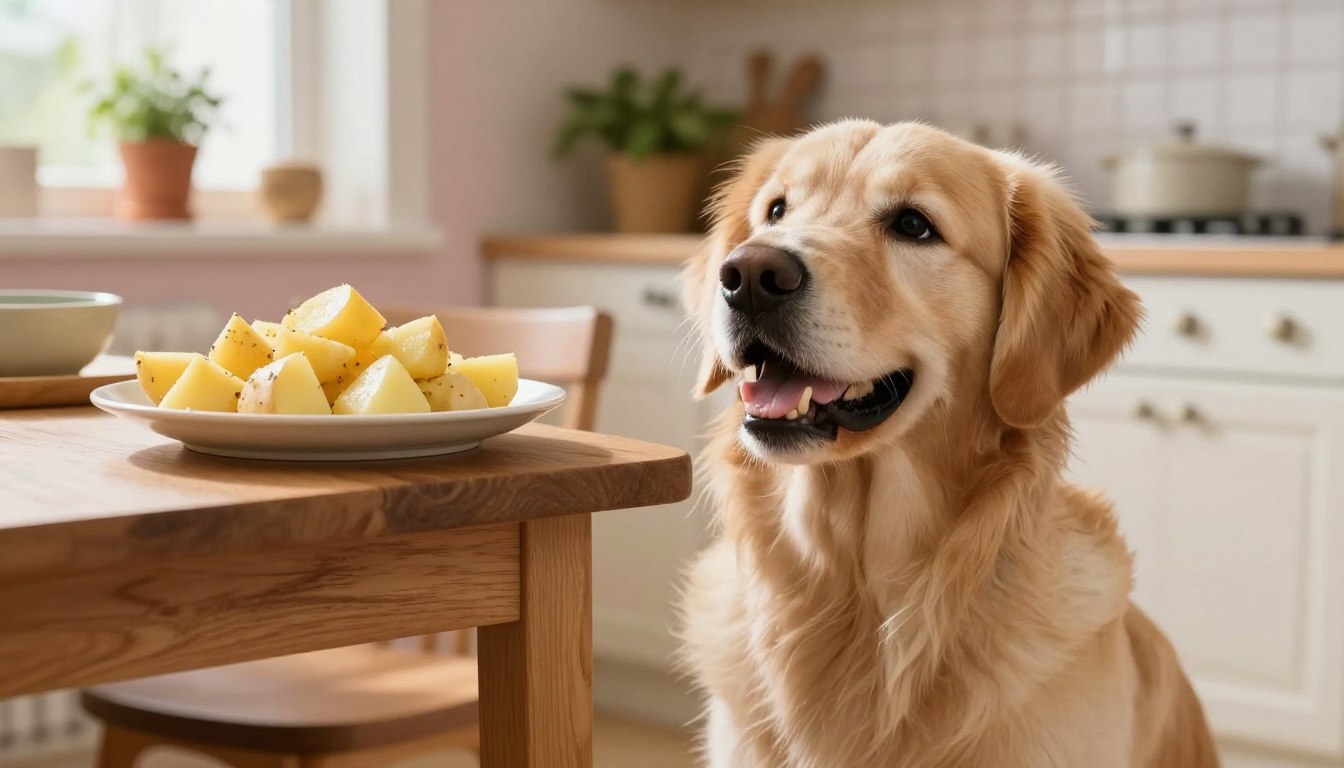
Can Dogs Have Potatoes? Safe Ways to Feed Potatoes to Dogs
As you prepare dinner, you can’t help but wonder if your dog wants a taste. It’s natural to want to share your favorite snacks. But, your pet’s health should always come first. Knowing what’s safe for their bowl is key to being a good owner.
Many wonder if can dogs have potatoes safely. The answer depends on how you prepare them. Cooked potatoes are okay because they have good nutrients. But raw potatoes have solanine, which is bad for dogs. Remember, moderation is important when introducing new foods.
By following simple steps, you can make sure your dog stays healthy and happy. Let’s look at how to safely give them potatoes
Table of Contents
Understanding the Nutritional Profile of Potatoes for Dog
Have you ever thought about how potatoes fit into a dog’s diet? These tubers are common in human food, but they’re different for dogs. If cooked right, they can add energy and important nutrients to a dog’s diet.
Essential Vitamins and Minerals Found in Potatoes
Potatoes have many nutrients that are good for dogs. Adding them in small amounts can give your pet a nutritional boost. This helps with their daily needs.
Here are some key nutrients:
- Vitamin B6: It helps with brain growth and keeps the nervous system healthy.
- Vitamin C: It’s an antioxidant that boosts the immune system and fights inflammation.
- Potassium: It’s important for muscle and heart health.
- Iron: It helps make healthy blood cells and carry oxygen.
The Role of Carbohydrates in Your Dog’s Energy Levels
Carbs are a main energy source for dogs. When dogs are active, the starch in potatoes turns into glucose. This gives them the immediate energy they need.
But, be careful not to give too many starchy foods. Too much can make dogs gain weight. It’s best to see potatoes as a treat or a small part of their diet, not the main food.
Watch your dog’s weight and activity when adding new foods. This balance ensures they get the good from dogs and potatoes without too much starch.
Can dogs have potatoes safely in their diet
Figuring out if it’s safe for dogs to eat potatoes means knowing how to prepare them. Humans often eat potatoes, but they’re not always good for dogs. Make sure to keep things simple and plain to keep your dog healthy.
Distinguishing Between Safe Preparation and Harmful Practices
When giving potatoes to dogs, they must be thoroughly cooked and plain. Never give your dog potatoes with salt, garlic, onion powder, or heavy oils. These can upset their stomach or even be toxic.
Commercial potato products like chips or fries are bad for dogs. They have too much fat and salt. Stick to plain, boiled, or steamed potatoes to keep your dog safe.
When Potatoes Should Be Excluded from Your Dog’s Meals
Potatoes aren’t right for every dog, even if they’re prepared well. Dogs with pre-existing metabolic conditions like diabetes or obesity should avoid them. The carbs can cause blood sugar to rise too fast.
Dogs with food sensitivities or stomach problems might not digest potatoes well. Always talk to your vet before adding new foods. If your dog seems tired or has stomach issues after eating, stop giving them potatoes.
The Dangers of Raw Potatoes and Solanine Toxicity
Potatoes are common in many homes, but they can be dangerous for dogs if not handled right. Many pet owners don’t know that dogs eating potatoes in their raw form can cause serious health issues. Knowing these risks helps keep your pet safe from eating something harmful.
What is Solanine and Why is it Toxic to Canines
Solanine is a poison found in plants like potatoes. It’s made when potatoes are exposed to light, showing up as green spots. This chemical protects the plant but is very harmful to dogs.
When dogs eat solanine, it can mess with their nervous system and stomach. Even a little bit can be dangerous because dogs are more sensitive to it than people. Always check your food before it gets to your dog.
Recognizing Symptoms of Potato Poisoning
Wondering if can potatoes make dogs sick if not cooked right? Yes, they can, and symptoms can show up quickly. Keep an eye on your dog for any sudden changes in behavior or health.
“Prevention is always better than treatment when dealing with household toxins. Always keep raw produce stored securely away from curious pets.”
Signs of poisoning include:
- Excessive drooling or foaming at the mouth
- Vomiting and severe diarrhea
- Lethargy or unusual weakness
- Dilated pupils and confusion
| Potato Part | Safety Status | Risk Level |
|---|---|---|
| Cooked Flesh | Safe | Low |
| Raw Skin | Unsafe | High |
| Green Spots | Toxic | Critical |
| Potato Eyes | Toxic | Critical |
Immediate Steps to Take if Your Dog Eats Raw Potatoes
If your dog eats raw or green potatoes, act fast. Call your vet right away and tell them how much your dog ate. Don’t wait for symptoms to get worse, as quick action is crucial for a good outcome.
Save a piece of the potato if you can. This helps the vet figure out how much your dog ate. If your dog seems sick, take them to an emergency vet. Remember, can potatoes make dogs sick is a real concern, so keep raw veggies away from your dog.
How to Properly Prepare Potatoes for Your Dog
When you decide to feed potatoes to dogs, how you prepare them is key. You should handle them with the same care as your own food to avoid health risks. By following a few simple steps, you can make a raw potato a safe and healthy snack for your dog.
The Importance of Thorough Washing and Peeling
First, wash the potatoes under cold water to get rid of dirt and pesticides. Thorough cleaning is crucial, but often missed. Then, peel the skin off completely to remove any remaining dirt or contaminants.
Removing Green Spots and Eyes Before Cooking
Check each potato for green spots or sprouts, known as “eyes.” These spots have more solanine, a harmful compound. Always cut away these sections before cooking to keep your dog safe.
Why Skin Removal is Crucial for Digestibility
Removing the skin is not just for safety; it’s also for your dog’s comfort. Potato skins are hard for dogs to digest. Serving only the soft, cooked flesh helps your pet digest the meal without upset or bloating.
| Preparation Step | Action Required | Reasoning |
|---|---|---|
| Washing | Scrub under water | Removes dirt and chemicals |
| Peeling | Remove all skin | Improves digestibility |
| Inspection | Cut out green spots | Prevents toxin ingestion |
| Cooking | Boil until soft | Ensures safe texture |
By following these steps, feeding potatoes to dogs becomes safer. Remember, the goal is to give a nutritious treat that supports your dog’s health, not causes digestive stress.
Boiling and Steaming: The Healthiest Cooking Methods
Choosing the best potatoes for dogs is crucial. The cooking method matters a lot too. It makes sure your pet gets the good stuff without the bad. Simple, clean cooking is key to a safe, tasty treat for your dog.
Step-by-Step Guide to Boiling Potatoes for Dogs
Boiling is easy and makes potatoes soft for your dog. But, it’s important to do it right to avoid harm. Here’s how to boil potatoes safely:
- First, scrub the potato well to get rid of dirt.
- Then, peel it to avoid solanine, a bad stuff.
- Cut it into small cubes for even cooking.
- Put the cubes in a pot of plain water, without salt, butter, or oil.
- Boil until they’re tender, then drain and serve.
Retaining Nutrients Through Proper Steaming Techniques
Steaming is better for keeping vitamins in the potato. Since the potato isn’t in water, more nutrients stay in. This makes steamed potatoes a top choice for dogs needing a healthy snack.
To steam, put your potato chunks in a steamer basket over boiling water. Cover the pot to keep the steam in. This cooks the potato gently, keeping it low-fat and healthy for your dog.
Why You Should Avoid Fried and Seasoned Potatoes
Feeding potatoes to dogs needs care, especially with processed foods. Plain, cooked potatoes are okay, but restaurant or frozen ones have additives. Your dog’s digestive system is not designed to process the heavy fats and chemical seasonings that humans enjoy.

The Risks of Added Fats and Oils
Frying potatoes makes them absorb a lot of oil and butter. This can cause pancreatitis, a serious inflammation of the pancreas. Even a little bit of greasy potato skin can upset your pet’s stomach or make them gain weight.
Harmful Ingredients in Seasonings Like Garlic and Onion
Many potatoes, especially those from restaurants or packages, have garlic or onion powder. These belong to the Allium family and are highly toxic to canines. They can harm your dog’s red blood cells, causing anemia even in small amounts.
“The best approach to canine nutrition is to keep human-grade seasonings far away from your dog’s bowl. Simple, plain, and unadorned foods are always the safest choice for your pet’s health.”
Why Salt Content is Dangerous for Canine Kidneys
Too much salt is a big worry when giving potatoes to dogs. High sodium can cause dehydration and stress your dog’s kidneys. Long-term salt use can lead to serious kidney problems that need quick vet care.
| Preparation Method | Safety Level | Risk Factor |
|---|---|---|
| Boiled (Plain) | Safe | None |
| Fried in Oil | Dangerous | Pancreatitis |
| Seasoned (Garlic/Onion) | Toxic | Anemia |
| Salted/Processed | Unsafe | Kidney Stress |
Identifying Potential Allergic Reactions and Digestive Issues
When you introduce new foods to your dog, watch their health closely. Many dogs love cooked potatoes, but you need to watch for signs of trouble. Knowing how to spot these signs early is crucial for your dog’s well-being.
Common Signs of Food Sensitivity in Dogs
Some dogs might not get along with potatoes, even though they’re common. You might wonder, can potatoes make dogs sick if they’re allergic? Look out for vomiting, diarrhea, or changes in stool after they eat potatoes.
Also, check your dog’s skin and coat. If they’re scratching a lot, have red spots, or hives, it could be an allergy. If you see these signs, stop the potatoes and talk to your vet.
Monitoring Your Dog After Introducing New Foods
Introducing new foods should be done slowly and carefully. Start with a tiny bit to see how your dog reacts. This way, you can figure out if something is wrong if they act sick.
Keep a log of what you feed your dog and when. If you’re worried about can potatoes make dogs sick, watch them for 24 to 48 hours after eating potatoes. Consistency in watching them helps you catch allergies early.
Comparing Sweet Potatoes vs White Potatoes for Canine Health
Choosing the best potatoes for dogs means looking at white and sweet potatoes’ nutritional values. Both are safe for dogs, but they offer different health benefits. Knowing these differences helps you pick the right food for your dog’s needs.
Nutritional Differences Between Varieties
Sweet potatoes are a nutritional powerhouse. They’re full of beta-carotene, which turns into Vitamin A, and lots of fiber. This fiber is great for regular bowel movements and a healthy gut.
White potatoes, on the other hand, are mostly simple carbs. They have Vitamin C and potassium, but not as much as sweet potatoes. White potatoes give dogs a quick energy boost, not lasting nutrition.
Which Potato Type is Better for Sensitive Stomachs
Sweet potatoes are better for dogs with sensitive stomachs. Their complex carbs are easier to digest and don’t cause blood sugar spikes. This makes them safer for dogs needing to manage their glucose levels.
White potatoes can be tough for sensitive dogs to digest, especially if not cooked right. If your dog often gets upset stomachs, sweet potatoes are safer. Always check with your vet before giving white potatoes to your dog. Here’s a table to help you pick the best potatoes for dogs.
| Feature | Sweet Potato | White Potato |
|---|---|---|
| Primary Nutrient | Vitamin A & Fiber | Starch & Potassium |
| Glycemic Index | Low to Moderate | High |
| Digestibility | High | Moderate |
| Best For | Sensitive Stomachs | Active Dogs |
Portion Control and Frequency of Feeding Potatoes
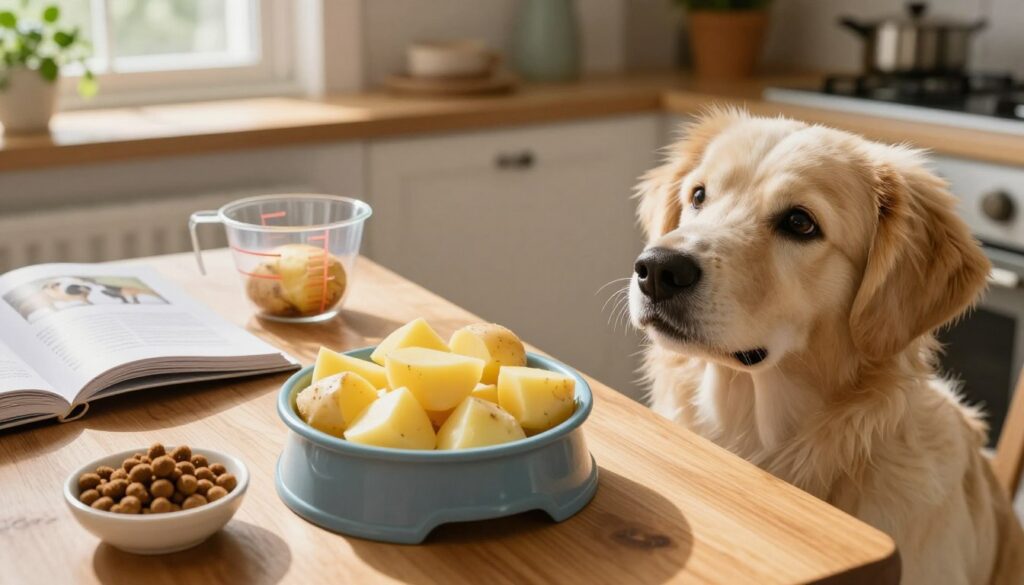
When adding potatoes to your dogs diet with potatoes, watch the portions closely. Potatoes are high in calories and can cause weight gain if not controlled. Treat them as a small addition, not a main part of their diet.
Determining the Right Serving Size Based on Weight
Finding the right amount depends on your dog’s size, activity, and health. A good rule is to keep extra food under 10% of their daily calories. Always check with your vet for your dog’s specific needs.
Here are some basic guidelines for a healthy, active adult dog:
- Small breeds (under 20 lbs): No more than one small, bite-sized cube.
- Medium breeds (20-50 lbs): Up to two small, bite-sized cubes.
- Large breeds (over 50 lbs): A maximum of three small, bite-sized cubes.
Use this table to understand how to add these portions to your dog’s routine:
| Dog Size | Daily Limit | Frequency |
|---|---|---|
| Small | 1/2 ounce | Occasional |
| Medium | 1 ounce | Occasional |
| Large | 2 ounces | Occasional |
Treats vs Meals: How Often Can Dogs Have Potatoes
Potatoes should never be a main meal for your dog. They are best as an occasional reward or a small addition to their regular meal. If your dog starts to gain weight, cut back on potatoes right away.
By limiting dogs diet with potatoes to small, occasional portions, you avoid obesity. Keeping portions small and consistent helps your dog enjoy potatoes safely. Always check your dog’s weight to keep them healthy.
Signs Your Dog May Have Eaten Too Many Potatoes
Potatoes can be a tasty treat for dogs, but eating too many can cause health problems. It’s key to watch your pet closely after they eat starchy foods. This ensures they stay comfortable and healthy.
Gastrointestinal Distress and Upset Stomach
If a dog eats too much starch, they might feel sick right away. You might see sudden vomiting, diarrhea, or a lot of gas soon after.
This happens because dogs’ stomachs can’t handle lots of carbs. If your pet seems tired or won’t eat after eating potatoes, their stomach is upset.
Long-term Effects of Excessive Starch Consumption
Eating too many potatoes can also harm your dog’s health over time. Too much starch can make them gain weight. This extra weight can hurt their joints and heart.
Dogs with health issues are at even greater risk. Diabetic dogs can face serious problems. The starch in potatoes can make their blood sugar levels drop too low.
By watching how much your dog eats, you can avoid these problems. Make sure they only get the good stuff from potatoes. Always choose a balanced diet to keep your pet healthy for the long run.
Integrating Potatoes into a Balanced Homemade Dog Diet
Creating a balanced meal plan for your dog often means using healthy foods like potatoes. When you think about dogs and potatoes, focus on getting the right nutrients. A good diet gives your dog the energy and vitamins they need to live a long, active life.
Consulting Your Veterinarian Before Changing Diets
Before changing your dog’s diet, always talk to a vet. They can check if a homemade diet is right for your dog. They’ll make sure you avoid any diet problems.
“The foundation of canine health is a diet that respects their biological needs while providing variety through safe, whole-food sources.”
Balancing Potatoes with Proteins and Vegetables
To manage a dogs diet with potatoes well, see potatoes as a carb source, not the main food. Mix cooked potatoes with proteins like lean chicken or beef. Add veggies like green beans or carrots for more nutrients.
The table below shows how to make a balanced meal for your dog. It keeps starches low and focuses on proteins and vitamins.
| Component | Role in Diet | Recommended Portion |
|---|---|---|
| Lean Protein | Muscle Support | 50% of meal |
| Cooked Potatoes | Energy Source | 20% of meal |
| Fresh Vegetables | Fiber & Vitamins | 30% of meal |
Watch your dog’s weight and energy when adding new foods. Keep the right balance to make sure your dog stays healthy. Proper planning is key to a happy, healthy dog.
Conclusion
Feeding your dog a balanced diet is key to their long-term health. You now know if dogs can have potatoes as part of their diet. Always choose plain, cooked potatoes to avoid harmful additives.
Your vet is the best person to talk to about your dog’s diet. They can help make sure your dog’s food is right for them. This way, you can avoid any problems with their digestion or sensitivities.
Remember, moderation is important when giving your dog treats. If you’re wondering if dogs can have potatoes, it’s all about how you prepare them. Keep the portions small and watch for any signs of trouble after introducing new foods.
Being a responsible pet owner means making smart choices about what your dog eats. By following these simple rules, you can give your dog the best care. It’s fun to find healthy treats that your dog will enjoy.
# Can Dogs Have Potatoes? Safe Ways to Feed Potatoes to Dogs
As a responsible pet owner, you want to give your dog healthy snacks. You might wonder if potatoes are good for them. Yes, dogs can have potatoes, but only if they are cooked right.
Premium brands like The Honest Kitchen or Blue Buffalo use potatoes in their recipes. But, it’s important to be careful when giving them to your dog from home. Raw potatoes are not safe because they have toxic compounds.
By understanding the risks and benefits, you can safely add potatoes to your dog’s diet.
## Understanding the Nutritional Profile of Potatoes for Dogs
Potatoes are more than just a filler. They have important nutrients that help your dog stay healthy. Giving them potatoes in small amounts can give them the energy they need.
### Essential Vitamins and Minerals Found in Potatoes
Potatoes are full of Vitamin C, which boosts the immune system. They also have Vitamin B6, which is good for the brain and blood cells. Plus, they have potassium and magnesium, which help with blood pressure and muscle health.
### The Role of Carbohydrates in Your Dog’s Energy Levels
Carbs are a main energy source for active dogs. Potatoes have complex carbs that help dogs stay active. But, too many carbs can lead to weight gain.
## Can dogs have potatoes safely in their diet
Potatoes are nutritious, but they must be prepared safely. Not all potato dishes are good for dogs, and some can be harmful.
### Distinguishing Between Safe Preparation and Harmful Practices
A safe potato for dogs is plain, cooked, and peeled. Avoid adding fats or seasonings. This keeps the potato simple and safe for your dog.
### When Potatoes Should Be Excluded from Your Dog’s Meals
Don’t give potatoes to dogs with diabetes or metabolic issues. They can cause blood sugar spikes. Also, avoid potatoes for overweight or inactive dogs to prevent health problems.
## The Dangers of Raw Potatoes and Solanine Toxicity
Never give raw potatoes to your dog. Raw potatoes have toxins that are harmful.
### What is Solanine and Why is it Toxic to Canines
Solanine is a natural defense in raw potatoes. It’s toxic to dogs and can cause serious health issues. It’s most dangerous in the skin and green parts of the potato.
### Recognizing Symptoms of Potato Poisoning
If your dog eats raw potatoes, watch for vomiting, diarrhea, lethargy, and confusion. In severe cases, it can cause heart problems. If you think your dog ate raw potatoes, call VCA Animal Hospitals or your vet right away.
## How to Properly Prepare Potatoes for Your Dog
To safely give potatoes to your dog, you need to prepare them carefully. This starts in the kitchen.
### The Importance of Thorough Washing and Peeling
Always wash potatoes to remove dirt and pesticides. Peel the potato before cooking. The skin is hard to digest and has more solanine.
### Removing Green Spots and Eyes Before Cooking
Check every potato for green spots or “eyes.” These areas have toxins. If a potato is mostly green, throw it away to keep your dog safe.
## Boiling and Steaming: The Healthiest Cooking Methods
How you cook potatoes affects their nutritional value and digestibility.
### Step-by-Step Guide to Boiling Potatoes for Dogs
Boiling is a common way to cook potatoes for dogs. Dice the peeled potato and boil it in plain water until soft. Don’t add salt or seasonings.
### Retaining Nutrients Through Proper Steaming Techniques Steaming keeps more nutrients than boiling. It makes the potato soft and keeps its health benefits.
## Why You Should Avoid Fried and Seasoned Potatoes
Fried potatoes are not good for dogs. They have harmful ingredients that can cause pancreatitis.
### The Risks of Added Fats and Oils
Fried potatoes have trans fats and oils. These can cause pancreatitis in dogs, a serious condition.
### Harmful Ingredients in Seasonings Like Garlic and Onion
Many potato dishes have garlic or onion powder. These are toxic to dogs and can cause anemia. Keep seasoned potatoes away from your dog.
## Identifying Potential Allergic Reactions and Digestive Issues
Every dog is different, and some may not like potatoes. Watch for signs of intolerance like loose stools or itchy skin.
### Common Signs of Food Sensitivity in Dogs
Look for signs of intolerance like loose stools or itchy skin. If your dog shows these symptoms after eating potatoes, remove them from their diet.
### Monitoring Your Dog After Introducing New Foods
Start with a small amount, like a teaspoon, and watch for 24 hours. If your dog’s digestion is normal, you can give them potatoes as an occasional treat.
## Comparing Sweet Potatoes vs White Potatoes for Canine Health
Choosing between white and sweet potatoes depends on your dog’s health. Sweet potatoes are better for dogs with sensitive stomachs.
### Nutritional Differences Between Varieties
Sweet potatoes have more Vitamin A and fiber, which are good for vision and digestion. They are also lower in glycemic index, which is better for blood sugar.
### Which Potato Type is Better for Sensitive Stomachs
If your dog has a sensitive stomach, sweet potatoes are better. They are easier on the blood sugar and less likely to cause digestive issues.
## Portion Control and Frequency of Feeding Potatoes
When adding potatoes to your dog’s diet, remember moderation. They should not replace a balanced diet.
### Determining the Right Serving Size Based on Weight
Treats should not make up more than 10% of your dog’s daily calories. Small dogs need small portions, while larger dogs can have a bit more.
### Treats vs Meals: How Often Can Dogs Have Potatoes
Potatoes should be an occasional treat, not a daily meal. Daily potatoes can lead to weight gain and nutritional imbalances.
## Signs Your Dog May Have Eaten Too Many Potatoes
If you give your dog too many potatoes, they will show signs of distress.
### Gastrointestinal Distress and Upset Stomach
Too many potatoes can cause stomach upset. They are high in starch, which can overwhelm the digestive system and lead to diarrhea or a bloated stomach.
### Long-term Effects of Excessive Starch Consumption
A diet too rich in potatoes can lead to obesity and joint problems. Some studies suggest it may also increase the risk of heart disease in certain breeds. Always prioritize protein over starch.
## Integrating Potatoes into a Balanced Homemade Dog Diet
If you’re moving to a homemade diet, potatoes can be a good source of carbs. But, always consult a vet first.
### Consulting Your Veterinarian Before Changing Diets
Before making potatoes a regular part of your dog’s diet, talk to a vet. They can help ensure your dog’s health profile can handle the extra starch and calories.
### Balancing Potatoes with Proteins and Vegetables
In a homemade meal, pair potatoes with proteins and vegetables. This ensures your dog gets a balanced diet, not just carbs.
## FAQ
### Q: Can dogs have potatoes if they are cooked?
A: Yes, cooked potatoes are safe for dogs. Boil, steam, or bake them without salt or seasonings to make them a healthy snack.
### Q: Can potatoes make dogs sick?
A: Yes, raw potatoes or those with green spots and sprouts can be toxic. Fried or seasoned potatoes can also cause pancreatitis or sodium poisoning.
### Q: What are the best potatoes for dogs?
A: While white potatoes are okay, sweet potatoes are better. They have more fiber and Vitamin A and are gentler on blood sugar.
### Q: Is it okay to include potatoes in a dogs diet with potatoes daily?
A: It’s best to keep potatoes as an occasional treat. Daily potatoes can lead to weight gain and nutritional imbalances unless part of a balanced homemade diet.
### Q: How do I know if dogs eating potatoes are having an allergic reaction?
Watch for signs of intolerance like skin irritation, chronic ear infections, vomiting, or diarrhea. If your dog shows these symptoms after eating potatoes, remove them from their diet.
### Q: Can dogs eat potato skins?
No, always peel potatoes before giving them to your dog. The skin is hard to digest and can be toxic.