Can Dogs Eat Corn on the Cob? What Pet Owners Need to Know
Imagine you’re at a summer barbecue, and your dog looks up at you with big, sad eyes. You might want to give them a bite of your food. But, is that corn on the cob safe for them? Your pup’s health is your top priority, and it’s important to be careful with human food.
While plain kernels are usually okay, the hard part of the cob is a big risk. It can cause a serious risk of gastrointestinal obstruction. If your dog swallows big pieces, they might need emergency surgery. It’s crucial to know the difference between a safe snack and a dangerous one.
In this guide, we’ll talk about how to give snacks safely and what signs to watch for. We’ll also cover when to get vet help if your pet eats something they shouldn’t. Prevention is the best way to keep your home happy and healthy.
Table of Contents
Can Dogs Eat Corn on the Cob?
When you grill outdoors, you might wonder if dogs can eat corn on the cob. It’s a common question for pet owners who want to share summer snacks. But, it’s important to know the difference between the vegetable and the cob it grows on.
The Short Answer for Dog Owners
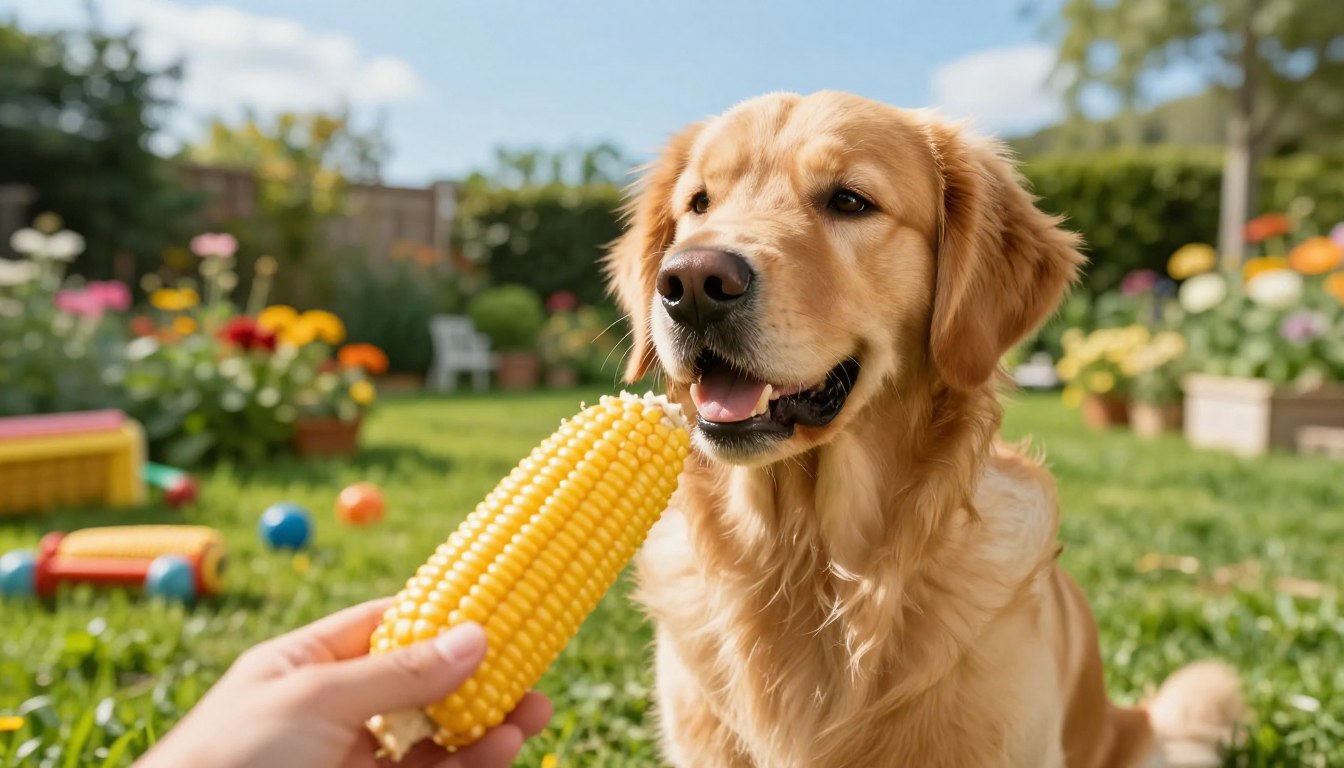
Never give your dog a whole corn cob. While kernels are safe, the cob is dangerous. Keep cobs away from your dog at all times.
Why Corn Kernels Differ From the Cob
Corn kernels and the cob are different. Kernels are soft and nutritious. The cob, however, is hard and fibrous, hard for dogs to digest.
Plain, Cooked Corn Kernels in Moderation
Offer plain, cooked corn kernels in small amounts. Make sure they’re free from butter, salt, and seasonings. Moderation is key to avoid digestive issues or weight gain.
The Cob as a Choking and Obstruction Hazard
The main danger is when a dog swallows a cob piece without chewing. The hard cob can block the throat or get stuck in the stomach or intestines. This can be life-threatening and may need emergency surgery.
Why Corn on the Cob Is Dangerous for Dogs
Ever wondered why a simple cob can harm your dog? It’s because of its shape and how dogs eat. Many dogs swallow food quickly, which raises the risk of choking on big pieces.
How the Cob Can Become Lodged in the Throat
The cob’s size and shape make it a choking hazard. If a dog swallows a big piece, it can get stuck in the throat. This immediate obstruction stops the dog from breathing and needs quick help.
Why Dogs Cannot Reliably Digest the Cob
The cob is hard and fibrous, unlike the soft corn kernels. Dogs can’t digest it. Even if swallowed, the cob stays hard and can cause problems in the digestive system.
Intestinal Blockages and Other Serious Complications
The cob can get stuck in the intestines. This blocks food and water, causing a serious medical emergency. It can damage tissues or even cause the intestines to rupture.
Warning Signs of a Gastrointestinal Obstruction
Watch your dog for sudden changes after eating corn. Look for vomiting, extreme tiredness, and belly pain. A lack of appetite or trouble passing stool are also signs of trouble.
Why a Blockage Can Become Life-Threatening
An untreated blockage is extremely dangerous and can be deadly. It can cause dehydration and imbalances in electrolytes. Without surgery, it can lead to tissue death, which is often fatal for dogs.
Is Corn on the Cob Safe for Dogs in Any Form?
Whether your dog can enjoy corn depends on how it’s served. Many ask, is corn on the cob safe for dogs. The answer is no for the cob, but kernels can be safe if prepared right.
Safe Ways to Offer Corn Without the Cob
To share a snack, remove the kernels from the cob first. Make sure the corn is plain, cooked, and unseasoned. Avoid butter, salt, or spices to prevent stomach upset or health problems.
Give small portions as treats, not as a meal. This keeps your dog happy and healthy.
Why You Should Remove the Husks, Silk, and Cob
The cob, husks, and silk are not digestible for dogs. They can cause a blockage in the digestive tract, which is dangerous. Even small pieces of the cob can harm your dog’s insides.
“When it comes to human foods, the safety of your pet depends on your ability to identify hidden hazards. Always prioritize digestibility over convenience.” — Veterinary Nutritionist
When Corn Should Be Avoided Entirely
Not all dogs can safely eat corn, even if it’s prepared right. Always talk to your vet before adding new foods to your dog’s diet.
Dogs With Food Sensitivities or Digestive Disease
For dogs with chronic stomach problems, corn might cause inflammation or discomfort. Dogs with allergies or sensitive stomachs need a controlled diet to avoid problems.
Dogs With Diabetes, Obesity, or Specialized Diets
Corn has a lot of carbs, which can raise blood sugar levels. For dogs with diabetes or obesity, these extra calories are bad. Always follow your vet’s dietary plan.
| Corn Part | Safety Status | Reasoning |
|---|---|---|
| Kernels (Plain) | Safe | Digestible and nutritious in moderation. |
| Corn Cob | Dangerous | High risk of intestinal obstruction. |
| Husks/Silk | Dangerous | Indigestible and can cause blockages. |
| Seasoned Corn | Avoid | Salt and fats cause digestive distress. |
While is corn on the cob safe for dogs is a common question, focus on safe preparation. Remove the cob and use plain kernels to safely share a treat with your dog.
Risks of Feeding Dogs Corn on the Cob
Feeding dogs corn on the cob can be dangerous. It can cause serious health problems. Knowing the risks of feeding dogs corn on the cob helps keep your pet safe.
Choking, Vomiting, and Abdominal Pain
If a dog tries to swallow a cob, it might get stuck. This can cause intense distress. Your dog may choke, vomit, and feel pain in their belly.
You might see your dog pacing or acting restless. They’re trying to find relief from the pain inside.
Partial Versus Complete Intestinal Obstruction
The size of the cob piece matters. A small piece might cause vomiting or diarrhea. But a big piece can block everything and is a serious emergency.
Fat, Salt, and Seasoning-Related Health Problems
Butter and other toppings on corn can be harmful. They can cause pancreatitis, a painful condition. It needs hospital care and special diets to get better.
Butter and Other High-Fat Toppings
Butter and oils make corn very fatty. Dogs can’t handle this well. It can lead to pancreatitis, a serious condition.
Garlic, Onion, Chili, and Barbecue Seasonings
Seasonings like garlic and onion are toxic to dogs. They can harm red blood cells and cause anemia. Spicy toppings can also upset their stomach, leading to vomiting and dehydration.
Can Puppies Have Corn on the Cob?
When raising a young dog, you might wonder if corn on the cob is safe. It’s natural to want to share your favorite foods. But, you must always put your pet’s safety first. Many owners ask, can puppies have corn on the cob, and the answer is a firm no.
Why Puppies Face Greater Choking and Obstruction Risks
Puppies have smaller airways and narrower digestive tracts than adult dogs. This makes them at a significantly higher risk for choking or intestinal blockage. A corn cob is a dense, indigestible object that can easily get stuck in a puppy’s system. This could lead to emergency surgery.
Age-Appropriate Ways to Introduce Plain Corn
If your vet says it’s okay, you can give a few soft, plain kernels. Never give the cob, as it’s not nutritious and is very dangerous. Only give these kernels after your puppy is eating a high-quality, age-appropriate complete diet.
How to Keep Corn From Replacing Balanced Puppy Food
Growing puppies need precise nutrition for their fast growth. Treats, including corn, should not make up more than 10% of their daily calories. If you give too many snacks, they might not eat their balanced meals. This can cause nutritional deficiencies.
Portion Considerations for Small and Toy-Breed Puppies
Even a small amount of corn can be too much for small or toy-breed puppies. Their stomachs are tiny, and their digestive systems are sensitive. Here are some guidelines for treats:
- Keep portions to a single, soft kernel.
- Ensure the corn is cooked thoroughly and served plain.
- Monitor your puppy closely for any signs of digestive upset.
When to Ask Your Veterinarian Before Offering Treats
Always talk to your vet before adding new human foods to your puppy’s diet. They can give advice based on your puppy’s breed, weight, and health history. If you’re still unsure, can puppies have corn on the cob, your vet is the best person to ask.
How to Serve Corn Safely to Your Dog
Many owners wonder how to safely include corn in their dog’s diet. They want to avoid the risks of the cob. While dogs and corn on the cob are dangerous, the kernels can be a healthy snack if done right.

Remove the Corn From the Cob Completely
Make sure every kernel is off the cob before giving it to your dog. Use a sharp knife to cut the kernels off. Never give the cob, as it’s a choking hazard.
Serve Plain, Cooked, and Unseasoned Kernels
Always give corn plain. Don’t add butter, salt, garlic, or onion powder. These can upset your dog’s stomach or be toxic. Cook the corn well to help your dog digest it.
“The secret to a healthy treat is simplicity; keep it plain and keep it small to ensure your pet stays happy and safe.”
Offer a Small Portion as an Occasional Treat
Corn should be a rare treat, not a regular part of your dog’s diet. A few tablespoons are enough for most breeds. Too much can cause weight gain or stomach problems.
Cutting Kernels for Small Dogs
If you have a small dog, mash or chop the kernels. This helps prevent choking. Small dogs need extra care to make sure they chew their food well.
Supervising Your Dog While Eating
Always watch your dog when they eat treats. This way, you can stop them if they choke or seem uncomfortable. It’s crucial for dogs that eat quickly.
Store and Dispose of Corn So Your Dog Cannot Reach It
Even after eating, leftover cobs can still be a danger. Discarded cobs are tempting to curious pets. Secure your garbage cans with lids to keep your dog away. Accidents with dogs and corn on the cob can happen unexpectedly.
How Much Corn Can Your Dog Eat?
Knowing how much corn your dog can eat is key to being a good pet owner. Many wonder if can puppies have corn on the cob, but the answer is no. This is because corn can block their digestive system. For adult dogs, corn should only be a rare treat, not a regular part of their diet.
Use Corn as a Treat Rather Than a Meal
Corn is not a full meal for dogs. It should not replace the good food your vet recommends. Treats should not be more than ten percent of your dog’s daily food to keep them healthy.
Adjust Portions to Your Dog’s Size and Calorie Needs
The right amount of corn depends on your dog’s size, how active they are, and their health. Small dogs need less corn than big, active dogs. If your dog has health issues like diabetes or obesity, talk to your vet before giving them more carbs.
Account for Corn in Commercial Dog Foods and Treats
Many dog foods already have corn as a main ingredient. If your dog eats a lot of corn already, adding more can lead to too many calories. Always check the labels of your dog’s snacks to avoid too much of the same ingredients.
Signs Your Dog Ate Too Much Corn
Too much corn can upset your dog’s stomach. Look out for signs like excessive gas, loose stools, or vomiting after they eat it. If your dog seems tired or doesn’t want to eat, they might have eaten too much.
When Mild Digestive Upset Requires Veterinary Advice
Most stomach issues get better in a few hours. But, keep an eye on your dog. If they have ongoing discomfort, keep vomiting, or diarrhea for more than a day, call your vet. While you might worry about can puppies have corn on the cob, it’s best to get vet advice instead of trying to fix it yourself.
What to Do If Your Dog Eats Corn on the Cob
It’s scary when your dog eats a corn cob. Many wonder if can dogs eat corn on the cob. But, the cob is very dangerous. If your dog eats one, act fast to keep them safe.

Stay Calm and Determine What Your Dog Swallowed
First, take a deep breath and think clearly. Find out what your dog ate. Did they eat the whole cob, a big piece, or just a few kernels?
Look around to see how much is gone. If you have other pets, see who’s upset. Staying calm helps you get the facts right.
Call Your Veterinarian or an Emergency Veterinary Hospital
Don’t wait for symptoms to call for help. Call your vet or an emergency animal hospital right away. They know how to handle risks of feeding dogs corn on the cob and will tell you what to do next.
“Time is of the essence when dealing with potential gastrointestinal obstructions in pets. Early intervention often prevents the need for invasive surgical procedures.” — Veterinary Emergency Specialist
Do Not Induce Vomiting Unless a Veterinarian Directs You
Don’t try to make your dog vomit at home. Never induce vomiting without a vet’s say-so. A corn cob can hurt your dog’s esophagus or cause pneumonia if they vomit the wrong way.
Information to Give the Veterinary Team
When you call the clinic, be ready with details. This helps the staff get ready for you and take care of your dog.
| Information Category | Details to Provide | Why It Matters |
|---|---|---|
| Time of Ingestion | Approximate time elapsed | Determines digestion stage |
| Size of Cob | Estimated length or width | Assesses blockage risk |
| Current Symptoms | Vomiting, lethargy, or normal | Indicates severity level |
Why Prompt Advice Matters Even if Your Dog Seems Normal
You might think your dog is fine if they seem normal. But, a corn cob can cause serious problems inside your dog. Getting advice early helps your vet catch any issues before they get worse.
Signs Your Dog May Have Swallowed the Cob
If you think your dog ate a corn cob, knowing the signs can save their life. Many wonder if is corn on the cob safe for dogs. But, the cob itself is very dangerous for their digestive system. Spotting changes in your dog early can greatly help their recovery.
Immediate Choking and Breathing Symptoms
The risks of feeding dogs corn on the cob start right after they swallow it. You might see your dog trying to get something out of their mouth or neck. If the cob gets stuck in their throat, they could have trouble breathing, gasp loudly, or even collapse.
Early Digestive Warning Signs
When the cob gets to the stomach, the first signs might be small. Your dog might seem restless or show a bit of discomfort. Watch for any big changes in their behavior or energy in the first few hours.
Delayed Symptoms of an Intestinal Blockage
As the cob goes into the intestines, it can cause blockages. These symptoms can show up hours or even days later.
Repeated Vomiting, Drooling, or Loss of Appetite
One key sign is persistent vomiting. Your dog might also drool a lot or not want to eat. These signs mean their digestive system is having trouble moving things past the blockage.
Lethargy, Straining to Defecate, or a Painful Abdomen
Your dog might seem very tired or hide a lot. They could also have trouble going to the bathroom or have a swollen, sore belly. If they whine when you touch their belly, it’s a big warning sign.
| Symptom Category | Primary Indicators | Urgency Level |
|---|---|---|
| Respiratory | Gasping, choking, collapse | Critical |
| Digestive | Vomiting, loss of appetite | High |
| Physical | Abdominal pain, lethargy | High |
When Symptoms Require Immediate Emergency Care
Get immediate veterinary attention if your dog shows severe distress. Signs like trouble breathing, a lot of vomiting, or intense belly pain are emergencies. Don’t try to treat these at home, as a vet is needed to avoid serious harm.
How Veterinarians Diagnose and Treat a Corn Cob Obstruction
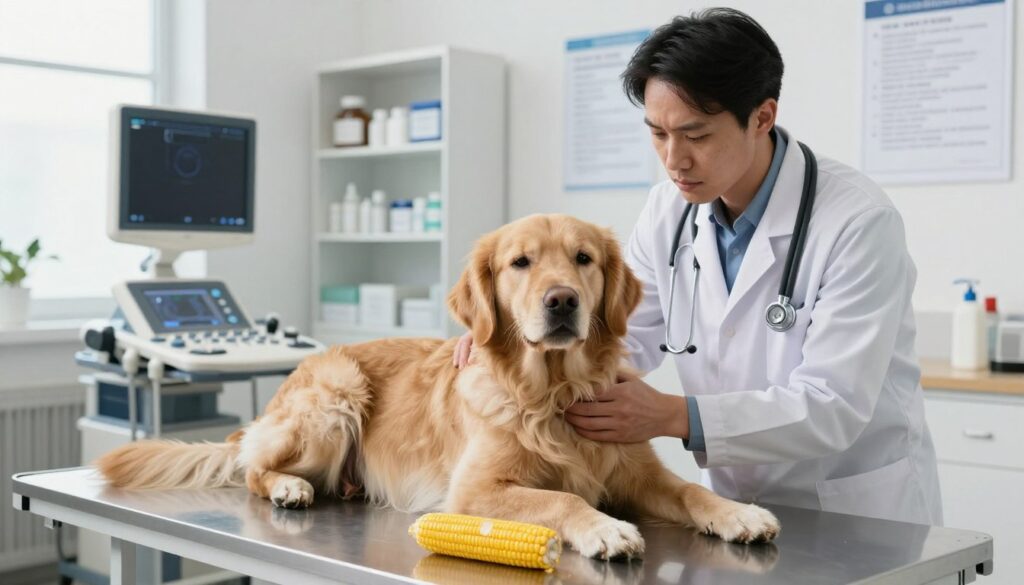
If you think your pet ate a corn cob, get them to the vet right away. The vet will do a full check-up to see if your pet is in distress. They will ask about the incident, like how long ago it happened and what was on the corn.
Physical Examination and Questions About the Incident
The vet will feel your dog’s belly to check for pain or swelling. This helps them know if the corn cob is still in the stomach or has moved. It’s important to tell the vet everything you know about the incident.
X-Rays, Ultrasound, and Other Diagnostic Tests
Corn cobs don’t always show up on X-rays because they are not very dense. The vet might use special tests or an ultrasound to see better. These tools help find out if there’s a blockage and where it is.
Monitoring, Endoscopy, or Surgical Removal
The treatment depends on where the blockage is and how bad it is. If it’s in the stomach, the vet might use an endoscope to get it out. But if it’s in the intestines, surgery is usually needed to avoid serious problems.
| Treatment Method | Best Used For | Invasiveness |
|---|---|---|
| Supervised Monitoring | Small, soft fragments | Low |
| Endoscopy | Stomach-bound objects | Moderate |
| Surgical Removal | Intestinal blockages | High |
Why Home Monitoring Should Only Follow Veterinary Guidance
Don’t try to handle a blockage at home without a vet’s advice. Waiting for it to pass can cause serious harm or an intestine rupture. Always follow the vet’s instructions to keep your dog safe.
Recovery Care After Treatment
After treatment, your dog will need to rest and not move much. They might get medicine for pain, antibiotics, or a special diet. Regular vet visits are vital to make sure your pet is getting better and to watch for infections.
Preventing Corn on the Cob Accidents at Home and Outdoors
To keep your dog safe from dogs and corn on the cob, you need to be proactive. Make sure food is stored safely and trash is thrown away correctly. Being consistent and watchful is key to protecting your pet.
Keep Cooked Corn and Leftovers Out of Reach
The kitchen is a common danger zone. Always put cooked corn in high places or closed cabinets right after cooking. Never leave food on low tables where dogs can get to it.
Use trash bins with tight lids to stop dogs from digging through trash. Clean up after meals by taking the trash outside to a closed bin. This keeps your pet from being tempted by garbage.
Teach Your Dog to Leave Food and Trash Alone
Training your dog is crucial. Teach them a “leave it” command to stop them from grabbing dropped cobs. Practice this with safe treats to make sure they listen, even when distracted.
Also, teach your dog not to look for food on counters or during walks. Positive reinforcement helps them understand ignoring food is good. A well-trained dog is less likely to find dogs and corn on the cob dangers.
Watch for Discarded Cobs at Cookouts, Parks, and Campgrounds
Outdoor places can be tricky because you can’t control what others throw away. Always keep your dog on a leash in places where food is served. Look for dropped items, especially in busy picnic spots.
Safe Summer Grilling and Picnic Practices
At barbecues, keep the grill area off-limits to your pet. Use high tables for serving food and tell guests not to feed your dog. Give your dog a safe chew toy to keep them busy while you eat.
Communicating Food Rules With Guests and Children
Guests and kids might not know how dangerous corn cobs are. Tell them that your dog’s stomach is sensitive and human food can be harmful. You can even put a sign near the food table to remind everyone.
| Location | Primary Risk | Prevention Strategy |
|---|---|---|
| Kitchen | Counter surfing | Use locking trash cans |
| Backyard | Discarded scraps | Supervise outdoor time |
| Public Park | Littered cobs | Keep dog on a leash |
| Picnic Area | Guest feeding | Clear communication |
Conclusion
Keeping your dog safe means always watching what they eat. You now know dogs can’t eat corn on the cob because it’s too dangerous. It can cause serious blockages in their intestines.
The cob itself is a big risk because dogs can’t digest it. This can lead to serious problems that need emergency surgery. Places like BluePearl or VCA Animal Hospitals might be needed.
You can give your dog plain, cooked kernels as a treat sometimes. But make sure to remove the husks, silk, salt, butter, and seasonings first. This keeps them safe.
If you think your dog ate a piece of the cob, call your vet right away. Quick action can help avoid serious health issues for your pet.
By keeping your dog safe, you can enjoy many happy years together. Always watch out for food that might be harmful to them. This keeps your home and parks safe for all pets.