How to Make Scrambled Eggs for Dogs Safely and Easily
There is nothing like the unconditional love your furry companion gives you each day. You may want to reward that loyalty with a nutritious snack that makes their tail wag.
Learning how to make scrambled eggs for dogs offers a simple, protein-rich treat. Prepared correctly, this dish can add wholesome nutrition to their routine.
Making homemade scrambled eggs for dogs requires fresh ingredients and thorough cooking. Avoid breakfast additives like salt, butter, and onions because they can harm your pet.
This guide covers everything you need across ten detailed sections. It explains preparation, safe serving sizes, storage tips, and common mistakes to help keep your pup happy and healthy.
Table of Contents
Why Plain Scrambled Eggs Can Be a Safe Dog Treat
Making safe scrambled eggs for pets means using simple, quality ingredients. Skip butter, salt, and onions to make a wholesome snack many dogs enjoy. Cook the eggs fully and keep them plain to protect your pet’s health.
How Eggs Provide Protein and Nutrients for Dogs
Eggs provide high-quality protein that most dogs can digest easily. They contain essential amino acids, which help build strong muscles and healthy skin. Eggs also provide B12, riboflavin, and fatty acids that support a shiny coat.
“Eggs are a complete protein source, meaning they contain all the essential amino acids a dog needs to thrive.”
When Eggs Should Be an Occasional Treat
Eggs are nutritious, but they should not replace balanced, commercial dog food. Treat them as a supplemental treat, not a main meal. Too many eggs may cause an unbalanced diet or unwanted weight gain.
- Limit egg treats to one or two times per week.
- Ensure the portion size is appropriate for your dog’s weight.
- Always prioritize your dog’s regular, nutritionally complete meals.
Health Conditions That May Require Veterinary Guidance
Before adding healthy scrambled eggs for dogs to your pet’s routine, consider its medical history. Some dogs have special dietary needs that make simple treats risky. Ask your veterinarian for advice if you doubt your dog’s tolerance.
Food allergies and sensitivities
Some dogs may be allergic to eggs, causing skin irritation or digestive distress. If your dog has food sensitivities, introduce eggs slowly and watch for harmful changes.
Pancreatitis, obesity, and low-fat diet concerns
Eggs contain natural fats that may harm dogs prone to pancreatitis. If your dog follows a strict low-fat diet or has obesity, count each egg’s extra calories and fat.
Prescription diets and existing digestive problems
Dogs with kidney or gastrointestinal issues often need strict prescription diets. Extra foods can disrupt their medical diet’s balance. Check with your vet before giving treats that might affect prescribed treatment.
Ingredients and Kitchen Tools for Dog-Friendly Scrambled Eggs
Making a dog-friendly scrambled eggs recipe needs only a few basic kitchen tools and ingredients. Use high-quality, plain ingredients to give your pet a nutritious treat without hidden additives. Good preparation habits help you serve a safe snack.
Choose Fresh, Plain Eggs
Choose fresh, high-quality eggs for your pet. Avoid eggs with cracked shells or unusual odors. Use plain eggs without seasonings or additives that could harm your dog.
Select a Dog-Safe Cooking Surface
Clean your cooking area and remove residue from previous meals. A sanitized stovetop and clean workspace help prevent cross-contamination. A tidy kitchen helps you prepare easy scrambled eggs for dogs safely.
Use a Nonstick Skillet Without Added Fat
Use a high-quality nonstick skillet to cook the eggs without butter, bacon grease, or excess oil. Avoiding added fats supports your dog’s digestive health and keeps the calorie count low.
Prepare a Clean Bowl, Fork, Spatula, and Serving Dish
Gather your tools before cooking to make the process smoother. You need a clean mixing bowl, a fork for whisking, and a heat-resistant spatula for stirring. Keep a dedicated serving dish ready to cool the eggs before your dog eats them.
| Tool | Purpose | Benefit for Dogs |
|---|---|---|
| Nonstick Skillet | Cooking | No added fats or oils needed |
| Whisk or Fork | Mixing | Ensures even texture |
| Silicone Spatula | Stirring | Prevents burning and sticking |
| Ceramic Bowl | Serving | Easy to clean and cool |
How to Make Scrambled Eggs for Dogs
Follow these basic steps to master a dog-friendly scrambled eggs recipe. This guide explains how to make scrambled eggs for dogs safely. This homemade snack gives your pet high-quality protein without hidden additives or harmful ingredients.
Crack and Inspect the Eggs
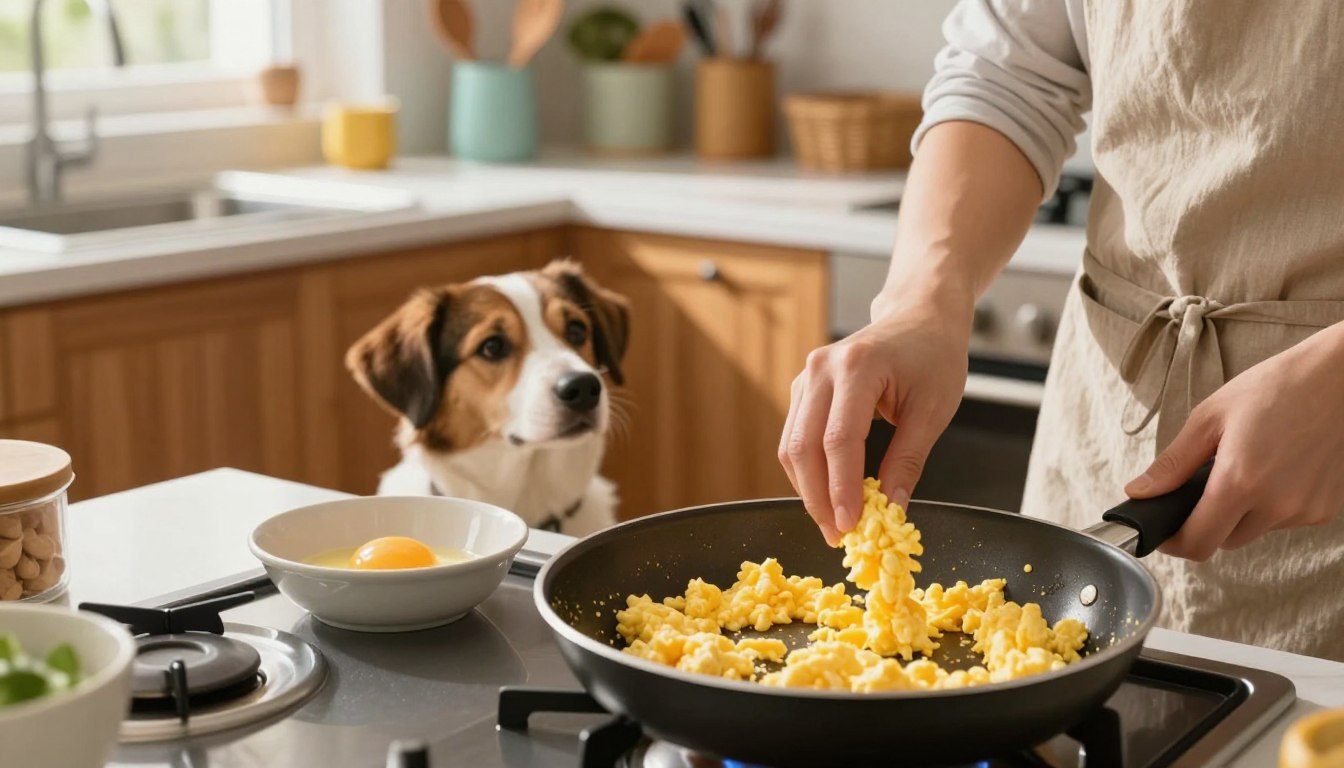
Crack fresh eggs into a clean bowl. Inspect them carefully for shell pieces. Removing shell fragments helps prevent choking and digestive irritation.
Whisk the Eggs Without Seasonings
Beat the eggs with a clean fork or whisk until yolks and whites combine. Keep the mixture plain. Do not add salt, pepper, milk, butter, or other seasonings, which can harm your dog.
Warm the Skillet Over Low to Medium-Low Heat
Place a nonstick skillet on the stove over low or medium-low heat. Use gentle heat to cook the eggs evenly without burning them. High heat can make eggs rubbery or create a charred crust that dogs may struggle to digest.
Cook the Eggs Until Fully Set
Pour the whisked eggs into the warm skillet. Watch the pan closely so the texture stays consistent.
Stir gently for small, soft curds
Slowly move the eggs around the pan with a spatula. This creates small, soft curds that your dog can chew and swallow easily.
Check that no wet or runny egg remains
Keep cooking until the eggs are completely firm. Ensure no wet or runny parts remain, because raw egg whites can interfere with nutrient absorption. The finished eggs should be thoroughly cooked and dry to the touch.
Cool the Eggs Before Serving
Remove the fully set eggs from the heat at once and place them on a cool plate. Let them reach room temperature before serving them to your pet. Use this canine scrambled eggs tutorial for a safe, tasty, healthy treat each time.
Ingredients to Avoid in Scrambled Eggs for Dogs
When cooking scrambled eggs for furry friends, be careful about what you add. These protein-packed snacks are usually healthy, but common human breakfast ingredients can harm dogs. Keep the recipe simple to help your dog stay safe and happy.
Keep Onions, Garlic, Chives, and Leeks Out of the Recipe
Never include members of the allium family in your dog’s food. Onions, garlic, chives, and leeks contain compounds that can damage red blood cells and cause anemia. Even small amounts, powdered or fresh, can seriously harm your pet.
Skip Salt, Pepper, Spice Blends, and Seasoning Packets
Human seasoning blends may contain hidden ingredients, such as onion powder or too much sodium. High salt intake can cause dehydration or sodium ion poisoning in dogs. Keep the eggs plain to prevent digestive distress.
Avoid Butter, Bacon Grease, and Excess Cooking Oil
Buttery foods and rich fats can upset a dog’s sensitive stomach. High-fat ingredients can trigger pancreatitis, a painful and dangerous inflammation of the pancreas. Use a nonstick surface instead of adding oil or fat to the pan.
Limit or Exclude Milk, Cream, Cheese, and Other Dairy Products
Many dogs are lactose intolerant and cannot digest dairy products well. Milk or cheese in your dog’s eggs can cause gas, bloating, or diarrhea. Omit these items when cooking scrambled eggs for furry friends.
Do Not Add Bacon, Sausage, Ham, or Processed Meat
Processed meats usually contain preservatives, nitrates, and high levels of salt. These additives do not suit a canine diet and may cause long-term health problems. Serve eggs alone instead of mixing them with breakfast meats.
Recognize Why Human Scrambled Egg Add-Ins Can Be Risky
Human breakfast dishes suit our tastes, not canine biology. Ingredients that seem harmless to us can be toxic or hard for dogs to process. Avoiding these add-ins protects your dog and keeps the treat healthy.
| Ingredient Category | Status | Reason for Avoidance |
|---|---|---|
| Onions & Garlic | Toxic | Causes red blood cell damage |
| Salt & Spices | Unsafe | Leads to dehydration and toxicity |
| Butter & Grease | High Risk | Can trigger pancreatitis |
| Processed Meats | Unsafe | Contains harmful preservatives |
Safe Serving Sizes for Different Dogs
When you prepare easy scrambled eggs for dogs, control the portion carefully. Eggs provide nutrients, but they should not become your pet’s main food. The right amount offers a tasty treat without causing digestive discomfort.
Start With a Small Taste
Before offering a full serving, start with a very small amount. This helps you watch your dog’s reaction to the new food. Observe your pet closely for stomach upset or allergic reactions after the first bite.
Adjust Portions for Small, Medium, and Large Dogs
The right serving depends on your dog’s weight and size. Adjust the amount so this treat remains a healthy part of the day. The table below gives general serving guidelines.
| Dog Size | Weight Range | Recommended Egg Portion |
|---|---|---|
| Small | Under 20 lbs | 1/4 to 1/2 egg |
| Medium | 20 – 50 lbs | 1/2 to 1 egg |
| Large | Over 50 lbs | 1 to 2 eggs |
Keep Treats Within Your Dog’s Daily Calorie Needs
Veterinarians generally recommend that treats make up no more than 10% of your dog’s total daily caloric intake. If your dog eats eggs, include those calories in the day’s total. Too many calories can cause weight gain and put extra stress on your dog’s joints.
Reduce the Regular Meal When Appropriate
For a larger egg serving, consider slightly reducing your dog’s regular meal. This helps maintain a healthy caloric balance. Managing total intake helps your dog stay at a healthy weight while enjoying favorite snacks.
Serve Eggs as a Supplement Rather Than a Complete Meal
Remember, easy scrambled eggs for dogs are a supplement. They lack all essential vitamins and minerals needed for a balanced canine diet. Always offer these eggs as a special reward, not a replacement for high-quality, nutritionally complete dog food.
How to Serve and Store Homemade Scrambled Eggs
Proper handling of homemade scrambled eggs for dogs keeps this snack safe and tasty for your pet. Simple guidelines protect the eggs’ nutrition and help keep your dog healthy.
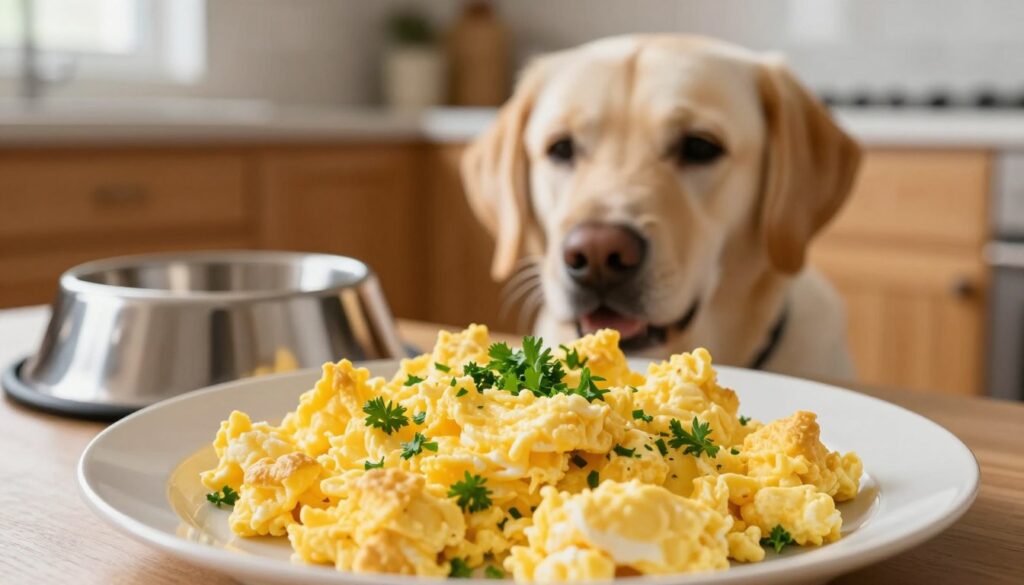
Serve the Eggs Plain and Fully Cooled
Let the eggs reach room temperature before placing them in your dog’s bowl. Hot eggs can cause uncomfortable burns in your dog’s mouth or tongue. Keep them plain, without seasonings or fats that could upset your dog’s stomach.
Mix a Small Amount With Your Dog’s Regular Food
Add a spoonful of eggs to your dog’s kibble to make a special meal. This can help picky eaters finish their food and add high-quality protein. Keep the portion small to avoid overfeeding.
Use Eggs as a Training Reward or Occasional Topper
Small pieces of cooked egg make high-value training treats during obedience sessions. These soft treats are easy to chew, so they reward good behavior quickly. Use them only as an occasional supplement to a balanced diet.
Refrigerate Leftovers Promptly in a Sealed Container
If you make a larger batch of homemade scrambled eggs for dogs, store the extra portions right away. Put the eggs in an airtight container, and refrigerate them for no more than two days. A sealed container stops the eggs from absorbing other refrigerator odors.
Discard Eggs That Sit Out Too Long or Develop an Odor
Food safety matters when preparing homemade scrambled eggs for dogs. If the eggs sit at room temperature for more than two hours, throw them away to prevent bacterial growth. Inspect the eggs before serving, and discard them if they smell unusual or sour.
How to Introduce Eggs and Monitor Your Dog
Learning to introduce safe scrambled eggs for pets can help prevent digestive issues. Eggs are nutritious, but each dog may react differently to new proteins. A slow approach helps your dog enjoy this snack without discomfort.
Offer a Small Portion the First Time
When serving eggs for the first time, offer a very small amount, such as a single teaspoon. This minimal serving helps you see how your dog’s stomach handles the new food. If your dog shows no distress after twenty-four hours, slowly increase future portions.
Watch for Vomiting, Diarrhea, Itching, or Other Reactions
After the initial taste, watch your pet closely for signs of an adverse reaction. Common symptoms include vomiting, diarrhea, or excessive itching, which may indicate food sensitivity. Some dogs may also show lethargy or bloating if the food does not agree with them.
“Always introduce new dietary items in moderation. Observing your pet’s behavior and physical response is the most effective way to ensure long-term health and happiness.”
Pause Egg Treats if Digestive Upset Occurs
If you notice digestive upset, stop offering the eggs immediately. Feed your dog its regular, bland diet for a few days while its system returns to normal. Wait until your dog is completely normal before reintroducing the treat.
Contact Your Veterinarian for Severe or Persistent Symptoms
Mild reactions often resolve on their own, but some cases need professional medical attention. Contact your veterinarian right away for severe vomiting, persistent diarrhea, or allergic signs like facial swelling. Caution is always best when managing your pet’s nutrition.
| Observation Stage | What to Look For | Recommended Action |
|---|---|---|
| Initial Taste | Excitement or refusal | Monitor for 24 hours |
| Post-Consumption | Vomiting or diarrhea | Pause treats immediately |
| Long-term | Itching or skin issues | Consult your veterinarian |
By following these steps, you can confidently offer safe scrambled eggs for pets as an occasional, healthy reward. Consistency and observation remain your best tools for maintaining your dog’s digestive health.
Common Mistakes When Cooking Scrambled Eggs for Dogs
Although cooking scrambled eggs for furry friends seems easy, small mistakes can make the meal unsafe. Even experienced pet owners may miss details that affect the snack’s quality. Following a proper canine scrambled eggs tutorial helps keep this treat tasty and safe.
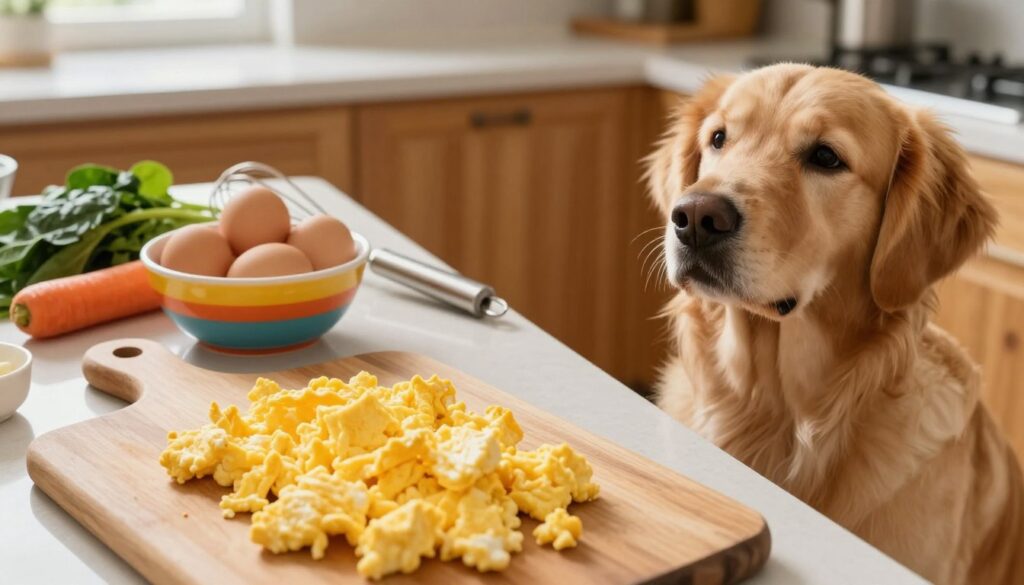
Serving Eggs Before They Cool
Serving eggs while they are piping hot is a common mistake. Dogs often gulp food, which can cause painful burns in the mouth or throat. Let the eggs reach room temperature before putting them in your dog’s bowl.
Using High Heat That Burns or Dries the Eggs
High heat can burn the edges or make eggs rubbery and hard for dogs to digest. It can also reduce the egg’s nutritional value. Use low to medium-low heat so the eggs stay soft and easy to chew.
Adding Human Breakfast Ingredients
Many people reach for salt, pepper, or butter when making eggs. These kitchen staples can harm or even poison your dog. Use plain, unseasoned eggs to prevent unnecessary digestive distress.
Offering Oversized Portions or Eggs Too Frequently
Your dog may enjoy eggs so much that you want to serve a large portion. However, treats should make up only a small part of your dog’s daily calories. Overfeeding can cause unwanted weight gain and nutritional imbalances.
Assuming Eggs Replace a Balanced Dog Food
Eggs are a helpful supplement, but they are not a complete meal. They lack the specific vitamins and minerals found in high-quality, formulated dog food. Offer eggs as an occasional snack, not a replacement for your dog’s primary diet.
| Common Mistake | Potential Risk | Corrective Action |
|---|---|---|
| Serving hot eggs | Mouth burns | Cool to room temperature |
| Using high heat | Indigestion | Use low heat settings |
| Adding seasonings | Toxicity | Keep the recipe plain |
| Large portions | Weight gain | Limit to small treats |
Conclusion
Healthy scrambled eggs for dogs can boost your pet’s protein intake. Turn this kitchen staple into a nutritious reward with plain, simple preparation.
Always avoid toxic ingredients, including onions, garlic, and chives. Leave out excess fats, salt, and dairy to keep your dog comfortable and happy. Serve modest portions to support a balanced diet and prevent unwanted weight gain.
Watch your dog when introducing new foods, and look for digestive sensitivity. Store leftovers properly to prevent spoilage and keep your kitchen routine efficient. Ask your veterinarian about your dog’s nutritional needs or health history.
Safe, high-quality snacks can strengthen your bond with your canine companion. Make healthy scrambled eggs for dogs a special part of your pet’s routine.