
How to make salmon and rice for dogs
Do you ever feel like your dog is looking at you with hope, waiting for a meal that’s good for them? Cooking homemade food is a beautiful way to show your love. By making salmon and rice for dogs, you give them a healthy, easy-to-digest meal.
First, make sure the fish is cooked to 145°F to kill harmful bacteria. Check every piece carefully to remove any small bones that could be dangerous. Adding plain, steamed veggies can also make the meal more nutritious.
In this guide, we’ll talk about important safety tips, how much to feed, and how to introduce new foods slowly. We’ll also cover how to store these meals and why they should be part of a balanced diet.
Table of Contents
Why Salmon and Rice Can Be a Nutritious Meal for Dogs
Looking for a healthy meal for your dog? Salmon and rice are a great choice. They offer a mix of nutrients that support your dog’s health. Knowing the benefits of salmon and rice for dogs helps you choose the best food for them.
Benefits of Salmon and Rice for Dogs
This meal is easy to digest and packed with nutrients. Salmon is full of amino acids, which are key for muscle and tissue health. It’s also gentle on dogs with sensitive stomachs.
Protein, omega-3 fatty acids, and carbohydrate contributions
Salmon is a top source of protein and omega-3 fatty acids. These fats keep your dog’s coat shiny and skin healthy. Rice gives your dog the carbs they need for energy.
| Nutrient | Primary Source | Key Function |
|---|---|---|
| Protein | Salmon | Muscle maintenance |
| Omega-3s | Salmon | Skin and coat health |
| Carbohydrates | Rice | Energy production |
When a homemade meal may support your dog’s diet
Homemade meals can be a great addition to your dog’s diet. They’re especially helpful when your dog is recovering from a minor upset stomach. A simple mix of boiled fish and rice can offer comfort and support.
Why homemade food should complement, not automatically replace, complete dog food
While salmon and rice are healthy, they don’t have all the nutrients your dog needs. They should be seen as a complementary addition to a complete dog food. Always check with a vet before making any big changes to your dog’s diet.
Check Whether Salmon and Rice Suit Your Dog
Before you start making salmon and rice for dogs, it’s key to know your dog’s health. This mix is good for digestion, but every dog is different. They all process food in their own way.
Dogs that may benefit from a simple salmon-and-rice meal
Many owners choose this meal for their dogs when they have stomach issues. The rice is easy to digest, and the salmon is a good protein. It’s a common choice for dogs with minor stomach problems or when they need a simple diet.
Health conditions that require veterinary guidance
If your dog has ongoing health problems, talk to a vet before changing their diet. Issues like pancreatitis or kidney disease need careful management of fat and protein. A homemade meal might not be right for these conditions.
Food allergies, sensitivities, and previous reactions to fish
Some dogs can’t handle certain foods, even healthy ones. If your dog reacts badly to fish, skip the salmon. Adding salmon and rice for dogs without checking their history could cause problems.
Signs that your dog may not tolerate salmon or rice
Keep a close eye on your dog after introducing salmon and rice for dogs. Look out for signs of intolerance, like:
- Persistent vomiting or diarrhea
- Excessive itching or skin redness
- Chronic ear infections or inflammation
- A sudden loss of appetite or lethargy
How your dog’s age, size, and activity level affect the recipe
Your dog’s age and activity level affect their diet needs. Puppies need more calories than older dogs. Adjust the salmon and rice for dogs recipe to keep them healthy at every stage of life.
Choose Safe, High-Quality Ingredients
When making salmon and rice for dogs, picking the right ingredients is key. Choose high-quality items to ensure your pet gets the best nutrition. Always go for fresh ingredients to keep your dog healthy and happy.
Selecting fresh, frozen, or canned salmon
Use fresh or frozen fillets that are fully cooked and deboned. If canned salmon is your choice, always check the label for added salt or oils. Make sure it’s packed in water to keep it safe for your pet.
Choosing plain white rice or brown rice
Both white and brown rice are great energy sources for salmon and rice for dogs. White rice is easier for sensitive stomachs, while brown rice has more fiber. Make sure the rice is plain and cooked well without any additives.
Dog-safe additions, including plain vegetables
Adding vegetables can make your homemade meals more nutritious. These extras provide important vitamins and minerals for your dog’s health. Always introduce new vegetables slowly to watch for any digestion issues.
Optional ingredients such as carrots, green beans, and pumpkin
Carrots, green beans, and plain pumpkin are great, nutrient-dense additions. Steam or boil these vegetables until they’re soft. This makes them easy for your dog to digest.
Ingredients and seasonings you must avoid
Some common kitchen items can be harmful or even deadly to pets. Avoid using any ingredients that could be toxic or cause stomach problems. Keeping your recipe simple is the safest choice for your dog.
Onions, garlic, excess salt, butter, oils, and toxic sauces
Never add onions or garlic to your salmon and rice for dogs as they are toxic. Also, skip adding salt, butter, or rich oils. Human sauces often have xylitol or spices that are harmful to dogs and should be kept away from their food.
Prepare the Salmon Safely for Your Dog
When you decide to make salmon and rice for dogs, how you prepare it matters a lot. Handling the fish right ensures your pet gets a safe and tasty meal.
Remove skin, bones, and unwanted fat before cooking
First, check the fish carefully. Remove all skin because it’s hard for dogs to digest and has too much oil. Also, trim off any fat and look for bones in the fillet.
Even if the package says it’s boneless, always check yourself. Taking these extra steps helps avoid choking hazards and stomach problems.
Cooking salmon thoroughly to reduce health risks
Cook the salmon until it’s 145°F inside. This is the safest temperature for your dog. Cooking it well kills off harmful germs.
Baking, poaching, and steaming methods
There are healthy ways to cook the fish without extra fats. Baking in the oven keeps it moist. Poaching in water or steaming are good choices because they don’t need oils or butter.
How to check the salmon for small bones after cooking
After cooking, flake the fish into small pieces. Use a fork to break it up and feel for bones with your fingers. Never skip this step because small bones can hurt your dog’s insides.
Why raw salmon, smoked salmon, and seasoned salmon are unsafe choices
Don’t give your dog raw, smoked, or seasoned salmon. These can make your pet very sick. Always use plain, cooked fish to keep them safe.
Parasites, bacteria, sodium, and preservatives to consider
Raw salmon has parasites and bacteria that can make pets sick. Smoked or seasoned fish has too much sodium and can harm dogs. Also, many seasonings have garlic or onion powder, which are toxic to dogs.
Cook the Rice and Combine the Ingredients
Making a salmon and rice for dogs bowl is easy. Use simple cooking methods to make sure your pet gets a nutritious meal. This meal is also easy for them to digest.
Rinsing and cooking rice without added salt or seasoning
First, rinse your rice well under cold water until the water is clear. This removes extra starch, making the rice less sticky. Cook the rice in plain water, without salt, butter, or stock that might have harmful additives.
Preparing optional vegetables until they are soft and digestible
If you add vegetables, cook them until they’re very soft. Steaming or boiling is best to make them easy for your dog to digest. Soft, well-cooked vegetables add fiber and vitamins without upsetting your dog’s stomach.
Flaking the salmon into small, manageable pieces
After cooking the salmon, let it cool a bit. Then, flake it into small pieces, making sure to remove bones or tough skin. This is important to keep your dog safe and make the meal easy to eat.
Combining salmon, rice, and vegetables in balanced proportions
Mix the ingredients in a clean bowl for a consistent meal. Use a ratio that focuses on protein, with rice as a gentle base. Make sure the mix is well combined for a balanced bite every time.
How to keep the mixture moist without adding rich sauces
The mix might seem dry after combining. Instead of using gravies or cream, add a bit of the cooking water. This natural moisture makes the meal tasty and easy to swallow, without extra fats or calories.
| Ingredient | Preparation Method | Key Benefit |
|---|---|---|
| White Rice | Boiled in plain water | Easy digestion |
| Salmon | Steamed or poached | High-quality protein |
| Vegetables | Steamed until soft | Added fiber |
| Cooking Liquid | Reserved plain water | Natural moisture |
By following these steps, you give your dog a high-quality meal of salmon and rice for dogs. Always let the food cool down before serving it to your pet.
Adjust the Recipe for Your Dog’s Nutritional Needs
Getting optimal salmon and rice nutrition for dogs needs careful planning. Each dog is different, based on their metabolism, age, and how much energy they use every day. It’s not just about how much they eat, but making sure they get the right mix of nutrients.

Estimating an appropriate serving size
Figuring out how much to feed your dog starts with their weight and how active they are. A working dog needs more calories than a senior dog that rests a lot. Talk to your vet to find out how many calories your dog needs to stay healthy.
Considering calories from salmon, rice, and optional ingredients
Every ingredient adds calories to your dog’s meal. Salmon has healthy fats, and rice has carbs. Tracking these calories helps avoid weight gain or nutritional gaps.
| Factor | Impact on Caloric Needs | Adjustment Strategy |
|---|---|---|
| Age | Puppies need more energy | Increase portion frequency |
| Activity Level | High activity burns fuel | Boost healthy fat content |
| Body Condition | Overweight dogs need less | Reduce rice portion size |
Why salmon and rice alone may not provide complete nutrition
This combo is easy on the stomach but not enough for a full diet. Relying only on salmon and rice can cause long-term health problems. Make sure it’s part of a balanced diet plan.
Calcium, vitamins, minerals, and essential fatty acid balance
A diet of just fish and grains lacks the calcium-to-phosphorus ratio for bones. It also might not have enough vitamins A, D, and E, or trace minerals. Without these, your dog could have skin, immune, and bone health issues.
When to use a veterinary-formulated supplement
In some cases, a vet might recommend a special supplement. These fill in the nutritional gaps that salmon and rice can’t. Always follow the specific dosage your vet gives to avoid harm.
Why you should not add supplements without professional advice
Adding vitamins or minerals yourself can be risky. Too much of fat-soluble vitamins can cause serious health problems. Only add these when a vet says it’s needed for your dog’s specific needs.
Serve Salmon and Rice to Your Dog Gradually
When you decide to feed your dog salmon and rice, the transition is key. Switching their diet too fast can upset their stomach. A slow transition helps your dog adjust smoothly to their new meal.
Testing a small portion before offering a full serving
Start by giving your dog a tiny bit of the mix. This initial test shows if they like the taste and if they can handle the ingredients. Watch for any signs of discomfort or hesitation right after they try it.
Transitioning from your dog’s regular food
It’s best to mix the new food with their old one, not replace it all at once. This gradual change helps their body get used to the new food. It’s the safest way to avoid stomach problems.
A gradual feeding schedule to reduce digestive upset
Use a structured timeline to help your dog adjust. This plan lowers the chance of digestive issues during the switch.
| Day | New Meal Portion | Old Food Portion |
|---|---|---|
| Days 1-2 | 25% | 75% |
| Days 3-4 | 50% | 50% |
| Days 5-6 | 75% | 25% |
| Day 7+ | 100% | 0% |
Monitoring appetite, stool quality, energy, and skin changes
Watch your dog’s health closely during the transition. Look for changes in their appetite or energy. Also, check their stool quality and skin for any issues.
What to do if your dog vomits or develops diarrhea
If your dog vomits or has diarrhea, stop the new food right away. These signs mean they might be sensitive to the ingredients. If the problem persists, or if your dog seems weak or dehydrated, call your vet.
Store and Reheat Homemade Salmon and Rice Safely
After making a batch of homemade salmon and rice dog meal, it’s crucial to store it right. This ensures your pet gets a tasty, safe meal.
Cooling the meal promptly after cooking
Never leave cooked food out for too long. Promptly cooling it stops bacteria from growing. Spread it on a tray to cool faster before storing.
Refrigerating portions in clean, sealed containers
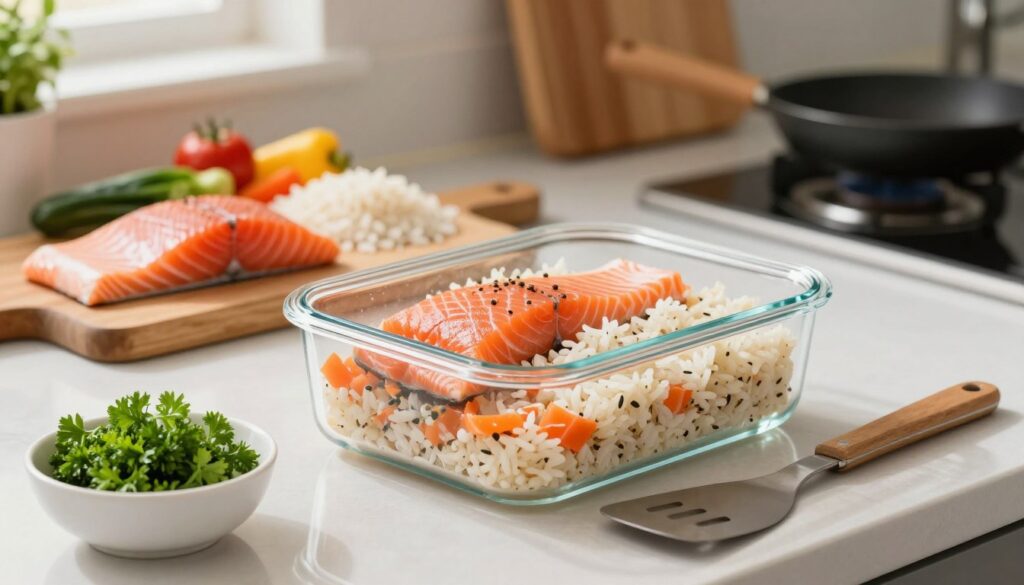
Use airtight, clean containers for safe salmon and rice storage. These keep moisture out and prevent contamination. Your refrigerated dog food stays good for three to four days.
Freezing individual servings for convenient use
Freezing large batches keeps food fresh longer. Divide it into single servings before freezing. This way, you can easily grab what you need for each meal.
Safe thawing methods and portion planning
Thaw frozen portions in the fridge, not at room temperature. This slow thaw keeps food safe. Plan your portions to always have a healthy meal ready.
Recognizing when leftovers should be discarded
Always check your dog’s food before serving. Even with proper storage, food can spoil. If unsure, it’s safer to throw it away.
Changes in smell, texture, mold, and storage time
Throw away any spoiled food. Look for bad smells, slimy textures, or mold. If it’s been more than four days in the fridge, it’s time to toss it.
| Storage Method | Temperature | Maximum Duration |
|---|---|---|
| Refrigerator | Below 40°F | 3 to 4 Days |
| Freezer | 0°F or lower | Up to 2 Months |
| Room Temp | Above 70°F | Discard Immediately |
Use Salmon and Rice as Part of a Complete Feeding Plan
Feeding your dog well means mixing fresh food with commercial options. It’s important to make sure your dog gets all the vitamins and minerals they need every day.
How often you can offer homemade salmon and rice
Homemade meals should be a supplement, not the main food. Vets say home-cooked food should not be more than 10% of your dog’s daily calories.
By making these meals occasional treats, you avoid nutritional gaps. Consistency is key for your dog’s health and energy.
Balancing the recipe with complete and balanced dog food
To keep your pet healthy, pair homemade meals with food that meets AAFCO standards. This mix offers the best of both worlds: fresh ingredients and scientific nutrition.
Comparing homemade meals with the best dog food with salmon and rice
Commercial diets are complete, but homemade recipes might miss some nutrients. The best dog food with salmon and rice is tested to ensure it’s balanced and nutritious.
What to look for in high-quality salmon and rice dog food
When looking for a good base diet, check for quality signs. A high-quality salmon and rice dog food will have a clear statement about its nutritional value on the label.
“The foundation of a healthy life for your dog begins with the quality of the food in their bowl every single day.”
Evaluating natural salmon and rice dog food ingredient lists
Always check the label to see if the main protein is listed first. Choose natural salmon and rice dog food with whole ingredients and avoid fillers or artificial preservatives.
| Feature | Homemade | Commercial |
|---|---|---|
| Nutrient Balance | Requires Supplementation | Guaranteed Complete |
| Preparation Time | High | None |
| Shelf Life | Short | Long |
When premium or top-rated salmon and rice dog food may be more practical
At times, premium salmon and rice dog food is the best choice for your pet. It’s great for busy owners or dogs with special needs.
Many owners prefer top-rated salmon and rice for dogs for sensitive stomachs. Choosing premium salmon and rice dog food ensures your pet gets consistent nutrition without the worry of cooking at home.
Troubleshoot Common Salmon and Rice Preparation Problems
Even the best plans for a dog-friendly salmon meal can face challenges. Whether you’re new or experienced, issues with texture or consistency are common. This is especially true when making a salmon and rice recipe for dogs.
Fixing dry, sticky, or undercooked rice
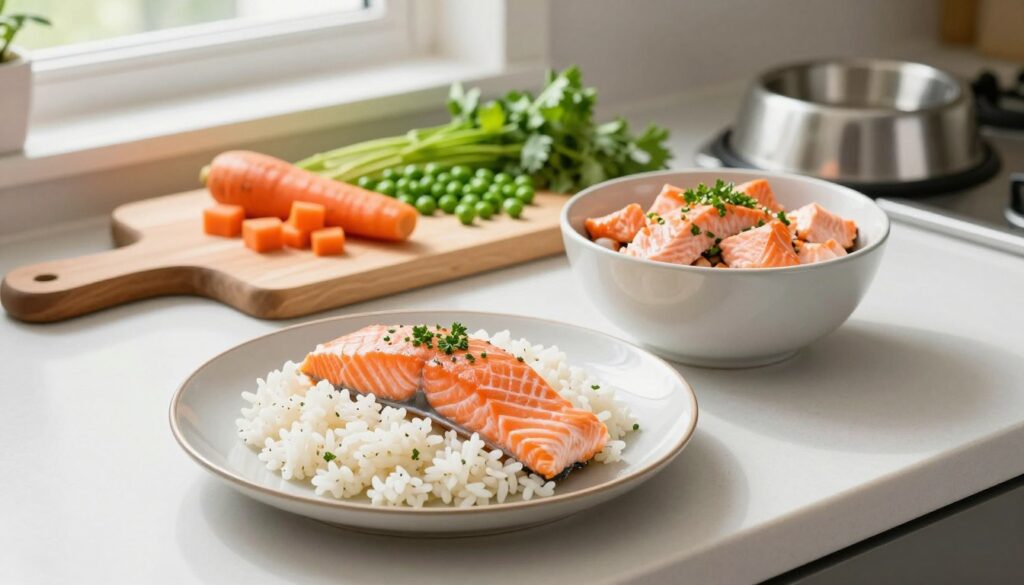
If your rice is too dry or undercooked, add a bit of warm water. Then, put it back on low heat. Cover the pot to let steam finish cooking it gently.
Sticky rice might mean it’s overcooked or stirred too much. But, it’s still safe for dogs as long as it’s not burnt.
Managing a strong fish odor or an unappealing texture
A strong fish smell often means the salmon isn’t fresh or has too much fat. Always pick high-quality, fresh fish. Trim off visible fat before cooking to keep the smell down.
It’s also key to cool the meal properly. Let it reach room temperature before serving. This helps fats solidify and improves the dish’s texture.
Correcting portions that contain too much rice or salmon
Creating a balanced homemade dog meal needs careful ingredient measuring. If there’s too much rice, add more cooked, flaked salmon. This balances the protein and carbs.
If there’s too much salmon, add more plain, cooked rice. But, never add onions, garlic, butter, or salty seasonings. These are toxic to dogs.
Responding to picky eating and changing preferences
Dogs can be picky and their tastes may change. If your dog suddenly doesn’t want to eat, make sure the food is at a good temperature. Also, make sure the pieces are small and easy to chew.
Safe ways to improve appeal without using harmful seasonings
To make the meal more appealing, mix in a bit of plain, steamed veggies like carrots or green beans. These add extra texture and nutrients without harmful additives. Always introduce new veggies slowly to check if they agree with your dog’s digestion.
Conclusion
Making meals for your pet needs careful attention and a focus on safety. To make a healthy salmon and rice dish for dogs, pick plain ingredients. Cook the fish to 145°F to ensure it’s safe.
It’s also crucial to remove all bones to avoid choking or injury. This step is very important.
When preparing the rice, don’t add salt, butter, or seasonings. These can upset your dog’s stomach. Start with small amounts to watch for any signs of sensitivity.
Remember to control the portion sizes and refrigerate leftovers quickly. This keeps the meal safe for later.
Talking to your vet is key to making sure your dog gets the right nutrients. Homemade salmon and rice can be a great treat or a gentle meal during recovery. But, it should not be the only food your dog eats.
Your effort to use quality ingredients and prepare meals carefully helps your dog stay healthy and happy.