Puppy Feeding Timeline: From First Solid Food to Adult Dog Food
Bringing home your new furry friend is truly a life-changing experience. You want to give them the best care to help them grow into a happy, healthy dog.
Proper nutrition is key for their growth. It helps develop important bones, muscles, brain cells, and tissues in the early months.
Many owners wonder how long should a puppy eat puppy food to support their growth. Knowing the right time is crucial for your pet to do well at every stage of their life.
Table of Contents
The Importance of Proper Nutrition During Growth
Puppies grow fast and need special food. They build their bones, muscles, and brains in the first months. High-quality food is key for their growth.
Puppies change a lot as they grow. They use a lot of energy to grow strong. Not meeting their needs can harm them later.
The Role of Caloric Density in Puppy Development
Puppies need lots of energy because they grow so fast. Caloric density is how much energy food has. High-density food gives them the energy they need without too much food.
This energy helps them grow and stay active. They also need fatty acids like DHA for their brains and eyes. Choosing the right food keeps them full of energy all day.
Essential Nutrients for Bone and Muscle Growth
Bones are very important for puppies. They need the right mix of calcium and phosphorus. Wrong amounts can cause bone problems, especially in big dogs.
Protein is also crucial for muscles and repair. Puppies need amino acids to grow strong. Checking the quality of these ingredients helps them grow right.
Weaning: The First Step to Solid Food
The journey to independent eating starts with weaning. This is a big change for your puppy, moving from relying on their mother. A regular feeding schedule for young dogs is key to their growth.
When to Begin the Weaning Process
Puppies often show interest in solid food by three weeks old. They might try to eat their mother’s food or play with the bowl. This shows their body is ready for new foods.
The weaning process is gradual. It usually takes seven to eight weeks. Watch how they eat and make sure they’re eating more solids and less milk.
Selecting the Right Starter Food
Choosing the right food is crucial for a healthy start. Look for high-quality puppy formulas that support growth. Softening dry kibble with warm water or puppy milk replacer makes it palatable.
Being consistent with meals is key. Small, frequent meals help avoid digestive issues and keep energy up. Always check with your vet to make sure the food is right for your puppy.
Understanding How Long Should a Puppy Eat Puppy Food
Finding out when your puppy should stop eating puppy food is key for their health. Every dog grows at their own pace, so there’s no one-size-fits-all answer. It depends on the breed and how fast they grow.
Look at your dog’s growth milestones, not just their age. Smaller dogs grow up quicker than big ones. They might need puppy food for up to two years. Knowing when to switch to adult food is crucial for their health.
General Guidelines for Puppy Food Duration
Vets say puppies should eat puppy food until they’re almost fully grown. For most dogs, this is between 10 to 12 months. But giant breeds might need it longer because they grow slower.
Keep an eye on your puppy’s weight and health. If they’re getting too fat or have joint problems, your vet might say it’s time to switch. Always get advice from a vet on when to stop puppy food.
Why Puppy Food Differs from Adult Formulas
Puppy food is made to meet special needs, as set by the AAFCO. It has more nutrients than adult food. This is because puppies grow fast and need lots of energy.
Adult food doesn’t have the right mix of nutrients for puppies. Eating it too soon can harm their bones and muscles. Good puppy food helps them grow strong and healthy.
Nutritional Requirements for Growing Puppies
Your puppy’s body changes a lot, needing the right food to grow. They build muscle, bone, and organs fast. Following puppy diet guidelines helps them get the right fuel for this busy time.
Protein and Fat Ratios for Rapid Growth
Puppies need more protein than adult dogs. Protein is key for building muscle and healthy tissues. Without enough, they might not grow as they should.
Fat is also crucial, giving energy for play and brain growth. Good puppy food balances fats for a shiny coat and skin. Always check the label to make sure it’s right for your puppy.
The Importance of Calcium and Phosphorus Balance
Protein and fat are important, but minerals are even more critical. Puppy food has a special mix of calcium and phosphorus for bone growth. Keeping this balance is vital to avoid bone and joint problems later.
Too much or too little calcium can cause bone issues. Sticking to puppy diet guidelines helps avoid these problems. Consistency is key in managing these minerals, so don’t add extra supplements.
Identifying the Signs Your Puppy Is Ready for Adult Food
Finding the best time to switch from puppy food is a big step for your dog. Age is not the only guide; your puppy’s growth rate is more important. Most dogs are ready for adult food when they are about 80% of their adult size.
Physical Milestones and Maturity Indicators
Watching your puppy grow is the best way to know when they’re ready for adult food. Keep an eye on their weight and compare it to growth charts from your vet. Regular weight checks show when they stop growing so fast.
Also, look at their body condition score. A healthy weight without too much fat means they’re almost ready for adult food. Big dogs take longer to grow up than small ones.
Behavioral Changes Related to Appetite
As your puppy gets older, you might see changes in how they eat. They might not eat as much or as fast as before. This could mean they don’t need as many calories anymore.
They might also play differently. Instead of quick, short bursts of energy, they’ll play for longer. These changes help you know when it’s time to switch to adult food.
| Growth Indicator | Puppy Phase | Adult Transition Phase |
|---|---|---|
| Weight Gain | Rapid and consistent | Stable and plateaued |
| Appetite | High and urgent | Moderate and consistent |
| Activity Level | Short, intense bursts | Sustained, steady energy |
| Body Shape | Lanky or soft | Defined muscle tone |
Breed Size and Its Impact on Feeding Duration
Finding the right puppy food feeding duration depends on your dog’s breed. Different breeds grow at different rates. So, a one-size-fits-all nutrition plan doesn’t work.
Small Breed Puppy Feeding Timelines
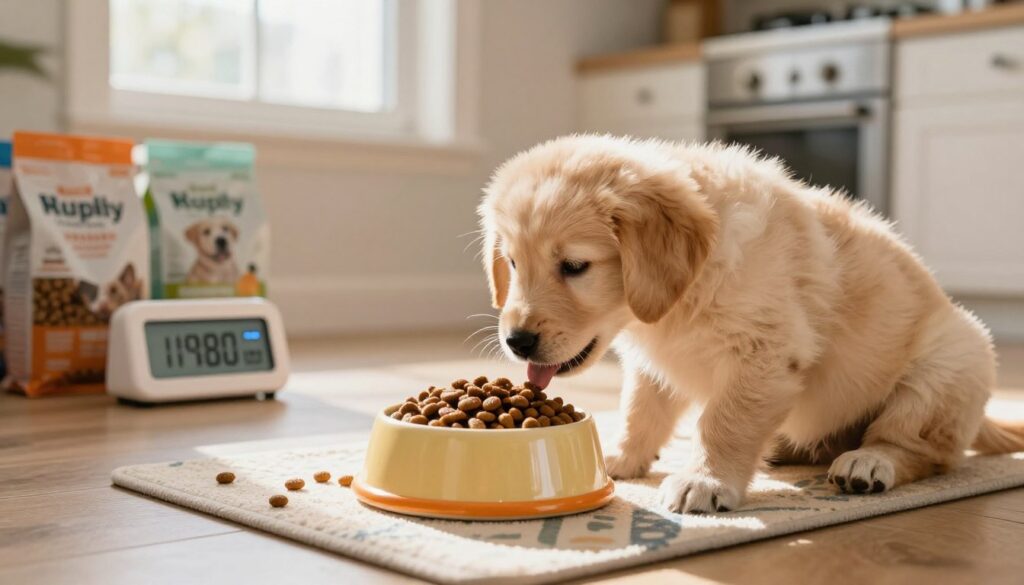
Small breeds like Chihuahuas or Yorkies grow fast. They reach adult size by 8 months.
Switching to adult food early helps prevent weight gain. Focusing on nutrient-dense kibble during this time gives them the energy they need for their active lives.
Medium and Large Breed Growth Considerations
Medium and large breeds grow slower. They need special nutrition for 15 months to 2 years to support their bones.
“Proper nutrition during the extended growth phase of large breeds is the foundation for a lifetime of joint health and mobility.”
Watch your dog’s body condition closely during this time. Here’s a table showing when growth is expected to complete based on size:
| Breed Size | Growth Completion | Nutritional Focus |
|---|---|---|
| Small | 8 Months | High Energy Density |
| Medium | 12-14 Months | Balanced Growth |
| Large/Giant | 18-24 Months | Controlled Calcium |
Managing Growth Rates in Giant Breeds
Giant breeds like Mastiffs or Great Danes need careful puppy food feeding duration to avoid joint problems. If they grow too fast, their bones may not be strong enough.
To help them grow healthy, consider these tips:
- Avoid overfeeding: Keep your puppy lean to reduce stress on developing joints.
- Monitor calcium levels: Too much calcium can cause skeletal problems in giant breeds.
- Consult your vet: Always check that your chosen food is right for large-breed growth.
By tailoring your approach to your dog’s size, you give them the best start for their health and vitality.
How to Transition Your Puppy to Adult Food Safely
Switching from puppy kibble to adult food is a big step. It’s important to know the best time to switch from puppy food. A slow and careful approach helps avoid digestive problems.
The Gradual Mixing Method
Changing your dog’s food too quickly can cause vomiting, diarrhea, or a loss of appetite. A structured puppy food transition timeline of seven to ten days is recommended. This slow change helps your dog’s gut adjust to the new food.
Begin by mixing a little of the new adult food with the puppy food. Gradually add more of the new food and less of the old. By the end of the week, your dog should be eating only the adult food.
“Good nutrition is the foundation of a long and healthy life for your canine companion, and the transition process is a critical step in that journey.”
Monitoring Digestion During the Switch
Watch your dog closely during the transition. Consistency is key when checking their stool and energy levels. If they show signs of discomfort, slow down the transition.
Look for these signs to make sure the switch goes well:
- Stool consistency: It should be firm and regular all week.
- Appetite: Your dog should be excited for meals without hesitation.
- Energy levels: Any lethargy could mean an upset stomach.
If your puppy has ongoing digestive problems, see your vet right away. They can help figure out if the new food is right or if you need a different plan for your breed.
Common Mistakes to Avoid During the Diet Transition
Many pet owners make mistakes that can upset their dog’s stomach during the transition. It’s important to carefully follow the puppy food transition timeline to keep your dog healthy and happy.
Switching Too Quickly
Changing your dog’s food in one day is a common mistake. Their digestive system is sensitive and needs time to adjust to new foods.
Quick changes can cause stomach problems like vomiting or diarrhea. Instead, take seven to ten days to let their gut adjust to the new food.
“A slow and steady approach to dietary changes is the gold standard for maintaining canine digestive health and preventing unnecessary stress on the body.”
Overfeeding During the Transition Phase
It’s easy to get the portions wrong when mixing foods. You need to watch the calories closely during the puppy food transition timeline to avoid weight gain.
Here are some tips to keep your dog at the right weight:
- Measure accurately: Use a standard measuring cup to avoid guessing.
- Limit treats: Treats should be no more than 10% of their daily calories.
- Monitor body condition: Check their ribs and waistline weekly to avoid too much fat.
By avoiding these mistakes, you help your pet have a smooth and healthy transition to adulthood. Being consistent is key to a successful diet change.
Monitoring Your Puppy’s Weight and Body Condition
Checking your puppy’s health needs a hands-on approach. Scales show numbers, but they don’t tell the whole story. Following puppy diet guidelines helps keep your dog healthy as it grows.
Using the Body Condition Score System
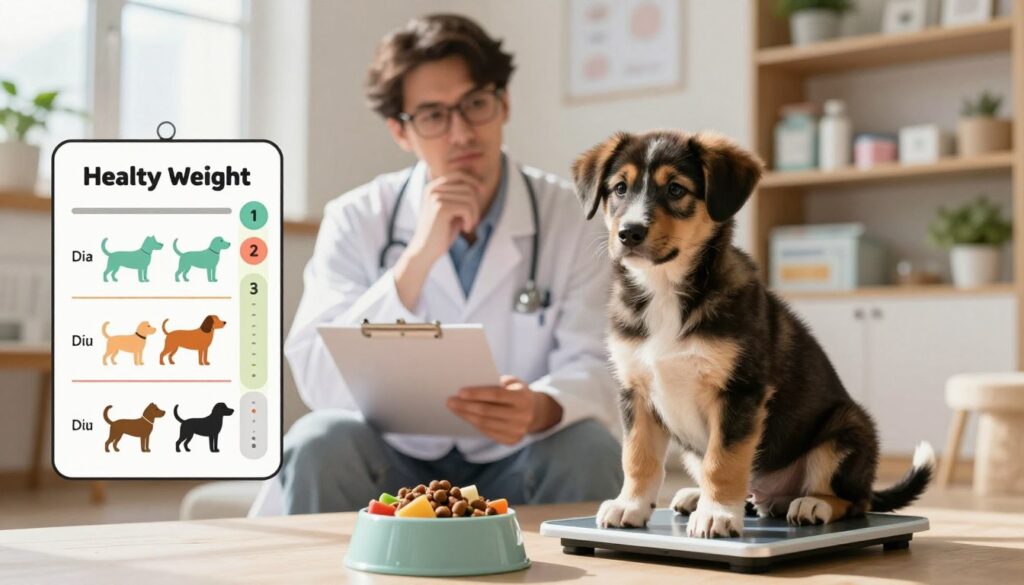
The Body Condition Score (BCS) system is like BMI for humans. It helps measure body fat. To check, feel your puppy’s ribs and waistline. Ideally, you should feel the ribs without too much fat, and see the waistline from above.
If you can’t feel the ribs, your puppy might be too heavy. If the ribs stick out too much, they might need more food. These puppy diet guidelines help you make the right food choices.
Adjusting Portions Based on Activity Levels
Every puppy is different, with a metabolism that changes as they grow and get more active. Watch how much energy your puppy uses to see if their food is right. A puppy that loves to play will need more food than one that likes to sleep.
If your puppy is less active, you might need to change their food portions. Always talk to your vet before making big changes to your puppy diet guidelines. This ensures they get all the nutrients they need.
| Activity Level | Energy Output | Portion Adjustment |
|---|---|---|
| Low | Minimal play, mostly sleeping | Reduce by 5-10% |
| Moderate | Daily walks and short play | Maintain standard serving |
| High | Constant running and training | Increase by 10-15% |
By watching these things closely, you keep your puppy in top shape. Regular checks are key to using puppy diet guidelines well throughout your dog’s life.
Addressing Dietary Sensitivities and Allergies
Keeping a regular feeding schedule for young dogs is key for their health. But sometimes, your puppy might face unexpected digestive problems. Spotting these issues early helps you support your pet’s health.
Being watchful ensures small stomach issues don’t slow down your puppy’s growth.
Recognizing Symptoms of Food Intolerance
Puppies often have sensitive stomachs that react to new foods. Look out for signs like chronic gas, loose stools, or itching. If your puppy has coccidiosis or digestive upset, a bland, low-fat diet might be suggested by your vet.
Watch for these signs of intolerance:
- Frequent vomiting or regurgitation after meals.
- Excessive scratching or red, inflamed skin patches.
- Chronic diarrhea that does not resolve within 24 hours.
- Lethargy or a noticeable lack of interest in food.
Selecting Limited Ingredient Diets
For puppies with food sensitivities, a limited ingredient diet can help. These diets use only one protein and one carb source, reducing allergy risks. Switching to these diets needs patience to keep your feeding schedule for young dogs steady.
Here’s how to manage a diet change:
- Consult your vet before removing major food groups from your puppy’s bowl.
- Introduce the new, limited-ingredient food slowly over several days.
- Track your puppy’s energy levels and stool quality in a simple log.
- Avoid adding table scraps or treats that might contain hidden allergens.
By carefully managing what your puppy eats, you can help them overcome sensitivities. This keeps their feeding schedule for young dogs consistent. Consistency is crucial for their long-term health and energy.
Consulting Your Veterinarian for Personalized Advice
Every puppy grows at their own pace. This makes personalized veterinary advice key to their health. General feeding charts are just a starting point. They can’t meet the unique needs of your dog.
A vet can assess your pet’s nutritional needs. This ensures they get the right nutrients for growth.
When to Schedule a Nutritional Consultation
Book a nutritional consultation at key milestones. Notice significant shifts in your puppy’s energy or body condition. These check-ups help adjust food intake to avoid weight issues.
Also, talk to your vet before switching your puppy’s food. They can check if it’s time for a change based on your puppy’s weight and growth. Proactive communication helps avoid feeding mistakes during growth spurts.
Interpreting Veterinary Recommendations
When you get feeding instructions, ask questions. This ensures you understand the long-term plan. If it’s complex, ask for a written summary or a simple schedule.
Your vet’s advice is based on your puppy’s health history. If you’re confused by online info, trust your vet. They focus on evidence-based nutrition for your puppy’s breed and size.
| Growth Stage | Consultation Trigger | Primary Goal |
|---|---|---|
| Early Weaning | Introduction of solids | Digestive safety |
| Rapid Growth | Monthly weight check | Bone development |
| Maturity Transition | Approaching adult size | Weight management |
| Senior Prep | Activity level decline | Metabolic support |
Conclusion
Your commitment to high-quality puppy nutrition is key for a long, healthy life. The right nutrients help your pet grow into a strong adult dog. This journey from puppy to adult is filled with joy and growth.
Every dog is different, needing specific foods as they grow. Watching your dog’s body condition score helps you adjust their food. This ensures they get the right amount for their activity and metabolism.
Brands like Purina Pro Plan and Royal Canin have special formulas for different needs. These formulas support your dog’s changing needs as they grow.
Working closely with your vet is crucial. Regular vet visits help keep your dog’s diet on track with their growth. You play a big role in your dog’s health with every meal.
Start taking care of your dog’s health today. Watch their energy, track their growth, and enjoy the bond of pet ownership. Your hard work today will lead to a brighter future for your loyal friend.