What Dog Breeds Are Hypoallergenic? A Complete Beginner’s Guide
Do you dream of coming home to a loyal companion, only to be met with sneezing, itchy eyes, and constant wheezing? Millions of Americans face this heartbreaking dilemma every day. You want the joy of a furry friend, but your immune system seems to have other plans.
While no canine is truly free of allergens, choosing the right animal can change your life. Understanding hypoallergenic options allows you to minimize reactions while enjoying the deep bond that only a pet can provide. This guide helps you navigate the science behind these specific dog breeds to find your perfect match.
We will explore how to manage your environment and care for your new companion effectively. Let’s start your journey toward a happier, sneeze-free home.
Table of Contents
Understanding the Science of Dog Allergies
Pet allergies are more than just a reaction to dog hair. Many think fur is the main cause of sneezing and itchy eyes. But, it’s really your immune system reacting to proteins in the animal’s body.
Looking for hypoallergenic dog breeds? It’s key to know these proteins are in all dogs. Knowing what triggers your allergies is the first step to a comfortable home.
The Role of Dander, Saliva, and Urine
The main allergen is a protein called Can f 1. It’s found in a dog’s saliva, urine, and skin. When a dog licks its fur or sheds, these proteins get airborne or settle on surfaces.
Dander, tiny skin flakes, carries these proteins. Because dander is light, it stays in the air for a long time. This is why even dogs that don’t shed much can still cause allergies.
Why No Dog Is Truly 100% Hypoallergenic
Many think some dogs are completely allergen-free. But, hypoallergenic dog breeds just produce fewer allergens. No dog is completely free of the proteins that cause symptoms.
Choosing a pet means picking one that might make less dander or shed less. But, don’t think a specific breed is 100% safe for your allergies. It’s important to manage your expectations when looking at hypoallergenic dog breeds for your home.
What Dog Breeds Are Hypoallergenic and Why
Looking for the perfect pet? Start by learning about what dog breeds are hypoallergenic and why. Many think these dogs have no allergens, but it’s more complex. They are chosen for producing fewer allergens in their hair or shedding less.
Defining the Hypoallergenic Trait
Exploring what dog breeds are hypoallergenic means finding dogs that reduce dander. Dander are tiny skin flakes that stick to fur and spread around your home. These dogs shed less, keeping dander off your furniture.
Remember, these dogs aren’t a complete fix for allergies. They help manage allergens in your home. They make your space more comfortable, not a cure for your symptoms.
The Importance of Hair Growth Cycles
The secret to these breeds is their hair growth. Unlike regular fur, hypoallergenic breeds have hair that grows continuously. This extended growth phase means less shedding and fewer allergies.
Their hair holds dander until you brush or groom it. Knowing what dog breeds are hypoallergenic means understanding this unique trait. Regular grooming is key to removing allergens safely.
Popular Hypoallergenic Small Dog Breeds
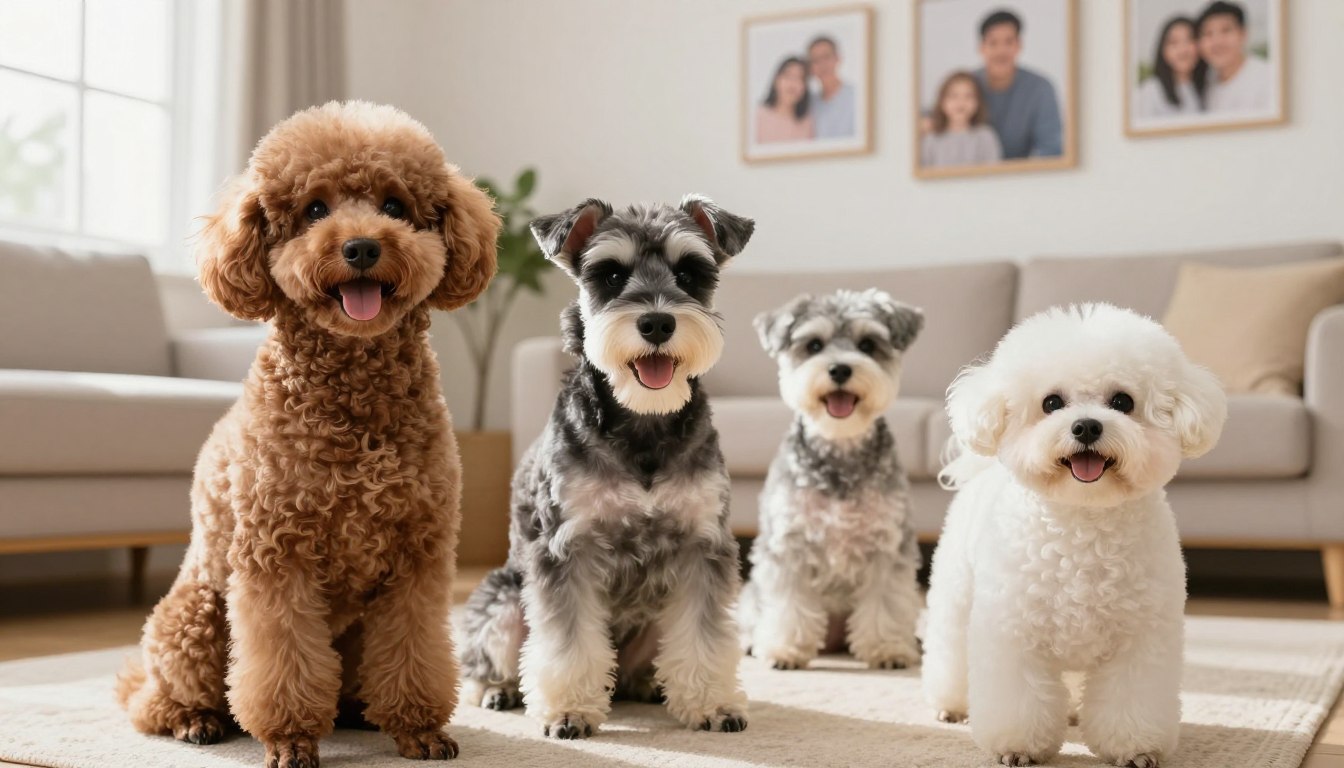
Many people love hypoallergenic small dog breeds because they are great companions. These dogs are perfect for small homes or apartments. They don’t shed much, making your home cleaner.
The Bichon Frise
The Bichon Frise is a happy and lively breed. It has a white, curly coat that catches loose hair and dander. This makes it a great choice for those with mild allergies.
The Miniature Poodle
The Miniature Poodle is smart and has a low-allergen coat. Its curly hair needs regular grooming to avoid mats. They are easy to train and great for people with allergies.
The Maltese
The Maltese is a popular hypoallergenic dog breed for those who want a small, elegant pet. They have long, silky hair but don’t shed much. They are very loving and make great lap dogs.
Temperament and Care Needs
Even though these dogs are small, they need regular care. Daily brushing helps keep their coats clean and prevents tangles. They also need professional grooming to keep their coats looking good.
“Small dogs with hair rather than fur require a dedicated grooming routine to ensure they remain comfortable and allergen-friendly for their owners.”
| Breed | Coat Type | Energy Level | Grooming Needs |
|---|---|---|---|
| Bichon Frise | Curly/Dense | Moderate | High |
| Miniature Poodle | Curly/Wavy | High | High |
| Maltese | Silky/Long | Moderate | High |
Top Hypoallergenic Large Dog Breeds
Many people think only small dogs are good for those with allergies. But, there are hypoallergenic large dog breeds that are perfect for big families. These dogs are big but don’t make your home full of dander.
The Standard Poodle
The Standard Poodle is smart and versatile. They are big and athletic. Their curly coat keeps dander in, making them great for families with allergies.
The Giant Schnauzer
The Giant Schnauzer is a strong and tall dog. They can grow over 27 inches tall and weigh up to 85 pounds. Their coat sheds little and needs regular grooming.
The Portuguese Water Dog
The Portuguese Water Dog was bred to help fishermen. They have low-shedding coats and love water. They’re perfect for people who enjoy being active outdoors.
Activity Levels and Exercise Requirements
It’s important to match a dog’s energy to your lifestyle. These big dogs need lots of exercise and mental challenges. Without it, they might get bored or restless.
| Breed | Average Weight | Energy Level | Grooming Needs |
|---|---|---|---|
| Standard Poodle | 45-70 lbs | High | Professional Clipping |
| Giant Schnauzer | 60-85 lbs | Very High | Regular Brushing |
| Portuguese Water Dog | 35-60 lbs | High | Frequent Grooming |
Best Hypoallergenic Dog Breeds for Families
Looking for the best hypoallergenic dog breeds means finding a pet that fits your family well. You want a dog that’s kind to kids and easy for people with allergies. These hypoallergenic dog breeds for families are perfect because they’re loving and don’t make many allergens.
The Soft Coated Wheaten Terrier
The Soft Coated Wheaten Terrier is known for being happy-go-lucky. They’re called “Wheaten Greeters” because they love to greet you with excitement. Their single coat is soft and wavy, which means less dander in your home.
The Labradoodle and Goldendoodle Considerations
Labradoodles were made to be hypoallergenic service dogs and are very friendly. Since they’re mixed breeds, their coats can vary a lot. Here are some things to think about when picking a doodle:
- Generation matters: Multi-generational crosses often have more predictable, non-shedding coats.
- Coat texture: Look for curly or fleece-like hair rather than straight, wiry fur.
- Grooming needs: Even low-shedding doodles need regular grooming to avoid matting.
The Irish Water Spaniel
The Irish Water Spaniel is a great choice for active families. They’re highly intelligent and playful, making them great friends for older kids. Their curly coat is water-repellent and sheds little, helping keep your home allergen-free.
Non-Shedding Hypoallergenic Dog Breeds
If you have pet allergies, knowing about a dog’s coat is key. Many look for non-shedding hypoallergenic dog breeds to cut down on dander. While no dog is completely allergen-free, some coats spread fewer irritants.

Understanding the Single-Coat Advantage
Most dogs have a double coat, with a soft undercoat that sheds. This shedding releases a lot of dander and hair. Dogs with a single-layer coat don’t have this undercoat.
These dogs shed less dander because their hair traps it close to the skin. This unique biological trait makes them a top pick for those with allergies.
Breeds That Require Professional Grooming
Getting a low-shedding dog doesn’t mean you’re off the hook for grooming. These dogs need more grooming to keep their coats healthy and mat-free. Their hair grows but doesn’t fall out, so they need regular clipping.
Without grooming, their hair can get tangled and trap more debris. You should groom them every six to eight weeks. This keeps them comfortable and your home clean.
| Coat Type | Shedding Level | Grooming Needs |
|---|---|---|
| Double Coat | High | Moderate |
| Single Coat | Very Low | High |
| Hairless | None | Skin Care |
Grooming Requirements for Allergy-Friendly Dogs
Even the most popular hypoallergenic dog breeds need regular care to keep allergens away. They may not produce as much dander, but they still need attention. A consistent grooming routine is key to reducing allergens in your home.
The Necessity of Regular Brushing
Brushing your dog regularly is crucial for managing allergies. Brushing at least once a week helps remove loose hair and skin cells. This prevents them from settling on your furniture or carpets.
Brushing also stops mats and tangles from forming. Mats can trap allergens like dust, pollen, and dander close to your dog’s skin. This increases allergens in your space. Consistent grooming keeps your pet’s coat healthy and free of debris.
Professional Clipping and Bathing Schedules
Professional grooming is vital for managing your pet’s coat. Most popular hypoallergenic dog breeds need a professional clipping every four to six weeks. This keeps their hair at a manageable length.
Bathing is also crucial during these visits. Using a good, moisturizing shampoo helps remove dander without drying out your dog’s skin. A clean, well-groomed dog is less likely to cause allergic reactions.
| Grooming Task | Frequency | Primary Benefit |
|---|---|---|
| Brushing | Weekly | Removes loose dander and hair |
| Bathing | Every 4-6 weeks | Cleanses skin and reduces allergens |
| Professional Clipping | Every 6-8 weeks | Prevents matting and debris buildup |
Managing Your Home Environment for Pet Allergies
Even with hypoallergenic dog breeds for families, your home’s air matters a lot. These dogs bring in pollen and dust. Improving your indoor air quality can make a big difference.
Using HEPA Air Purifiers
High-Efficiency Particulate Air (HEPA) purifiers are key for pet owners with allergies. They catch dander, dust, and tiny allergens that regular filters miss. Running one in your main areas can cut down on air irritants.
Put your air purifier in rooms where you spend most of your time. Consistency is key for air filtration. Change the filters as the maker suggests to keep it working well all year.
Cleaning Strategies for Floors and Upholstery
Keeping your home clean is crucial to avoid allergen buildup. Even with hypoallergenic dog breeds for families, you must manage dander on furniture and floors. Simple habits can greatly improve your comfort.
“The most effective way to manage pet allergies is to create a sanctuary in your home where allergens are strictly controlled and minimized.”
Here are some cleaning tips to keep your home fresh:
- Vacuum regularly: Use a vacuum with a HEPA filter to catch fine particles instead of spreading them.
- Wash bedding frequently: Wash your pet’s bedding and your own in hot water weekly to get rid of dander.
- Establish pet-free zones: Make bedrooms off-limits to your dog for a clean sleep space.
- Clean upholstery: Use a damp cloth or a pet hair attachment to clean sofas and chairs where dander gathers.
By combining these cleaning tips with air filtration, you can enjoy your pet more. These small changes help you focus on the joy of having a pet, not your allergies.
Common Myths About Hypoallergenic Dogs
Looking for the best hypoallergenic dog breeds can lead to myths. Many think certain looks mean no sneezes. But, these beliefs can cause disappointment when you get a dog.
The Myth of Hairless Dogs Being Allergy-Free
Many think hairless dogs are safe for allergies. Breeds like the Xoloitzcuintli are seen as perfect for those with allergies. In reality, they still have allergens in their skin, saliva, and urine.
These proteins cause most allergic reactions. So, not having fur doesn’t mean no allergies. It’s best to spend time with a dog to see how you react.
Why Size Does Not Determine Allergen Production
Some believe small dogs have fewer allergens because they’re smaller. They think smaller dogs shed less than big ones. But, even the smallest dogs can cause big allergic reactions.
When looking at non-shedding hypoallergenic dog breeds, look at the dog’s biology, not size. Some big, non-shedding hypoallergenic dog breeds might be better for you than small, high-dander ones. Fact-based research helps you choose a dog that’s good for your home and health.
How to Test Your Sensitivity Before Adopting
Finding the right pet is more than just picking a breed. It’s about testing your sensitivity. Even if a dog is called allergy-friendly, your immune system might still react. It’s important to check how your body reacts before adopting.
Spending Time with the Breed
Experts say you should spend at least 30 minutes to several hours with a dog before adopting. This lets you see how your body reacts in a safe way. Whether you like hypoallergenic small dog breeds or larger ones, direct experience is the best test.
“The best way to predict your future comfort is to experience the environment firsthand before you bring a new member into your home.”
Try playing with the dog and sitting near them to see if you react. If you’re looking at hypoallergenic large dog breeds, make sure to spend enough time with them. This way, you can avoid the sadness of having to give a pet away later.
Consulting with an Allergist
It’s also smart to talk to an allergy doctor. They can give you valuable insights into your allergies and suggest ways to manage them. They might even suggest allergy tests to find out what makes you react.
Your doctor can also talk about treatments like antihistamines or immunotherapy. These can help you live well with your new pet. By getting advice from a doctor and observing yourself, you can make a choice that’s good for your health and happiness. Preparation is the key to a happy life with your future dog.
Conclusion
Choosing a pet is a big decision, especially if you have sensitivities. Knowing about hypoallergenic dog breeds is a good start. It helps you create a comfortable home.
No pet is completely free of allergens. But, you can keep your home clean by grooming and using air filters. This way, you can still enjoy the special bond with your dog.
Looking into hypoallergenic dog breeds is a smart move. It helps you find the right dog for your lifestyle. Try spending time with different dogs to see how you react.
Many people find the right dog by considering their lifestyle and living space. Your health is the most important thing. With the right knowledge, you can make a choice that brings happiness to your home for years.