What Colors Can Dogs See? Understanding Canine Color Vision
Have you ever thrown a bright red ball into the green grass, only to see your dog struggle to find it? It’s a common scene that makes many pet owners wonder how their pets see the world. We often think our pets see things just like we do, but that’s not always true.
The truth about understanding dog color vision is really interesting. By clearing up old myths, you can appreciate how your dog sees things. Knowing what colors can dogs see helps you pick better toys and make their space more fun.
Table of Contents
The Science of Canine Vision
How your dog sees the world is shaped by millions of years of evolution. Unlike humans, dogs don’t rely on many colors to get around. Knowing about the dog vision color spectrum explains why they see things differently.
Evolutionary Adaptations for Survival
Dogs come from a line of crepuscular hunters, active at dawn and dusk. Their eyes are made to spot movement, not to see many colors. This helped them survive by catching prey, not by noticing flower colors.
Several traits help dogs see in their own way:
- Motion sensitivity: Dogs can see movement from far away.
- Low-light performance: More rod cells help them see better in the dark.
- Wide field of view: Their eyes let them see more to the sides.
The Dichromatic Nature of Dogs
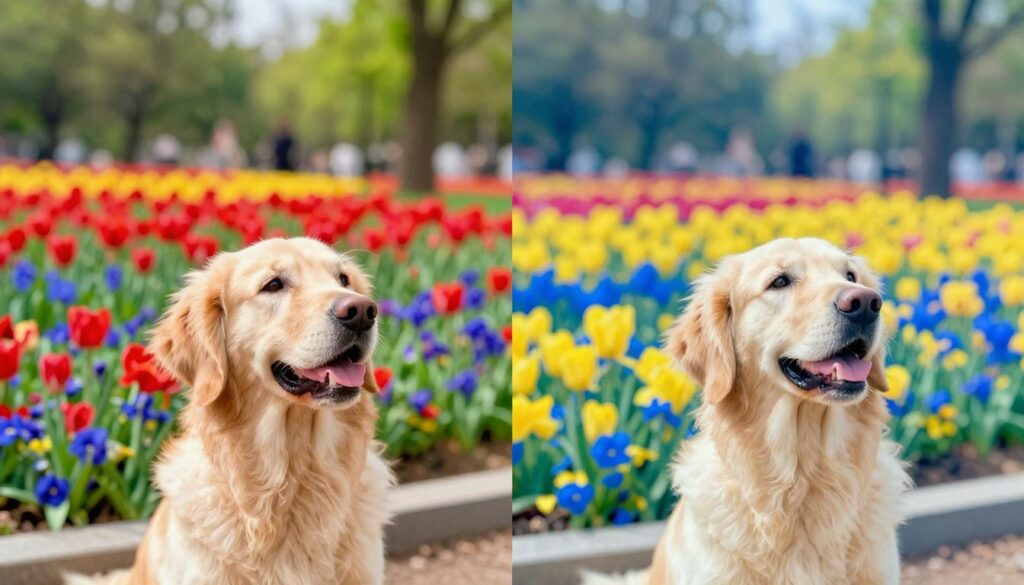
A dog color vision study shows dogs are dichromats, with only two color-detecting cells. Humans, being trichromats, can see a full range of colors. Dogs see mainly blues and yellows because they lack the third cone type.
This means many colors look dull to dogs. A red toy might look dark brownish-gray to them. Understanding canine color perception helps us see why they might miss a red ball in green grass. The dog vision color spectrum shows how evolution has made their world unique.
What Colors Can Dogs See?
When you see a sunset, you see many colors. But what colors can dogs see when they look at the same sunset? They see the world in a simpler way.
The Blue and Yellow Spectrum
Research shows dogs are not colorblind like we think. They see mainly blue and yellow. These colors visible to dogs are their main colors.
Dogs see blue and yellow very clearly. They might chase a yellow ball faster than a red one. This is because of how their eyes work.
Colors That Appear Gray or Brown
Other colors, like purple or orange, look gray or brown to dogs. This is because their eyes can’t see all light frequencies. They see the world in a different way.
This doesn’t mean their world is dull. They use brightness and contrast to see things. Knowing this helps pick the right toys for them.
Why Red and Green Are Difficult to Distinguish
Dogs have trouble with red and green. They can’t see red light well. This makes red and green look brownish to them.
A red toy in green grass is hard for dogs to see. They can’t tell the toy from the grass. Understanding this helps make playtime better for them.
Dog Vision Compared to Humans
Looking at dog vision compared to humans shows a world of movement, not color. Your eyes catch a wide range of colors, but your dog’s eyes are for survival and tracking.
Knowing these differences helps you see how your pet sees the world. It’s not that one is better; they’re just optimized for different lifestyles.
Trichromacy vs. Dichromacy
Humans have three color-detecting cones, making us trichromatic. This lets us see a wide range of colors, like reds and greens.
Dogs, on the other hand, are dichromatic with only two types of cones. They see mainly blue and yellow shades. This means dog vision compared to humans lacks the color depth you see every day.
Differences in Visual Acuity and Motion Detection
While you might be better at color recognition, dogs excel at motion detection. Their eyes have more rod cells, which help them see in low light and detect movement.
This skill lets them spot a squirrel before you even see it. Motion is the primary trigger for their visual attention, making them great at tracking fast objects.
How Dogs Perceive Depth and Distance
Depth perception needs binocular vision, where both eyes overlap. But dogs’ eyes are positioned differently, so their overlap is smaller.
Still, dogs judge distance well using other visual cues. They look at object sizes and movement to navigate their world with great accuracy.
The Anatomy of the Canine Eye
When you look at dog vision compared to humans, you see big differences in the retina. Dogs see the world in their own special way, thanks to unique cells. These cells help dogs see well in different light conditions.
The Role of Rods and Cones
The retina has two main types of cells: rods and cones. Rods help dogs see in the dark and move. Cones are for colors and details. Dogs have more rods, making them great at seeing in the dark.
Humans, on the other hand, have more cones. This lets us see colors better. Dogs might not see colors as well, but they’re better at hunting and surviving. This shows how animals adapt to their environments.
The Tapetum Lucidum and Night Vision
Dogs also have a special layer called the tapetum lucidum. It reflects light back through the eye. This makes them see better in the dark.
This layer is why dogs’ eyes glow in the dark. It helps them stay alert at night. Knowing about this layer helps us understand why dog vision compared to humans is so different.
Debunking the Black and White Myth
The myth that dogs are colorblind is a common mistake. Many wonder, do dogs see in black and white. They think dogs live in a world without color. But this old idea doesn’t show how dogs really see things.
Historical Misconceptions About Animal Sight
For years, people thought animals couldn’t see colors. Early dog color vision research was limited by old technology. This led to the wrong idea that dogs see only in shades of gray.
Dogs don’t react to colors like we do. So, it seemed they saw only gray. But, their sight is different, not just black and white.
The Reality of Muted Color Perception
Recent studies show dogs see a world with certain colors. They don’t see the full rainbow like us. But, they see blues and yellows well, helping them spot objects.
Knowing this helps you choose better toys and training tools for your dog. They see the world in a unique way. Here’s a table that shows the difference between myths and facts about dog sight.
| Myth | Scientific Reality | Impact on Behavior |
|---|---|---|
| Dogs see only gray | Dogs see blue and yellow | High contrast is key |
| Color is irrelevant | Color aids object tracking | Use bright blue toys |
| Vision is poor | Vision is motion-sensitive | Movement triggers interest |
How Color Perception Affects Daily Life
Your dog may not see colors like we do, but they can still move around easily. Canine color perception is just one part of how they understand the world. They use their sense of smell and hearing to create a detailed picture of their surroundings.
Navigating the Home Environment
Your dog doesn’t need to see every color to get around your house. They use spatial memory and can sense light and shadow changes. If you move furniture, they might seem lost at first. But they quickly adjust by feeling the new layout with their whiskers and nose.
They can also spot moving objects, even in dim light. This helps them avoid things and move around stairs and hallways without needing to see colors.
Recognizing Familiar Objects and People
You might wonder how your dog knows you from a distance. They don’t look at your clothes’ color. Instead, they use scent profiles and your unique way of moving to recognize you.
For toys or items, they look for shapes that stand out. They know their favorite ball by its feel and how it moves. This way, canine color perception doesn’t stop them from bonding with you or enjoying their day.
| Sensory Input | Human Reliance | Dog Reliance |
|---|---|---|
| Color Vision | High | Low |
| Sense of Smell | Low | Very High |
| Motion Detection | Moderate | High |
| Spatial Memory | High | High |
Choosing the Best Toys Based on Color
Choosing toys that match the colors visible to dogs makes games more fun for them. Knowing how dogs see the world can turn a simple game into a rewarding one. The right toys help dogs track and find objects easily.
Selecting High-Contrast Toys for Playtime
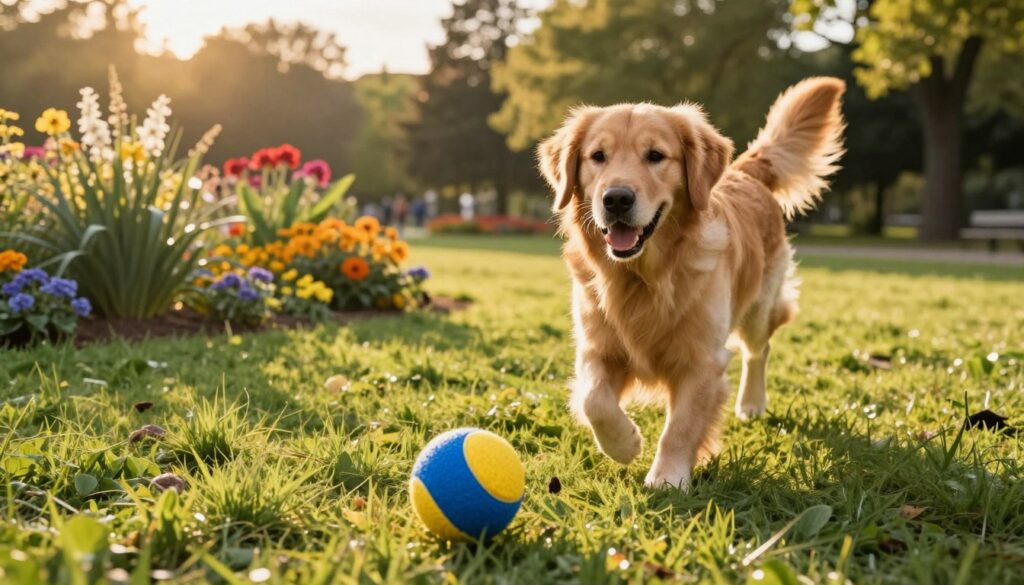
To keep your dog engaged, choose toys that contrast well with their surroundings. In a park or backyard, pick items that stand out against the green grass or dirt. High-contrast toys are easier for dogs to follow during fast games.
If a toy blends in, your dog might lose interest or have trouble finding it. Bright, distinct colors keep your dog focused on the game. This simple change can make playtime longer and more fun.
Why Blue and Yellow Toys Stand Out
Dogs see the world differently, with blue and yellow being the most visible colors. These colors are vibrant and clear to them, making them great for training and play.
When buying balls or frisbees, choose bright blue or sunny yellow. These colors are easy for dogs to see, even when moving fast. Investing in these specific colors helps your dog track the toy better.
Avoiding Red Toys in Grassy Areas
Red toys might look bright to us, but to dogs, they appear dark brownish-gray or black. In a grassy field, a red toy can blend in, making it hard for dogs to find.
This can be frustrating for dogs, who must rely on smell to find the toy. To keep your dog happy and successful, avoid red or orange toys for outdoor play. Stick to blue and yellow to ensure your dog can always see the toy.
Practical Tips for Training and Safety
Knowing how your dog sees the world can change your training and safety habits. By using their natural visual strengths, you make a clearer language with your pet. This makes training better and keeps your dog safe in different places.
Using Visual Cues in Obedience Training
Dogs find it hard to tell red from green, which can confuse them in training. Use high-contrast items in the blue and yellow range to grab their attention. A bright yellow ball or a blue training disc will stand out more to your dog than a standard red toy.
For new commands, use hand signals that stand out against your clothes or the background. If you wear dark pants, use light-colored gloves or a bright target stick. This visual clarity makes it easier for your dog to understand and reduces frustration.
Enhancing Visibility During Evening Walks
Walking at night is tough for dogs because they rely on motion, not color, in the dark. Use gear that reflects light or glows brightly to keep your dog safe. Reflective collars and harnesses are key for visibility to drivers and others.
Think about the color of your accessories for night walks. Neon green might seem bright to you, but vibrant yellow or bright blue is better for dogs in dim light. Using the same safety gear every time makes your dog feel more secure at night.
| Training/Safety Tool | Best Color Choice | Primary Benefit |
|---|---|---|
| Training Targets | Bright Yellow | High visibility for focus |
| Night Leash | Reflective Blue | Safety in low light |
| Obedience Discs | Vivid Blue | Easy tracking during play |
| Safety Vest | Fluorescent Yellow | Maximum driver awareness |
Conclusion
Seeing the world through your pet’s eyes changes how you interact with them every day. You now know the truth about black and white sight. This new understanding lets you see how your companion sees the world.
Your dog uses motion and color to understand their surroundings. By choosing toys in blue or yellow, you make playtime clearer. These small changes help you bond more during walks and training.
Keep watching how your dog reacts to different sights at home. Using what you know about dog color vision makes your home better for them. You can improve their life with simple, smart choices. Enjoy learning together and growing closer every day.