
Can Dogs Eat Almond Butter Is It Safe For Your Pet
You may cherish quiet moments when your furry companion gazes up, hoping for a taste of your snack. Sharing feels natural, but ask whether can dogs eat almond butter without health risks. Almond butter is not toxic by itself, but its safety depends on the jar’s ingredients.
Most plain varieties are generally almond butter safe for dogs in small, infrequent amounts. Still, check for hidden additives such as xylitol, chocolate, or excess salt. These substances can seriously harm pets.
High fat levels and choking risks also need attention before you offer a spoonful.
This guide helps you make informed choices. We will examine labels, proper portions, and symptoms that may require veterinary care. Your pet’s health remains the top priority in every decision.
Table of Contents
Can Dogs Eat Almond Butter
If you wonder whether your dog can enjoy almond butter, you are not alone. Many pet owners seek healthy, protein-rich snacks for their companions. Generally, can dogs eat almond butter? Yes, but serve it in moderation without harmful additives.
When Plain Almond Butter May Be Safe
This treat’s safety depends on its ingredient list. Offer your pet only plain, unsalted, and unsweetened almond butter.
Almond butter made only with roasted almonds is usually safe for healthy dogs in very small amounts. Always check the label for harmful hidden ingredients, and avoid jars containing additives.
Why Almonds Are Not the Same as Macadamia Nuts
Different nuts can affect your pet in different ways. Some are safe, while others are highly toxic. Dogs and almond butter pose less risk than macadamia nuts, which are strictly off-limits.
- Macadamia nuts can cause weakness, tremors, and hyperthermia in dogs.
- Almonds are not toxic, though they can be difficult for some dogs to digest.
- Always keep all nut products stored securely away from curious paws.
Why Your Dog’s Size, Age, and Health Matter
Before adding new food, consider your dog’s size, age, and health. A tiny Chihuahua may react differently than a large Labrador. Start with a tiny taste to test your pet’s response to its texture and fat content.
Consider these factors before sharing:
- Pancreatitis risk: High-fat foods can trigger painful inflammation in sensitive dogs.
- Digestive history: If your dog has a sensitive stomach, even small amounts might cause diarrhea.
- Existing allergies: Monitor your pet closely for signs of itching or skin irritation after consumption.
Your veterinarian is the best resource for deciding whether your dog can safely enjoy this treat. Staying informed helps keep your pet happy and healthy.
What Almond Butter Contains
Almond butter should remain an occasional treat, not a daily food. Though popular, it differs from the balanced meals your pet needs each day. Understanding almond butter for dogs helps you choose wisely for your furry friend.
Almond Butter Nutritional Value for Dogs
The almond butter nutritional value for dogs centers on its high energy density. It cannot replace a complete, balanced canine diet. Still, it provides specific macronutrients in very small amounts.
Fat, Calories, and Protein
Almond butter contains many calories because it has lots of fat. Dogs need healthy fats for energy and skin health. However, this spread can cause weight gain without careful portion control.
It also provides moderate plant-based protein. This protein cannot replace the high-quality animal protein found in standard dog food.
Fiber, Vitamins, and Minerals
This spread also contains small amounts of important nutrients. These include:
- Dietary Fiber: Helps support healthy digestion in small doses.
- Vitamin E: An antioxidant that supports immune function.
- Magnesium and Potassium: Minerals that assist with muscle and nerve health.
How Commercial Almond Butter Differs From Homemade Versions
Not every grocery store jar has the same ingredients. Commercial almond butter for dogs may contain unnecessary or harmful additives. Manufacturers often add ingredients to improve texture, shelf life, and flavor.
Common additives in commercial brands include:
- Excess salt or sugar for human palates.
- Palm oil or other hydrogenated vegetable oils.
- Artificial flavorings or preservatives.
- Dangerous sweeteners like xylitol.
Homemade versions let you control every ingredient. You can prepare a spread made only from roasted almonds, without hidden additives. Always prioritize simplicity when choosing or preparing this treat for your dog.
Possible Almond Butter Health Benefits for Dogs
Almond butter is not a dietary staple, but it can be an occasional reward for your dog. Understanding the almond butter health benefits for dogs requires moderation and safety.
Using a Small Amount as a High-Value Treat
Many trainers and pet owners use almond butter as a high-value reward during training. Its strong aroma and sticky texture can motivate dogs that ignore standard dry biscuits.
Use only a tiny amount to keep your dog focused without overfeeding. This works best for difficult commands or especially impressive behavior.
Supporting Enrichment Through Food Toys
Spreading a thin layer of almond butter inside a durable rubber toy provides mental stimulation. Licking is naturally soothing for most dogs and may help them settle during quiet periods at home.
This activity keeps your pet engaged longer while using very little product. Clean the toy thoroughly after use to prevent bacteria from building up in sticky residue.
Why the Nutritional Benefits Do Not Make Almond Butter a Dietary Essential
Remember that the almond butter nutritional value for dogs does not replace a balanced, species-appropriate diet. Almonds contain healthy fats and some protein, but they are not necessary nutrients for your pet.
Your dog gets all required vitamins and minerals from regular commercial dog food. Relying on treats for nutrition can cause an unbalanced diet and possible weight gain.
| Treat Type | Best Use Case | Primary Benefit |
|---|---|---|
| Almond Butter | Enrichment Toys | Mental Stimulation |
| Carrot Sticks | Low-Calorie Snacking | Crunchy Texture |
| Blueberries | Training Rewards | Antioxidant Boost |
| Plain Chicken | High-Value Training | Protein Intake |
Ingredients to Avoid in Almond Butter for Dogs
Not every nut butter on grocery shelves is safe for your dog. To ensure that the almond butter is safe for dogs, read each product label carefully. Many additives in human foods can cause serious health problems for pets.
Xylitol and Other Dangerous Sugar Substitutes
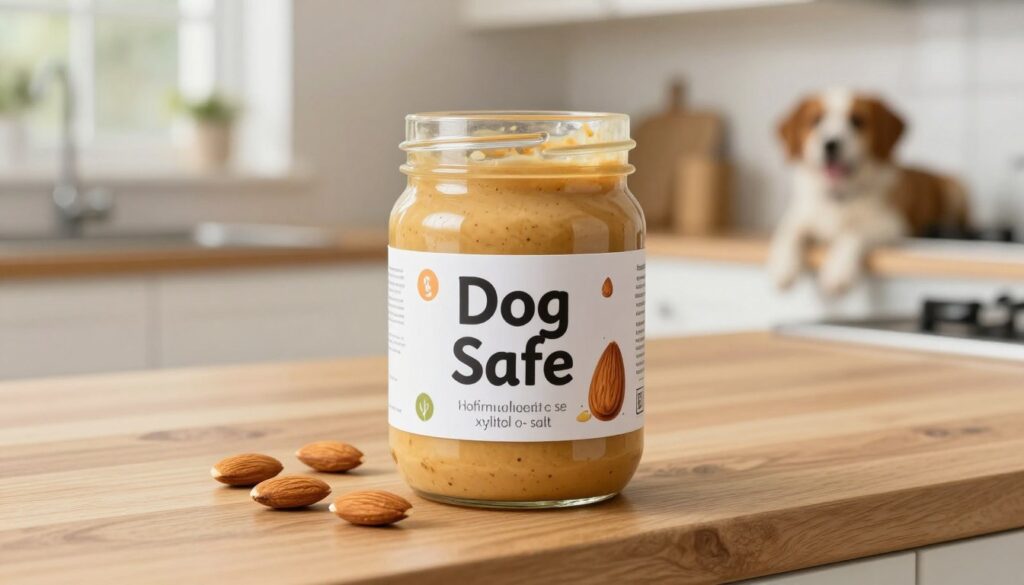
Xylitol is the most important ingredient to avoid. This sugar alcohol appears in many low-calorie and sugar-free products. Even a tiny amount can cause a rapid, life-threatening drop in your dog’s blood sugar. Always check the label, because xylitol can cause liver failure and requires immediate emergency veterinary care.
Chocolate, Cocoa, and Candy Additions
Some specialty nut butters include chocolate or cocoa powder for flavor. These ingredients contain theobromine and caffeine, which are toxic to dogs. Never give your pet almond butter with chocolate, candy pieces, or cocoa.
Excess Salt, Sugar, and Artificial Flavorings
Small amounts of natural ingredients are usually acceptable, but too much salt can cause dehydration or sodium ion poisoning. Added sugars can cause weight gain and dental problems over time. Artificial flavorings and preservatives provide no nutrition and may upset sensitive dogs’ stomachs.
Macadamia Nuts and Other Unsafe Mix-Ins
Be careful with “mixed nut” butters, which might contain macadamia nuts. These nuts are highly toxic to dogs and can cause weakness, tremors, and hyperthermia. Check that the product contains only almonds or other dog-safe ingredients.
How to Read the Ingredient List and Nutrition Facts Label
Before buying a product, review the back of the jar. Choose a simple list with almonds as the main or only ingredient. If the list contains many unfamiliar chemicals, leave the jar on the shelf.
| Ingredient Category | Status for Dogs | Potential Risk |
|---|---|---|
| Xylitol | Toxic | Liver failure/Hypoglycemia |
| Chocolate/Cocoa | Toxic | Theobromine poisoning |
| Macadamia Nuts | Toxic | Neurological symptoms |
| Excess Salt/Sugar | Unhealthy | Obesity/Dehydration |
Choose simple, natural products to keep the almond butter is safe for dogs as an occasional treat. Put your pet’s long-term health before convenience when choosing snacks.
Almond Butter Risks for Dogs
Almond butter is a popular human snack, but it carries specific risks for your canine companion. These hazards matter because dogs and almond butter may not mix well with pets’ unique digestive systems.
Stomach Upset, Diarrhea, and Vomiting
When dogs consuming almond butter try it for the first time, they may face digestive distress. Common symptoms include vomiting, diarrhea, and excess gas as their bodies process the rich oils.
You may also notice abdominal discomfort or a lower appetite. These reactions often happen because the ingredients are unfamiliar to your dog’s gut microbiome.
High Fat Content and Pancreatitis Concerns
Almond butter is naturally high in fat, which can trouble many breeds. For susceptible dogs, high-fat treats can trigger pancreatitis, a painful, serious inflammation of the pancreas.
This condition needs urgent veterinary attention. If your dog has a history of digestive issues, avoid these fatty spreads.
Weight Gain and Excess Calories
Even a small amount of almond butter contains many calories. Frequent indulgence can quickly lead to unwanted weight gain, stressing your dog’s joints and heart.
Count these extra calories in your pet’s daily nutritional intake. In dogs, obesity often comes from well-meaning owners offering too many high-calorie treats.
Choking, Aspiration, and Sticky Texture Risks
Almond butter’s thick, sticky texture creates a physical danger for your pet. It can stick to the roof of the mouth or back of the throat, creating a choking hazard.
In some cases, dogs may inhale the sticky substance, causing aspiration. Never leave a spoonful of almond butter unattended, because your dog might gulp it down too quickly.
Allergic Reactions and Individual Sensitivities
Like humans, pets can develop allergies to specific nuts. Recognizing almond butter risks for dogs means watching for allergic reactions, including hives, facial swelling, or persistent itching.
If you notice unusual behavior or physical changes after your dog eats almond butter, contact your veterinarian immediately. Every dog has a unique sensitivity level, and a food safe for one pet may cause a reaction in another.
How Much Almond Butter Can Your Dog Have
If you wonder whether can dogs eat almond butter, portion control matters most. This snack is not toxic, but its high fat and calorie content can affect your dog’s health. Use small portions to help your dog stay happy and fit.

Starting With a Tiny Taste
Before making this treat routine, start with a very small amount. Offer a tiny, pea-sized taste and watch your dog’s response. This trial helps you spot digestive upset or allergic signs, such as itching or swelling.
Adjusting the Portion for Small, Medium, and Large Dogs
The right serving depends on your dog’s weight and metabolic needs. Small breeds need much less almond butter because they need fewer calories. A serving for a Great Dane could be an excessive amount for a Chihuahua, causing weight gain or stomach distress.
Limiting Treats to a Small Part of Daily Calories
Veterinary nutritionists recommend that treats make up no more than 10% of your dog’s daily calories. When asking whether can dogs eat almond butter, count these calories with regular meals. After a spoonful of nut butter, reduce dinner kibble to keep a healthy balance.
How Often Dogs Should Receive Almond Butter
Treat almond butter as an occasional reward, not a dietary staple. Because it is high in fat, offer it once or twice a week at most. Frequent use may cause long-term health issues, so limit it to support an optimal weight and overall wellness.
How to Choose Almond Butter That Is Safe for Dogs
Not every jar of nut butter on the grocery store shelf is safe for your canine companion. When shopping for almond butter for dogs, choose quality products with clear ingredient lists.
Selecting Unsweetened, Plain Almond Butter
Choose jars labeled plain or unsweetened. Many brands add sugar or corn syrup for human taste, but these provide no nutritional value for pets.
Too much sugar can cause weight gain and dental problems over time. Plain almond butter safe for dogs stays an occasional treat instead of empty calories.
Checking for Xylitol Before Every Serving
Inspect the ingredient list each time you buy a new jar. Manufacturers often change recipes, and some now add xylitol, a sugar substitute that is extremely toxic to dogs.
Even a small amount can cause a life-threatening drop in blood sugar or liver failure. Never assume a brand is safe because you used it before.
Choosing Products With Simple, Recognizable Ingredients
The best products contain only one or two ingredients, such as roasted almonds and a little salt. If the list has unfamiliar chemicals, preservatives, or artificial flavors, return the jar.
Simple, natural ingredients are easier for dogs to digest. Choose brands that pride themselves on using whole, roasted nuts without unnecessary additives.
When Homemade Almond Butter May Offer More Control
Making your own almond butter at home gives you total control. You can roast the almonds properly and avoid harmful oils or sweeteners.
When preparing almond butter at home, check that your blender or food processor is clean. Do not add dangerous mix-ins. This DIY approach is often the safest way to provide almond butter for dogs with peace of mind.
| Ingredient Category | Safe for Dogs | Avoid Completely |
|---|---|---|
| Sweeteners | None | Xylitol, Sorbitol |
| Additives | Sea Salt (minimal) | Chocolate, Cocoa |
| Nut Types | Roasted Almonds | Macadamia Nuts |
| Oils | Natural Almond Oil | Hydrogenated Oils |
Safe Ways to Serve Almond Butter to Your Dog
When you share a treat with your pet, how you serve it matters as much as the ingredients. Controlled portions limit calories and help your dog enjoy the treat safely.
Spreading a Thin Layer on a Lick Mat
A lick mat serves almond butter for dogs because it makes your pet slow down. Spread a very thin layer over its textured surface to extend treat time without overfeeding.
This method provides mental stimulation and keeps your dog busy for several minutes. Clean the mat before and after each use to maintain good hygiene.
Stuffing a Small Amount Into a Food Puzzle
For a hollow rubber toy or food puzzle, use only a small amount of almond butter. This keeps the treat a supplemental reward, not part of the main meal.
Its sticky texture keeps your dog engaged with the puzzle. Wash the toy thoroughly after every session to prevent bacteria buildup.
Mixing Almond Butter With Dog-Safe Foods
You can enhance the almond butter health benefits for dogs by adding nutritious, low-calorie ingredients. This adds variety and texture to your dog’s snack.
Plain Pumpkin and Unsweetened Applesauce
Mixing a tiny amount of almond butter with plain canned pumpkin or unsweetened applesauce makes a tasty, fiber-rich treat. Make sure the pumpkin is 100% pure, with no added spices or sugars.
Carrot Pieces and Other Crunchy Treats
Dip small, raw carrot pieces in a light almond butter coating for a satisfying crunch. You can also use dog-safe vegetables, such as green beans, for a healthy, balanced snack.
Why You Should Never Leave a Sticky Spoonful Unsupervised
You must never leave your dog unattended with a large, sticky spoonful of almond butter. Its thick texture can lodge in the throat or cause aspiration when your dog swallows a large glob.
Always supervise your pet while they enjoy these treats to ensure safe swallowing. If your dog struggles or coughs, remove the treat immediately and provide fresh water.
What to Do If Your Dog Eats Too Much Almond Butter
Stay calm after your dog eats too much almond butter. Small amounts often cause no harm, but large amounts may upset digestion or cause serious problems. Learning the almond butter risks for dogs helps you protect your pet.
Symptoms to Monitor After Dogs Consume Almond Butter
Watch your pet closely for several hours after they eat a large amount of nut butter. Early problems often affect digestion or energy levels.
- Vomiting or frequent retching
- Persistent diarrhea
- Noticeable abdominal pain or bloating
- Unusual tiredness or lethargy
- Tremors or shaking
- Changes in normal behavior or coordination
When Vomiting, Diarrhea, or Pain Requires Veterinary Care
Not every case requires an emergency clinic visit, but some signs need professional help. If your dog has repeated vomiting or severe, watery diarrhea, dehydration may result. Seek veterinary advice if your dog shows extreme pain, pacing, whining, or a hunched posture.
Contact your veterinarian or an emergency animal hospital immediately if your dog struggles to breathe, collapses, or seems disoriented. These signs show that the almond butter risks for dogs have become a medical crisis needing urgent care.
Why Xylitol Exposure Is an Immediate Emergency
The most serious danger linked to dogs consuming almond butter is xylitol. This artificial sweetener is extremely toxic to dogs and can quickly lower blood sugar or cause liver failure. If you suspect xylitol, seek emergency care immediately without waiting for symptoms.
Information to Give Your Veterinarian
When you call your vet, clear and accurate information helps them choose the best treatment. Having these details ready can speed up diagnosis.
Product Name and Complete Ingredient List
Bring the container or have its label ready to read. Your vet must check for toxic additives, including xylitol or chocolate.
Estimated Amount and Time Consumed
Estimate how much your dog ate and exactly when it happened. This helps the medical team decide whether inducing vomiting or other treatments may work.
Your Dog’s Weight and Current Symptoms
Give your dog’s approximate weight and list every symptom you have noticed. This information helps calculate possible toxicity levels and shows how serious the situation is.
Conclusion
When asking, can dogs eat almond butter, consider your pet’s specific dietary needs. Some dogs may safely enjoy a tiny amount of plain, natural almond butter. However, this treat is not necessary for a balanced canine diet.
View this snack as a high-fat, calorie-dense reward, not a nutritional staple. Understanding the almond butter health benefits for dogs helps set realistic expectations and support your pet’s long-term wellness.
Always inspect product labels for hidden dangers, such as xylitol, which poses a severe risk to dogs. Knowing the almond butter risks for dogs helps you control portions and prevent digestive upset or weight gain.
Keep your veterinarian’s contact information handy if you offer this treat. If you suspect your dog ate toxic additives, seek professional medical help immediately. Staying vigilant helps ensure almond butter safe for dogs remains a rare, controlled indulgence.