What Colors Do Dogs See Best? Choosing Toys and Accessories They Notice
Ever throw a bright red ball and watch your dog ignore it? It’s a common scene for many pet owners. Understanding your pet’s perspective changes how you play together.
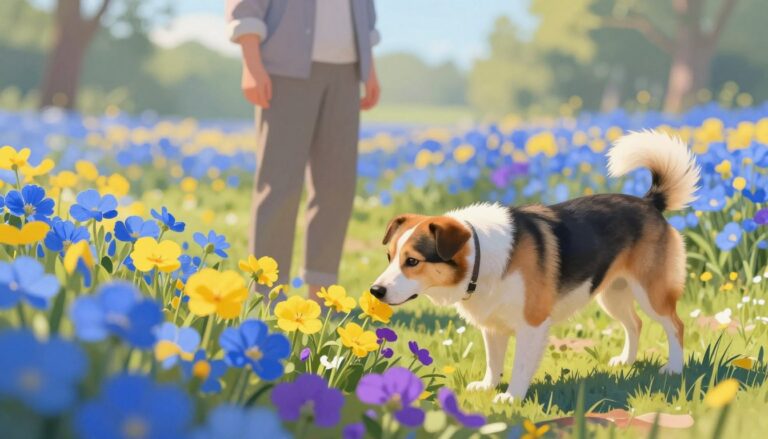
Dogs see the world differently than we do. They can’t see the full range of colors like humans. Instead, they mostly see blues and yellows. Other colors look like gray or brown to them.
Knowing what colors do dogs see best helps you choose the right gear. But remember, vision is just part of the story. Brightness, contrast, movement, scent, and sound also matter. This guide offers tips for picking toys, collars, and harnesses your dog will notice.
Table of Contents
What Colors Do Dogs See Best?
Your dog’s eyes are different from yours, changing how they see the world. Many thought pets saw only black and white, but now we know they see blue and yellow best.
Blue and yellow as the most visible colors for dogs
Dogs have two color receptors, unlike humans’ three. This makes blue and yellow very clear to them. These colors stand out vividly against most backgrounds, perfect for toys and training gear.
“The world of a dog is not gray, but it is certainly a different palette than the one we perceive.”
Why red, orange, and green may blend together
Dogs find it hard to tell apart colors we see clearly. Red, orange, and green look like brownish-gray or dull yellow to them. Colors perceived by dogs in these ranges lack the brightness we see, making them hard to spot.
- Red toys may look like dark brownish-gray blobs.
- Green items often blend seamlessly into grass.
- Orange objects can appear as a dull, muddy yellow.
How brightness and contrast affect visibility
Beyond specific hues, dogs’ color vision capabilities rely on light-dark contrast. A bright object is easier for your dog to see than a dull one, no matter the color. Choosing a toy with high contrast helps your pet find it quickly, even if it’s not in their primary spectrum.
Think about the background when picking toys for your pet. A light toy will stand out on a dark floor, and a dark toy will be easy to see on light sand or snow. Focusing on contrast helps your dog enjoy playtime more.
How Canine Color Perception Differs From Human Vision
Exploring canine color perception shows why your pet sees the world differently. You might think your dog sees things just like you, but that’s not true. Their eyes are made for survival, not for seeing colors like we do.
Knowing these differences helps you pick the best toys and training tools for your dog.
Dogs’ two-color vision compared with human three-color vision
The main difference between dog vision vs human vision is in the retina’s photoreceptor cells, called cones. Humans have three types of cones, letting us see a wide range of colors. Dogs, on the other hand, have only two types.
This means dogs are mostly colorblind to red and green. They can’t see these colors well because they lack the right receptors. But, they don’t see the world in just black and white.
The practical meaning of a dog’s narrower color spectrum
Dogs see a world mostly in shades of blue and yellow. Colors like red or orange look like muddy brownish-gray to them. This is important to remember when picking out new items.
Choosing blue or yellow items makes them easier for your dog to see. This helps them find their favorite things more easily. High-contrast options help your pet track their toys better.
| Feature | Human Vision | Dog Vision |
|---|---|---|
| Cone Types | Three (Trichromatic) | Two (Dichromatic) |
| Primary Colors | Red, Green, Blue | Blue, Yellow |
| Motion Sensitivity | Moderate | High |
| Low-Light Ability | Limited | Excellent |
Why color is only one part of how dogs see the world
Remember, how dogs see the world isn’t just about color. They use other senses like motion and scent to understand their surroundings. Motion is especially important for them.
A still toy might be hard to spot, but a moving one grabs their attention. They also use scent and sound to help them see better. Using high-contrast colors with these senses makes playtime more exciting for your dog.
The Dog Vision Color Spectrum Explained
Seeing the world through your dog’s eyes is fascinating. Humans see a full rainbow, but dogs see a more limited range. Knowing this helps you choose better for your pet’s daily life.
Colors perceived by dogs across the visible spectrum
Dogs mainly see blue and yellow. They can’t see red and green like humans do. This means their world is simpler than ours.
How dogs may distinguish blue from yellow
Dogs have dichromatic vision, focusing on blue and yellow. These colors stand out well against neutral backgrounds. Choosing toys in these colors helps your dog see best.
Why some colors appear muted, brownish, or gray
Red, orange, and green often look like muddy yellow, gray, or brown to dogs. These colors blend into the background, making them hard to see outside.
Color appearance versus color recognition
It’s key to know the difference between how a color looks and how a dog sees it. Color appearance is the physical aspect, while color recognition is how a dog identifies an object. A dog might see a red ball, but struggle to see it clearly if it’s not contrasting well with the grass.
How individual dogs can respond differently
Remember, every dog sees the world differently. Age, eye health, training, and distance all affect how a dog sees things. Your dog’s unique vision and experience shape their view of the world.
| Color Category | Human Perception | Dog Perception |
|---|---|---|
| Blue | Vibrant Blue | Clear Blue |
| Yellow | Bright Yellow | Distinct Yellow |
| Red/Orange | Warm Tones | Dark Brown/Gray |
| Green | Vivid Green | Muted Yellow/Gray |
How Brightness, Contrast, and Background Change What Dogs Notice
Dogs see the world differently than we do. It’s not just about the spectrum of colors for dogs. The environment around them plays a huge role in what they see.
Even if a color is visible to us, it might not be to a dog. This is because the right environment is needed for a dog to see it.
Why a blue toy can disappear on grass or water
A blue toy might not always be easy to spot. This is especially true when it’s against green grass or dark water. The brightness levels can be too similar for a dog to see the toy.
“Vision is not just about color; it is about the ability to separate an object from the background through contrast and movement.”
When a blue toy matches the grass or water, it blends in. This is because dogs can’t see small differences in color well. This is due to their limited dog vision color spectrum.
Using light-dark contrast to make objects easier to find
To help your dog find toys, focus on light-dark contrast more than color. A dark blue toy will be easier to spot on a light surface than a medium blue one.
Think about these things when picking out toys or gear:
- Silhouette: Does the object create a clear outline against the ground?
- Brightness: Is the object significantly lighter or darker than the floor or grass?
- Texture: Does the surface of the toy catch light differently than the background?
Choosing colors for sand, snow, dirt, and indoor floors
The right colors for dogs change based on where you are. For example, a yellow toy is easy to see on dark dirt but hard to spot on a sandy beach or snowy field.
Indoor play areas are different too. A dark toy is easier to follow on light floors. But on dark floors, a bright toy is better for finding during play.
Choosing the Best Toy Colors for Indoor Play
Turning your living room into a fun play area starts with picking the right dog toy colors. Dogs see a limited color range. So, the toys you choose should be easy to see against your flooring.
Visible colors for carpet, hardwood, and dark flooring
For dark hardwood or deep carpets, skip brown or dark red toys. They blend in too much. Go for bright blue or yellow toys instead. These colors pop out clearly. High contrast dog toys help your pet see the toys better, even in shadowy spots.
Best choices for fetch, tug, puzzle, and chew toys
Think about what the toy is for when picking indoor dog toys. For fetch, pick toys that stand out against your walls and floors. Puzzle toys should have different colors for each part. This helps your dog know where to touch or paw.
Using color contrast to support search-and-find games
Search-and-find games need your dog to spot things fast. Place a bright yellow toy on a neutral rug. This makes it easy for your dog to find, making the game more fun.
How lighting changes toy visibility indoors
Lighting indoors can make toys hard to see. Glare and shadows can hide even the brightest toys. Test your toys in different rooms to see how light affects them. A toy might look bright in the kitchen but dull in a dim hallway.
When texture and shape matter more than color
If your dog can’t tell colors apart, use other senses. Texture and shape become key in low light. A toy with a unique texture or sound can help your dog find it, even if the color blends in.
Choosing Toy Colors for Outdoor Fetch and Training
When you go to the park or beach, picking the right outdoor dog toys colors is key. Knowing what colors do dogs see best can make finding toys fun instead of frustrating.
Making toys easier to spot in grass and wooded areas
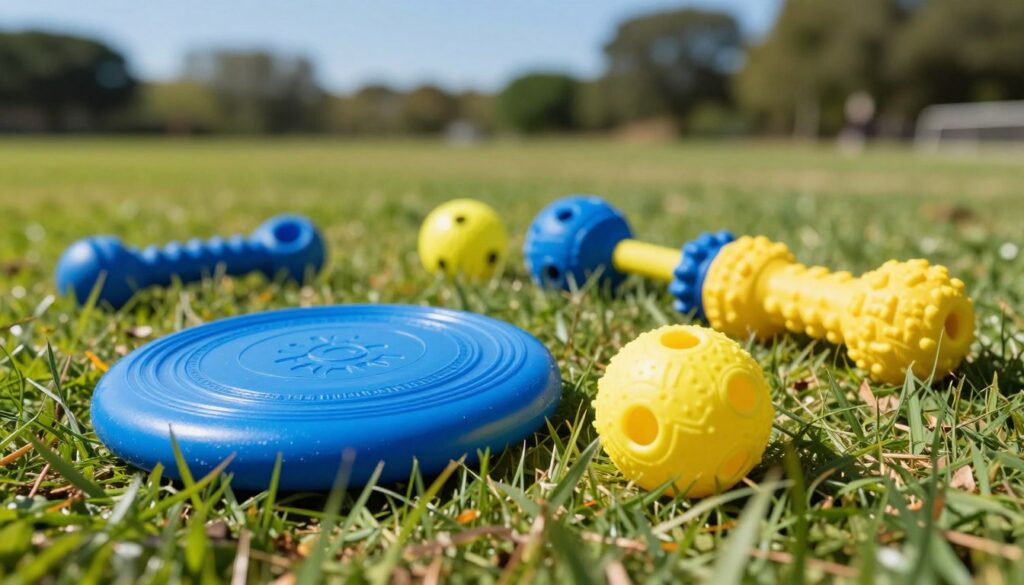
Grass and leaves look like yellow or gray to dogs. Toys in red or green often get lost in the scenery. Choose toys that stand out against the natural background.
Selecting toys for beaches, snow, and open fields
Beaches and snowy fields are bright and reflective. A white or light toy can vanish quickly. Opt for darker, vibrant colors to make your toy pop against the ground.
Why blue and yellow are useful starting points outdoors
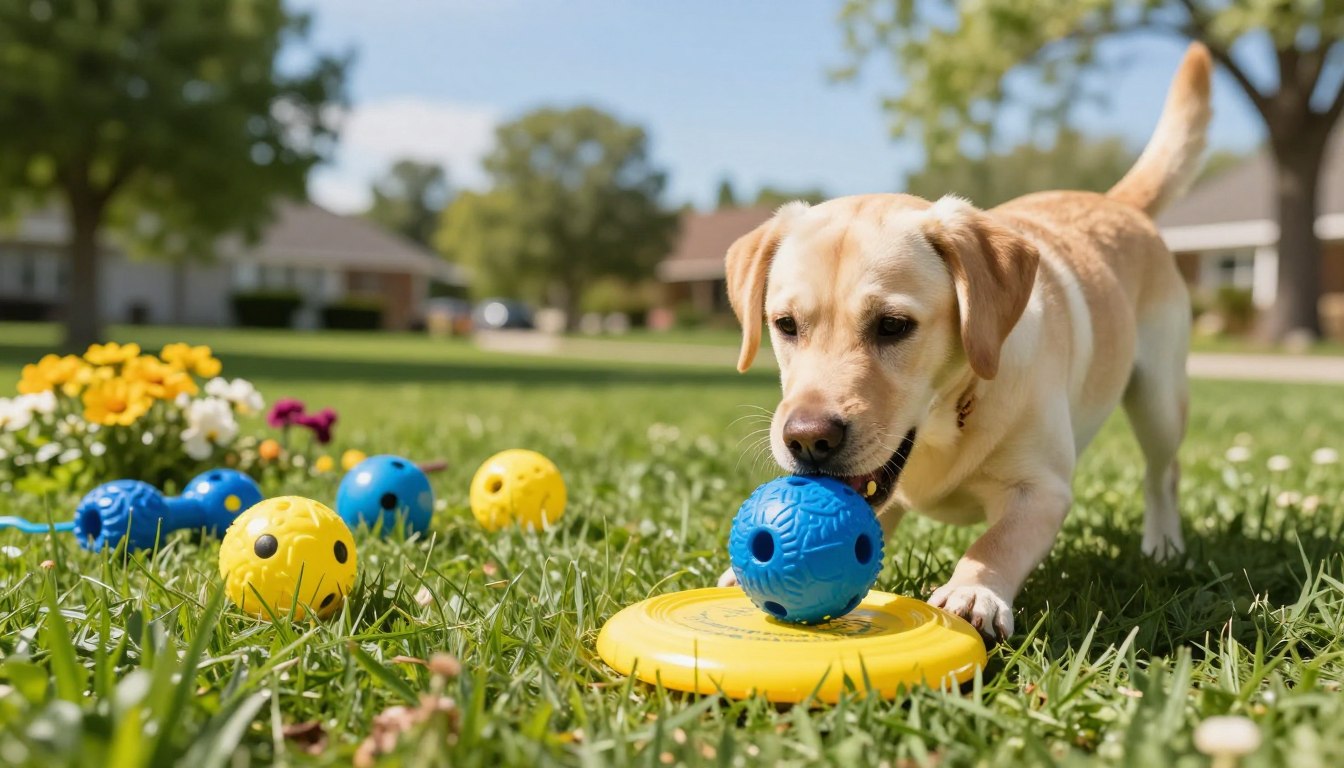
Starting with blue and yellow dog toys is a smart choice. These colors are easy for dogs to see in various outdoor settings. They are a solid choice for your dog’s toys.
Matching toy color to the activity
Each activity needs a different level of visual clarity. For fast fetch, a bright toy helps your dog see it better. For slower activities, a less bright color helps keep your dog focused on you.
Improving visibility without overstimulating your dog
Visibility is crucial, but avoid neon or too bright colors. They can distract your dog. Find a balance between brightness and contrast to keep your dog on task.
Colors for Dog Collars, Harnesses, Leashes, and Clothing
Choosing the right gear for your pet is important. It’s about finding colors that look good to you and are easy for your dog to see. A stylish red leash might look great to you, but it might not stand out to your dog. The right dog collar colors can make your pet feel more confident and help their equipment be seen.
Choosing accessories your dog can notice during handling
Dogs see the world differently than we do. They mainly see blues and yellows. Choosing a harness or collar in these colors helps your dog know it’s there. This clarity makes them associate the gear with good times, like walks or training.
Using high contrast for safer outdoor visibility
Keeping your pet safe outside is key. A bright yellow harness stands out in green parks. This makes sure your dog knows where their gear is and helps you keep them safe.
Balancing canine visibility with human visibility
What looks bright to you might not show up to your dog. You want gear that’s easy for you to see but also within your dog’s color range.
“Safety is not just about being seen; it is about being understood by those around you,” as many professional trainers often emphasize.
Bright accessories for parks and trails
In busy parks and trails, neon yellow or bright blue is best. These colors pop against natural colors. They help others see your dog, avoiding accidents.
Reflective materials for low-light conditions
At night, light reflection is more important than color. Reflective dog accessories are key for evening walks. They reflect light, making your dog visible even when it’s dark.
Why color cannot replace lights, reflectors, or supervision
While color and reflective strips help, they’re not enough. Always use LED lights or clip-on beacons at night. Your constant watch is the best way to keep your dog safe.
How Dog Vision Abilities Affect Color-Based Choices
Exploring dog vision abilities shows why some toys catch their eye while others don’t. Their vision color spectrum is narrower than ours, but their eyes are made for survival and hunting. Knowing this helps pick toys that really engage them during play.
Low-light vision and why brightness still matters
Dogs have a special layer in their eyes called the tapetum lucidum. It makes their night vision better. Even in dim light, they use light-dark contrast more than colors. So, toys that are bright or reflective are best for them when it’s dark.
Motion detection and moving toys
Dogs are great at spotting movement. A moving, dull-colored ball will catch their eye quickly. But, a bright toy that doesn’t move might be hard for them to see if it blends in.
Peripheral vision and object placement
Dogs have a wider field of view than humans. This lets them watch their surroundings easily. They notice objects moving into their field of view well. So, toys should be placed where they can easily see them.
How age, eye disease, and vision loss can change responses
Dogs’ color vision changes as they age. They might get cataracts or other vision problems. Older dogs might have trouble finding toys they used to see easily. You might need to use toys that are high-contrast or have a scent.
| Visual Factor | Impact on Play | Best Strategy |
|---|---|---|
| Motion | High Sensitivity | Use rolling or bouncing toys |
| Contrast | Moderate Sensitivity | Pair light toys with dark backgrounds |
| Peripheral View | Wide Coverage | Place toys in open, clear spaces |
| Low Light | High Sensitivity | Use reflective or high-brightness items |
Colors for Puppies, Senior Dogs, and Dogs With Limited Vision
When you have a puppy or an older dog, it’s crucial to understand their vision. Knowing about dog vision abilities helps you make their world brighter and more fun. This is true at every age.
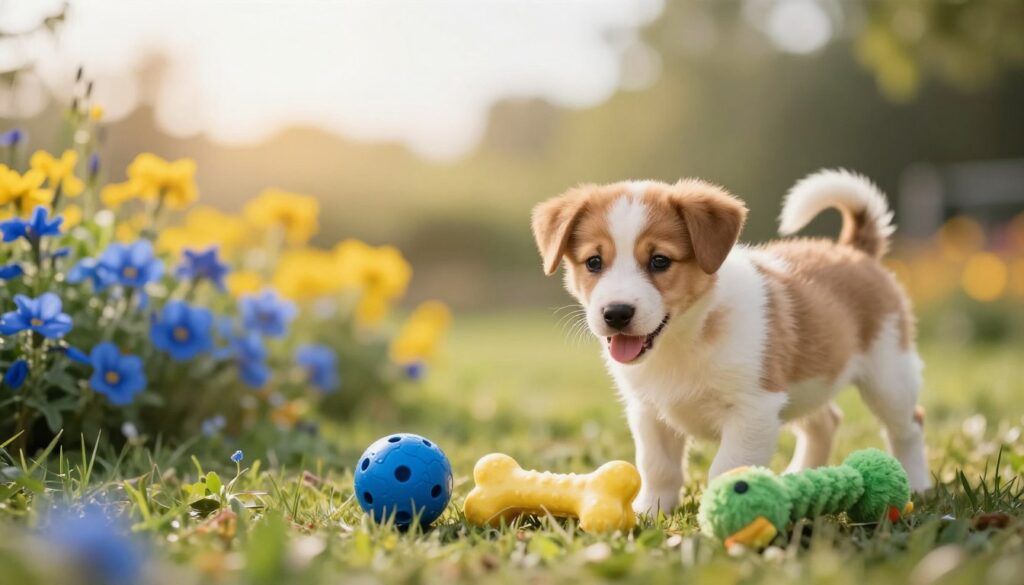
Helping puppies learn to track and retrieve visible toys
Puppies are still learning to move and focus. Playing games that move quickly can help their dogs’ color vision capabilities. These games should be short and fun.
Choose puppy toy colors that are easy to see. Toys that move fast against a simple background help puppies learn to follow objects.
Adapting toy choices for senior dogs
As dogs get older, their senior dog vision might get worse. This makes it harder for them to see in busy places. Make their play area simpler to avoid confusion.
- Use toys with strong contrast to make them stand out.
- Avoid toys with too many patterns that might hide them.
- Play in well-lit areas to help them see better.
Choosing strong contrast for dogs with impaired eyesight
For dogs with vision loss, contrast is key. A bright yellow toy on a dark mat is easier to find than a multicolored one.
Combining color with sound, scent, and texture
When sight is limited, other senses can help. Toys that squeak or feel different in your hand give extra clues. This makes playtime more fun and engaging.
Try toys with scents too. This helps dogs find their way, even if they can’t see well. Using all senses keeps your dog happy and active.
Recognizing when a veterinary eye examination is needed
Watch for changes in your dog’s behavior. If they bump into things, are slow in the dark, or have cloudy eyes, see a vet. Early checks can help keep your dog’s life better.
Early detection of eye conditions can often preserve your dog’s quality of life and help you adjust your home environment to keep them safe and happy.
Testing Which Colors Your Dog Notices Best
To learn about canine color perception, try a controlled play test. Watch how your pet reacts to different objects. This helps you pick the right toys for them.
Comparing toys under consistent lighting
Start your dog color preference test with toys that are the same size, shape, and texture but in different colors. Make sure the lighting is the same for all tests. This could be a bright day in your backyard or a well-lit room.
Observing your dog’s search time and accuracy
Begin the test by placing the toys at a fixed distance from your dog. Note how fast they find each toy and if they go straight to it. This shows how well they can see the toys.
Testing colors against real play backgrounds
Do these tests on different surfaces like grass, hardwood, and shaded areas. A toy might look great on a light rug but hard to see on dark grass. This shows which colors are best for your dog.
Keeping the test fair and reward-based
Give the same reward for every successful find to keep your dog interested. Start each test from the same spot to keep the distance the same. This makes your canine color preference test reliable.
Recording preferences without assuming color is the only cause
While testing, remember other things can affect your dog’s choices. Things like scent, texture, movement, and familiarity are important too. Don’t think color is the only thing that matters.
| Variable | High Visibility | Low Visibility | Impact Level |
|---|---|---|---|
| Toy Color | Blue or Yellow | Red or Green | High |
| Background | Contrasting Surface | Matching Surface | High |
| Lighting | Bright Daylight | Dim or Shadowy | Medium |
| Toy Texture | Distinctive/Rough | Smooth/Slick | Low |
Common Mistakes When Choosing Colors for Dogs
Many pet owners pick toys that look good to them but are invisible to their dogs. Knowing how dogs see the world helps avoid common mistakes. These mistakes can make playtime frustrating.
Assuming dogs see colors exactly as humans do
It’s common to think dogs see colors just like us. But, their dog vision vs human vision is quite different. Dogs are dichromatic, seeing mainly blue and yellow shades.
Thinking a bright red ball is as clear to your dog as it is to you can be a problem. They might lose interest or have trouble finding it in the grass.
Choosing a toy based only on human appeal
Manufacturers often make toys to attract human buyers, not dogs. You might love neon pink or bright green, but these colors might not stand out to your pet.
“The most important thing is not what the toy looks like to you, but how it functions within the unique sensory world of your companion.”
Choosing high-contrast colors that pop in your play area is better than picking trendy colors. This ensures your dog can see the toy clearly.
Ignoring glare, shadows, and background clutter
Even the brightest color can vanish in the right environment. Glare from sunlight and shadows can make a toy hard to spot.
Background clutter, like dense grass or patterned rugs, also hides objects. Always think about the play area to help your dog find the toy.
Using color as a substitute for safe toy design
Color is useful, but it’s not a replacement for safe dog toy design. A colorful toy is useless if it’s harmful or too small.
Focus on durable toys, the right size for your dog, and non-toxic materials. Consistent supervision and checking toys regularly are key to a safe playtime.
Conclusion
Knowing what colors dogs see best changes how you pick things for them. Blue and yellow are good starts, but brightness and contrast matter more. They help your dog find toys in the grass or spot them in the dark.
Dogs see colors differently than we do. But, they use motion, texture, scent, and sound a lot. Using color alone might not be enough to keep them interested.
Try out different toys and accessories where your dog plays and walks. See how they react to colors in your park or backyard. This way, you can make sure they have fun and stay safe.