Best Hunting Dog Breeds for Every Type of Hunter
Table of Contents
Going into the wilderness with a loyal friend makes any trip more exciting. Whether you’re tracking through thick brush or waiting in a blind, the right dog is key. Picking the best hunting dog breeds means your skills and goals match perfectly.
A great hunt needs more than just the right gear; it needs a dog that gets you. When you choose a dog that fits your hunting style, you significantly increase your success rate. This bond turns every hunt into a special memory.
Knowing what each hunting dog breed is like is the first step to a strong bond. By picking a dog that matches your hunting style, you form a powerful team for any challenge. Let’s look at how to find the perfect hunting partner for your next adventure.
Key Takeaways
- A strong partnership improves your overall success in the field.
- Matching canine instincts to your goals is essential for productivity.
- Selecting the right companion enhances your enjoyment of outdoor excursions.
- Understanding breed temperament helps you build a reliable team.
- Proper preparation leads to a more rewarding experience for both you and your partner.
Understanding Your Needs as a Hunter
Choosing the best hunting dog breeds starts with knowing your hunting style. Think about the terrain you hunt in and the game you chase most. A dog that doesn’t fit your hunting style can cause frustration for both you and your dog.
Matching Temperament to Hunting Style
Every hunter has a unique way of hunting. If you hunt in open fields, you need a dog with lots of energy and a wide search area. But, if you hunt in dense areas, a dog that stays close is better.
Your dog’s personality should match yours. High-energy dogs need lots of activity, even when not hunting. Here’s a table to help find the right dog for you:
| Hunter Profile | Preferred Terrain | Ideal Dog Trait |
|---|---|---|
| Upland Enthusiast | Open Fields | High Stamina |
| Waterfowl Specialist | Wetlands/Marshes | Cold Tolerance |
| Small Game Tracker | Woodlands | Tenacious Scenting |
| Mixed Terrain Hunter | Varied Landscapes | High Adaptability |
Assessing Your Training Experience and Commitment
Training a hunting dog takes a lot of time and effort. Be honest about your training skills when looking at hunting dog breeds. Some dogs are easy to train, while others need a strong, experienced handler.
“The bond between a hunter and their dog is forged in the hours of training long before the season begins. Success is not just about the breed, but the dedication you bring to the partnership every single day.”
Think if you have the patience and consistency for daily training. Building a reliable hunting partner takes months of training. Beginners should look for breeds that are eager to please and enjoy working with their handler.
Top Bird Dogs for Upland Game
Finding the best bird dogs means knowing how breeds handle dense cover and long days. Upland hunting needs a dog with endless energy and a keen nose. Choosing the right breed makes hunting more fun and productive.
English Pointer: The Speed and Stamina Specialist
The English Pointer is top for hunters who cover lots of ground. They are known for their incredible speed and stamina. This lets them keep up all day.
They are perfect for wide-open areas where you need to cover a lot of ground. Their intense prey drive makes them efficient. They love to run and show off their skills.
English Setter: The Versatile Upland Companion
The English Setter is great for those who want a dog that’s good in the field and at home. They are versatile and work well in different terrains. They are calm at home but focused in the field.
Many hunters like Setters because they work well with handlers. They are determined and graceful. This makes them a reliable choice for all hunters.
| Breed | Primary Strength | Field Temperament | Ideal Terrain |
|---|---|---|---|
| English Pointer | High Speed | Intense and Driven | Open Fields |
| English Setter | Versatility | Steady and Focused | Mixed Cover |
Best Duck Dogs for Waterfowl Hunting
When it gets cold and the birds fly, you need a dog that loves water. Finding the best duck dogs means looking for a partner that’s good at retrieving and can handle the cold.
These special breeds have coats that repel water and webbed feet. These traits help them do well in wetlands and icy marshes.
Labrador Retriever: The Gold Standard for Waterfowl
The Labrador Retriever is the top pick for many hunters in the U.S. They are eager to please, making them easy to train for water retrieves.
These dogs are smart and gentle, which means your catch will be in great shape. Many see them as the best duck dogs because they fit well in both the field and at home.
Chesapeake Bay Retriever: The Rugged Cold-Water Expert
For hunting in freezing conditions, the Chesapeake Bay Retriever is a great choice. They have a thick, oily coat that keeps them warm in icy water.
These dogs are tough and can handle rough terrain and strong currents. They’re known as some of the best duck dogs for hunting in cold weather.
- Labrador Retriever: Highly trainable, friendly, and versatile.
- Chesapeake Bay Retriever: Rugged, protective, and built for extreme cold.
Reliable Hunting Dog Breeds for Small Game
Finding the best hunting hounds for small game is rewarding. You need a partner with unwavering persistence and a sharp nose. These dogs must navigate tough terrain and stay focused on the trail for a successful hunt.
Beagle: The Premier Rabbit Hunter
The Beagle is the top choice for rabbit hunting in the U.S. They are known for their melodic baying, helping you find them in thick cover. Their ability to follow a scent trail makes them very effective.
Beagles are small but have high stamina. They can move through brambles that bigger dogs can’t. If you’re looking for a best hunting hound for rabbits, the Beagle is perfect. They have a natural instinct and are friendly.
Jack Russell Terrier: The Tenacious Small Game Tracker
For high energy and grit, the Jack Russell Terrier is a great choice. These dogs are fearless and have a strong drive when tracking small game. They excel in tight spaces where other dogs might struggle.
Their tenacity is unmatched, making them a reliable partner. Despite their small size, they can move over rough ground easily. Adding these dogs to your hunting routine brings a unique intensity.
| Breed | Primary Strength | Hunting Style | Energy Level |
|---|---|---|---|
| Beagle | Scent Tracking | Patient/Methodical | High |
| Jack Russell | Tenacity | Aggressive/Fast | Very High |
| Basset Hound | Deep Scenting | Slow/Steady | Moderate |
Versatile Gun Dogs for Mixed Terrain
When you hunt in open fields and dense woods, you need a dog that can handle it all. Choosing the right types of gun dogs means you get a partner ready for any terrain. These breeds are perfect for hunters chasing different game all season.
German Shorthaired Pointer: The All-Around Performer
The German Shorthaired Pointer is a real powerhouse in the field. It’s known as one of the best bird dogs for its pointing, retrieving, and tracking skills. This dog stays focused whether you’re in thick brush or open fields.
They have great stamina and drive, making them perfect for long days outdoors. Their eagerness to please makes training easy. Their strong build lets them handle tough terrain while keeping up with you.
Vizsla: The Loyal and Adaptable Hunter
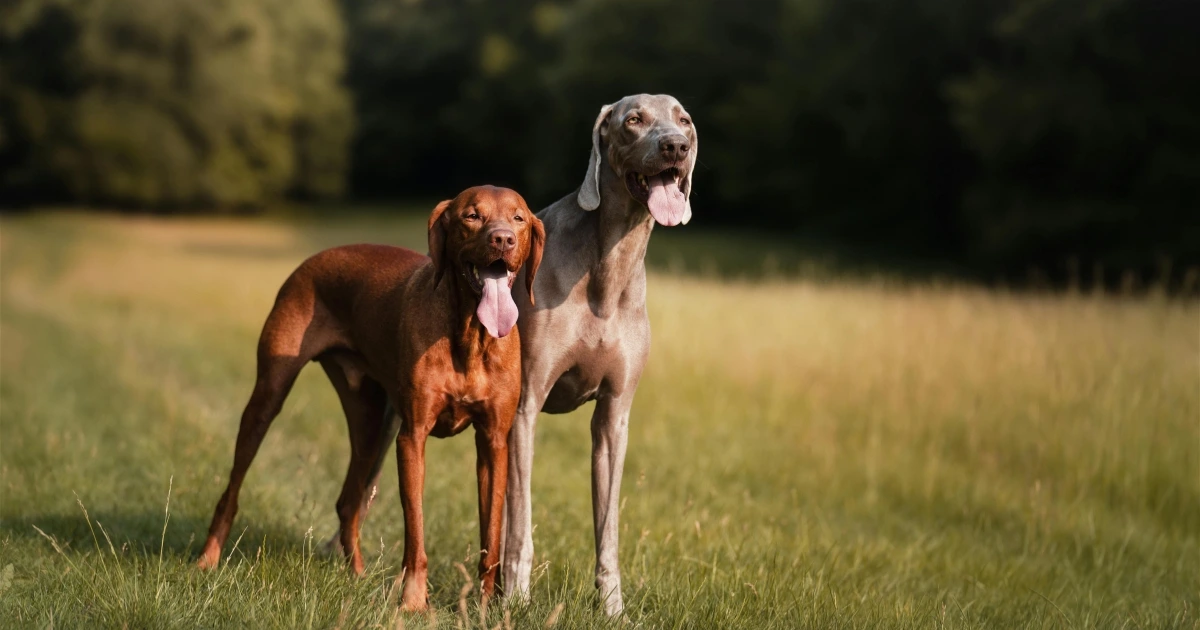
The Vizsla is great if you want a dog that stays close and works with you. They’re smart, loyal, and calm at home. They quickly adapt to new places, making them excellent in varied terrains.
This breed is good at staying in touch with its handler, even in dense areas. Their versatile hunting style makes them switch between tasks easily. They’re intense in the field but loving and gentle at home.
Specialized Hunting Hounds for Big Game
Finding the best hunting hounds for large predators requires understanding specific breed traits. These traits go beyond basic obedience. When hunting in dense forests or mountains, you need a partner with unmatched grit.
They must be able to follow a scent over long distances. These specialized dogs provide the endurance needed to succeed in demanding environments.
Bluetick Coonhound: The Master of the Night Hunt
The Bluetick Coonhound is a top choice for night hunting. This breed is known for its incredible stamina and cold-nosed tracking ability. They have a unique vocal style that helps you track them in thick brush.
They are highly focused, staying committed to the trail for hours. If you’re looking for a best hunting hound for night hunting, this breed is reliable. Their determined nature ensures they follow the scent until the job is done.
Plott Hound: The Fearless Tracker for Large Predators
For hunting large predators, the Plott Hound is an excellent companion. This breed is known for its fearless attitude and physical strength. They easily navigate difficult, rocky, and mountainous terrain.
These dogs are not just trackers; they are courageous protectors that stay focused under pressure. By choosing a Plott, you get a partner that excels in high-stakes situations. Their ability to handle intense, long-distance pursuits makes them a favorite among serious big game hunters.
Essential Traits to Look for in a Hunting Prospect
Finding the right hunting dog breed means looking beyond just their family tree. The puppy’s personality is key to its hunting success. Watch how it acts around others to see its true potential.
Evaluating Prey Drive and Focus
Prey drive is a dog’s natural urge to chase and catch game. A good prospect will quickly notice and chase moving things or smells. You want a dog that stays focused, not easily swayed by its surroundings.
Try these simple tests:
- Use a bird wing on a string to see how the puppy tracks.
- Watch how long it keeps an eye on a moving target.
- See if it sniffs out new smells in the grass.
Assessing Biddability and Trainability
Biddability means a dog wants to work with you, not just for itself. This is crucial for hunting dog breeds as it affects how fast they learn. A biddable dog listens to you, even when excited by the hunt.
Check trainability by seeing how the puppy interacts with you. If it often looks to you during play, it will likely listen well to training. Remember, being consistent in your training will help your dog reach its full potential.
Training Your Hunting Companion for Success
Creating a top-notch hunting dog takes time, patience, and clear communication. It doesn’t matter what types of gun dogs you pick. The key is daily, structured practice. Building a strong bond with your dog is crucial for success.
Establishing Basic Obedience Foundations
First, your dog needs to learn basic commands for safety and control. A good recall is essential, keeping your dog close during hunts. Focus on these key skills early:
- Recall: Returning immediately when called, even when distracted.
- Stay: Staying put until released, important for steady work.
- Heel: Walking calmly by your side, saving energy for the hunt.
Consistency is key in teaching these commands. Keep training sessions short and positive. This way, your dog stays excited to learn. Mastering these basics prepares your dog for more advanced tasks with different types of gun dogs.
Introducing Field Work and Gun Sensitivity
After your dog knows basic commands, it’s time for field work. This step needs a careful approach to keep your dog confident, not scared. Gun sensitivity training must be done carefully to avoid negative reactions to gun sounds.
Begin by introducing gun sounds from far away while your dog is doing something fun. Slowly get closer over weeks as your dog becomes more comfortable. Always watch your dog’s body language to make sure they’re calm and ready to work.
Remember, different types of gun dogs react differently to new things. If your dog seems anxious, slow down. With a careful, steady approach, you’ll have a reliable hunting partner.
Health and Maintenance for Active Hunting Dogs
Your hunting dog is like an elite athlete needing special care. Whether it’s a pointer or one of the best duck dogs, regular physical care keeps them sharp all season. Ignoring these needs can cause early tiredness or health problems.
Nutritional Requirements for High-Energy Breeds
High-energy hunting breeds use a lot of calories all day. They need a diet full of high-quality protein for quick muscle recovery and lasting energy. Choose formulas made for working dogs that have the right mix of fats and proteins.
Drinking water is as important as eating for your dog. Always have fresh water ready and give it often to avoid dehydration. Good nutrition keeps your dog motivated and strong when things get tough.
Preventative Care and Field Injury Management
Preventive care keeps your dog safe in rough places. Even the best duck dogs can get cuts, thorns, or hurt joints in water and thick brush. Regular vet visits help catch small problems before they get big.
Keep a first-aid kit in your car or hunting vest. Being ready helps you handle common injuries right away. Here’s how to keep your dog safe:
- Check paws and pads every day for cuts, burrs, or infection signs.
- Keep vaccinations up to date to fight off diseases from wildlife.
- Watch for overheating or exhaustion in warm weather hunts.
- Keep your dog at a healthy weight to avoid joint and ligament stress.
By focusing on these care habits, your dog will be a reliable partner for many years. Consistent care means better performance and a stronger bond with your hunting dog.
Conclusion
Choosing the right hunting dog is a big decision. It affects your success and fun in hunting for years. It’s not just about the breed. It’s about your hunting style and training commitment.
You can make a great team by picking a dog that fits your lifestyle. Whether it’s a high-energy Labrador or a steady Beagle, their growth is worth it. Every sunrise hunt will be better with them by your side.
Think about your local area and the game you hunt. A dog that matches your needs is more than a hunting tool. They become a loyal friend that makes your outdoor adventures better.
Begin your search by visiting good breeders or local kennel clubs. Your future hunting partner is waiting. Create a strong bond that will make your outdoor time unforgettable.
FAQ
Which breed is considered the gold standard for waterfowl hunting?
The Labrador Retriever is the top pick for waterfowl hunters. It has great intelligence, a waterproof coat, and a strong retrieving instinct. Labs are eager to please, making them the best duck dogs.For icy, rugged conditions, the Chesapeake Bay Retriever is a strong choice. It’s built for the toughest North American wetlands.
What are the best bird dogs for upland game hunting?
The English Pointer and English Setter are the best for upland game hunting. The English Pointer is fast and has great stamina in open country.The English Setter is versatile and gentle. It excels at finding game in dense cover.
Are there specific types of gun dogs that can handle both pointing and retrieving?
Yes, there are versatile gun dogs for mixed terrain. The German Shorthaired Pointer is an all-arounder that can point, track, and retrieve.The Vizsla is loyal and adaptable. It works closely with you, making it great for various landscapes.
Which breeds are the best hunting hounds for big game and tracking?
For big game, the Bluetick Coonhound and Plott Hound are top choices. The Bluetick Coonhound is great at night hunting with its strong scenting.The Plott Hound is fearless and gritty. It’s perfect for dangerous tracks in mountains.
How should I evaluate a puppy’s potential as a hunting companion?
Look for prey drive and biddability. Watch how the puppy reacts to scents or movement in field exercises. Biddability shows how well the dog listens to commands during a hunt.
What is the best way to introduce my dog to gunfire?
Introduce gun sensitivity slowly. Start with positive experiences and low-volume noises. Gradually increase the noise level as your dog stays calm.This helps prevent gun-shyness and keeps your dog reliable in the field.
What kind of nutrition does a high-performance hunting dog require?
Hunting dogs need a high-protein, high-fat diet for muscle recovery and energy. Professional handlers often use Purina Pro Plan Sport or Eukanuba Premium Performance.Make sure your dog gets enough calories and water to stay in top shape during hunting season.
Which breeds are most effective for hunting small game like rabbits?
Beagles are the best for small game due to their great nose and “musical” voice. They help track through thick brush.For high-energy tracking, the Jack Russell Terrier is a great choice. It brings unmatched intensity to the hunt.