
Dogs & Cinnamon: Everything You Need to Know
You look into those soulful eyes and feel an unbreakable bond. As a pet parent, you naturally want to share the comforts of your home. This includes the warm scents of your kitchen. But, you might wonder if common pantry staples are safe for your furry friends.
It’s important to understand the relationship between dogs and cinnamon for your pet’s health. While cinnamon is a favorite in many human recipes, it has hidden risks. Knowing what’s safe and what’s not is key to responsible pet care.
This guide gives you the knowledge to make informed decisions for your home. By learning the facts, you can keep your kitchen safe for your beloved pet. Your commitment to their well-being starts with knowing what’s safe for them to eat.
Table of Contents
Understanding the Basics of Dogs Cinnamon Safety
Knowing about dogs cinnamon safety is key when it comes to human foods for pets. While humans love cinnamon in their coffee or oatmeal, dogs have different rules. Learning these dogs cinnamon safety tips can prevent health problems at home.
Is Cinnamon Toxic to Canines?
Cinnamon is not toxic to dogs in small amounts. But, it’s not good for them as a regular food. Eating too much can hurt their mouth, throat, and stomach.
If your dog eats a lot of cinnamon, they might cough, choke, or have trouble breathing. Always keep spices out of their reach.
Distinguishing Between Ceylon and Cassia Cinnamon
Not all cinnamon is the same. Most stores sell Cassia cinnamon, which is cheaper but has more chemicals. Ceylon cinnamon, or “true cinnamon,” is safer and tastes milder.
Ceylon cinnamon has less of the chemical that worries pet owners. It’s a better choice for your dog’s health.
The Risks of Coumarin Content
The main danger in Cassia cinnamon is coumarin. Too much can harm a dog’s liver.
Dogs are smaller than humans, so even a little coumarin can be too much for them. Knowing this helps keep your pet safe.
| Feature | Ceylon Cinnamon | Cassia Cinnamon |
|---|---|---|
| Coumarin Levels | Very Low | High |
| Safety for Dogs | Relatively Safer | Higher Risk |
| Common Usage | Premium/Health Foods | Standard Grocery |
| Flavor Profile | Sweet and Delicate | Strong and Spicy |
Potential Health Benefits of Cinnamon for Dogs
Cinnamon is not just for holiday treats. It might also help your dog’s health when used right. But remember, it’s not a magic fix. It’s more like a helpful addition to their diet.
Anti-Inflammatory Properties
Many pet owners want to ease their older dogs’ aches. Cinnamon might help with that. It has stuff that could reduce minor inflammation in joints.
Adding a little cinnamon to their food might help them move better. But make sure to use the right kind to avoid problems.
Regulating Blood Sugar Levels
Studies say cinnamon might help keep blood sugar steady. This is good for dogs that need a little extra help with their metabolism. But it’s not a replacement for vet advice.
In small amounts, cinnamon could make insulin work better. This is why some owners are interested in using it for their dog’s health.
Antioxidant Support for Immune Health
Cinnamon is full of antioxidants that fight stress in the body. These help keep your dog’s immune system strong. It’s like a shield against bad stuff.
Adding antioxidants to your dog’s diet is a smart move. But remember, a little goes a long way. Too much can be bad.
| Health Area | Potential Benefit | Usage Note |
|---|---|---|
| Joint Health | Reduces inflammation | Use sparingly |
| Metabolic Support | Stabilizes blood sugar | Consult your vet |
| Immune System | Provides antioxidants | Small doses only |
Recognizing the Signs of Cinnamon Toxicity
Every pet owner should know the early signs of spice toxicity. While many love the smell of cinnamon, dogs cinnamon can be harmful if eaten too much. Watching your pet closely helps you act fast if they seem off.
Common Symptoms of Overconsumption
If a dog eats too much cinnamon, their stomach might get upset. Look for sudden vomiting or diarrhea. These signs mean their body is fighting to digest the spice.
In serious cases, a dog’s heart rate might change. An unusual or fast heartbeat is a big warning sign. Keep a close eye on your pet if you think they’ve been in your spice cabinet.
Respiratory Issues and Irritation
The powder of cinnamon can also be dangerous. If a dog breathes it in, it can irritate their lungs. This might show as persistent coughing, sneezing, or trouble breathing.
The oils in cinnamon can hurt the nose and throat. If your dog is having trouble breathing or seems distressed, get them away from the powder fast. Protecting their airways is crucial.
When to Contact Your Veterinarian
It’s important to know when to call the vet. If you see any symptoms, don’t wait. Call your vet or an animal emergency clinic right away.
Be ready to tell them how much cinnamon was eaten and when. Prompt veterinary care is key to your dog’s recovery. Your quick action can greatly help your pet’s health.
Safe Ways to Incorporate Cinnamon into Your Dog’s Diet
If you want to add flavor to your dog’s meals, safety is key. Humans love cinnamon, but dogs cinnamon needs careful handling to avoid harm. Start with a tiny amount to check your pet’s reaction before adding it regularly.
Determining the Correct Dosage
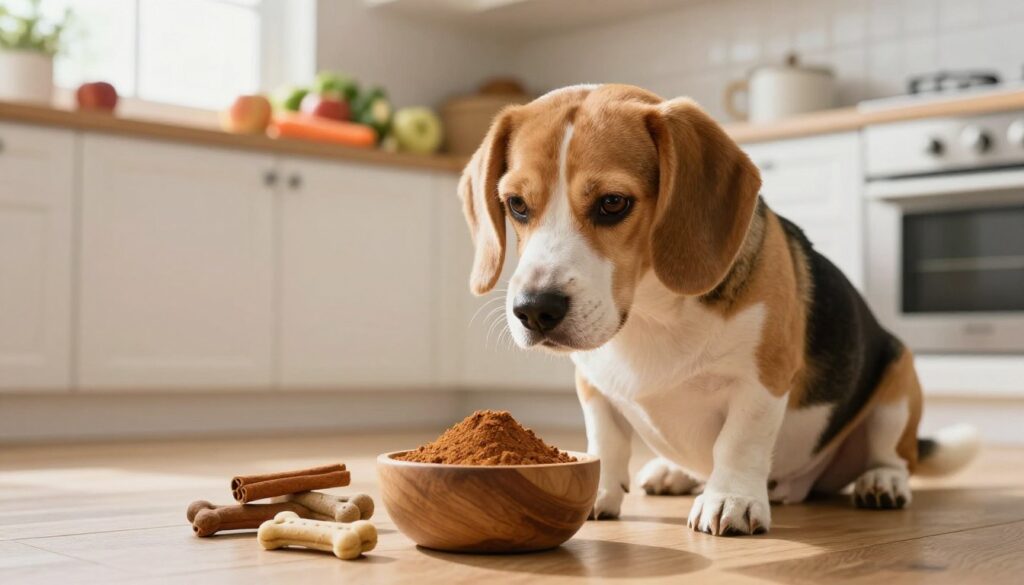
Finding the right dogs cinnamon dosage is crucial for your pet’s health. Small breeds should get only a pinch, while bigger dogs might handle up to a quarter teaspoon. Never give more than these amounts to avoid stomach problems or irritation.
Talking to your vet is the best way to adjust these amounts for your dog. They can guide you based on your pet’s health and size. Use the table below as a guide for safe amounts.
| Dog Weight | Recommended Limit | Frequency |
|---|---|---|
| Small (Under 20 lbs) | A tiny pinch | Occasional |
| Medium (20-50 lbs) | 1/8 teaspoon | Occasional |
| Large (Over 50 lbs) | 1/4 teaspoon | Occasional |
Methods for Safe Administration
Knowing how to give dogs cinnamon safely is important. Never let your dog inhale the powder. Make sure the spice is well mixed into their food or treats to keep them safe.
Mixing with Wet Food
Mixing cinnamon into wet food is the simplest way. The moisture helps the powder stick to the food, avoiding inhalation risks. Just stir the measured amount into their food until it’s fully mixed.
Sprinkling on Homemade Treats
For baking, add cinnamon to dog-friendly recipes. Mix it into the dry ingredients before adding wet ingredients. This ensures it’s evenly distributed, making treats safe and tasty for your dog.
Risks Associated with Cinnamon Essential Oils
Cinnamon essential oils are very different from the spice you use in cooking. While a little spice is okay, these oils are extremely hazardous for pets. They have strong compounds that can harm animals badly.
Why Essential Oils Are Dangerous for Pets
Essential oils are very strong and not safe for pets like food-grade ingredients. Using these oils is like using something much stronger than baking spice. Even a tiny drop can be too much for pets, causing serious harm.
Pets can’t handle these strong plant chemicals well. What smells nice to you can be very bad for them. Always think about your pet’s safety when using essential oils.
Dermal Irritation and Chemical Burns
Touching cinnamon oil can hurt pets a lot. If it gets on their skin, it can cause pain and burns. These burns need quick help from a vet.
Don’t put these oils on your pet’s skin or fur, even if it’s a little bit. Dogs’ skin is very sensitive and can get hurt easily. Keeping pets away from these oils is key to keeping them safe.
Inhalation Hazards in the Home
Using diffusers with cinnamon oil can be bad for pets’ breathing. Pets can get sick from breathing in these vapors. They might start coughing or have trouble breathing.
If you must use diffusers, make sure pets are far away. It’s better to keep these oils away from pets to keep them safe. Locking up these oils is the best way to protect your pets.
Common Household Items Containing Cinnamon to Avoid
Many everyday products in your home have cinnamon. This spice is common in human kitchens but can be risky for dogs cinnamon sensitivity. Knowing these hidden sources is key to keeping your pet safe.
Baked Goods and Human Snacks
Human treats like muffins, cookies, and granola bars often have cinnamon. They also have sugar and unhealthy fats that can upset your pet’s stomach. Always check the ingredient label before giving any snack to your furry friend.
Cinnamon-Scented Candles and Potpourri
Your home decor might have hidden dangers. Cinnamon-scented candles, wax melts, and potpourri can irritate a dog’s respiratory system. If your pet chews on these, they could face chemical burns or severe stomach problems.
Sugar-Free Products and Xylitol Dangers
Sugar-free snacks with cinnamon are especially dangerous. They often have xylitol, which is very toxic to dogs. Even a small amount can cause a dangerous drop in blood sugar or liver failure. When managing dogs cinnamon exposure, keep all sugar-free items away from your pet.
Nutritional Considerations and Dietary Supplements
Before adding anything new to your pet’s diet, it’s crucial to think about the impact. Not every supplement is right for every dog. Professional guidance is key to keeping your dog healthy for the long term.
Consulting Your Vet Before Adding Supplements
Always talk to your vet before starting any new diet plan. They’ll check your dog’s health history and diet needs. This is especially important for dogs cinnamon supplements, as health conditions can affect how pets react.
Your vet will decide if your dog needs extra help or if their diet is fine. They’ll also watch for any bad reactions to new foods. Never assume a natural product is safe for your dog without a vet’s say-so.
Evaluating Quality and Purity of Cinnamon Products
If your vet says it’s okay to use dogs cinnamon, choose high-quality products. Many spices have fillers, pesticides, or low-grade materials that can harm pets. Look for organic, pure sources without artificial additives or preservatives.
Make sure the label shows the product is pure and chemical-free. Avoid products with added sugars or xylitol, which are toxic to dogs. Purity is key to avoid digestive problems or poisoning.
Natural Alternatives to Cinnamon for Health Support
If cinnamon worries you, there are safer options. Ingredients like turmeric or ginger are great for anti-inflammatory support. These are often safer and easier to find in pet-safe forms.
Research any alternative before adding it to your dog’s food. Focus on proven, safe supplements to boost your dog’s health. Making informed choices means a happier, healthier life for your pet.
Preparing Homemade Dog Treats with Cinnamon
Baking treats for your dog is a fun way to make sure they eat healthy. You can add dogs cinnamon in small amounts to make the treats tasty and possibly good for them.
Selecting Dog-Friendly Ingredients
Great treats start with good ingredients. Use organic pumpkin, fresh apples, and whole-wheat or oat flour. This ensures your dog gets the best nutrition.
Stay away from xylitol, artificial sweeteners, and too much salt. Natural, whole foods make treats that are tasty and safe for your dog.
Simple Recipes for Occasional Rewards
Finding tasty dogs cinnamon recipes is simple with basic ingredients. Treats should be occasional rewards, not a main food, to keep your dog’s diet balanced.
Pumpkin and Cinnamon Biscuit Recipe
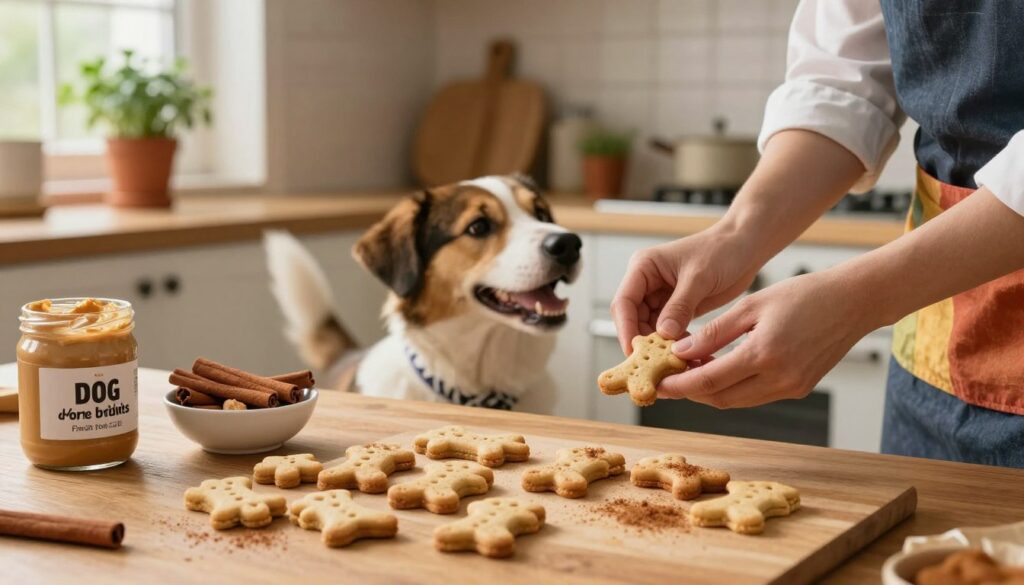
This recipe mixes pumpkin’s health benefits with a bit of spice. Mix 2 cups of oat flour, 1/2 cup of pure pumpkin puree, and 1/2 teaspoon of Ceylon cinnamon.
- Roll the dough out on a floured surface.
- Cut into fun shapes using a cookie cutter.
- Bake at 350°F for 20 minutes until crisp.
Apple and Cinnamon Crunch Treats
Apples add a natural sweetness dogs enjoy. Mix 1 cup of unsweetened applesauce, 2 cups of whole-wheat flour, and a pinch of cinnamon for a crunchy texture.
Bake these at 325°F for about 25 minutes. Let the treats cool completely before serving. This makes sure the dogs cinnamon flavor is safe and enjoyable for your pet.
Conclusion
Managing your dog’s diet is important. You need to watch what you have in your kitchen. Cinnamon can be safe for your dog if you pick the right kind and use it little.
Make sure to choose Ceylon cinnamon over Cassia. This helps avoid bad reactions. Always be careful with what you give your dog.
Stay away from concentrated essential oils. They are very dangerous for dogs. Keep all spices and scented items in safe places.
This keeps your dog from getting into things they shouldn’t. It also stops them from getting sick.
Always talk to your vet before adding new foods to your dog’s diet. They can give you advice that’s just right for your dog. This keeps your dog happy and healthy for a long time.
Share your stories about making treats for your dog. Tell us what natural ingredients your dog likes. Your stories help other dog owners make good choices for their pets.