When to Change Puppy Food to Dog Food for Healthy Growth
Watching your furry friend grow is a truly magical experience. You want the best for them, making sure every meal boosts their health and energy. Giving the right food at the right time is key to their care.
Many owners wonder when to switch their pet’s diet. Knowing when to change puppy food to dog food is crucial. It helps avoid health problems and keeps your pet healthy. The right food at the right time gives your dog the nutrients they need.
Learning about these nutritional milestones is important. It helps you create a strong foundation for a happy life together. Let’s look at how to make this transition smoothly and with care.
Table of Contents
Understanding the Nutritional Differences Between Puppy and Adult Formulas
Nutritional needs change a lot as your dog grows from a puppy to an adult. When you look at puppy food vs dog food, you see two different products. Puppies need lots of energy for fast growth, while adult dogs need a balanced diet to stay healthy and avoid gaining weight.
Key Macronutrient Variations
Puppy formulas are powerhouses of energy. They have more protein and fat to meet the high energy needs of a growing body. This extra energy helps your puppy build muscle, bones, and organs during their most important months.
Adult formulas, on the other hand, focus on maintenance and stability. Once a dog is fully grown, they don’t need as much fat and protein. Feeding a puppy diet to an adult dog can lead to weight gain and joint problems. Knowing the difference between puppy food vs dog food helps you avoid these issues.
Micronutrient Density and Growth Support
The mineral content of puppy and adult foods is also different. Puppy food has the right amounts of calcium and phosphorus for skeletal development. These minerals are crucial for strong bones that grow right without being too brittle or deformed.
Adult formulas, however, focus on long-term health. They often include antioxidants and fiber to boost the immune system and digestion. By picking the right puppy food vs dog food, you give your pet the nutrients they need for their current stage of life. This keeps them active and healthy for many years.
Determining When to Change Puppy Food to Dog Food Based on Breed Size
Every puppy grows at their own pace, needing different foods. Since breeds grow at different rates, there’s no one-size-fits-all rule for switching foods. Knowing your dog’s breed helps you give them the right food at the right time.
Small Breed Maturity Timelines
Small and toy breeds grow up quickly. They often reach full size between nine and twelve months. For a Chihuahua or a Yorkshire Terrier, the best time to switch to dog food is usually around their first birthday.
Medium Breed Growth Milestones
Medium-sized dogs grow at a steady pace. They usually stop growing by twelve months. Keep an eye on their weight as they get closer to this age to avoid health issues.
Large and Giant Breed Considerations
Big dogs need more time to grow. They might not reach full size until they are eighteen to twenty-four months old. Switching them too early can cause problems, so be patient.
- Small Breeds: Transition at 9 to 12 months.
- Medium Breeds: Transition at 12 months.
- Large/Giant Breeds: Transition at 18 to 24 months.
For any doubts, talk to your vet about when to switch your puppy’s food. They can check your puppy’s growth and suggest the best time. Proper timing helps keep your dog healthy and active for life.
Physical and Behavioral Signs Your Puppy Is Ready for the Switch
Knowing when to change your puppy’s food is key for any pet owner. Age is not always the best guide. Your dog’s growth tells you more about their food needs. Watching their body changes helps you pick the right food for them.
Monitoring Weight and Body Condition
Checking your puppy’s body condition score is a great way to know when to switch food. You should be able to feel their ribs without a lot of fat. They should also have a clear waistline when you look at them from above.
If your puppy looks round or doesn’t have a defined waist, they might be too heavy. Eating too much high-calorie food can make them grow too fast. Look for these signs of a healthy body:
- Ribs are easy to feel but not too visible.
- They have an hourglass shape when you look down at their back.
- Their belly is tucked up when you see them from the side.
Changes in Activity Levels and Appetite
As your puppy gets older, you’ll see changes in how active they are and how much they eat. These changes show their body needs are changing. Spotting these signs helps you know when to switch their food to avoid weight gain.
Look out for these common changes:
- Less enthusiasm: They might leave food in their bowl, showing they don’t need as much.
- Lower intensity: They might want to play less or seem less energetic.
- Steady growth: When they stop growing, they don’t need puppy food anymore.
By noticing these small signs, you can move your dog to adult food. Remember, every breed grows at its own pace. Keep an eye on your dog’s special growth journey.
The Importance of Gradual Transitioning for Digestive Health
Your puppy’s digestive system is very sensitive. That’s why a gradual transition puppy food to dog food is crucial for their health. It’s important not to rush the change, as it can cause discomfort.
Knowing when to change puppy food to dog food is just the start. How you transition affects how well your pet adjusts to new foods.
Why Sudden Diet Changes Cause Upset
Dogs have a sensitive gut that needs a balance of gut bacteria. A quick change in food can upset this balance. This often leads to unpleasant symptoms like diarrhea, vomiting, or loss of appetite.
Slowly introducing new food helps your dog’s system adjust without stress. This approach reduces the chance of inflammation and keeps your pet enjoying their meals.
The Seven-Day Transition Schedule
To transition puppy to adult dog food smoothly, follow a seven-day plan. It gradually replaces puppy food with adult food:
- Days 1-2: Mix 25% new food with 75% puppy food.
- Days 3-4: Combine 50% new food with 50% puppy food.
- Days 5-6: Serve 75% new food and 25% puppy food.
- Day 7: Transition to 100% adult dog food.
If your dog shows signs of digestive issues, slow down the transition. Consistency is key for a smooth change. Watch your dog’s energy and stool quality to make sure they’re doing well on the new food.
Selecting the Right Adult Dog Food for Your Pet
Choosing the right food for your pet is key. The pet food aisle can be overwhelming. But, by focusing on the label, you can make a better choice for your dog’s adult years.
Reading Ingredient Labels Effectively
When reading labels, remember that ingredients are listed by weight. The first items are the main parts of the food. Look for a named protein source as the first ingredient.
Watch out for vague terms like “meat meal” or “animal byproduct.” A good label will say “deboned chicken” or “lamb.” This shows the food’s quality and what your dog is getting.
Identifying High-Quality Protein Sources
Whole-food proteins are best for your dog’s diet. Ingredients like fresh beef, salmon, or turkey are full of amino acids. Prioritizing these whole proteins helps your dog stay healthy and strong.
Meat meals can also be good, but they should be from a known animal. Look for “chicken meal” instead of “poultry meal.” This shows the food is made by a reputable company.
Avoiding Common Fillers and Additives
Many foods use cheap fillers like corn, wheat, or soy. These add bulk but little nutrition. Try to avoid foods with these as main ingredients.
Also, steer clear of artificial colors, flavors, and preservatives like BHA or BHT. These can cause problems in some dogs. Choosing clean, natural ingredients is better for your dog’s health and happiness.
Common Challenges During the Dietary Transition
Changing your dog’s diet can be tricky, especially if they have certain tastes or a sensitive stomach. Even though a gradual transition puppy food to dog food is best, you might face some bumps. Knowing how to handle these problems helps keep your pet healthy and happy.
Managing Picky Eaters
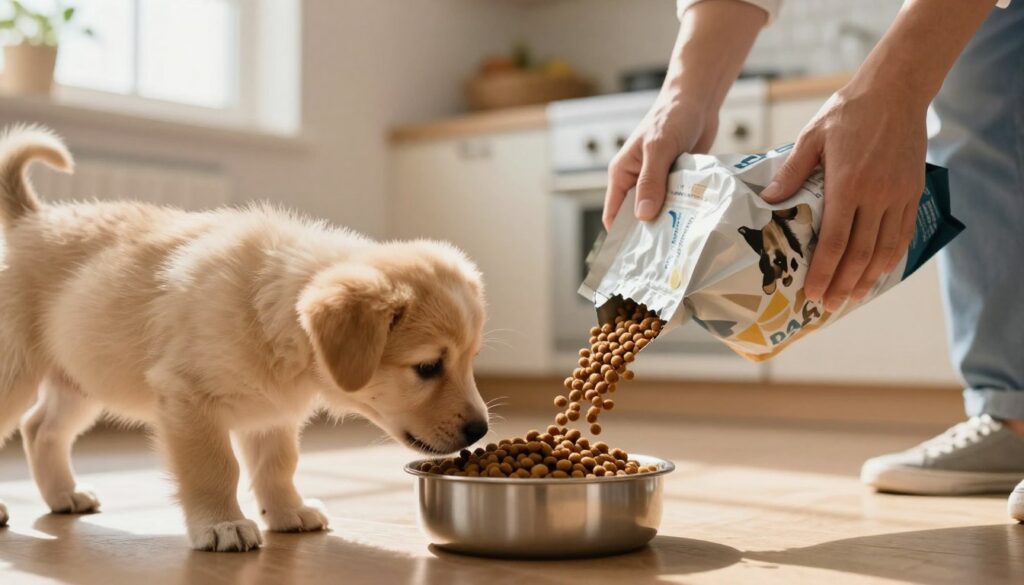
Some dogs are picky about new foods. If your dog doesn’t like the new adult food, don’t give them human food. Instead, try gently warming the food or adding a bit of warm water to make it smell better.
Adding a small amount of low-sodium bone broth to the kibble might help. Keep the mix of gradual transition puppy food to dog food the same, even if they’re being stubborn. Most dogs will get used to the new food once they realize it’s all they have.
Addressing Sensitive Stomachs
Some dogs get upset stomachs when trying new foods. If your dog has loose stools or gas, slow down the change. Probiotics can help with their gut health during this time.
If the problem doesn’t go away, try a bland diet of boiled chicken and white rice. But, if your dog keeps vomiting or has diarrhea, talk to your vet. A carefully managed gradual transition puppy food to dog food can help avoid these issues and keep your dog healthy in the long run.
Consulting Your Veterinarian Before Making the Switch
Switching from puppy to adult food is a big step. It’s best to get advice from a vet. They know your pet’s health history and how they’re growing. Finding the right age to switch puppy to dog food is not easy. A vet can help make sure your dog is healthy.
When Professional Guidance Is Essential
Some dogs need to be extra careful when changing their food. If your puppy has gastrointestinal sensitivity or health problems, talk to a vet first. They can tell if your dog is ready for adult food or needs a special diet.
Also, if your puppy is growing too fast or having trouble staying thin, see a vet. They can check if your dog is ready for adult food. They can also find out if there are any health problems that need attention.
Questions to Ask During Your Wellness Visit
When you go for a check-up, have some questions ready. This will help you understand what food is best for your dog. Start by asking, “What is the best age to switch puppy to dog food for my dog?”
Also, ask about the right amount of calories for your dog’s activity level. You might want to ask about these things too:
- Are there certain brands or ingredients I should avoid because of my dog’s health history?
- How should I watch my dog’s stool and energy levels during the change?
- Is a seven-day transition enough, or should we go slower?
By asking these questions, you make sure your plan is medically sound and right for your pet. Your vet’s advice will give you confidence in your dog’s health and happiness.
The Role of Life Stage Nutrition in Long-Term Health
Choosing the right time to switch your pet’s food is key. It helps keep your dog healthy and active for life. Following puppy food change guidelines ensures their food matches their needs as they grow.
Preventing Obesity in Young Adults
Young adult dogs need less food than when they were growing fast. Eating too much can make them gain weight too quickly. This can harm their health in the long run. Managing portion control is crucial to avoid obesity.
Switching to adult food gives your dog the right nutrients for staying fit. It helps them stay lean and active. Keeping an eye on their body condition score is important.
Supporting Joint Health for Aging Dogs
As your dog gets older, good nutrition is key to keeping them mobile. Adult food often has glucosamine and chondroitin to support joints. Giving these nutrients early helps keep joints healthy longer.
The table below shows how nutrition changes as your dog grows from puppy to adult and beyond.
| Life Stage | Primary Nutritional Goal | Key Nutrient Focus |
|---|---|---|
| Puppy | Rapid Growth Support | High Protein & Calcium |
| Young Adult | Weight Maintenance | Controlled Calories |
| Senior | Joint & Mobility Support | Omega-3s & Glucosamine |
Choosing high-quality adult food helps your dog stay active and comfortable. Proper dietary management today affects their life quality later. Pick formulas that fit your dog’s breed and activity level for the best benefits.
Comparing Puppy Food vs Dog Food Caloric Density
When you look at puppy food vs dog food, the main difference is in calories. Puppy food is packed with fat and protein to help puppies grow fast. But, as dogs get older, they don’t need as many calories.
Calculating Daily Caloric Needs
To figure out your dog’s energy needs, start with their Resting Energy Requirement (RER). This is how much energy they use when they’re just resting. You can find this by using the formula: 70 x (body weight in kilograms)^0.75.
After finding the RER, multiply it by an activity factor. This depends on how active your dog is. Here are some general activity levels:
- Sedentary or senior dogs: RER x 1.0 to 1.2
- Average adult dogs: RER x 1.4 to 1.6
- Highly active or working dogs: RER x 2.0 to 3.0
Adjusting Portions During the Transition
Switching from puppy food vs dog food needs careful calorie management to avoid weight gain. Adult formulas have fewer calories, so you can’t just switch amounts without checking the labels.
First, look at the calories per cup on both labels. If the adult food has fewer calories, you might need to keep the same volume. But if it’s more nutrient-dense, you might need to give less. Always check your dog’s body condition score during the first few weeks to keep them at a healthy weight.
If your dog seems less interested or hungry, try increasing their food by 5% to 10% at a time. Watching them closely will help you find the right amount for their new adult diet.
Common Mistakes to Avoid When Switching Diets
It’s crucial to follow the right puppy food change guidelines to keep your pet healthy. Many owners rush or ignore their dog’s nutritional needs. Knowing these common mistakes helps make the transitioning puppy to adult dog food process safer and smoother.
Switching Too Early or Too Late
Switching your dog to adult food too soon can cause significant nutritional deficiencies. Adult formulas lack the nutrients needed for growth. This can lead to stunted growth or skeletal problems.
On the other hand, waiting too long to switch can also be bad. Keeping a dog on puppy food too long can lead to unwanted weight gain and obesity. This puts extra strain on their joints and organs.
Mixing Brands Without Proper Ratios
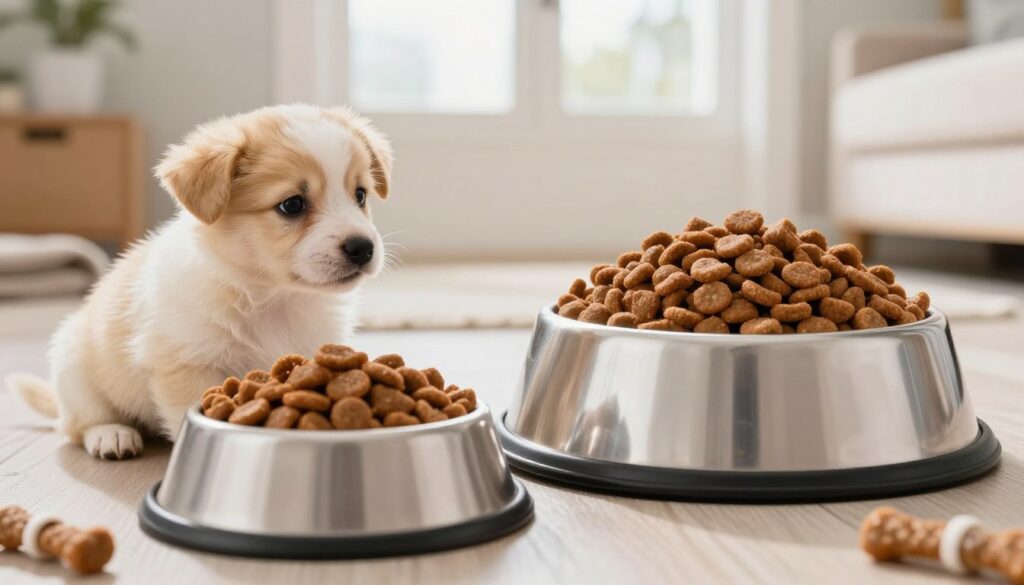
Changing your dog’s diet too quickly can upset their stomach. Many owners switch brands or formulas too fast, causing vomiting, diarrhea, or loss of appetite. A gradual transition is key to a healthy gut during this change.
Always follow a structured schedule when introducing new food. Start by mixing a small amount of the new food with the current puppy formula. Gradually increase the new food ratio over seven to ten days. This helps your dog’s digestive system adjust comfortably to the new food.
By following these puppy food change guidelines, you can avoid stomach upset. Remember, transitioning puppy to adult dog food is a big step. Take it slow and steady for your dog’s health and happiness.
Monitoring Your Dog After the Transition
Your journey doesn’t stop when you switch your dog’s food. You need to keep a close eye on them. This is to make sure the new food meets their needs.
Tracking Coat Quality and Energy Levels
Look at your dog’s coat first. A good diet should make it shiny and soft. If it’s dull or flaky, the food might not have enough fatty acids.
Your dog’s energy is also key. They should be playful and full of energy all day. If they seem tired, the food might not have enough calories.
Observing Stool Consistency and Digestion
Digestion shows how well your dog is doing. Look for firm, consistent stools. Loose or watery stools mean the food isn’t being digested well.
Watch for gas or bloating too. It could mean they’re not tolerating certain proteins or grains. If it lasts, talk to your vet. Good digestion is crucial for your dog’s health.
| Indicator | Healthy Response | Warning Sign |
|---|---|---|
| Coat Texture | Soft and Shiny | Dull and Brittle |
| Energy Level | Consistent Vitality | Lethargy or Fatigue |
| Stool Quality | Firm and Regular | Loose or Frequent |
| Skin Health | Clear and Hydrated | Itchy or Flaky |
By watching closely, you help your dog adjust to their new food. Every dog is different, so you might need to make small changes. Always put your dog’s comfort and health first.
Conclusion
Switching your pet to adult food is a big step. It means they get the right nutrients for a long, healthy life.
Be patient when changing their diet. Watch your dog closely as you try new foods from brands like Purina Pro Plan or Hill’s Science Diet. Keep an eye on their energy and how they look to see if they like the new food.
Talk often with your vet to make sure you’re making the right choices for your dog. They can help you understand the best food for your dog’s health. Taking care of these details helps your dog live a happy, healthy life.
Write about your experiences with changing your dog’s food. Your stories can help other pet owners make good choices for their dogs. Start this new chapter today to help your dog stay healthy for many years.