Duck Dog Breeds Explained: Choosing the Right Waterfowl Hunting Companion
There’s a special bond in the early morning of a marsh. You wait for the first light, knowing your loyal partner is ready. Choosing the right duck dog breeds means understanding your area and hunting style.
Success in the field depends on your dog’s natural instincts. When you match their nature to your hunting needs, you create a perfect team. This partnership not only increases your success but also makes lasting memories.
Table of Contents
Understanding the Role of a Waterfowl Retriever
For centuries, wild dogs have evolved into the duck retriever breeds we use today. When you go hunting, you’re not just bringing a pet. You’re working with a partner made for specific tasks. These dogs have been bred for generations to excel in tough environments.
The History of Working Retrievers
The modern retriever started when hunters wanted dogs for wet, cold places. Breeders aimed for a soft mouth to carry birds safely. This trait is key for the top breeds of duck hunting dogs in the U.S.
Breeders also worked on water-resistant coats. These coats keep dogs warm in freezing water. This adaptation ensures your dog stays warm and ready for winter hunts.
Why Specialized Breeding Matters for Waterfowl
Specialized breeding is more than looks. It’s about the dog’s mental drive and instincts. Choosing a dog from a line of hunters means you’re getting natural abilities that training can’t match.
These duck retriever breeds have special mental traits. They’re great at tracking, staying calm, and following commands. These traits are crucial for hunting success.
Knowing the history of your dog’s breed helps you understand their needs. Proper breeding gives your dog the stamina and focus needed for hunting. This is what makes a field retriever different from a regular pet.
Essential Traits of Top Duck Dog Breeds
Looking for the best duck hunting dogs? You need to look at their mental sharpness. It’s not just about being physically strong. It’s about being able to think clearly under pressure.
Natural Marking and Memory Abilities
Dogs have a remarkable instinct to mark where birds fall. This can’t be learned just by training. The best retrievers remember where birds landed, even in tough places.
This skill lets your dog find several birds in hard-to-reach places. You don’t need to give them hand signals all the time. This saves you time and makes sure you catch every bird.
“The mark is the foundation of the retriever’s work; without the ability to visualize the fall, even the most obedient dog will struggle in the marsh.”
Desire to Please and Biddability
The top duck dog breeds really want to please their owners. This is called biddability. It means they listen to you, even when it’s loud and busy.
When hunting gets tough, a good dog waits for your signal. This shows they’re more than just a pet. They’re a true partner.
| Trait | Elite Retriever | Average Pet |
|---|---|---|
| Marking Ability | High (Multiple birds) | Low (Single bird) |
| Biddability | Exceptional focus | Easily distracted |
| Field Memory | Long-term retention | Short-term only |
Choosing a dog with these innate mental strengths will make you better at hunting. A dog that marks well and wants to please will make every hunt better.
The Most Popular Duck Hunting Dog Breeds
Looking at the best duck hunting dogs, a few breeds stand out. They have been bred for generations to excel in wetlands. Choosing these duck dog breeds means you get a partner ready for success.
Labrador Retrievers: The Gold Standard
The Labrador Retriever is the top choice for many waterfowlers in the U.S. They are loved for their eagerness to please and natural hunting skills. Their smart nature makes them easy to train.
They have a short, dense coat that keeps them warm in cold water. They also make great family pets, being friendly and easy to get along with.
Chesapeake Bay Retrievers: The Rugged Specialist
The Chesapeake Bay Retriever is perfect for tough hunting conditions. They have a water-resistant coat that keeps them warm in icy water. They are known for their tenacious spirit and endurance.
This breed needs a firm trainer. They are protective of your gear and blind, making them great companions on long hunts.
Golden Retrievers: Versatility in the Field
Golden Retrievers are known for their high performance and gentle nature. They are highly biddable and excel in both land and water. Their thick coat keeps them warm in cold weather.
While they are often family pets, their working lines are just as good. They provide a steady presence that helps you stay focused during your hunt.
| Breed | Primary Strength | Coat Type | Temperament |
|---|---|---|---|
| Labrador Retriever | Versatility | Short/Dense | Eager to Please |
| Chesapeake Bay | Cold Water Tolerance | Wavy/Oily | Tenacious |
| Golden Retriever | Biddability | Long/Water-Repellent | Steady/Gentle |
Evaluating Temperament and Trainability
The temperament of your dog is key to success in hunting. When looking at top duck dog breeds, don’t just focus on looks. You need a dog with the drive to hunt and the calmness to stay focused.
Assessing Drive and Intensity
A dog’s natural drive is what keeps them going, even when it’s tough. Watch how they react to a thrown bumper or bird wing. A dog with strong natural desire will quickly show interest and keep chasing.
Look for these signs of a strong working drive:
- Focus: The dog keeps their eyes on the target as it moves.
- Persistence: They keep searching, even when the target is hard to find.
- Speed: They quickly respond to the call to retrieve.
Patience During Long Waits in the Blind
While energy is good for chasing, patience is crucial for waiting. Many top duck dog breeds are full of energy. Teaching them to stay calm while waiting is a big step. You want a dog that can sit quietly for hours.
Check if your dog is ready for long hunts with this table:
| Trait | Low Intensity | High Intensity |
|---|---|---|
| Response to Command | Hesitant | Immediate |
| Blind Behavior | Restless | Composed |
| Retrieval Focus | Distracted | Locked-in |
Teaching calmness needs consistent training and positive rewards. By praising your dog for staying calm, you make them a reliable hunting partner. Picking a breed that values human guidance will help a lot.
Matching Your Hunting Environment to the Breed
Finding the right dog for your hunting spot is key to a great hunting career. When looking at a duck hunting dog breeds list, think about where you hunt. Dogs do better in some places than others because of their size and build.
Selecting for Timber and Swamp Hunting
In flooded timber or swamps, you need a dog that’s very agile. They should be able to move through logs, thick brush, and uneven ground without getting tired. Smaller to medium-sized dogs are usually better here because they can move more easily.
These places have shorter shots but need dogs that can work hard. Your dog must find birds that fall into dense cover. Quick reflexes and the ability to get through obstacles are more important than long-distance swimming.
Choosing Breeds for Open Water and Large Lakes
For hunting on big open water or large lakes, the needs change a lot. You need a dog that can swim long distances and handle rough waves. These waterfowl hunting dog breeds are usually bigger and stronger to fight against strong currents.
On large lakes, you might wait a long time in the cold. A dog with a thick coat and strong body will stay warm better. Always choose a breed known for its stamina when hunting in wide-open areas.
| Environment | Key Physical Trait | Primary Need |
|---|---|---|
| Flooded Timber | High Agility | Navigation |
| Swamp/Marsh | Compact Build | Maneuverability |
| Open Water | High Endurance | Swimming Power |
| Large Lakes | Robust Frame | Cold Tolerance |
Physical Stamina and Cold Water Tolerance
When you go hunting in the cold marsh, your dog’s health is key. You need to pick waterfowl hunting dog breeds that can handle the cold. They should not get tired or shocked by the icy water.
Coat Types and Insulation Needs
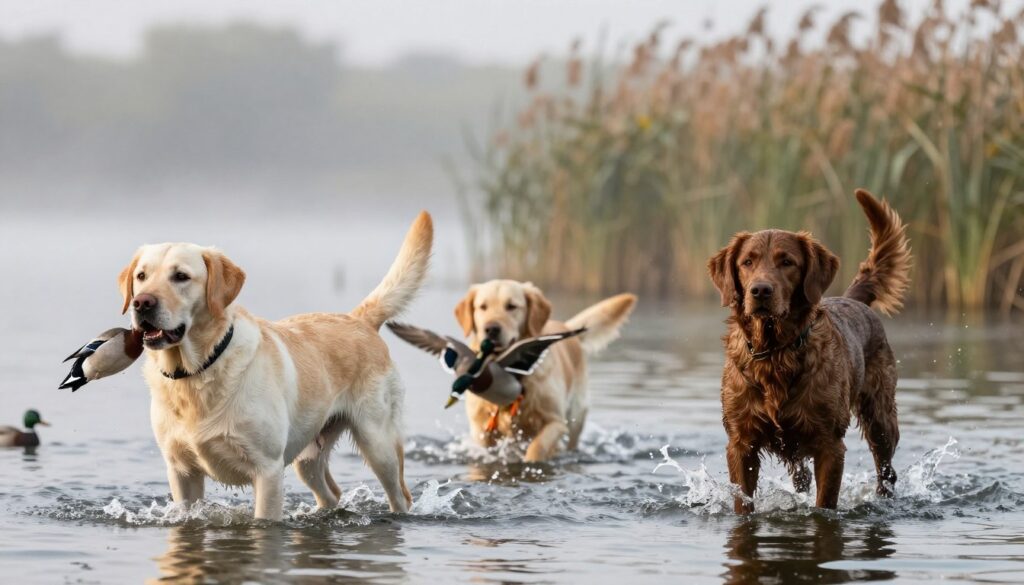
A dog’s coat is crucial for staying warm in the cold. Many waterfowl hunting dog breeds have a thick, water-resistant coat. This coat keeps them warm and dry.
This fur traps heat and keeps the skin dry. It’s important to prevent hypothermia during long hunts. If your dog doesn’t have a thick coat, a neoprene vest can help keep them warm.
“A dog’s ability to endure the cold is not just about toughness; it is about the biological engineering of their coat and their internal metabolic drive.”
Building Endurance for All-Day Hunts
To stay energetic all day, your dog needs training. Start training early to build their heart health. This is important for long days in the field.
Swimming and long retrieves are great for building stamina. Don’t forget that good food is also important. Talk to your vet about the best food for active waterfowl hunting dog breeds.
By focusing on these needs, your dog will stay alert, capable, and safe all season. Spending time on their training ensures a great experience for both of you.
Health Considerations for Working Retrievers
A rigorous hunting lifestyle demands proactive health management for your canine companion. Duck retriever breeds are highly active, pushing their bodies to the limit during long days in the field. Understanding the specific physical risks helps you keep your partner healthy for many seasons.
Common Orthopedic Issues in Large Breeds
Large hunting dogs often face joint conditions that can affect their mobility. Hip and elbow dysplasia are common, caused by genetics and high-impact activities like jumping into boats or running through rough terrain.
Watch for signs of stiffness, difficulty rising, or a change in their gait. Early detection is essential for managing these conditions effectively. Here are steps to support your dog’s joint health:
- Maintain a healthy weight to reduce stress on joints.
- Provide high-quality, joint-supporting supplements like glucosamine.
- Ensure your dog has a soft, supportive place to rest after a hunt.
Managing Eye and Ear Health in Wet Conditions
Working in marshy environments exposes your dog to constant moisture, bacteria, and debris. These elements can lead to painful infections if you do not prioritize routine maintenance. Proper care for duck retriever breeds involves regular inspections after every outing.
Water trapped in the ear canal creates a perfect environment for yeast and bacteria to thrive. Brush and grit in the field can cause corneal abrasions or irritation. Follow these simple practices to protect your dog:
- Gently dry your dog’s ears with a clean cloth immediately after they leave the water.
- Use a veterinarian-approved ear cleaning solution to flush out debris.
- Flush the eyes with a sterile saline solution if you notice redness or squinting.
By staying vigilant, you ensure that your hunting partner remains comfortable and ready for the next retrieve. Consistent care is the best way to protect the long-term performance of your favorite duck retriever breeds.
The Importance of Early Socialization and Field Training
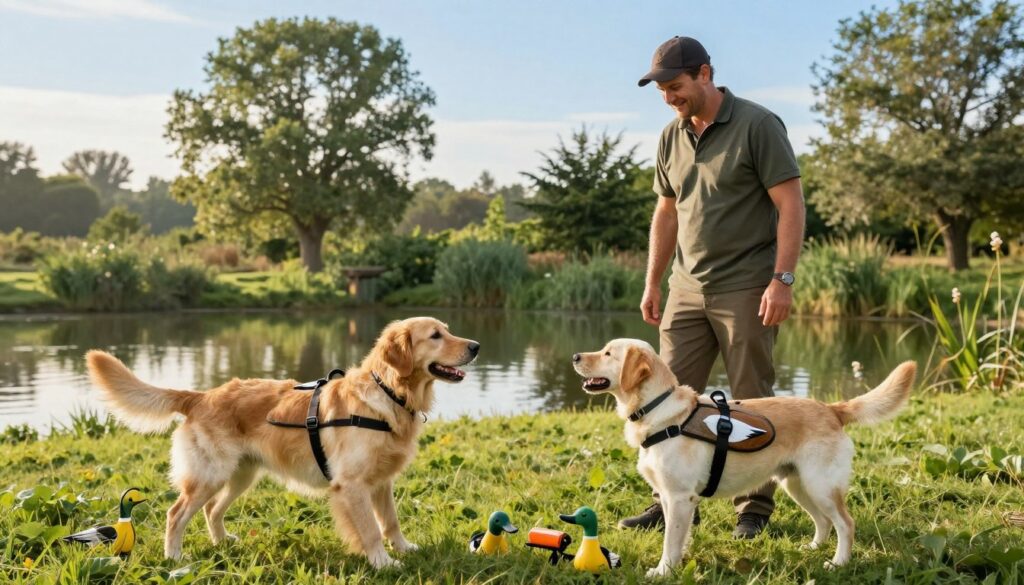
The journey from a playful puppy to a reliable hunting partner starts early. Spending time on your dog’s early development builds a strong bond. It also helps them stay focused during exciting hunting moments. With the right preparation, a high-energy dog becomes a calm, responsive teammate.
Foundational Obedience for Safety
Before hunting, your dog needs to learn basic obedience commands. Commands like sit, stay, and come are crucial for safety. They keep your dog safe from danger. A dog that listens at home will be more likely to obey during a hunt.
Consistency is key in early training. Keep drills short and frequent to keep your dog interested. Positive reinforcement, like treats or praise, makes learning fun. This makes your dog eager to learn these commands.
Introducing Gunfire and Water Confidence
Introducing your dog to field sounds and sights needs a careful approach. Never rush them to gunfire to avoid anxiety. Start with low-volume sounds during fun activities, then increase the volume as they get comfortable.
Water confidence is also crucial for a waterfowl retriever. Let your puppy explore shallow water at their own pace. Use toys or treats to encourage them. Building confidence early makes the water exciting, not scary. This prepares your dog for field challenges with poise and reliability.
Budgeting for Your Hunting Companion
Having a top-notch duck dog is more than just a hobby. It’s a big responsibility that comes with a price tag. Proper planning is key to keeping your dog healthy and ready for hunting. This ensures they stay in top shape for the hunting season.
Initial Costs of Quality Breeding
Starting your journey with a puppy from a good breeder comes with a cost. Choosing a dog from proven hunting lines might be pricier upfront. But, it often saves you money on vet bills down the line. Reputable breeders do genetic tests to avoid common health problems.
Buying a well-bred retriever means you’re investing in a dog with a solid background. They have a good temperament and the drive needed for hunting. Cutting corners here can lead to costly vet bills or behavioral issues later.
Ongoing Maintenance and Veterinary Care
After bringing your dog home, focus shifts to daily care and health. A working retriever needs top-notch food to keep up with hunting. Also, consider professional training to improve field skills.
Regular vet visits are crucial for a dog that faces harsh conditions. These visits include check-ups, shots, and parasite control. Here’s a look at what you might spend on your retriever.
| Expense Category | Estimated Frequency | Financial Impact |
|---|---|---|
| Premium Dog Food | Monthly | Moderate |
| Routine Vet Visits | Annually | Moderate |
| Professional Training | One-time/Seasonal | High |
| Gear and Supplies | As Needed | Low to Moderate |
Conclusion
Choosing the right hunting buddy means looking at your hunting style and where you hunt. You need to think about what your dog needs for your hunting spot. A Labrador or Chesapeake Bay Retriever can be more than just a tool with the right training.
Early training and regular health care are key to your hunting success. A well-trained dog makes hunting easier and more enjoyable. You get a partner who knows what you want and works well with you.
The bond you build with your dog is important. It grows stronger with each successful hunt and sunrise. Your hard work with your dog will lead to many good hunting seasons together.