Portuguese Water Dog: Temperament, Size, Lifespan & Breed Facts
Ever dreamed of a pet that matches your energy and shows unwavering loyalty? Finding the right pet is a heart journey. For many active families, the portuguese water dog is the perfect match. It brings joy and energy to any home.
Choosing a dog breed is a big decision that affects your life for years. This athletic partner loves adventure and connecting with people. It fits into your lifestyle, whether it’s morning jogs or quiet evenings.
Discovering the unique traits of the portuguese water dog helps you see if it’s right for you. Understanding this dog breed is the first step to a lasting, loving bond. It will enrich your life every day.
Table of Contents
The History and Portuguese Origin of the Breed
The Portuguese Water Dog’s story starts along the rugged Atlantic coast. They come from the coastal areas of Portugal, where they helped fishermen. Their portuguese origin shows in their hard work and resilience.
From Fishing Boats to Modern Companions
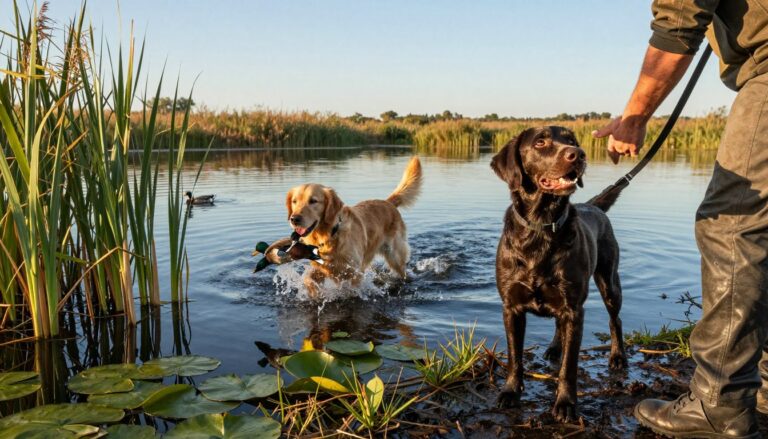
These dogs were more than pets; they were skilled workers on the sea. They helped herd fish, retrieve lost gear, and carry messages between ships and shore. Their webbed feet and waterproof coats were perfect for these tasks.
“The dog is a gentleman; I hope to go to his heaven, not man’s.”
When fishing changed, these dogs found new homes. They quickly adjusted to family life, bringing their boundless energy and smarts.
Preserving the Working Heritage
Your dog may not dive in the ocean anymore, but their portuguese origin is still strong. They’re smart and love to solve problems, just like their ancestors.
To keep them happy, give them activities that match their past. Swimming or retrieving games are great. Knowing their history helps you appreciate their special personality.
Understanding the Portuguese Water Dog Temperament
The portuguese water dog has a lively personality, shaped by its history at sea. This breed is full of energy and smart, needing lots of activity. Knowing these traits is key to a great bond with your pet.
Intelligence and Problem-Solving Abilities
These dogs are very smart and love to work. Their problem-solving abilities are impressive, solving puzzles and finding ways to get what they want. Training a portuguese water dog is both fun and challenging for owners.
They need constant mental challenges to stay happy. Without them, they might create their own games, which might not follow your rules.
Affectionate Nature Toward Family Members
Despite their work ethic, they are very loyal to their families. A portuguese water dog forms strong bonds with everyone at home. They are incredibly affectionate and enjoy being part of your daily life.
They love to be close to you, whether you’re relaxing or working. This makes them great friends for those who love spending time with their pets.
Potential for Independent Thinking
These dogs are eager to please but also independent. This comes from their history as working animals. As an owner, you need to be patient and firm to guide them.
Regular training helps them use their independence for good. Setting clear rules helps them respect you while keeping their lively spirit.
| Temperament Trait | Description | Owner Requirement |
|---|---|---|
| High Intelligence | Quick to learn new tasks | Consistent mental challenges |
| Affectionate | Deeply bonded to family | Quality time and attention |
| Independent | Self-reliant decision making | Patient, firm leadership |
Physical Characteristics and Size Standards
The Portuguese Water Dog’s look comes from its history and breed standards. They have a robust, athletic frame for water and land work. Their bodies are compact and square, showing their history with fishermen.
Height and Weight Expectations
Knowing the breed standards is key to spotting a well-bred dog. Males are bigger and stronger than females. Yet, both have a harmonious balance in their build.
| Gender | Height Range | Weight Range |
|---|---|---|
| Males | 20–23 inches | 42–60 pounds |
| Females | 17–21 inches | 35–50 pounds |
Distinguishing Between Coat Types
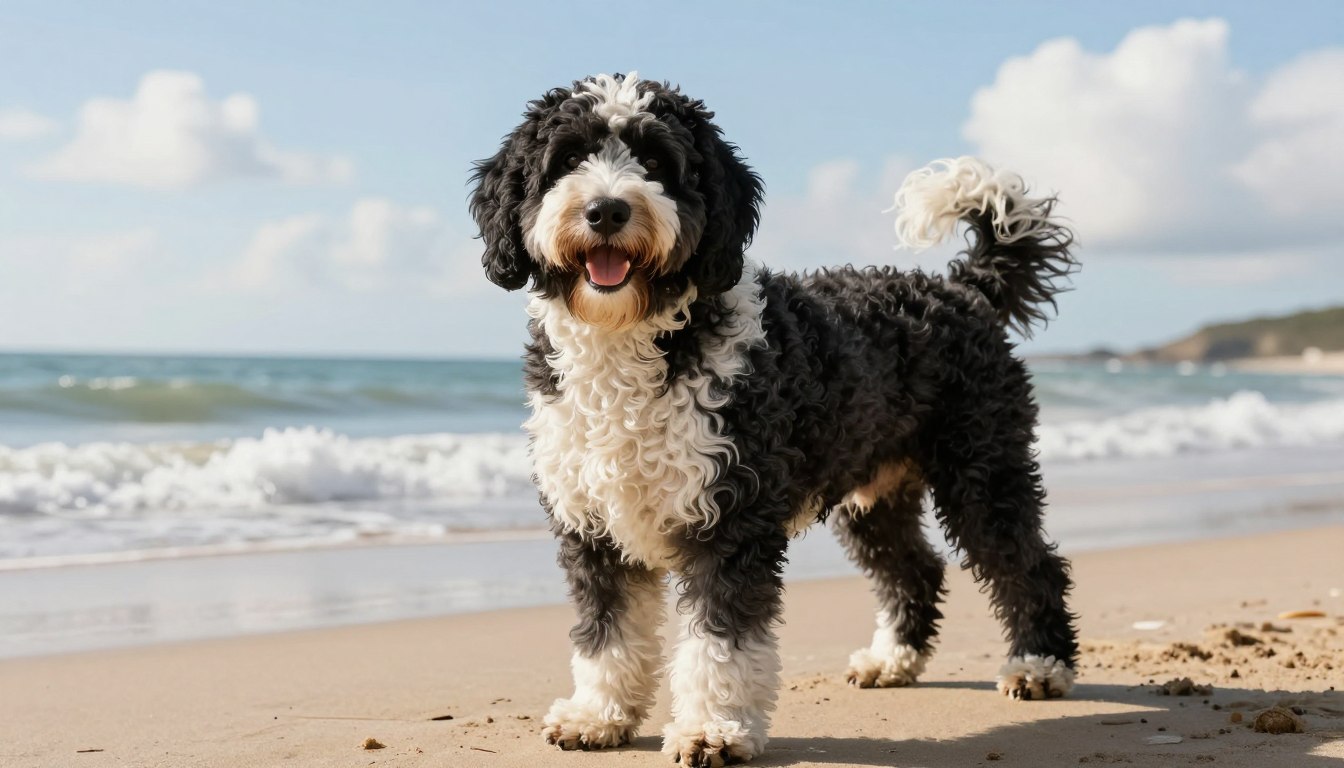
The breed’s single-layer coat is a key feature. It lacks an undercoat. There are two coat types, both highly prized for their durability. They differ in hair growth patterns.
The Curly Coat Variety
The curly coat has tight, cylindrical curls all over. It’s very dense and keeps the dog warm in cold water. The ears have softer hair than the rest of the body.
The Wavy Coat Variety
The wavy coat has loose, elegant waves. It has a slight sheen that makes the dog look refined. Both coats need regular care to stay healthy and mat-free.
Lifespan and Common Health Considerations
Welcoming a new dog breed into your home means focusing on their long-term health. A stable environment and regular vet visits help them live their best life.
Average Life Expectancy
The Portuguese Water Dog is a lively and strong friend. They usually live between 12 and 15 years if they stay healthy.
“The secret to a long life for your pet lies in the balance of proper nutrition, regular exercise, and consistent medical oversight.”
Genetic Health Screenings for Responsible Owners
Knowing your pet’s genetic background is key to being a responsible owner. Early tests can spot hereditary issues before they get worse.
Work with your vet to set a health baseline for your dog. Testing for common markers helps catch problems early. This way, you can prevent rather than treat them.
Managing Common Breed-Specific Conditions
Even though this is a healthy dog breed, there are specific health issues to watch out for. Knowing about these conditions lets you act fast if symptoms show up.
| Health Concern | Management Strategy | Frequency |
|---|---|---|
| Hip Dysplasia | Weight control and exercise | Annual checkup |
| Progressive Retinal Atrophy | Specialized eye exams | Bi-annual screening |
| GM1 Gangliosidosis | Genetic DNA testing | One-time test |
Keeping up with regular vet visits keeps your dog active and joyful. Your watchfulness is crucial in keeping your pet healthy for years.
The Reality of Owning a Hypoallergenic Dog
Understanding pet allergies is key when considering a dog. Many are attracted to hypoallergenic dogs for their reputation. But, it’s important to see beyond the labels. No dog is completely free of allergens.
Debunking Myths About Non-Shedding Breeds
Many think a non-shedding dog won’t cause allergies. But, allergens are in dander, saliva, and urine, not just fur. Even without shedding, dogs still produce dander as their skin regenerates.
The Portuguese Water Dog has hair, not fur, which means less dander. They’re a good choice for those looking for a non-shedding dog. Still, spend time with them to see if your allergies can handle it.
Grooming Requirements for Allergy Sufferers
Keeping your home clean is as crucial as choosing the right dog. Regular grooming is the best way to control allergens. Brushing your dog removes loose hair and dander before it settles on furniture or carpets.
Getting your dog groomed every six to eight weeks is a must. It keeps their coat and skin healthy. Keeping your pet clean and using the right bath products also helps. Consistent maintenance is essential for living with a dog when allergies are a concern.
Exercise Needs for an Active Lifestyle
Keeping your dog active means knowing their special needs. These dogs were made for hard work and have lots of energy. They need regular exercise to stay healthy and happy.
Why This Is a Water-Loving Dog
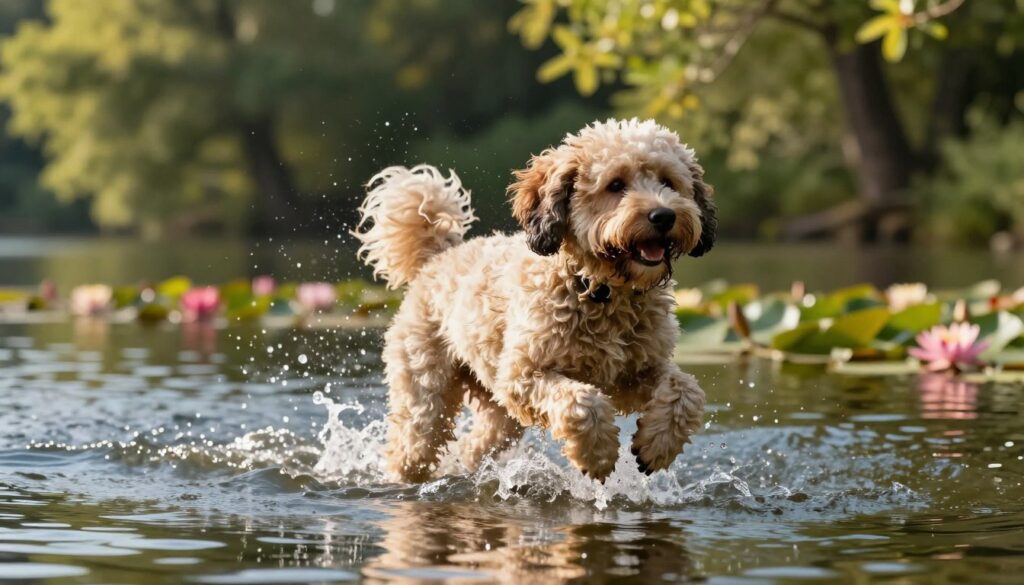
This water-loving dog needs more than just walks. Their webbed feet and strong swimming make them love water. Look for places like lakes, dog-friendly pools, or calm beaches for them to play.
Swimming is great for them because it’s easy on their joints but still tough. If you can, swimming is better than playing on land. Make sure the water is clean and safe before they swim.
Mental Stimulation and Enrichment Games
Your dog needs both physical and mental challenges. Without them, they might get bored and act out. Use puzzle toys, scent games, or teach them new tricks to keep their minds sharp.
Try hiding treats or teaching them to find specific items. These enrichment games make them think hard and solve problems. A tired mind means a happy dog.
Daily Activity Requirements for Apartment vs. House Living
Whether you live in an apartment or a house, adjust your routine accordingly. Apartment dwellers need short, brisk walks and playtime in parks. Make sure to schedule these activities to keep your dog active.
House owners with yards have more freedom but still need to plan play and social time. Consistency is key, no matter the size of your home. It keeps your pet fit and happy.
Training Your Intelligent Dog
Getting an intelligent dog means starting a journey of mental growth. These dogs need to know what you expect from them. With a clear plan and patience, they become well-behaved friends.
Positive Reinforcement Techniques
Positive reinforcement is the best way to teach your dog. Rewarding good behavior with treats or praise makes them want to do it again. Consistency is key for any training to work.
“The better you understand your dog, the better you can train them. Positive reinforcement builds a bridge of trust that lasts a lifetime.”
Socialization Strategies for Puppies
It’s crucial to socialize your intelligent dog early. Introduce them to new things like sights and sounds slowly. This helps them avoid fear as they grow up.
Invite friends over or take your puppy to quiet parks. This helps them meet different people. Make sure these meetings are positive and stress-free. A well-socialized dog is more relaxed in public.
Addressing Stubbornness and Boredom
Intelligent dogs can be stubborn or ignore tasks they find boring. Keep training fun and short. This keeps them interested.
These dogs need mental challenges as much as physical exercise. Use puzzle toys or scent games to keep their minds sharp. When they’re challenged, they’ll be eager to learn and follow you.
Nutritional Requirements for Optimal Health
Fueling an active lifestyle means knowing your pet’s special needs. The right food keeps your intelligent dog full of life and health. Choosing top-notch ingredients helps avoid many health problems early on.
Choosing High-Quality Protein Sources
Protein is key for muscle and tissue repair. Choose whole meats like chicken, salmon, or lamb as the main ingredient. These provide the amino acids your dog needs for strength.
Stay away from fillers like corn, wheat, or soy. They don’t offer much nutrition. Instead, look for foods with healthy fats and complex carbs for lasting energy. Quality nutrition boosts your dog’s coat, immune system, and energy.
“The foundation of canine health is built upon a diet that mirrors their ancestral needs while supporting their modern, active requirements.”
Managing Caloric Intake for Active Dogs
Even the most energetic dogs can gain weight if they eat too much. Adjust their food portions based on their activity level, age, and metabolism. Too much weight can harm their joints and health.
Check your dog’s weight regularly to keep them healthy. If they’re less active, eat less. Eating at the same times every day helps keep their metabolism steady and hunger in check.
| Life Stage | Protein Needs | Caloric Focus |
|---|---|---|
| Puppy | High (Growth) | High Density |
| Adult | Moderate/High | Maintenance |
| Senior | Moderate | Weight Control |
Always talk to your vet for a custom diet plan. Every intelligent dog is different, and a vet can help your pet stay happy and healthy. The right food is a simple way to make your pet’s life longer and better.
Grooming and Maintenance Essentials
Learning to groom your hypoallergenic dog is key. These dogs don’t shed like others, so their hair keeps growing. This means you need to groom them regularly to avoid mats and skin problems. Good pet care mixes professional help with your own efforts at home.
Professional Grooming vs. At-Home Care
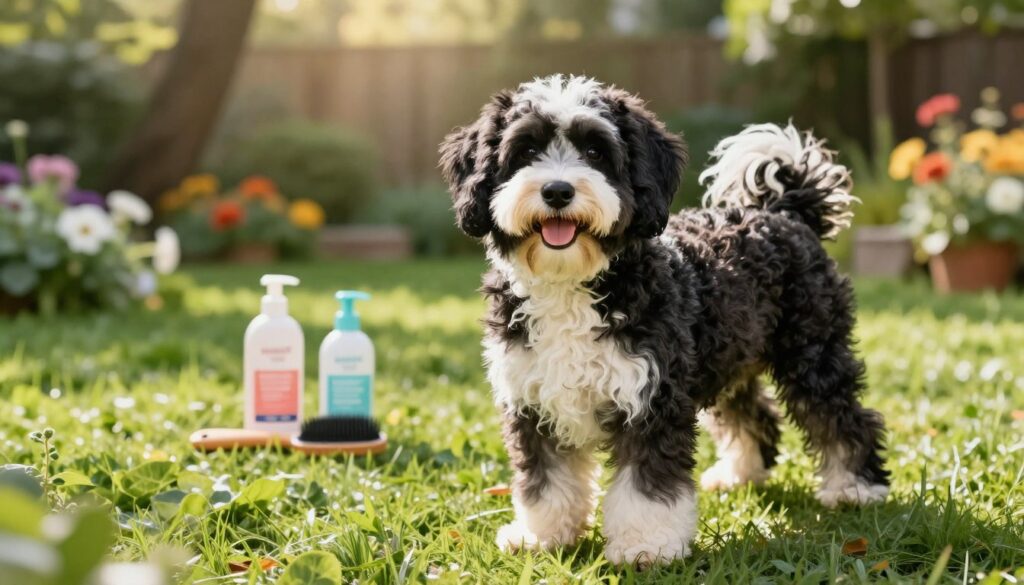
Book grooming sessions every six to eight weeks. A pro groomer will keep your dog’s coat looking great. They also know how to safely trim tricky spots like eyes and paws.
At home, you play a big part in pet care. Brush your dog three times a week to get rid of loose hair. Use a slicker brush or metal comb to avoid mats that hurt your non-shedding dog.
Ear and Dental Hygiene Practices
The ears of these dogs can get wet and lead to infections. Check them weekly for signs of trouble. Clean the outer ear with a vet-approved solution to keep it dry.
Keeping your dog’s teeth clean is also crucial. Brush their teeth daily with dog toothpaste to stop plaque and tartar. This habit helps prevent dental disease and keeps your pet happy and healthy. A well-cared-for hypoallergenic dog is a joy to have around.
Living with a Portuguese Water Dog as a Family Pet
Getting a Portuguese Water Dog is a big step for any family. This smart dog breed loves being around people and quickly becomes a big part of your life. By planning well, you make sure your new pet feels safe and loved right away.
Compatibility with Children and Other Pets
The Portuguese Water Dog is playful and patient, making it a great family dog. They need kids who know how to play nicely. Always watch when kids and pets first meet to keep everyone safe.
When introducing your dog to other animals, do it slowly and carefully. Use positive reinforcement to teach your dog to be calm and friendly. This helps everyone in your home get along well.
Setting Boundaries and House Rules
It’s important to set clear rules for a happy home. Decide which areas are off-limits and stick to it. Consistency helps your dog know their place in the family.
Use positive reinforcement to teach your dog good habits. Rewarding them for good behavior helps them feel confident at home. A structured home environment lets your family dog do well while keeping your home peaceful.
Essential Supplies for New Owners
Welcoming a new pet is an exciting journey. It starts with gathering essential gear. Proper pet care begins before your dog arrives. It ensures you have everything for their unique needs.
Selecting the Right Gear for Water Activities
Since you’re getting a water-loving dog, safety in water is key. A high-quality, well-fitted life jacket is essential for lake or beach trips.
Choose durable, water-resistant toys that don’t mold or lose shape in water. These toys keep your dog safe and active.
Creating a Comfortable Environment
Creating a cozy space is crucial for your dog’s transition. Invest in orthopedic bedding for joint support after exercise.
A sturdy crate is a personal sanctuary for your dog. It helps them feel secure and at home from the start.
Conclusion
Choosing a new pet is a big decision. It’s important to think about your lifestyle and daily habits. The Portuguese Water Dog is smart and loyal, making them a great choice for many families.
You now know if this breed is right for you. To succeed with them, you need to train them regularly and keep them active. The right environment is key for their happiness and for them to become a beloved family member.
It’s important to balance their high energy with mental stimulation. Tools from brands like Kong or Outward Hound can help keep their minds sharp. This builds a strong bond that lasts for years.
Before you decide, take a good look at your schedule. A prepared owner makes a happy pet. This breed will show you their loyalty and devotion as a family dog.
Use this guide to plan your adventures together. Your journey to being a responsible owner starts here. Enjoy the journey of welcoming a vibrant and spirited animal into your life.