Can Dogs Have Corn? Safety, Benefits, and Risks Explained
Looking into your dog’s eyes while eating dinner can melt your heart. It’s natural to want to share your favorite snacks with them. But, you might wonder if it’s safe to give them a piece of corn.
Understanding what goes into your pet’s bowl is the ultimate act of love.
Many owners ask if can dogs have corn without facing digestive trouble. While some human foods offer nutritional value, others can harm a sensitive stomach. It’s important to know the difference between plain, cooked kernels and processed additives for your pet’s health.
We will explore the nutritional role of this common crop in a balanced diet. By learning the facts, you ensure your best friend stays happy, healthy, and safe from potential dietary hazards.
Table of Contents
Understanding the Nutritional Profile of Corn for Dogs
When you check your dog’s food, you might wonder about corn. Many think it’s just a filler. But, corn is a rich source of essential nutrients that boost your pet’s health. Knowing this can help you decide if corn is good for your dog’s diet.
Essential Vitamins and Minerals Found in Corn
Corn is more than empty calories. It has vital micronutrients like B vitamins, iron, and potassium. These are key for your dog’s health and immune system.
Also, corn has antioxidants like lutein and zeaxanthin. These are important for your dog’s eye health as they age. They add to the nutritional value of dog food.
The Role of Carbohydrates in Canine Energy
Carbohydrates are a main energy source for dogs. When processed right, they are highly digestible, over 90% digestible. This means your dog gets the energy they need without digestive problems.
These grains give dogs a quick energy boost. They’re great for active or working dogs that need energy all day. So, when you ask if dogs can have corn, the answer is often yes, if it’s prepared well.
Fiber Content and Digestive Health
Fiber is key for a healthy digestive system in dogs. Corn has both soluble and insoluble fiber. This helps with bowel movements and keeps the gut healthy.
The fiber in corn helps your dog feel full after eating. It’s a valuable part of a healthy diet. It helps your dog stay at a healthy weight and have the energy they need.
Can Dogs Have Corn Safely in Their Diet?
Looking at a kibble bag’s ingredient list, you might wonder about corn’s role. Many pet owners ask, can dogs have corn safely? The answer is yes, if the corn is cooked right and given in the right amounts.
Distinguishing Between Whole Corn and Processed Corn
Not all corn is the same. Whole corn is the intact kernel, full of fiber and nutrients when cooked. On the other hand, processed corn is often found in pet food as corn meal or ground corn.
These processed forms are highly digestible for dogs. Manufacturers make them to ensure easy nutrient absorption. This knowledge helps you decide if can dogs have corn in different forms in their meals.
Corn as a Common Ingredient in Commercial Dog Food
Corn is a reliable energy source in many dog foods. It gives dogs the carbs they need for energy and play. It’s also affordable, making good food accessible to many families.
- Provides a steady release of energy.
- Contains essential fatty acids for skin health.
- Offers a source of plant-based protein.
When thinking about can dogs have corn in their kibble, look at the food’s overall quality. A good food will have corn as part of a balanced mix, not the only thing.
Expert Perspectives on Corn as a Filler
Some call corn a “filler” because it’s thought to lack nutrients. But, vets say corn is far from empty. It adds vitamins, minerals, and antioxidants that are good for dogs.
“The nutritional adequacy of a diet is determined by the balance of all ingredients, not the presence or absence of a single grain.”
The debate over can dogs have corn often misses the point. Dogs are omnivores and can digest and use cooked corn’s nutrients. Focus on the quality of the diet, not just one ingredient.
The Truth About Can Dogs Eat Sweet Corn
When you’re eating sweet corn, your dog might look at your plate. Many people wonder, can dogs eat sweet corn safely? Yes, they can, but you need to follow some rules to keep them healthy.
Make sure to give them plain corn. Don’t add butter, salt, or other seasonings. These can upset their stomach or cause bigger health problems.
Nutritional Differences Between Sweet Corn and Field Corn
Not all corn is the same for dogs. Sweet corn is sweeter and softer than field corn. Field corn is drier and harder for dogs to digest.
Sweet corn is a tasty treat, but it shouldn’t be their main food. It’s best as an occasional snack.
Serving Sizes and Frequency Recommendations
When sharing food with your dog, remember moderation. Even though can dogs eat sweet corn safely, too much can make them gain weight. A small spoonful is enough for most dogs.
Give them these treats only once or twice a week. This helps keep them at a healthy weight. Watch for any signs of discomfort after trying new foods.
Raw Versus Cooked Sweet Corn
Should you give your dog raw or cooked corn? Dogs can eat raw corn, but cooked sweet corn is easier for them. Make sure it’s well cooked and off the cob.
Don’t give them corn cooked with oils or spices. Plain, steamed, or boiled kernels are best for a safe and fun snack.
Why You Must Avoid Dogs and Corn Cobs
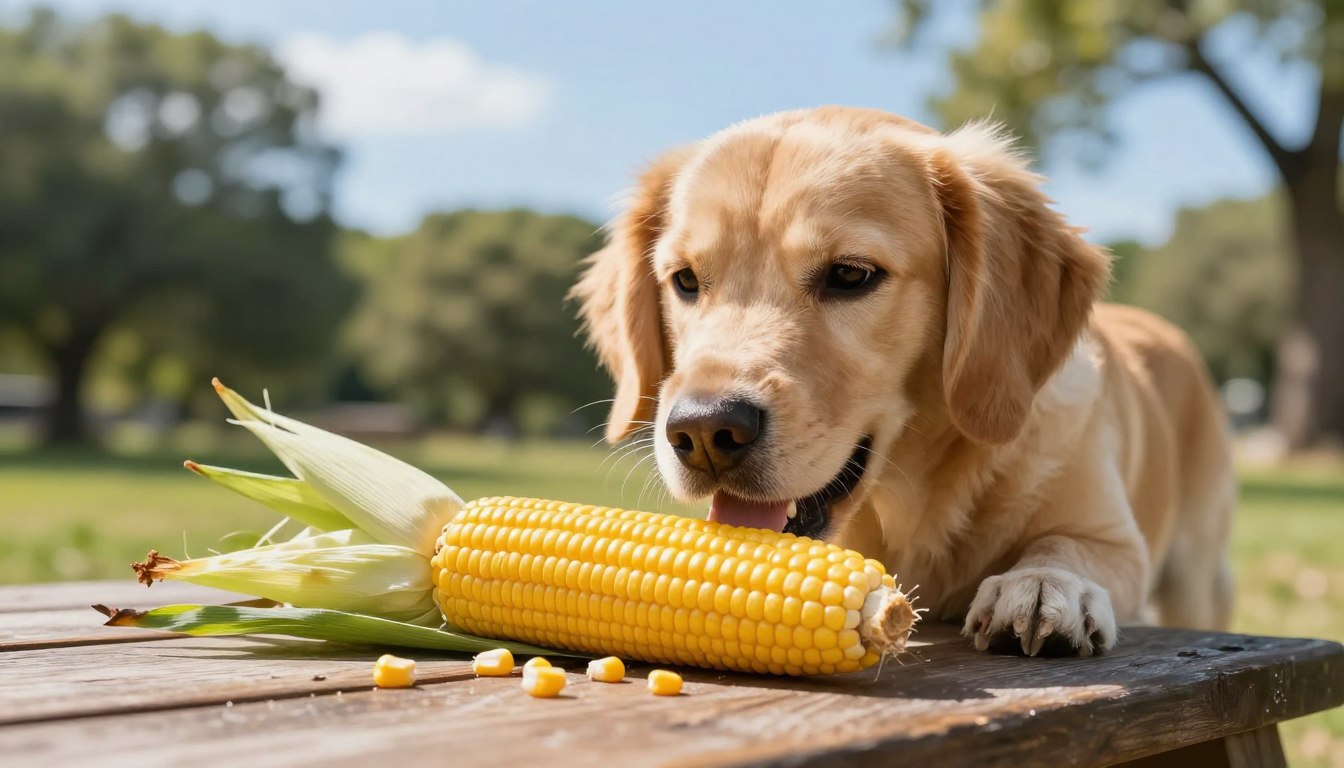
It might seem okay to let your dog chew on a leftover corn cob. But, this is a dangerous mistake. While kernels are usually safe in small amounts, the cob itself is a big risk. Knowing the dangers of dogs and corn cobs is key for any caring owner.

The Severe Danger of Intestinal Obstruction
Letting your pet chew on a cob is a big risk. Cobs are hard and can get stuck in your dog’s narrow digestive tract. This blockage stops food and water from moving, which is a life-threatening medical emergency.
When a blockage happens, your dog’s digestive system can’t work right. This leads to serious inflammation and damage in the intestines. Without quick surgery, it could be deadly for your pet.
Why Cobs Are Indigestible for Canines
Many think corn cobs are safe because they’re natural. But, the cob is hard and fibrous, and dogs can’t digest it. Unlike soft treats, cobs don’t break down in the stomach.
The cob stays hard and can block the digestive system. Even small pieces can pile up and cause trouble in the stomach or intestines.
Emergency Symptoms of a Blockage
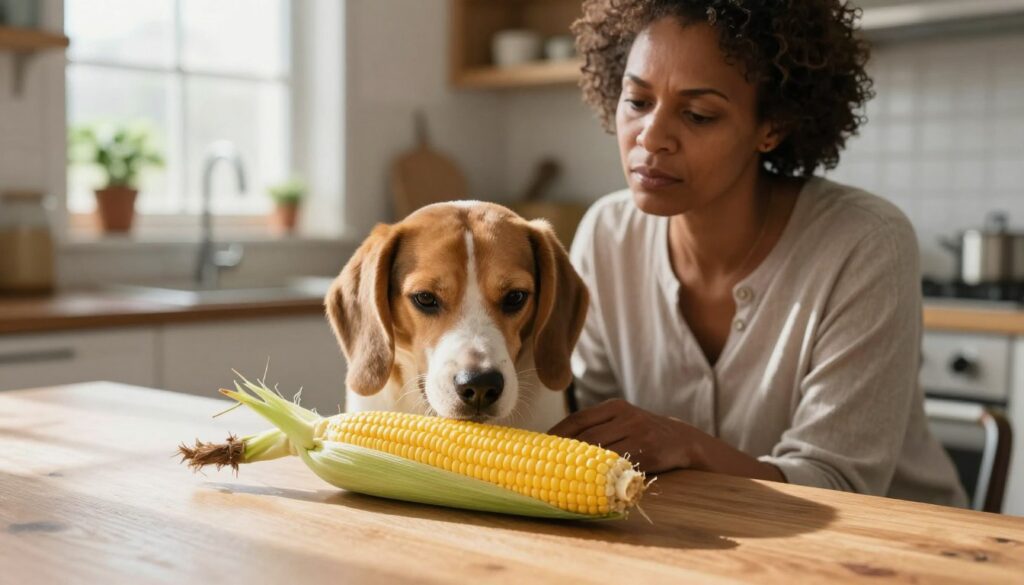
If you think your pet ate a cob, watch them closely for signs of trouble. Don’t ask, “can dogs eat corn on the cob,” if they’ve already swallowed it. Call your vet right away if you see these signs:
- Persistent or projectile vomiting
- Obvious lethargy and lack of energy
- Loss of appetite or refusal to drink water
- Straining to defecate or visible abdominal pain
- Restlessness or pacing due to discomfort
These signs mean your dog is in serious pain and needs help fast. Catching it early is the best chance for a good outcome.
Potential Health Benefits of Corn for Canines
Corn is more than just a myth; it’s a key fuel and nutrient for your dog’s health. When you think about can dogs eat sweet corn, consider its real benefits. It’s not just a filler but a vital part of a balanced diet, say many nutritionists.
Antioxidants and Eye Health
Corn is packed with antioxidants like lutein and zeaxanthin. These are crucial for your dog’s eyes as they age. They fight off free radicals, keeping the eyes safe from damage.
Linoleic Acid for Skin and Coat Support
Corn is rich in linoleic acid, an omega-6 fatty acid. It’s essential for a strong skin barrier and shiny coat. Since dogs can’t make it themselves, corn is a valuable source.
Energy Density for Active Working Dogs
For active dogs, like working breeds or agility athletes, corn is a great energy source. Its carbs are easy to digest, giving muscles quick energy during exercise. So, if you’re wondering if can dogs eat sweet corn to boost energy, the answer is yes, as long as it’s part of a balanced diet.
| Nutrient | Primary Benefit | Impact on Canine Health |
|---|---|---|
| Lutein | Antioxidant | Supports long-term eye health |
| Linoleic Acid | Fatty Acid | Promotes shiny coat and skin |
| Carbohydrates | Energy Source | Fuels active working dogs |
| Riboflavin | Vitamin B2 | Aids in metabolic function |
Identifying Risks and Potential Allergies
If you’re wondering if dogs can eat sweet corn, think about how their bodies handle new foods. Each pet is different and reacts to foods in their own way. Knowing what’s best for your pet is key to a healthy diet.
Common Signs of Food Sensitivities in Dogs
Watch your pet closely when introducing new foods. Food sensitivities can show up as skin problems or digestive issues. Look for signs like scratching, licking paws, or red skin, and also gas, loose stools, or vomiting after eating.
Reactions might not show up right away. They could take days or weeks to appear. Keeping a food diary can help you see if certain foods, like corn, cause problems.
Distinguishing Between Allergies and Intolerance
It’s easy to mix up food allergies and intolerances, but they’re different. A true food allergy is an immune system reaction that can cause hives, swelling, or itching.
A food intolerance, on the other hand, is a digestive issue. It makes your dog uncomfortable without attacking the immune system. Knowing the difference helps you decide if sweet corn is safe for your pet.
| Feature | Food Allergy | Food Intolerance |
|---|---|---|
| Primary Cause | Immune system reaction | Digestive system struggle |
| Common Signs | Itching, hives, swelling | Gas, bloating, diarrhea |
| Onset Speed | Can be rapid | Usually gradual |
| Severity | Potentially dangerous | Generally mild discomfort |
When to Consult Your Veterinarian
If you think your dog has a food issue, don’t wait. A vet can check for other health problems and tell you if your dog can eat sweet corn. They’ll make sure your pet gets the right food without any harm.
Always talk to a vet before changing your dog’s diet. They can create a plan that meets your pet’s needs without causing problems. Getting professional advice is the best way to keep your dog healthy.
How to Properly Prepare Corn for Your Dog
Preparing corn right is key to making it safe and fun for your dog. Many wonder if can dogs eat corn on the cob. But, the answer is no because of the risk of blockage. By following certain steps, you can give a healthy snack without danger.
Safe Cooking Methods for Canine Consumption
When giving corn, thorough cooking is a must. Boiling or steaming the kernels until soft makes them easy for your dog to digest. Raw corn is hard for dogs to digest.
Make sure the corn is cool before giving it to your pet. Hot food can hurt a dog’s mouth and throat. Serving it at room temperature is safest for your pet.
Removing Kernels from the Cob
Always take the kernels off the cob before giving them to your dog. Many think can dogs eat corn on the cob safely, but the cob is a choking hazard. It can also block the intestines if swallowed.
Use a sharp knife to slice the kernels off the cob. Make sure no cob pieces are left with the kernels. This step keeps your dog safe from indigestible material.
Avoiding Harmful Additives Like Butter and Salt
It’s tempting to share your dinner, but keep the corn plain. Never add butter, salt, garlic, or onion powder to your dog’s corn. These can cause serious health problems, like digestive issues or toxicity.
Stick to plain, boiled corn for your pet’s health. Remember, even a little butter or salt can harm. Keeping the treat simple is the best way to show love while keeping your dog safe.
Recognizing Signs of Digestive Distress
Digestive health is key to your dog’s overall health, especially with new foods. Many wonder if can dogs eat corn on the cob. The main thing is how your dog reacts to it. Catching small problems early can prevent big health issues.
Gastrointestinal Upset and Its Causes
Introducing new food can upset your dog’s stomach. You might see gas, bloating, or loose stools. This is because their digestive system is adjusting to new things.
Sudden changes in diet can upset the balance of gut bacteria. This can cause short-term discomfort.
Monitoring Stool Quality After New Foods
The best way to check your dog’s digestive health is by looking at their stool. Look for consistency, color, and how often they go. Healthy stool is firm and easy to pick up.
Watery or mucous-covered stool means the food is not good for them. If your dog has diarrhea or strains, go back to their old diet. Keeping a food log can help spot patterns and avoid future problems.
When to Seek Immediate Veterinary Care
Some symptoms need quick vet care, not just watching. Vomiting, extreme tiredness, or a bloated belly are urgent. These are especially true if your dog ate dogs and corn cobs, as they can block the intestines.
If your dog can’t keep water down or seems very upset, call the vet right away. Prompt action is crucial to keep your dog safe from serious blockages.
Conclusion
Feeding your pet is all about knowing what’s good for them and keeping them safe. Plain, cooked corn kernels can give your dog extra energy and vitamins. But, it’s crucial to keep dogs away from corn cobs to avoid harm.
Swallowing a corn cob can be very dangerous for your dog. It can block their intestines and cause serious health issues. Make sure to throw away food scraps right after eating to keep your home safe for your pet.
Always watch your dog when you give them new foods. Look for any changes in how they act or their poop. If you see anything odd, call your vet for advice.
Feeding your dog a little corn can be good if you do it right. Being careful with what you feed them keeps them safe. If you have questions about what’s best for your dog, talk to your local animal clinic.