How to Make Sweet Potato Dog Treats Your Pup Will Love
Few moments match the joyful wag of a tail when you pull a fresh snack from the oven. You want the very best for your furry companion, and trusted, wholesome ingredients bring peace of mind.
Learning how to make sweet potato dog treats at home is a rewarding way to show love. This guide covers mixing the dough and choosing the perfect baking time for your pet.
Choose soft chews for a senior or crunchy bites for a playful puppy by adjusting the texture. We cover preparation, shaping, and safe storage tips to keep your kitchen running smoothly.
Table of Contents
Gather the Ingredients and Tools for Homemade Sweet Potato Dog Treats
Healthy pet snacks start with quality ingredients and the right kitchen tools. Organizing your workspace makes preparing homemade sweet potato dog treats easy and efficient.
Choose Plain, Dog-Safe Ingredients
Sweet potatoes, whole-wheat flour, eggs, and optional add-ins
These snacks use simple, wholesome ingredients. Fresh sweet potatoes provide fiber and vitamins for your dog. Whole-wheat flour adds structure, and eggs bind the dough.
You can add optional add-ins, such as cinnamon or unsweetened applesauce, for more flavor. Check that each addition is safe for dogs before mixing it into the dough.
Ingredients to avoid, including added sugar, salt, onion, garlic, and xylitol
Keep the recipe pure to protect your pet’s health. Never use onion or garlic because they can poison dogs. Also avoid added sugar, salt, and xylitol, an artificial sweetener dangerous in small amounts.
“The best treats are those made with simple, whole foods that support your dog’s long-term health and vitality.”
Prepare the Baking Equipment
Baking sheet, parchment paper, mixing bowl, masher, rolling pin, and cookie cutters
Gather the right tools before you begin. Use a sturdy mixing bowl and masher to make a smooth base for your homemade sweet potato dog treats. A rolling pin creates even thickness, and cookie cutters make fun, consistent shapes.
Line your baking sheet with parchment paper to prevent sticking. This step simplifies cleanup and helps your treats keep their shape while baking.
How to select a treat size that suits your dog
Choose treat sizes based on your dog’s breed and size. Small cutters suit training, while larger shapes work as occasional rewards. Use the table below to choose the best size for your pet.
| Dog Size | Recommended Treat Size | Usage Purpose |
|---|---|---|
| Small Breeds | 1 inch or less | Training rewards |
| Medium Breeds | 1.5 to 2 inches | Daily snacking |
| Large Breeds | 2.5 inches or more | Occasional treats |
Gathering these tools and ingredients helps you succeed. Preparing your kitchen makes crafting homemade sweet potato dog treats stress-free for you and your furry friend.
How to make sweet potato dog treats from scratch
Learning how to make sweet potato dog treats gives your pet healthy, wholesome snacks. You control each ingredient and avoid hidden additives or preservatives. This helps provide good nutrition for your furry friend.
Step 1: Cook and Mash the Sweet Potato
Roasting, steaming, and microwaving methods
First, cook your sweet potatoes until a fork slides in easily. Choose from several methods based on your time and equipment.
| Method | Cooking Time | Texture Result |
|---|---|---|
| Roasting | 45-60 Minutes | Rich and caramelized |
| Steaming | 20-30 Minutes | Light and moist |
| Microwaving | 8-12 Minutes | Soft and quick |
How to achieve a smooth, moisture-balanced purée
After cooking, peel the skins and mash the flesh well. Use a potato masher or food processor so no large lumps remain. A perfectly smooth texture helps create dough that bakes evenly.
Step 2: Combine the Wet Ingredients
Mixing the mashed sweet potato with egg
Let the purée cool slightly, then add the binding agent. Crack one large egg into the bowl and whisk until fully mixed.
Adjusting the mixture when the purée is especially wet
If your sweet potato purée seems too watery, do not worry. Add a little extra flour, or let the mixture rest for a few minutes. Knowing how to make sweet potato dog treats means adjusting the mixture until the dough is manageable.
Step 3: Add the Flour Gradually
Creating a soft dough without overmixing
Add your chosen flour one half-cup at a time. Use a sturdy spatula to fold it into the wet mixture, and avoid overmixing. Overmixing can make tough, chewy treats instead of the crisp biscuits most dogs prefer.
How the dough should look before rolling
Aim for soft, pliable dough that pulls away from the bowl’s sides. It should feel slightly tacky but not stick to your fingers. When the dough holds its shape, roll it out and cut your favorite shapes.
Prepare the Sweet Potato Purée for a Reliable Dough
The secret to making simple sweet potato dog treats starts with good purée. The right texture makes dough easy to handle and helps it bake evenly.
Cook the Sweet Potato Until Tender
Testing the center with a fork
Boil or steam your sweet potatoes until they are soft throughout. Check by gently piercing the center with a fork; it is ready when the fork slides in easily.
Cooling the flesh before adding other ingredients
Let the cooked flesh cool to room temperature before mixing. Hot potato can activate leavening agents early or melt fats, damaging the dough structure.
Remove Excess Moisture
Why water content affects flour quantity and baking time
Sweet potatoes have different amounts of natural water, which changes the recipe. A wet purée needs more flour, which can make tough, hard treats that your dog cannot chew easily.
How to thicken loose purée without making treats tough
If your mash seems watery, drain it in a fine-mesh sieve for a few minutes. You can also heat it in a dry pan over low heat to remove liquid without extra fillers.
Measure the Purée Accurately
Using cups or a kitchen scale for consistent results
Precision helps you bake simple sweet potato dog treats consistently. A kitchen scale gives the most accurate result because it avoids guesswork when packing mashed potato into cups.
Scaling the recipe for smaller or larger batches
When scaling the recipe, keep the wet-to-dry ingredient ratio steady. If you double the purée, also double the flour and binders to keep the right dough consistency.
| Purée Texture | Moisture Level | Flour Adjustment |
|---|---|---|
| Very Runny | High | Increase flour by 10% |
| Standard Mash | Medium | Follow recipe exactly |
| Dry/Stiff | Low | Reduce flour slightly |
These steps help your simple sweet potato dog treats stay healthy and appealing. Proper base preparation builds a strong foundation for kitchen success.
Mix and Knead the Sweet Potato Dog Biscuit Dough
For good sweet potato dog biscuits, balance the flour and technique carefully. The dough should be firm enough to roll, yet soft enough for your pet to enjoy.
Stir the Ingredients Into a Cohesive Dough
Adding flour in stages
Slowly mix the flour into the wet ingredients. Adding it in stages prevents clumps and spreads moisture evenly through the mixture.
Recognizing dough that is ready to knead
The dough is ready when it pulls cleanly from the bowl’s sides. It should feel tacky but leave no thick residue on your fingers.
Knead Lightly for the Right Texture
Preventing dense, hard sweet potato dog biscuits
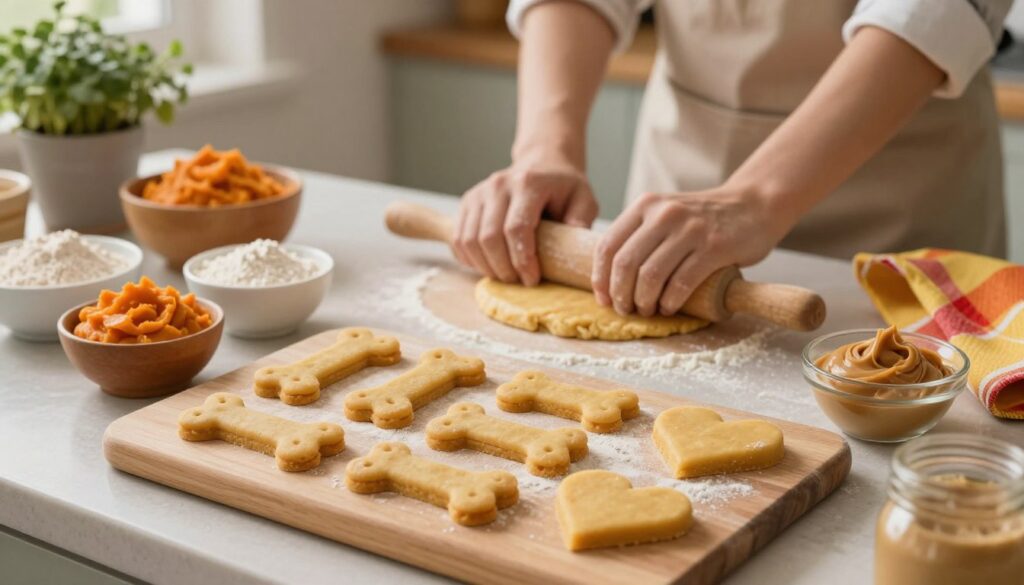
Overworking the dough can make your treats tough. Knead only until the mixture looks even, because gentle handling creates a better bite.
Using a small amount of flour to control stickiness
If the dough feels sticky, lightly dust your work surface with flour. Too much flour can dry out your sweet potato dog biscuits and harm their texture.
“The secret to a perfect treat is in the touch; treat your dough like a delicate pastry rather than heavy bread.”
Rest the Dough Before Rolling
When a short rest makes the dough easier to handle
Let the dough rest for about ten minutes so the flour fully absorbs moisture. This pause makes the dough more flexible and easier to roll into even shapes.
How to cover the dough if you need to pause
If you must step away, cover the bowl with a damp kitchen towel or plastic wrap. This keeps the surface moist and your sweet potato dog biscuits dough ready for the next stage.
- Keep the dough covered to maintain moisture.
- Use a cool, dry surface for kneading.
- Check the texture before you begin rolling.
Roll and Cut Easy Sweet Potato Dog Treats
Turn prepared dough into perfect snacks with a few simple steps. Use good technique so your easy sweet potato dog treats turn out just as your pup likes them.
Roll the Dough to an Even Thickness
Choosing a thickness for crunchy or softer treats
Dough thickness directly affects the biscuits’ final texture. For a crunchy snack, roll the dough about 1/8 inch thick. For softer, chewier treats, make the dough 1/4 inch thick or slightly thicker.
Preventing sticking with parchment paper or light flouring
Lightly dust your counter with flour to prevent sticking. You can also roll the dough between two sheets of parchment paper. This pro-tip speeds cleanup and keeps your workspace tidy.
Cut Consistent Treat Shapes
Using small bone, circle, or seasonal cookie cutters
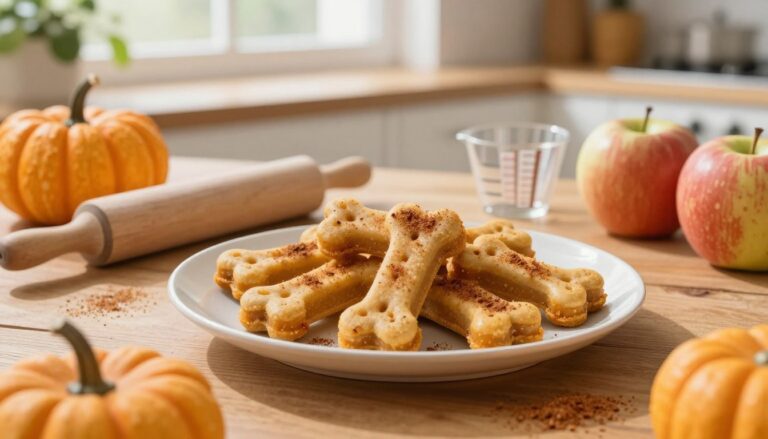
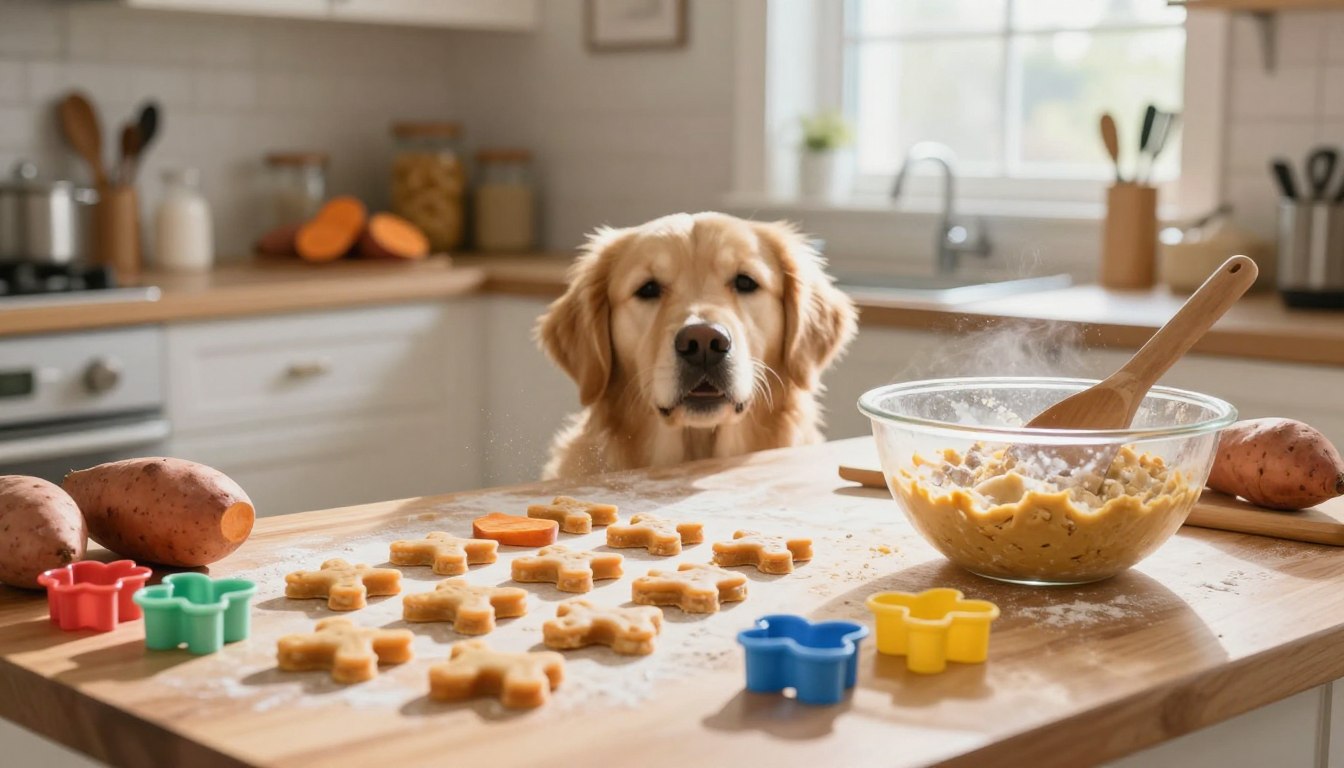
Cookie cutters let you personalize your easy sweet potato dog treats. Small bones are classic, but circles and seasonal cutters work well for holidays. Make sure your cutters are clean and dry before pressing them into the dough.
Why uniform pieces bake more evenly
Consistent pieces bake more evenly. Treats with the same size and thickness finish baking together. This keeps small pieces from burning while larger ones remain undercooked.
Arrange the Treats on the Baking Sheet
Leaving enough space between pieces
Place your cut shapes on a baking sheet lined with parchment paper. Leave at least one inch between treats for proper airflow. This essential step helps the edges crisp instead of steaming together.
Docking thick treats to release steam
If your dough is thick, prick each treat’s surface with a fork. This process, called docking, lets steam escape during baking. It helps your easy sweet potato dog treats keep their shape without puffing unevenly.
Bake the Sweet Potato Dog Cookies to the Right Texture
Managing kitchen heat is key to a successful sweet potato dog cookie recipe. The right texture depends on oven control during the final baking stage.
Set the Oven Temperature and Baking Time
When to use a moderate temperature for even baking
A moderate oven temperature, typically around 350°F (175°C), is essential for even baking. This heat cooks the center without burning the delicate edges.
Adjusting time for treat thickness and cutter size
Adjust your baking time based on each treat’s size and thickness. Thicker biscuits or larger shapes need a few extra minutes to cook fully, while smaller, thinner pieces bake faster.
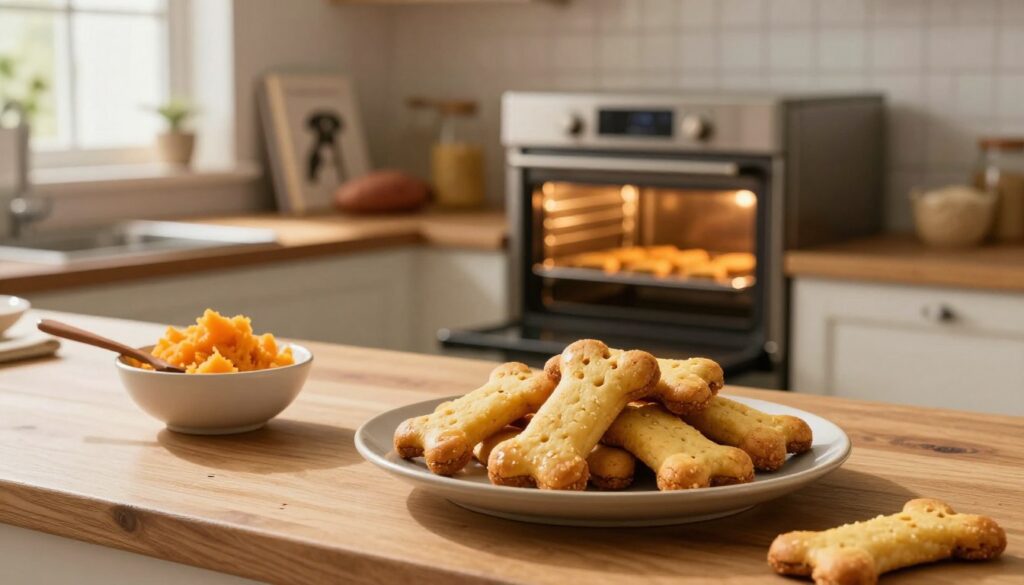
Check for Doneness
Signs of a soft-baked treat
For a chewy texture, remove the cookies when they feel firm but remain slightly soft in the center. These treats are perfect for older dogs who may have trouble chewing harder snacks.
Signs of a crisp, crunchy treat
For a satisfying crunch, bake the treats until they are golden brown and completely firm. A truly crisp treat sounds hollow when tapped lightly.
“The quality of your ingredients is only half the battle; the precision of your baking process defines the final joy your dog experiences.”
Dry the Treats for Extra Crunch
Using residual oven heat or a low-temperature finish
For maximum crunch, turn off your oven and leave the treats inside for an additional 30 minutes. This residual heat gently removes remaining moisture without burning the treats.
Why thorough drying helps extend freshness
Removing moisture is vital for long-term storage. Thoroughly dried treats resist mold and stay fresh in your pantry for much longer. This makes your sweet potato dog cookie recipe practical for busy pet owners.
Cool, Store, and Serve the Finished Treats
When the oven timer dings, your homemade pet snacks enter their final stage. Proper handling keeps your sweet potato treats for dogs safe, crunchy, and tasty for your furry friend.
Cool the Treats Completely
Transferring baked treats to a wire rack
After removing the baking sheet, move the biscuits to a wire cooling rack. This lets air flow under the treats, which is essential for the right texture. Leaving them on a hot pan can make the bottoms soggy or overcooked.
Never store treats while they are warm. Trapped heat creates steam and condensation inside the container. This moisture encourages mold, which can spoil your treats and harm your pet.
“Good nutrition is the foundation of a happy, healthy life for your canine companion.”
Store Treats Safely
Counter, refrigerator, and freezer storage options
Keep these snacks in a cool, dry place on the counter for up to one week. For longer freshness, refrigerate them for two weeks or freeze them for up to three months. Check for spoilage before serving sweet potato treats for dogs to your pet.
Choosing an airtight container and labeling the batch date
Use a glass or BPA-free plastic container with a tight-fitting lid to maintain freshness. Label the container with the date you baked the batch. This habit tracks storage time and helps you choose fresh treats.
Introduce the Treats to Your Dog
Starting with a small portion
When offering a new snack, give your dog a very small piece first. This helps you watch their digestion and spot reactions to the ingredients. Observation is key when adding any new food to your dog’s diet.
Using sweet potato treats as occasional rewards rather than a meal replacement
These snacks are occasional rewards, not substitutes for balanced meals. Although sweet potato treats for dogs are healthy, they should form only a small part of your pet’s daily calories. Prioritize regular, nutritionally complete dog food for primary meals.
Customize Healthy Sweet Potato Dog Treats for Your Pup
Tailoring homemade dog treats helps each pup get what it needs. By adjusting your methods, you can create healthy sweet potato dog treats for specific diets or ages.
Make Softer Treats for Puppies and Older Dogs
Reducing bake time and avoiding overly hard edges
Puppies and senior dogs may struggle with very crunchy biscuits. For softer treats, reduce the baking time by five to ten minutes. Trim thin, crispy edges before serving to protect their teeth.
Breaking treats into appropriately sized pieces
When preparing sweet potato puppy treats, size matters. Break finished biscuits into small pieces that fit your dog’s mouth. This prevents choking and helps younger or older pets digest them.
Add Dog-Safe Flavor Options
Plain pumpkin, unsweetened applesauce, carrots, or finely chopped parsley
Add fresh, dog-safe ingredients to improve your snacks’ nutrition. Stir in plain pumpkin or unsweetened applesauce for moisture and fiber. Grated carrots or chopped parsley add a fresh, healthy crunch many dogs enjoy.
When peanut butter is appropriate and how to check the label for xylitol
Peanut butter is popular, but use only natural, unsalted varieties without additives. Always check the label for xylitol, because this artificial sweetener, xylitol, is toxic and can be fatal in small amounts.
Create Different Versions of the Recipe
Grain-free adjustments using oat, brown rice, or coconut flour
If your dog has sensitivities, swap traditional wheat flour for alternatives. Oat, brown rice, or coconut flour are grain-free options that help treats hold their shape. These choices keep your healthy sweet potato dog treats suitable for different diets.
Simple sweet potato dog treats with fewer ingredients
Sometimes, simpler recipes work best for canine nutrition. Make these snacks with mashed sweet potato and one flour type. This approach suits dogs with severe food allergies or sensitive stomachs.
| Ingredient | Benefit | Best For |
|---|---|---|
| Pumpkin | Digestive Health | Sensitive Stomachs |
| Coconut Flour | Grain-Free | Allergy-Prone Dogs |
| Carrots | Vitamin Boost | Active Puppies |
Troubleshoot the Recipe and Follow Dog Treat Safety Practices
Making homemade snacks for your pet can be rewarding. You may still face minor kitchen challenges while preparing each batch.
Fix Common Dough Problems
What to do when the dough is too dry, wet, crumbly, or sticky
If the dough feels dry or crumbly, add water or sweet potato purée, one teaspoon at a time. If it feels wet or sticky, add a little flour until it reaches a pliable consistency. Work slowly to prevent over-correcting the texture.
How to prevent spreading, cracking, or uneven baking
Chill the dough properly before rolling it out to prevent spreading. If the dough cracks, it may be too dry, so add a little moisture. For even baking, use a ruler to keep the sheet a consistent thickness.
Identify Ingredients That Can Harm Dogs
Why chocolate, raisins, grapes, macadamia nuts, onion, garlic, and xylitol do not belong in dog treats
Some common pantry items are toxic to dogs and must be avoided. Chocolate, grapes, raisins, and macadamia nuts can cause severe organ damage. Onion and garlic can harm red blood cells, while xylitol is extremely dangerous even in small amounts.
Checking peanut butter, flour blends, and other packaged ingredients
Read labels on packaged foods like peanut butter to make sure they contain no xylitol. Some flour blends and pre-packaged mixes may contain unsafe additives. Double-check every ingredient before adding it to the bowl.
Account for Your Dog’s Individual Needs
Managing allergies, food sensitivities, diabetes, and weight concerns
Every dog has unique nutritional needs. If your pet has diabetes or weight issues, limit daily treats. For food sensitivities, choose simple limited-ingredient recipes to help prevent reactions.
When to ask your veterinarian before offering homemade treats
Consult your veterinarian if your dog has chronic health conditions or dietary restrictions. A professional can explain whether certain ingredients fit your pet’s overall health plan. It is safest to ask before introducing new foods.
Recognize Possible Reactions
Watching for vomiting, diarrhea, itching, or other signs of intolerance
Watch your dog closely after they try a new treat. Look for vomiting, diarrhea, or physical signs like intense itching. These signs may show an allergic reaction or intolerance to a new ingredient.
When a veterinary call is appropriate
Contact your veterinarian immediately if your dog has ongoing vomiting, lethargy, or severe skin irritation. Do not wait if your dog seems uncomfortable or distressed. Prompt medical care helps keep your pet happy and healthy.
Conclusion
Making homemade snacks for your pet turns simple ingredients into a rewarding experience. With careful mixing, shaping, and baking, you can turn sweet potato purée into healthy biscuits.
Adjust the thickness, baking time, and portion size to meet your dog’s specific needs. You can try new flavors, but always put your pet’s safety first in the kitchen.
Always check that your ingredients are safe for canine consumption. Introduce new snacks slowly, and watch how your dog reacts to the diet change.
Proper preparation and storage support responsible treat-giving. High kitchen standards help you give your companion wholesome, high-quality rewards that support overall well-being.
Sharing favorite variations with other pet owners can help them offer better snacks to their furry friends. Your commitment to quality ingredients can make a significant difference in your dog’s life.