When to Change Puppy Food to Dog Food: Signs Your Puppy Is Ready
Watching your furry friend grow is a truly rewarding journey. You remember those first chaotic weeks. Now, your pet is growing into a sturdy adult. This is a big milestone in their life.
Many owners wonder when to change puppy food to dog food. It’s not the same for every dog, as growth rates vary. The right time to switch supports their long-term health and growth.
Knowing these subtle signs helps you care for your pet better. By focusing on their unique needs, you help them thrive at every stage of their life.
Table of Contents
Understanding the Nutritional Needs of Growing Dogs
Growing puppies need special nutrients that adult dogs don’t. In their first year, they change a lot and need the right food to grow well. Giving them the right food is key for their health and energy later on.
Puppies are always building new tissues. They need lots of energy and special nutrients to grow strong. Knowing what they need helps you choose the best food for them.
The Role of Protein and Fat in Puppy Development
Protein is crucial for your puppy’s muscles, skin, and organs. Puppies grow fast, so they need more high-quality protein than adult dogs. This helps them build strong muscles and a healthy immune system.
Fat is also vital for puppies. It gives them the energy they need to play a lot. It also helps them absorb vitamins and supports their brain. It’s important to make sure your puppy gets enough fat to stay energetic.
Why Calcium and Phosphorus Ratios Matter
Protein and fat are important, but minerals are key for bone health. Calcium and phosphorus must be in the right ratio for bones to grow right. If not, puppies can face serious bone problems.
Big and giant breed puppies are especially at risk. They need limited calcium and phosphorus to avoid bone issues. Always check with your vet to make sure the food you choose is right for your puppy’s size.
When to Change Puppy Food to Dog Food
The time to switch to adult food depends on your dog’s breed and size. Every dog grows at their own pace. Knowing when to change puppy food to dog food is key for their health. It ensures they get the right nutrients during important growth times.
General Age Guidelines for Most Breeds
Small breed dogs grow up quickly. For many toy and small breeds, it’s best to switch to adult food around 10 months. They don’t need the high calories in puppy food anymore.
Big and giant breeds grow slowly. They might keep growing for 18 to 24 months. Waiting until they’re fully grown is important to avoid health problems.
Consulting Your Veterinarian for Personalized Advice
While general rules are helpful, your vet knows best for your dog. They can check your dog’s health and growth to decide when should puppies start eating adult food. This helps meet your dog’s unique needs.
Your vet might suggest a specific time to switch based on your dog’s weight and activity. Personalized guidance makes sure your dog gets the best nutrition. Always check with your vet before changing your dog’s food.
Breed Size and Maturity Timelines
Growth rates differ a lot between small Chihuahuas and big Great Danes. Finding the best age to switch puppy to adult food depends on your dog’s breed. Each breed grows at its own pace.
Small dogs grow fast and reach their peak early. Big dogs, on the other hand, need more time for their bones to grow. They need special food to help their bones develop.
Small Breed Maturity Milestones
Small breeds usually stop growing by 10 months. They have very small stomachs. So, they need to eat often during the day.
Eating often helps prevent low blood sugar. Make sure your small puppy eats enough to stay energetic until they’re fully grown.
Medium Breed Growth Patterns
Medium-sized dogs grow at a steady pace. They usually reach their adult size and energy needs between 12 and 14 months.
Keep an eye on their weight during this time. A healthy weight is key for their joints. It helps them adjust to adult food better.
Large and Giant Breed Considerations
Large and giant breeds grow for a long time. Some may not stop growing until they’re two years old.
It’s important to feed them right during this time. This helps prevent bone problems. Always talk to your vet to find the best age to switch puppy to adult food for your giant breed dog.
Physical Signs Your Puppy Is Ready for Adult Food
Knowing when to switch your puppy’s food is important. You need to watch your dog closely. Every puppy grows at their own pace.
Monitoring Weight Gain and Body Condition
Tracking your dog’s growth is key. You want them to stay healthy without gaining too much weight. This is because their metabolism slows down as they get older.
If your puppy’s waistline is getting smaller or you can’t feel their ribs, they might be eating too much. Regular checks can help you spot this before it causes weight problems.
Changes in Activity Levels and Energy Requirements
Puppies have lots of energy, but this energy often drops as they grow up. If your dog prefers a calm walk over lots of play, they might need less food.
This change in energy is a sign they don’t need as many calories as puppy food provides. Knowing when is a puppy ready for adult food means seeing this shift to a more relaxed lifestyle.
Dental Development and Chewing Habits
When your puppy loses all baby teeth and gets their adult teeth, they’re ready for adult kibble. Adult food is bigger and crunchier, which helps their teeth stay healthy.
Waiting until their adult teeth come in ensures they can handle the new food. This helps them stay healthy and balanced.
Puppy Food vs Dog Food: Key Nutritional Differences
It’s key to know the difference between puppy food vs dog food for your pet’s health. These foods look alike but serve different needs. Knowing this helps you give your dog the right food at every life stage.
Caloric Density and Metabolic Needs
Puppies grow fast and need lots of energy. Their small stomachs require calorie-dense food to support growth. This food gives them the energy for bone growth, muscle, and brain development.
Adult dogs, on the other hand, have lower energy needs. Feeding them puppy food can cause unwanted weight gain. This is because they don’t need as much energy for growth.
Essential Nutrients for Maintenance vs Growth
Puppy food has more protein and fats for building new tissues. It also has the right amounts of calcium and phosphorus for healthy skeletal development.
Adult dog food focuses on keeping body systems running smoothly. It has less minerals to avoid imbalances. Switching to adult food at the right time keeps your dog healthy and prevents health problems from too much food.
The Importance of a Gradual Transition to Adult Dog Food
Knowing the importance of a gradual transition to adult dog food is key for your pet’s growth. Switching your dog’s diet too fast can be risky. A slow transition helps your dog get used to new foods without stress.
Preventing Digestive Upset and Sensitivity
Changing your dog’s diet too quickly can upset their stomach. They might vomit, have diarrhea, or feel bloated. Protecting your pet’s digestive health is why you should take it slow.
By mixing old and new food over days, your dog’s gut can adjust. This gradual shift lowers the chance of food sensitivities. It keeps your dog feeling good and active.
Ensuring Palatability and Acceptance
It’s not just about health; your dog’s taste matters too. Some dogs might not like new food if it’s introduced too fast. The importance of a gradual transition to adult dog food also helps your pet get used to the taste and texture.
To make the new food more appealing, slowly add more adult kibble. If your dog is still hesitant, try adding a bit of warm water or low-sodium broth. This trick often makes the transition from puppy food to adult dog food smoother and more enjoyable for your dog.
Step-by-Step Guide to Switching Food
Learning how to switch puppy to dog food is key to your pet’s health. A sudden diet change can upset their stomach. So, it’s important to do it slowly and carefully.
The Seven-Day Transition Schedule
For a smooth transition from puppy food to adult dog food, follow a seven-day plan. This lets your dog’s body get used to the new food bit by bit.
| Days | Puppy Food Ratio | Adult Food Ratio |
|---|---|---|
| 1-2 | 75% | 25% |
| 3-4 | 50% | 50% |
| 5-6 | 25% | 75% |
| 7 | 0% | 100% |
Monitoring Stool Quality and Appetite
Watch your dog’s health closely during this week. Stool quality shows if they’re adjusting to the new food. If they have loose stools or diarrhea, slow down the change.
Also, check if your dog is eating well. If they’re not interested in food, it might be too new or not feel right. Consistency is crucial to keep your pet happy.
Adjusting Portion Sizes During the Switch
Understanding how to switch puppy to dog food also means managing calories. Adult food has different calories than puppy food. Check the new bag’s feeding guidelines for your dog’s size and activity level.
As you add more adult food, reduce puppy food. Use a measuring cup to avoid overfeeding. This helps your dog stay healthy and meet their changing needs.
Common Challenges During the Transition
Even with a good plan, you might face small issues when switching your puppy to dog food. Most dogs adjust well, but you might hit some bumps. Being observant and patient will help you get through these changes.
Dealing with Picky Eaters
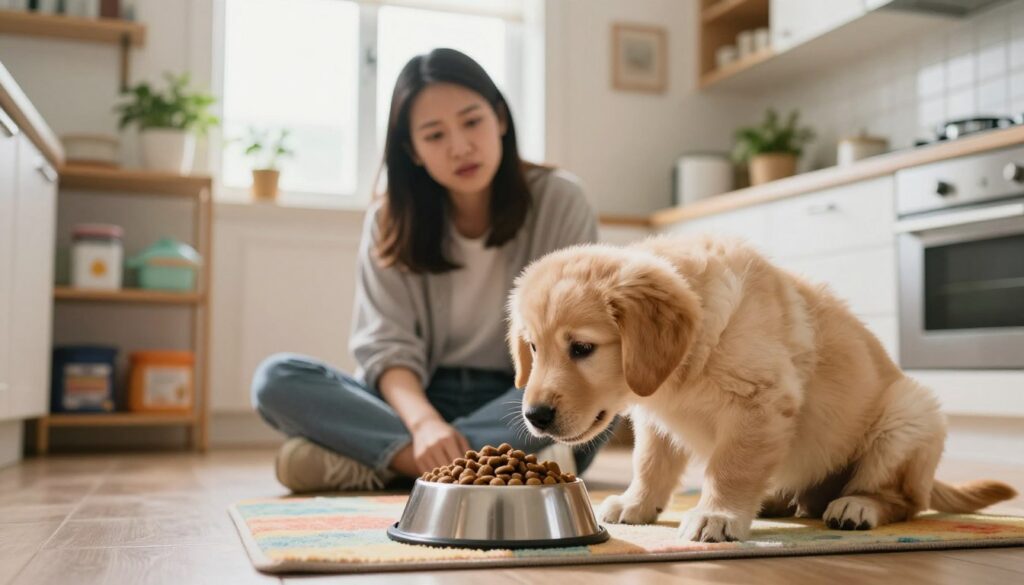
Some dogs might not like the new food because it’s different from their puppy kibble. If your dog won’t eat, try warming the food a bit. This can make the scents come out more. You can also slow down the transition to help your dog get used to the new taste.
If your dog still won’t eat, check if the new food has a different protein. Sometimes, switching to a different protein can make it easier. But, don’t give too many treats, as it can make them less hungry for their meals.
Managing Mild Gastrointestinal Distress
Loose stools or mild gas are common when switching food. It’s because their gut needs time to adjust. If you see these signs, slow down the transition by adding more of the old food.
Make sure your dog always has fresh water. You can also talk to your vet about adding canned pumpkin to help with stool. Watch their energy levels to make sure they’re happy and healthy.
When to Seek Veterinary Intervention
Minor stomach upset is usually short-lived, but some signs need vet help. If your dog vomits a lot, has severe diarrhea, or won’t eat for more than a day, call your vet. These could be signs of a bigger issue or sensitivity.
| Issue | Potential Cause | Recommended Action |
|---|---|---|
| Refusal to eat | Flavor preference | Warm food or slow transition |
| Mild gas | Ingredient change | Increase transition duration |
| Loose stool | Microbiome adjustment | Add fiber or consult vet |
| Lethargy | Possible illness | Seek veterinary care |
Always trust your instincts when switching your puppy’s food. If something seems off, call your vet. They can tell if it’s just a phase or if you need to see them.
Feeding Puppy and Adult Dog Food Together
Managing a household with dogs at different life stages is a big task. Feeding puppy and adult dog food together can be tricky. It’s important to make sure each dog gets the right food for their age.
Managing Multi-Dog Households
One way to avoid cross-feeding is to have a strict mealtime routine. Feed your dogs in separate rooms or use crates. This way, each dog eats their own food without getting into the other’s bowl.
If you can’t separate them physically, use elevated feeding stations or timed feeders. These tools help keep each dog’s food separate. Make sure to clean up any leftover food right away to stop them from eating it later.
Risks of Nutritional Imbalance
Feeding the wrong food can harm your pets’ health over time. Puppies need lots of protein and minerals for their bones. Adult dogs eating puppy food can get too fat and hurt their joints.
Also, mixing different foods can make it hard to find out why your dog might be sick. By feeding puppy and adult dog food together without watching, you make it harder to see how certain foods affect your pet. Keeping their diets separate is key for their health and to avoid extra stress on their metabolism.
Choosing the Right Adult Food Brand
Switching to adult food is a big step for your dog. It’s important to choose a high-quality food. Taking the time to research helps ensure your pet gets the right nutrition for their adult years.
Reading Ingredient Labels and Guaranteed Analysis
Check the guaranteed analysis on the packaging to evaluate a product. This section shows the minimum percentages of protein and fat. It also shows the maximum levels of fiber and moisture. Make sure these numbers meet an adult dog’s needs.
Look at the ingredient list too. High-quality protein sources should be listed first. Avoid foods with too many fillers or vague “meat by-products.” A good manufacturer will list specific animal proteins as the main ingredients.
Evaluating Life Stage Formulas
Adult maintenance formulas support a stable metabolism, not rapid growth. Unlike puppy food, adult food helps maintain lean muscle and healthy organs. Choosing a formula for “adult maintenance” prevents too much calcium or phosphorus.
Compare how different brands balance nutrients. The table below shows typical focus areas for dog food categories:
| Nutrient Category | Puppy Formula | Adult Maintenance |
|---|---|---|
| Protein Content | High (for growth) | Moderate (for maintenance) |
| Calcium/Phosphorus | Higher (bone development) | Balanced (skeletal health) |
| Caloric Density | High (energy needs) | Controlled (weight management) |
Transitioning Between Different Brands
Switching dog food brands needs patience. A sudden change can upset your dog’s stomach. Always introduce the new brand slowly over seven to ten days.
Start by mixing a small amount of the new food with the current one. Gradually increase the new food ratio. This slow transition helps your dog’s gut adjust to the new ingredients. If problems persist, talk to your vet to ensure the new food is right for your dog.
Conclusion
Switching your pet to adult food is a big step in their growth. You are key in making sure this change helps their health and energy for years to come.
Figuring out when your puppy is ready for adult food needs careful watching. Look at their body shape and how much energy they have. This helps you pick the best food for them.
Brands like Purina Pro Plan and Royal Canin have special foods for this time. Always talk to your vet to make sure the food you choose fits your dog’s needs.
Knowing when to switch to adult food lets you give your pet the right food at the right time. This care helps your pet live a happy and active life.
Share your knowledge with other pet owners. Your stories can help others understand dog nutrition better.