Are Pineapples Good for Dogs? A Complete Feeding Guide
Do you love when your dog looks up at you with hope while you eat? It’s natural to think about sharing a piece of fruit with them. Knowing what your pet eats is key to being a good owner.
Plain, fresh fruit can be a treat sometimes. But, you need to prepare it right to keep your dog’s stomach happy. Keeping your dog safe is always the most important thing when trying new foods.
This guide will help you understand how much to give, how to prepare it, and its benefits. We’ll also talk about the risks and when to pick safer options. Remember, these treats should add to their meals, not replace them.
Table of Contents
Are Pineapples Good for Dogs?
Are you thinking about adding pineapples to your dog’s diet? When done right, pineapples can be a tasty and refreshing snack for them.
But remember, not all human foods are safe for dogs. Knowing how to prepare pineapples is key to keeping your pet safe and happy.
When Fresh Pineapple Can Be a Safe Treat
Fresh pineapple is safe for dogs in modest portions. To make sure your dog enjoys it, follow these simple steps:
- Always remove the tough, spiky skin.
- Discard the hard, fibrous core.
- Ensure the fruit is served plain, without any added sugars or syrups.
By following these rules, you can give your dog a delightful treat on a hot day.
What Makes Pineapple Different From a Complete Dog Food
Pineapples for dogs have sugars and nutrients like vitamins and minerals. But they can’t replace a balanced meal. Dogs need specific proteins, fats, and nutrients that fruits can’t provide.
Think of pineapple as an occasional treat, not a main food. Relying on fruit alone can cause nutritional problems.
Which Dogs May Need Extra Caution
Not all dogs react the same to pineapple. Be extra careful with:
- Puppies: Their digestive systems are still developing and may be more sensitive to new foods.
- Dogs with health conditions: Pets managing diabetes, weight concerns, or chronic digestive issues require strict dietary control.
- Sensitive stomachs: Some dogs may experience mild gastrointestinal upset even from small amounts of fruit.
If your dog is under veterinary care, talk to your vet before giving them pineapples for dogs. Your vet can help ensure your pet’s health needs are met.
Can Dogs Eat Pineapple Safely?
If you wonder if your dog can have pineapple, you’re in the right spot. Many fruits are good, but not all parts of pineapple are safe for dogs. Knowing what’s safe can prevent vet visits.
Safe Pineapple Parts for Dogs
Why You Should Serve Only the Soft Inner Fruit
The only safe part for dogs is the soft, fleshy inner fruit. It’s full of water and vitamins, making it a nice treat. Make sure to remove the outer shell before giving it to your dog.
Why the Skin, Crown, Core, and Leaves Are Unsafe
Never give your dog the spiky skin, tough crown, fibrous core, or sharp leaves. These are hard to digest and can be a choking hazard. If swallowed, they can block the intestines, needing surgery.
“When introducing new fruits to a dog’s diet, moderation and preparation are the keys to ensuring their digestive system remains happy and healthy.”
Fresh, Frozen, Canned, and Dried Pineapple Compared
When thinking about can dogs eat pineapples, the fruit’s form is key. Fresh pineapple is best because it has no added sugars. Frozen pineapple is also good, as long as it’s plain.
Canned and dried pineapple can be bad because they often have lots of sugar. These can make dogs gain weight and upset their stomachs. Always choose natural, unsweetened options.
| Form | Safety Level | Recommendation |
|---|---|---|
| Fresh | High | Best choice |
| Frozen | High | Great for summer |
| Canned | Low | Avoid syrups |
| Dried | Low | High sugar content |
So, when you ask can dogs eat pineapples, choose simple. Go for fresh or plain frozen to keep your dog happy and safe.
Benefits of Pineapples for Dogs
Pineapple is a tasty treat for dogs that’s full of good stuff. It’s not just yummy; it’s also packed with nutrients. When given in small amounts, it can really benefit your dog’s health.
Hydration and Naturally Occurring Nutrients
Pineapple is mostly water, making it a great way to keep your dog hydrated. It’s especially helpful during hot weather. Plus, it has natural sugars that give dogs a quick energy boost.
Fiber to Support Normal Digestion
Pineapple is also a good source of fiber. Fiber helps keep your dog’s digestive system running smoothly. Giving them small amounts helps prevent upset stomachs.
Vitamin C, Manganese, and Other Nutrients
Pineapple is rich in vitamins and minerals that are good for your dog. It has lots of Vitamin C, which boosts their immune system. It also has manganese, which is important for strong bones and metabolism.
Why Pineapple Should Complement Rather Than Replace Balanced Food
Even though pineapple is nutritious, it’s not a full meal. It should be a complement to their regular food. Eating too much fruit can cause weight gain or stomach problems. Always make sure your dog eats their main food first to get all the nutrients they need.
How Much Pineapple Can Your Dog Eat?
Knowing how much pineapple your dog can eat is key to avoiding digestive problems. Many pets love the sweet taste, but it’s crucial to keep portions small.

Portion Guidelines Based on Your Dog’s Size
Dogs have different nutritional needs based on their size and activity level. Always adjust treat sizes to keep your pet at a healthy weight.
Toy and Small Dogs
Toy breeds and small dogs need only a tiny sliver. One small, bite-sized piece is enough to satisfy them without too much sugar.
Medium Dogs
Medium-sized dogs can handle one or two small chunks of fruit. Make these pieces about the size of a standard dice for easy chewing.
Large and Giant Dogs
Large and giant breeds can have two to three small pieces. Even for them, keep portions small to avoid stomach upset.
How Often You Can Offer Pineapple
Treats should not be a regular part of your dog’s diet. Pineapple can be an occasional reward, given once or twice a week, not daily.
Why You Should Start With a Small Bite
Always watch your pet when introducing new foods. Start with a single, very small piece to check for any reactions. This cautious approach helps spot any sensitivity or discomfort early.
Keeping Treats Within the Daily Calorie Allowance
All snacks, including fruit, should not make up more than 10% of your dog’s daily calories. By keeping pineapples for dogs within this limit, you ensure a balanced diet and a tasty, healthy treat.
How to Prepare Pineapple for Dogs
Wondering how to serve pineapple to your dog? It’s quite simple. Preparing the fruit right ensures your pet gets a healthy snack safely. Follow these easy steps to add this tropical treat to your dog’s diet.
Choosing a Ripe, Plain Pineapple
Always pick a fresh, ripe pineapple for your dog. Stay away from fruits with added sugars, artificial sweeteners, or spices. A ripe pineapple smells sweet and feels slightly firm, making it tasty and easy to digest.
Removing the Skin, Crown, Core, and Leaves
Before giving your dog the fruit, remove the parts they can’t eat. The tough skin, spiky crown, hard core, and leaves are dangerous. They’re hard to chew and can block your dog’s digestive system if swallowed.
- Use a sharp knife to slice off the top crown and the bottom base.
- Carefully peel away the entire outer skin, ensuring no prickly bits remain.
- Remove the tough, fibrous core from the center of the fruit.
Cutting Bite-Sized Pieces to Reduce Choking Risk
After removing the inedible parts, cut the fruit into small pieces. Big chunks of pineapple for dogs can choke, especially in small breeds. Cut the fruit into small cubes that your dog can chew and swallow easily.
Washing, Storing, and Refrigerating Prepared Pieces
Keeping things clean is key when preparing food for your pet. Wash the pineapple outside before cutting to avoid dirt or bacteria. Store the cut pieces in a clean container in the fridge.
Watch the fruit’s freshness. If it looks discolored, smells bad, or shows signs of spoilage, throw it away. Storing it properly keeps your pineapple for dogs fresh and safe for several days.
Risks of Feeding Pineapple to Dogs
Before giving your pet a slice of fruit, know the health risks of pineapple for dogs. This fruit has vitamins, but it’s not always good for every dog.
Stomach Upset From Sugar, Fiber, or Too Much Fruit
Too much fruit can upset your dog’s stomach. Pineapple’s high sugar and fiber might make your pet feel uncomfortable.
- Diarrhea
- Vomiting
- Excessive gas
- Abdominal pain
Choking and Intestinal Blockage Hazards
Pineapple’s structure is dangerous for dogs. Never give them the tough peel, fibrous core, or sharp leaves.
These parts are hard for dogs to chew and digest. Swallowing them can cause choking or intestinal blockage, needing emergency surgery.
Allergic Reactions and Signs of Sensitivity
Some dogs may react to certain fruits, like pineapple. If your dog scratches, gets hives, or swells after eating pineapple, stop it right away.
Start with small amounts of new foods to watch for bad reactions. If your dog looks distressed, call your vet.
Why Canned Pineapple in Syrup Is a Poor Choice
Don’t give your dog canned pineapple in syrup. It has too much sugar, leading to weight gain and dental problems.
The syrup also has preservatives and sugar, which are bad for your pet. Stick to fresh, plain fruit for their health.
When Pineapple May Be Unsuitable for Dogs With Health Conditions
Dogs with diabetes or obesity should avoid sugary treats. Pineapple’s natural sugars can raise blood sugar levels too high.
Before adding new snacks, talk to your vet. They can say if pineapple for dogs is safe for your pet.
Signs Your Dog Ate Too Much Pineapple
If your dog has eaten too much pineapple, it’s important to know the signs. While pineapple for dogs is usually okay in small amounts, too much can upset their stomach. Being alert helps you spot problems early and take care of your pet.
Common Mild Symptoms to Monitor
Most dogs will only feel a little uncomfortable if they eat too much fruit. You might see these signs right after they eat:
- Loose stool or mild diarrhea.
- Increased flatulence or gas.
- A temporary decrease in appetite for their next meal.
- General stomach gurgling or mild bloating.
These symptoms usually go away in a few hours. Keep a close eye on your pet to make sure they stay hydrated and comfy.
Symptoms That Need a Call to Your Veterinarian
Sometimes, eating too much can cause serious problems. You should call your vet right away if you see any of these signs:
- Repeated or forceful vomiting.
- Signs of severe abdominal pain, such as whining or a hunched posture.
- Extreme lethargy or visible weakness.
- Difficulty breathing or excessive drooling.
- Inability to pass stool or signs of straining.
These symptoms might mean a blockage or a serious reaction that needs vet help.
What to Do After Your Dog Eats the Peel or Core
If your dog eats the tough parts of the fruit, don’t worry. The peel and core are tough and can cause choking or intestinal blockage risk. Stay calm and watch your dog for any signs of trouble for the next 24 to 48 hours.
Check their stool to see if the pieces pass naturally. If your dog seems tired or won’t eat, call your vet. Prompt action is better than waiting if you think there’s a blockage.
How to Prevent Repeated Overeating
The best way to handle pineapple for dogs is to control the portions. Always keep fresh fruit in a sealed container or in the fridge where your pet can’t get it.
Here are some tips to keep your dog safe:
- Pre-portion treats into small, bite-sized pieces before serving.
- Supervise your dog whenever they are eating new snacks.
- Keep the fruit bowl off the counter to prevent accidental snacking.
By keeping treats out of reach, you can make sure your dog enjoys their snack without overeating.
Healthy Ways to Serve Pineapple to Your Dog
Looking for ways to serve pineapple to your dog? It’s great for adding variety without harming their health. Remember, these fruits are best as an occasional treat, not a full meal.
Plain Fresh Pineapple as an Occasional Treat
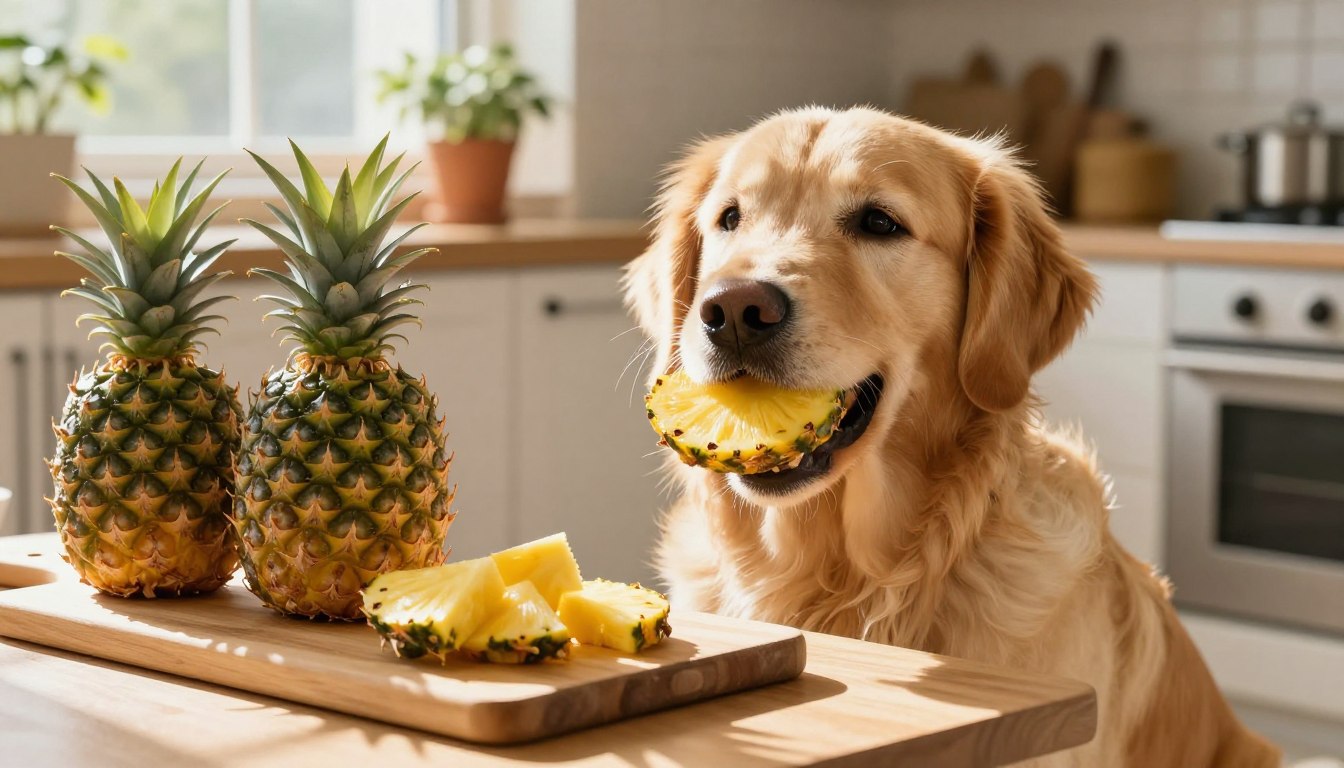
One easy way is to give small, raw pieces of fresh pineapple. Make sure it’s ripe and has no tough skin or core. Freshness is key for a sweet treat without extra stuff.
Frozen Pineapple Pieces for Warm-Weather Enrichment
On hot days, frozen pineapple chunks are a cool treat. They’re fun for dogs to eat because of their texture. Just make sure the pieces are small to avoid choking.
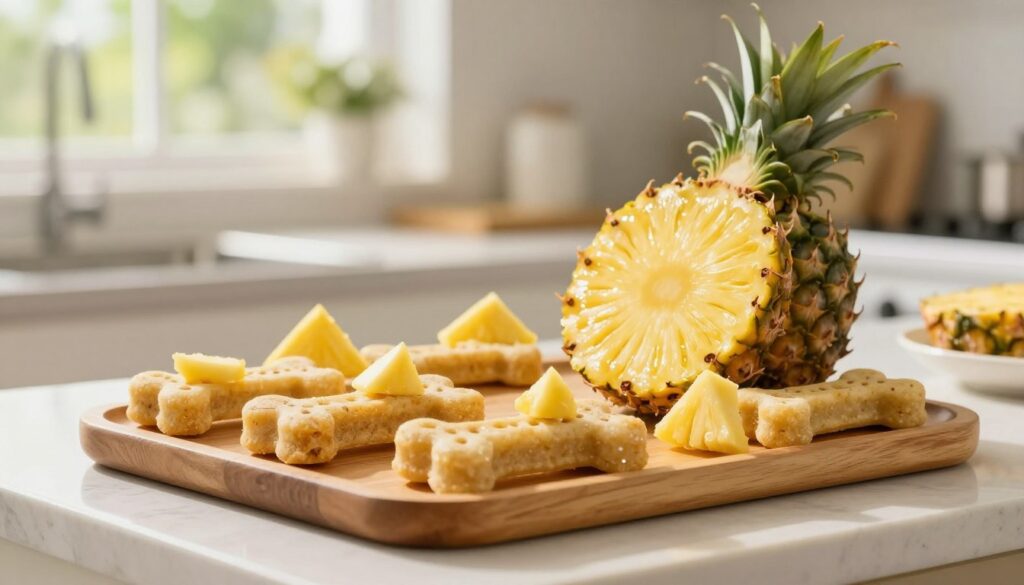
Pineapple Dog Treats With Dog-Safe Ingredients
Love to bake? Try making pineapple dog treats with safe ingredients. Use things like plain oats or unsweetened coconut flour. This way, you know exactly what your pet eats.
Combining Small Amounts With Your Dog’s Regular Food
Adding a little pineapple to your dog’s kibble can make mealtime more exciting. It’s a great way to get picky eaters to eat their food. Just watch to make sure they like it.
Ingredients and Add-Ins You Should Never Mix With Pineapple
When making treats, be careful what you mix with pineapple. Some foods are toxic to dogs and should never be in their snacks. Here are some things to avoid:
- Chocolate and cocoa products
- Grapes and raisins
- Xylitol (often found in sugar-free sweeteners)
- Macadamia nuts
- Onions, garlic, and chives
- Heavily seasoned or sugary syrups
Dog-Friendly Fruits to Consider Instead
Exploring dog-friendly fruits can make healthy rewards exciting for your pet. It’s important to know which fruits are good and which to avoid.
Fruits Safe for Dogs in Moderation
Many fruits can be great treats if given in small amounts. Make sure they are clean and plain.
Apple Pieces Without Seeds or Core
Apples are crunchy and full of fiber and vitamins. But, remove the seeds and core because they have cyanide and can choke your dog.
Blueberries, Strawberries, and Raspberries
Berries are full of antioxidants that help your dog’s immune system. Wash them well to remove pesticides before giving them to your dog.
Banana, Watermelon, and Cantaloupe
These fruits are hydrating and sweet. But, remove the rinds and seeds to avoid digestive problems.
Fruits You Should Never Feed Your Dog
Some fruits are toxic to dogs. Even a little can cause serious health issues, so keep them away.
Grapes and Raisins
Grapes and raisins are very dangerous. They can cause sudden kidney failure in dogs. Never give them to your pet.
Cherries, Their Pits, and Other Hazardous Seeds
Cherry pits have cyanide and can block your dog’s intestines. Also, avoid stone fruits with accessible pits.
How to Choose Healthy Snacks for Dogs
Choosing the right healthy snacks for dogs is important. Consider your dog’s diet needs. Here’s how to pick safe and nutritious treats:
- Plain Preparation: Avoid fruits with added sugars or artificial sweeteners like xylitol.
- Appropriate Portions: Treats should not be more than 10% of your dog’s daily calories.
- Health Compatibility: Talk to your vet if your dog has health issues like diabetes or obesity.
| Fruit Type | Safety Status | Preparation Tip |
|---|---|---|
| Apples | Safe | Remove seeds/core |
| Blueberries | Safe | Wash thoroughly |
| Grapes | Toxic | Avoid completely |
Conclusion
Deciding if pineapples are good for dogs depends on your pet’s diet. Pineapples add a sweet flavor but should not replace their regular meals.
It’s crucial to feed your dog high-quality, balanced food every day. If you want to add variety, make sure treats don’t make up most of their calories.
Begin by giving a small, soft piece of pineapple to see how your dog reacts. Watch for any signs of upset stomach or allergies in the first few hours. If your dog has health issues, talking to your vet is a good idea.
Make sure to keep the pineapple peel, core, and leaves away from your dog. This prevents choking or blockages. By following these steps, you can safely share a refreshing snack with your dog. This way, treat time is both fun and safe for them.