
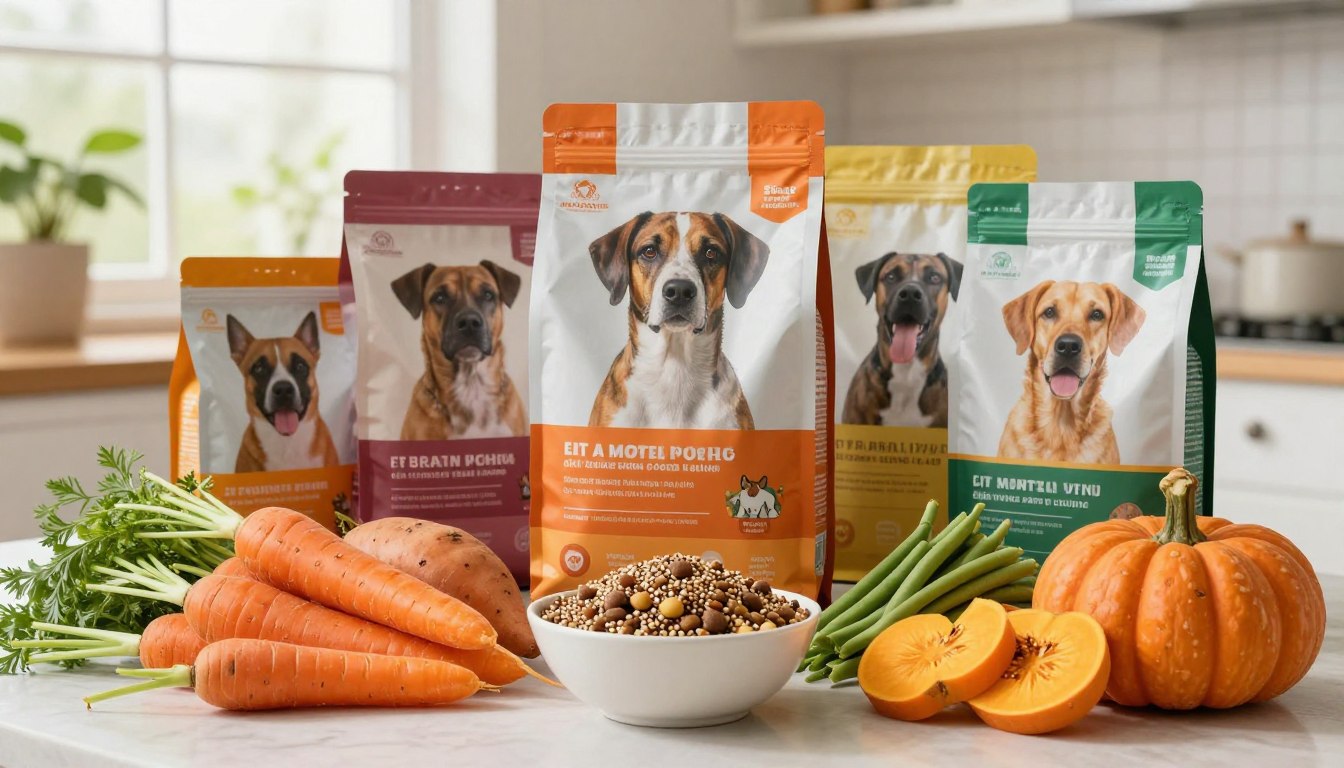
Fiber Foods for Dogs: Comparing Commercial and Homemade Options
It’s heartbreaking to see your dog not feeling well. They might have trouble digesting food or seem less energetic. You want to do everything to make them happy and healthy again.
Knowing about nutrition is key to caring for your pet. Choosing the right fiber foods for dogs can greatly improve their health. You can pick from store-bought options or make meals at home. Making smart choices is crucial.
This guide will dive into the science of dog digestion and offer practical tips. We aim to help you feel confident about what you feed your dog every day.
Table of Contents
The Role and Benefits of Fiber for Dogs
Fiber is a key player in your dog’s digestive system. It’s more than just roughage; it’s essential for a healthy gut. Knowing the benefits of fiber for dogs helps you make better choices for their health.
Understanding Digestive Health
A healthy gut is the base of your dog’s immunity and energy. Fiber feeds the good bacteria in the colon. This helps the bacteria grow, producing nutrients for the gut lining.
Fiber also helps with bowel movements. It makes stool bulkier, helping waste move through the system. Studies show that a diet rich in fiber can lower cholesterol levels by up to 76 mg/dL.
Soluble vs Insoluble Fiber for Canines
It’s important to know the difference between soluble vs insoluble fiber for canines. Each type has its own benefits for your dog’s health.
Soluble fiber turns into a gel in water. This slows digestion, helping control blood sugar and keeping your dog full. It’s great for weight control and soothing stomachs.
Insoluble fiber, on the other hand, helps move food through the intestines. It adds bulk to stool and promotes regular bowel movements. Combining both types ensures your dog stays regular and metabolically stable.
Signs Your Dog Needs More Fiber
It’s important to know when your dog needs more fiber for their health. By watching your dog’s daily habits, you can tell if they need more fiber. This can help improve their overall health.
Identifying Chronic Constipation
If your dog has chronic constipation, they might need more fiber. Look for signs like straining during bowel movements or hard, dry stools. These are signs their digestive system is not working right.
Fiber helps keep the stool soft and regular. Without enough, the colon absorbs too much water. This can cause discomfort. Watching your dog’s bathroom habits closely is key to catching these problems early.
Managing Weight Through Satiety
Fiber is also important for weight management. It helps your dog feel full, or satisfied. If your dog always wants more food or seems hungry after meals, they might not have enough fiber.
Adding fiber to their diet can help them feel full without eating too much. This is great for dogs on special diets who get hungry between meals. Feeling full longer helps prevent overeating and keeps their body healthy.
| Symptom | Potential Cause | Recommended Action |
|---|---|---|
| Hard, dry stools | Low fiber intake | Increase soluble fiber |
| Constant begging | Lack of satiety | Add high-fiber vegetables |
| Straining to defecate | Slow transit time | Consult your veterinarian |
| Rapid weight gain | High-calorie density | Switch to weight management food |
Top Fiber-Rich Dog Food Options in Commercial Markets
Looking for the best high fiber dog foods often means turning to special diets. These are made for dogs with weight or digestive issues. Standard kibble might not be enough. Vets often suggest these diets for their precise fiber blends.
Analyzing Purina Pro Plan Veterinary Diets Weight Management
This formula helps dogs stay at a healthy weight. It’s high in protein and fiber, making your dog feel full. This prevents them from always wanting more food. It’s great for managing calories without losing important nutrients.
Therapeutic diets are made with care to meet dogs’ special needs. They help with chronic digestive or metabolic problems.
Evaluating Royal Canin Veterinary Diet Gastrointestinal Fiber Response
This diet is for dogs with ongoing digestive issues. It has a special mix of fibers for better bowel movements. Many owners see a big improvement in their dog’s life with this top fiber-rich dog food option.
| Product Name | Primary Goal | Fiber Source | Best For |
|---|---|---|---|
| Purina Weight Management | Weight Loss | Powdered Cellulose | Obese Dogs |
| Royal Canin Fiber Response | Digestive Health | Psyllium Husk | Constipation |
| Standard Maintenance | General Health | Beet Pulp | Healthy Dogs |
Choosing between these depends on your dog’s health needs. Always talk to your vet to pick the right diet. Good nutrition is key to a happy, long life for your dog.
Key Considerations When Choosing Commercial Fiber Foods
Choosing the best commercial fiber food is more than just looking at the front of the bag. Marketing claims highlight certain ingredients, but the real value is in the fine print on the back. You need to look beyond the colorful branding to know what your dog is really eating.
Reading Ingredient Labels Effectively
Start by examining the first five ingredients on a label. High-quality fiber sources should be clearly listed, not hidden under vague terms. Transparency is key for reputable manufacturers, so choose brands that specify the exact plant source.
Also, check the order of ingredients. If a fiber source is far down the list, it might not help your pet’s digestion. Be wary of excessive fillers that add bulk but little nutrition, which can cause bloating.

Identifying Quality Fiber Sources
Not all fibers are good for dogs. Quality fiber sources have both soluble and insoluble components for regular bowel movements and gut health. Look for ingredients that have been tested in clinical settings.
Here are some top-quality fiber sources to look for:
- Beet pulp: A fermentable fiber that supports healthy gut bacteria.
- Pumpkin: Great for soothing the digestive tract and making stools bulkier.
- Psyllium husk: A soluble fiber that helps manage consistency.
- Miscanthus grass: A clean, sustainable source of insoluble fiber that helps with satiety.
Stay away from products with low-quality fillers or vague plant matter. By choosing specific, recognizable ingredients, you can make sure your dog gets the best nutritional support for a healthy life.
Safe Homemade Fiber Sources for Your Dog
Choosing homemade food for your dog means finding safe fiber sources. The right canine fiber sources keep your pet’s digestive system healthy. Whole foods let you control the quality and freshness of each meal.
Vegetables That Provide Essential Roughage
Vegetables add natural roughage and vitamins to your dog’s diet. They help with bowel movements and gut health. Many owners find these canine fiber sources affordable and simple to prepare.
- Green Beans: These are low in calories and high in fiber, making them perfect for weight management.
- Carrots: Whether served raw as a crunchy snack or steamed, they provide beneficial beta-carotene and fiber.
- Pumpkin: A classic choice for digestive support, plain canned or cooked pumpkin is highly effective for soothing upset stomachs.
“The foundation of a healthy homemade diet lies in the balance of macronutrients and the inclusion of high-quality, fiber-rich whole foods.”
The Role of Grains and Legumes
Grains and legumes are also good canine fiber sources when prepared right. They offer complex carbs for energy. Make sure all grains are cooked well for your dog’s digestion.
When using dehydrated ingredients, rehydrating them correctly is key. Once rehydrated, they offer 65-75% moisture, similar to fresh food. Always introduce new grains or legumes slowly to see how your dog reacts.
How to Increase Fiber in a Dog’s Diet Safely
Learning how to increase fiber in a dog’s diet takes patience and watching your pet’s health closely. When you want to add more fiber, do it safely to prevent digestive issues. Always remember that fiber needs water to work right, so your dog must drink plenty.

Gradual Transition Strategies
Don’t change your dog’s diet to high fiber all at once. Start by adding a little bit of the new food to their meal. Slowly increase the new food over seven to ten days, while reducing the old.
This gradual transition helps your dog’s gut adjust without discomfort. Make sure your dog drinks about one ounce of water for every pound of body weight each day. Water is crucial for fiber to work well in the digestive system.
Monitoring Your Dog’s Stool Quality
Watching your dog’s stool is the best way to see if fiber is working. Healthy stools are firm, consistent, and easy to pick up. If the stool gets too loose or your dog strains a lot, you’re moving too fast.
Watch your dog’s bathroom habits for at least two weeks after the change. Consistency is key in checking if the new diet is working. If your dog has persistent diarrhea or seems uncomfortable, talk to your vet. They can help adjust the diet for your dog’s needs.
Comparing Commercial and Homemade Fiber Foods for Dogs
When looking at fiber foods for dogs, you face a choice. You can pick from easy-to-use commercial options or make your own. This decision depends on your lifestyle and your dog’s health needs.
Convenience and Nutritional Consistency
Commercial diets offer unmatched nutritional consistency. Buying a high-quality kibble means the fiber is balanced to meet AAFCO standards. This makes feeding time easy.
On the other hand, making meals at home means you’re the nutritionist. You must measure each ingredient carefully to get the right mix of nutrients. While you have full control, there’s a risk of nutritional gaps if you’re not using a vet-approved recipe.
Cost-Effectiveness and Preparation Time
Many find commercial fiber foods for dogs more affordable, considering your time. Making meals at home takes a lot of effort. You need to find fresh ingredients, cook, and store them properly.
Yet, some owners choose homemade to avoid preservatives or certain fillers in commercial brands. Here’s a table showing the main differences:
| Feature | Commercial Diet | Homemade Diet |
|---|---|---|
| Preparation Time | Minimal | High |
| Nutritional Balance | Guaranteed | Requires Planning |
| Ingredient Control | Limited | Complete |
The best choice depends on your ability to keep a consistent schedule. Whether you go for store-bought fiber foods for dogs or make them yourself, watching your dog’s health is key.
Potential Risks of Excessive Fiber Intake
More fiber might seem better for your dog, but excessive intake can cause serious problems. While fiber helps with regular bowel movements, too much can harm your pet’s health. It’s crucial to find the right balance for your dog’s long-term health.
Nutrient Malabsorption Concerns
Fiber acts like a sponge in the digestive tract, which is good for waste but bad if too much. High fiber levels can block your dog from getting important minerals and vitamins. This can lead to significant nutritional deficiencies that affect energy and immune function.
Also, high-heat processing, like in canned foods, can destroy 50-90% of B vitamins. Adding a diet too high in fiber to this can increase malabsorption risks. You might need to talk to a vet to make sure your dog gets the right nutrients.
Gastrointestinal Distress and Bloating
Adding fiber too fast or in too much can upset your dog’s stomach. They might feel bloated, have cramps, or gas. These signs mean the diet isn’t right for them.
To prevent these problems, always change your dog’s fiber intake slowly. Watch for signs like a big belly or straining. With slow changes and expert advice, you can keep your dog’s digestive system healthy.
When to Consult Your Veterinarian
Fiber is key for dogs, but sometimes you need a vet’s help. Dietary adjustments aren’t always enough if your dog is feeling unwell. A vet can tell if it’s just a diet issue or something more serious.
Recognizing Underlying Medical Conditions
Some digestive problems can hide bigger health issues. If your dog has chronic diarrhea, vomiting, or sudden weight loss, it could be serious. Adding fiber might not fix the real problem.
Look for blood in the stool or lethargy after eating. A vet can check for deeper problems with blood work or scans. Early intervention is crucial to manage serious conditions.
Tailoring Fiber Needs for Senior Dogs
Senior dogs need special care with their diet. Their metabolism and organs change with age. Gentle, soluble fibers help keep their digestive system working smoothly.
Your vet can create a diet plan for your older dog. They might recommend special foods that balance fiber with other nutrients. This helps your senior dog stay healthy and comfortable.
| Symptom/Scenario | Action Required | Professional Priority |
|---|---|---|
| Occasional mild constipation | Monitor and adjust fiber | Low |
| Chronic, recurring diarrhea | Schedule vet visit | High |
| Senior dog weight changes | Consult for diet plan | Medium |
| Blood in stool or lethargy | Immediate clinical care | Critical |
Common Mistakes to Avoid When Adding Fiber
Adding fiber to your pet’s diet can be tricky. It’s important to do it right to avoid discomfort. Knowing the common mistakes helps keep your dog healthy.
Over-Supplementing Without Guidance
Many owners add fiber without a vet’s advice. They think more is better. But too much fiber can block nutrient absorption, causing deficiencies.
Also, using human fiber products is risky. They might have xylitol or other toxic ingredients for dogs. Always choose dog-specific supplements.
Ignoring Hydration Requirements
Fiber needs water to work right. Without enough water, it can cause constipation or blockages. Drinking water is crucial when adding fiber.
Remember these tips to keep your dog safe:
- Rapid transitions: Don’t change to high-fiber foods too fast to avoid gas and bloating.
- Ignoring stool quality: Watch your dog’s poop to catch any digestive problems early.
- Neglecting water access: Make sure your dog always has clean water to help fiber move.
- Self-diagnosing: Don’t guess your dog needs more fiber without a vet’s check-up. It might hide health issues.
By avoiding these mistakes, you can help your dog’s digestion. Be consistent and patient when changing their diet.
Conclusion
Managing your dog’s fiber intake is key for their long-term digestive health. You have the power to make a big difference in your pet’s comfort. This is by making smart choices about their diet.
Choosing between Purina Pro Plan Veterinary Diets or making fresh meals at home is important. But the most crucial thing is to be consistent. Keeping an eye on your dog’s stool quality and how much water they drink is essential. This ensures they stay healthy and happy under your care.
Getting advice from your vet is the best way to find what’s right for your dog. They can guide you on finding the right balance between convenience and your dog’s nutritional needs.
Take a look at how you’re feeding your dog today. Even small changes can make a big difference in their energy and happiness. Share your experiences with different fiber sources below. This can help other pet owners make better choices for their dogs.